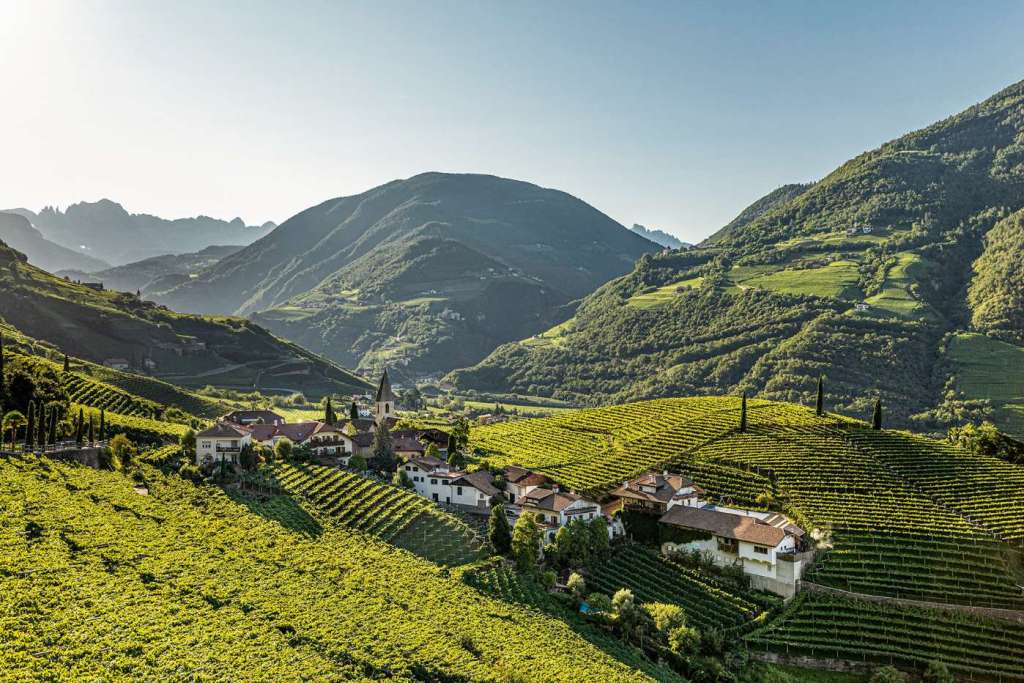
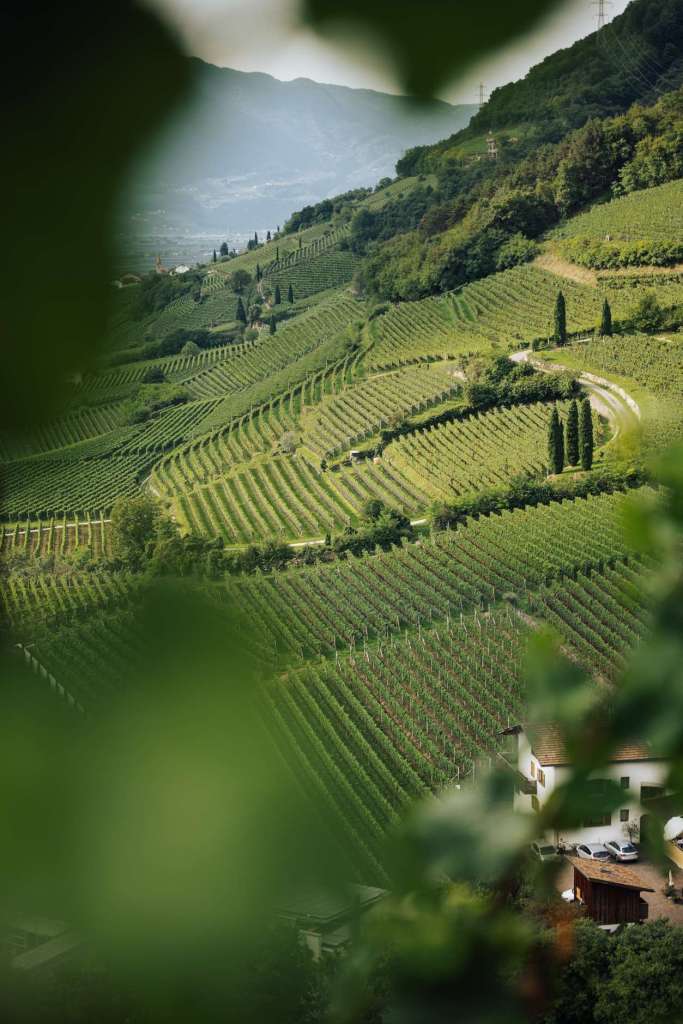
Sunlight slices through the jagged Dolomites, bathing the terraced vineyards in golden warmth. You take a deep breath of fresh mountain air laced with delicate blossoms, juicy apples, and grapevines ready for harvest. This is Alto Adige or Südtirol, the northernmost Italian wine region—cradled between Austria and Switzerland—where snow-dusted peaks give way to steep slopes rooted in volcanic porphyry, granite, and limestone. Alto Adige is a true crossroads, where languages and cuisines collide in a gentle, well-heeled co-existence.
Nestled in the lap of the Alps, the warm Mediterranean air flows up via Verona and meets the wall of brisk Alpine air, nurturing over twenty grape varieties, many of them local to this area. There is evidence to suggest that wine was produced here as far back as 500 BC, a remarkable 2,500 years ago.
Much of the fullness of John Keats’ famous ode To Autumn seems to fit the grape and apple-scented scenic beauty of this region. This truly is Italy’s Alpine treasure—an essential destination for any discerning traveller.
Bolzano: A tale of castles and wine, food and fitness
It is surprisingly easy to get here, either by arriving in Verona and driving up, or on a wonderful and rather quaint direct flight with the local airline – SkyAlps – to Bolzano. An airline that treats you as it did in times past, when you were served choice libations and snacks on board.
The city of Bolzano is the beating heart of this region, a treasure trove of surprises with a storied history etched upon its visage—stories of ancient stone arches and turreted castles beneath azure skies. The city whispers its secrets in three languages—German, Italian, and Ladin—all melding as easily as the rivers that carved this city’s fortune. At 270 metres above sea level, ringed by quartz mountains, this city wears its past with effortless grace.
Mussolini annexed this city during the First World War and initiated an ‘Italianisation’ effort, as evidenced by the Venice- and Trieste-like avenues and the blending of Italian and Germanic architectural styles. After the fascist regime, the city found its own identity, one that is categorically bicultural and bilingual in a rare modern-day harmonious duality.
Fun fact: approximately 30 years ago, a nearby glacier unearthed a 5,000-year-old mummy. Endearingly named “Ötzi”, it offers an unknown glimpse into the lives of our ancestors and is currently the most famous resident of the Museum of Archaeology in Bolzano.
Today, the designer stores keep the locals well-heeled with an Italian trademark—glamour oozing from oversized sunglasses. An essential part of one’s wardrobe, given the gift of year-round azure skies. Luxury here is not loud; it is quietly layered. Castles seem as commonplace as the street markets selling delicious dried berries and a variety of pasta.
A little tip for those who like to plan destination parties: the local Castle Mareccio/Maretsch is a gorgeous labyrinth of Renaissance architecture, modernised perfectly as an event venue.
Blessed with over 300 days of sunshine, Bolzano is a vibrant city of activity and youthful energy. Locals and visitors effortlessly swap their heels for trekking shoes, or get on bicycles or skis, depending on the season. Given that Bolzano is the birthplace of the famous Italian wafer Loacker, one needs to consider offsetting some of those chocolicious calories.

Taking the Alto Adige Wine Road
With 300 days of sun, this is a true gift of the Dolomites. The south-facing, steep, sun-soaked Dolomitic slopes are lined with stunning vineyards curving along the famed Alto Adige Wine Road. Here, the producers strive to maintain a symbiotic balance with nature. This, plus the wild Alpine–Mediterranean temperature swings between day and night, fosters a vinous intensity and freshness in every bottle of wine. Here, craftsmanship is the standard, not the exception.
So what is worth your glass and cellar?
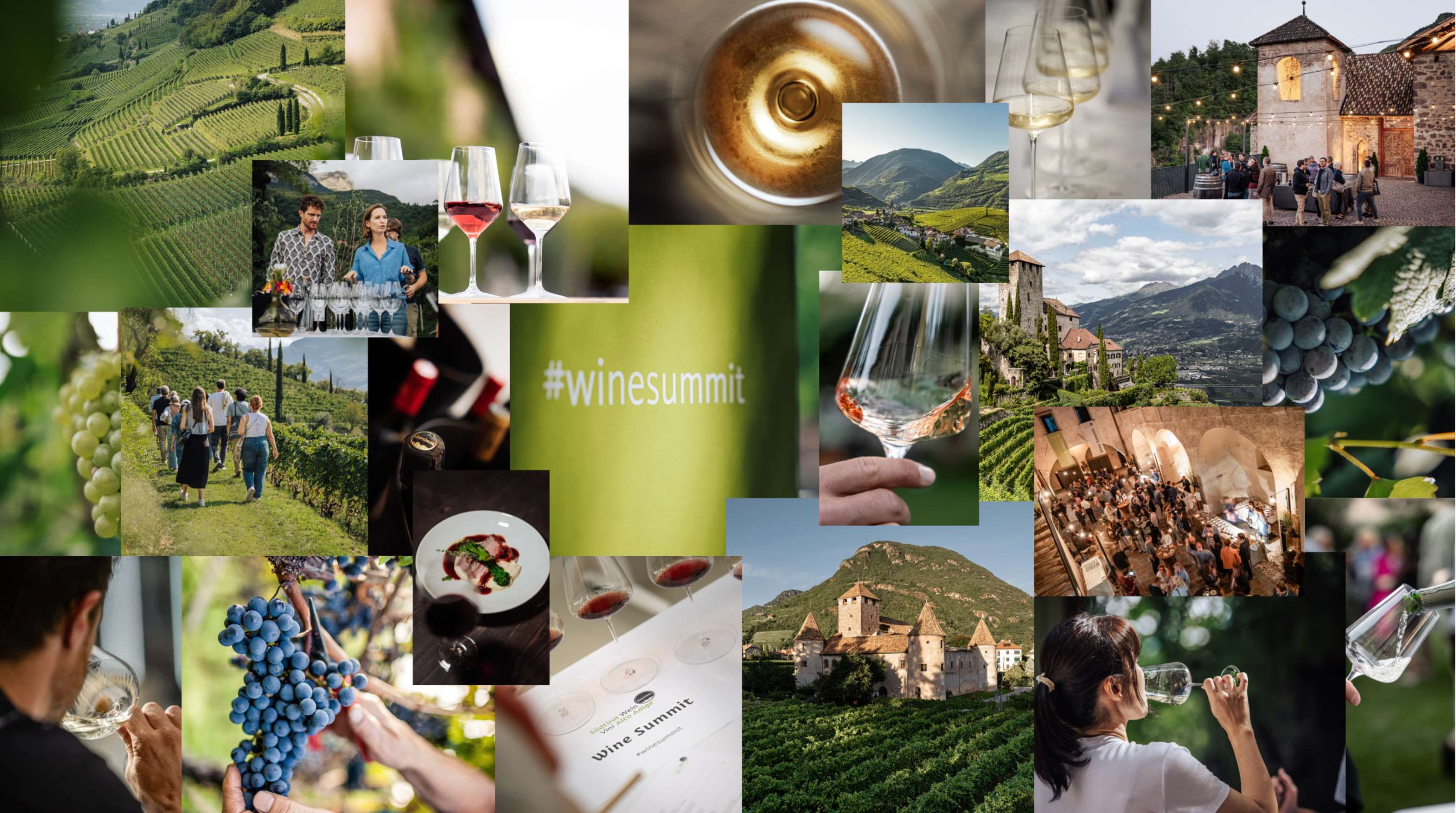
Alto Adige hosts an extraordinary Wine Summit @altoadigewines each year, highlighting the vinous offerings from this region and their producers. I was taken with the diverse flavour profiles of the wines and the breadth of their food-pairing prowess. The bright minerality and lifted aromatics of the wines also make them exceptional with Asian cuisines, going far beyond the expected European fare.
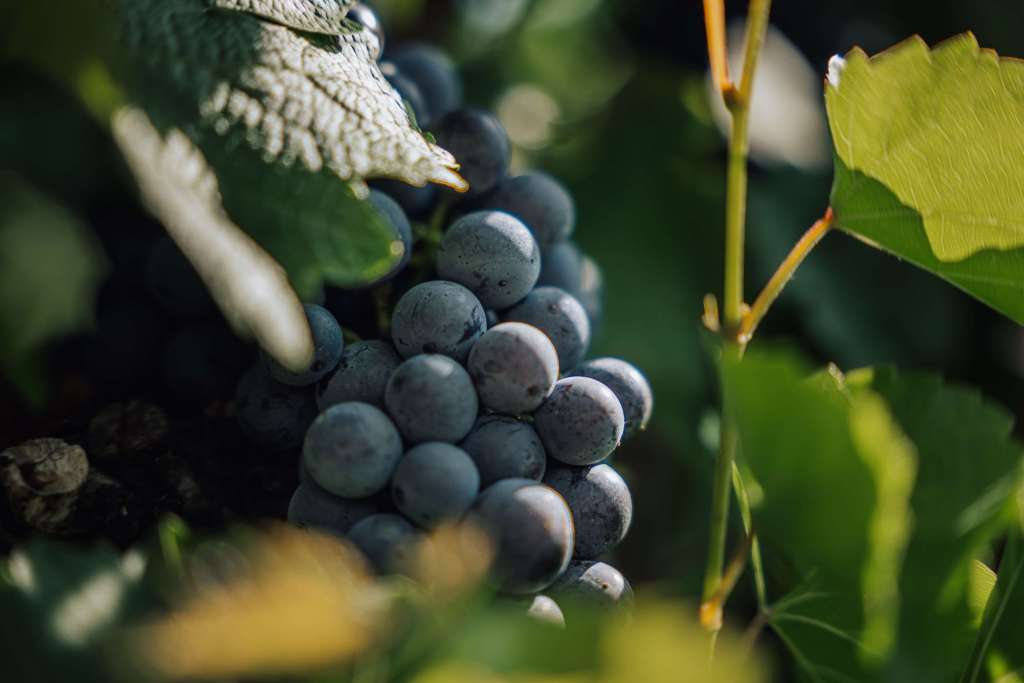
Kellerei Kurtatsch and the power of cooperation
Founded in 1900, it is an extraordinary, premium co-operative of 190 wine families. Their wine shop/cellar door, designed to mimic the jagged peaks of the Dolomites, is a must-visit for its jaw-dropping views—and, of course, their wines.
In the stunning backdrop of the Freudenstein castle at sunset, I made my first acquaintance with this cellar. They specialise in international grape varieties—and to significant effect.
- 600 Blanc de Blancs 2019 is Alto Adige’s homage to Chardonnay and one for the grower-champagne lovers. Exquisitely saline and shot through with ripe peaches and Sicilian lemons. Made from ancient vines and at an altitude of 600 metres above sea level, hence the name.
- Merlot Riserva Brenntal 2022 is a joy to behold. Bright ruby in colour, it is awash with red plums and sour cherries. This is what I would call an ‘Alpine’ red. I dare you to open this with a fish- and soy sauce-laced Thai or Asian stir fry.
- Merlot–Cabernet Riserva Tres 2018 – la pièce de résistance. For collectors, Kurtatsch’s ‘Tres’ is the serious buy—at circa €185, this is very much a Bordeaux-influenced blend with Alto Adige’s saline poise; one for those who value rarity and pedigree.
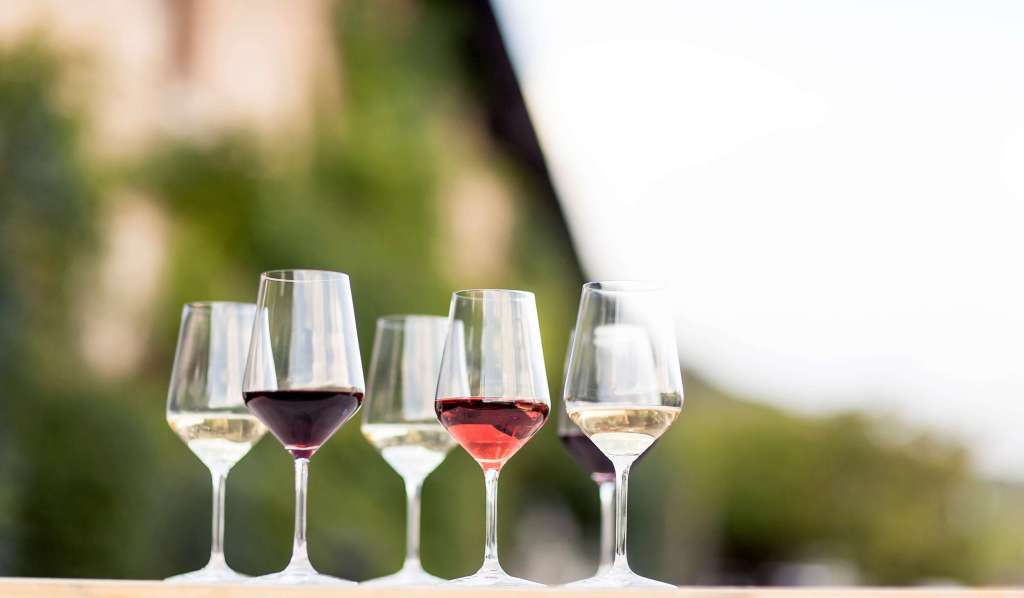
The (bio)dynamism of Alois Lageder
Biodynamic, boundary-pushing, with a cellar that feels as much an art gallery as a winery. The tasting here moves beyond wine—immersing you in art, architecture, and the restless energy of a family always dreaming forward.
The estate, anchored by a magnificent 16th-century building completed in 1601, seamlessly blends heritage and modernity with Renaissance charm and sustainable design elements. After being left vacant by its original owners, who fled the fascist period, the Lageder family purchased the estate from the church in 1991, infusing new life into these storied halls.
For Alois Clemens Lageder, sixth generation of the Lageder family and Managing Director, “Winemaking at Lageder goes beyond technique—we celebrate a sense of place in each of our wines.” He explains that the Dolomitic chalk brings roundness and body to the wine, whereas volcanic soils bring structure, precision, and vivid verticality.
Lageder have a devoted commitment to evolution: as climate shifts, so does their thinking—70% of production now focuses on white grapes, yet the estate remains poised for another potential swing back to reds in their warmer sites.
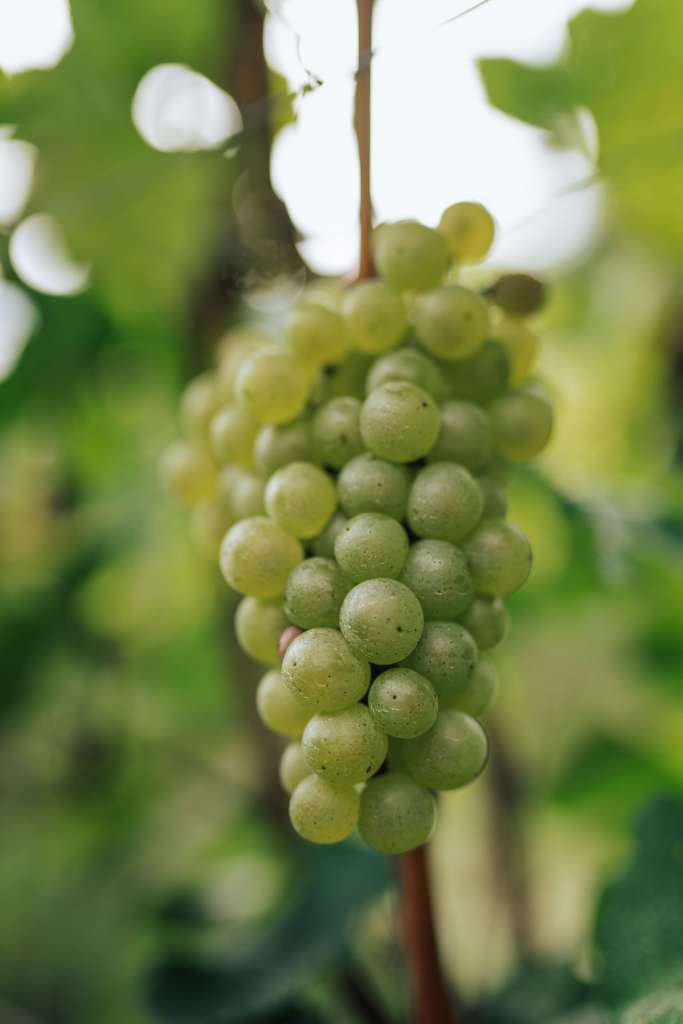
Some of the Lageder gems to try:
- Pinot Grigio Porer 2023: It is a delight to hear Clemens Lageder talk about the ‘spicy’ character of their Pinot Grigio wines: “In warmer years we increase the sense of seasoning with tannin from grape skin and stem to give the wines greater structure and avoid them becoming too alcoholic or flabby.” This is particularly welcome as the copious amounts of Alpine sunshine lead to hefty levels of alcohol in the wines. “I want to make wines that lift me, give me energy, rather than weighing me down.” This Pinot Grigio is precisely that—nervy with a spicy tension amidst all that peach blossom and preserved lemon.
- Pinot Blanc Versalto 2023: reminiscent of the apple orchards we passed, very aromatic with lifted notes of apples, pears, and peaches, alongside mineral-driven precision and structure—a gift of the soils.
- Their Crus: the extra attention to these wines was evident, showing perfect levels of maturity and fully developed character. These expressions truly demonstrate the Lageder commitment to biodynamic practices and biodiversity in their vineyards.
- Chardonnay Löwengang 2022: a lip-smacking, citrus and saline delight with a nutty, moreish finish from thoughtful use of oak. Very age-worthy.
- 2019 Cor Römigberg Cabernet Sauvignon: an Alpine Cabernet Sauvignon if ever there was one—crunchy blackberries, herbal lift with a capsicum bite, dusted with sweet baking spices like cinnamon and nutmeg.
It is worth visiting the Luna wine bar in Bolzano to sample a wider selection of the region’s offerings. Here are five of my other favourite producers to look out for:
- St. Michael-Eppan: Their Pinot Bianco is a show-stopper—creamy and bold with that electric mineral backbone that is so very Alto Adige.
- Cantina Colterenzio: Taste their Sauvignons—zesty, tight, and a tribute to the region’s crisp edge, in stark contrast to its Kiwi cousin.
- Niedrist Ignaz: Boutique in scale, but with big-league finesse. Their amphitheatre-like vineyard, built on a volcano, receives 360 degrees of sunshine, creating impeccable balance and minerality. I loved their backstory as narrated by Maria Niedrist. Theirs is a 300-year-old wine farm. During the wars, they sold grapes to other cooperatives as their grandmother had to look after her seven children, while all the men had gone off to fight. Maria’s parents restarted the winery in the 1980s, and she now works as the second-generation winemaker. Their Pinot Nero (also known as Pinot Noir) is a benchmark for the region—intensely perfumed and oh-so-spicy.
- Cantina Tramin: If you love your tropical flavours and the sweet, beguiling scents of Turkish delight, Cantina Tramin’s Gewürztraminer is region-defining: think rose petals, frangipani, lychee, passionfruit, and a whisper of mountain spice. Sip it for its perfume; stay for the wraparound views from their terrace and immerse yourself in the vinous embrace of the Italian Alps.
- Elena Walch is the Grand Dame of this Alpine wine region. An architect turned vintner by marriage, Walch is credited as one of the driving forces behind the modernisation of this wine region and its entry onto the world stage. With her two daughters now joining her in the wine business, the family legacy is set for another stage of growth—always with sustainability at its core. Particularly famous for her Gewürztraminer, the Vigna Kastelaz 2023 is a medley of bright pink rose florals and white pepper, with a stony edge that will slice through the creamiest of sauces.
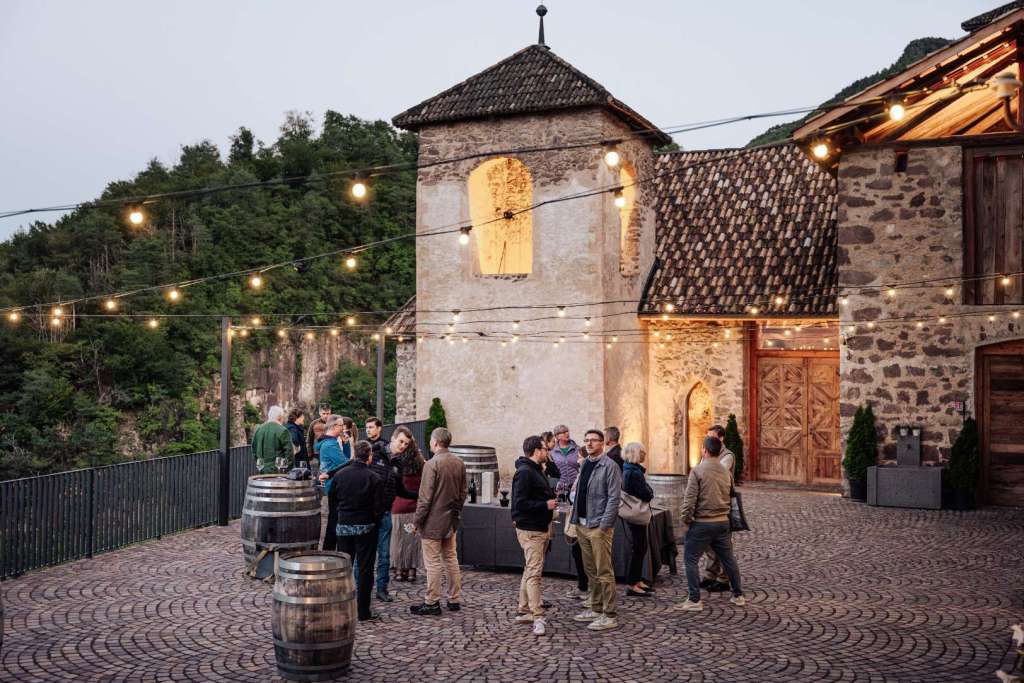
A Celebration of Sun, Stone, and Spirit
When to go? For this sun-blessed region, truly, every season has its own delicious mood: be it snow-capped peaks and ski season, spring awakening with brisk mountain hikes or bike rides, or the hot but lush green summers with cool evenings. For the wine-wardly, I think late summer and early autumn have their own magic—when the golden foliage glows, vines are laden with juicy grape bunches, apples are starting to come of age, and the promise of a great vinous bounty is assured.
You can also book guided tours to lead you through the Alto Adige Wine Road’s vine-laced villages, arranging exclusive tastings, castle dinners, and even sunrise breakfasts amid the vines—because sometimes, luxury means feeling personally welcomed, not simply served. The UNESCO Heritage-listed Dolomites are waiting to welcome you.
For more information, visit altoadigewines.com
Ver esta publicación en Instagram
Photo credit: All images, including featured, courtesy of Alto Adige Wines.