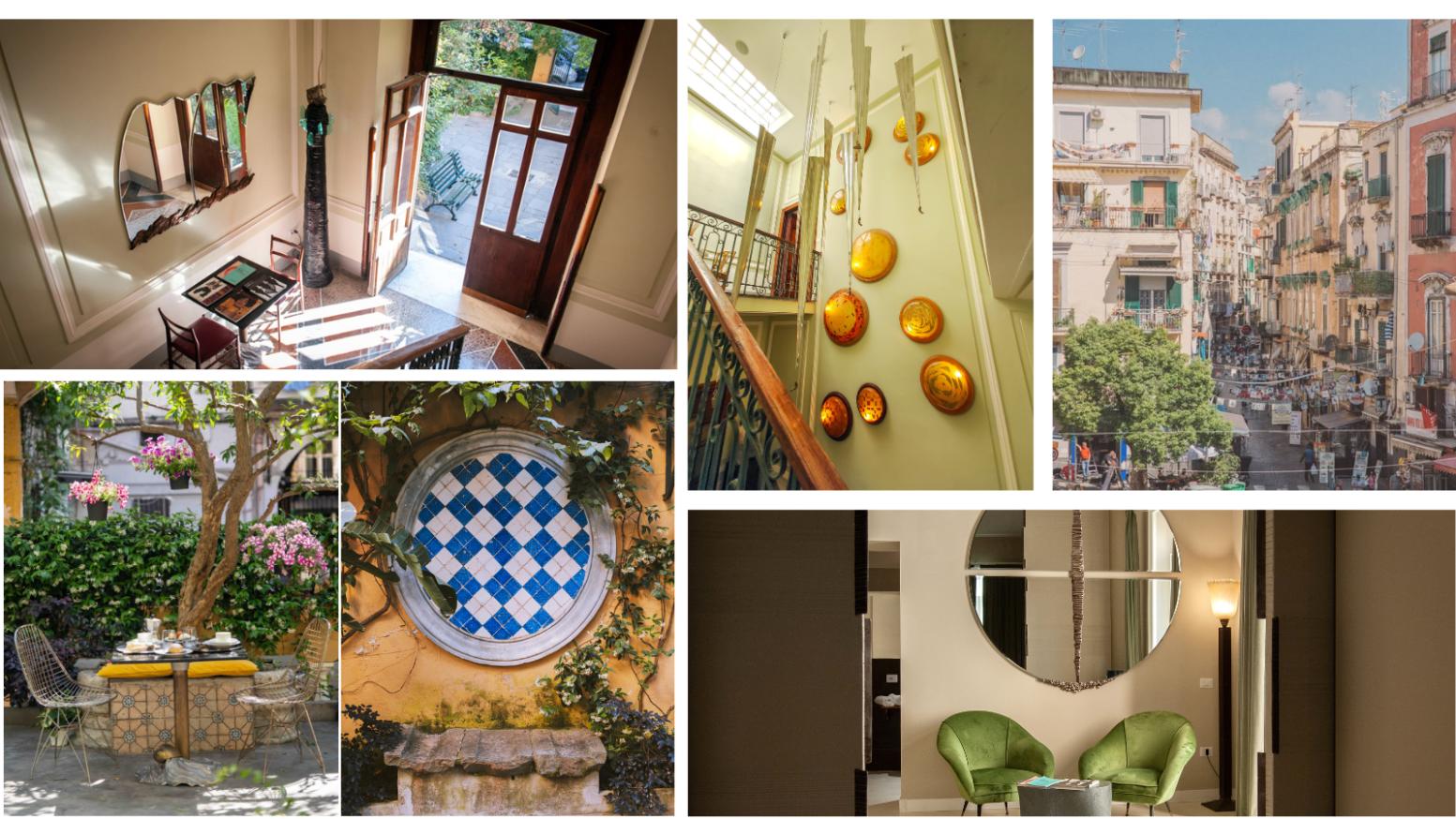
Italy’s third-largest city, Naples, has always been one of my favourite places. The rawness of it, the vibrancy of the streets and people, the rich history, the food and particularly the amazing pizza! My experience at Atelier Inès revealed again the amazing beauty of Naples.
Naples has an amazing amount to offer. The Circumvesuviano railway will take you to the architectural wonders of Pompeii and Herculaneum in less than an hour, and you can continue on the same line to Sorrento and the Amalfi coast. From there, or the port of Naples, fast ferries connect you to the Islands of Capri, Ischia and Procida. For the sporting-minded, the Estadio Diego Armando Maradona, home of Napoli SSC and several thousand fanatical supporters, is well within reach, and tickets are available on the club website. Several funiculars will connect you to the smart quarter of Vomero or elsewhere in the upper city, and provide amazing views of Vesuvius and the Islands. You can then descend to enjoy a glass of wine or a meal alongside the bay of Naples in Santa Lucia, Poisillipo, Mergellina or Pozzuoli.
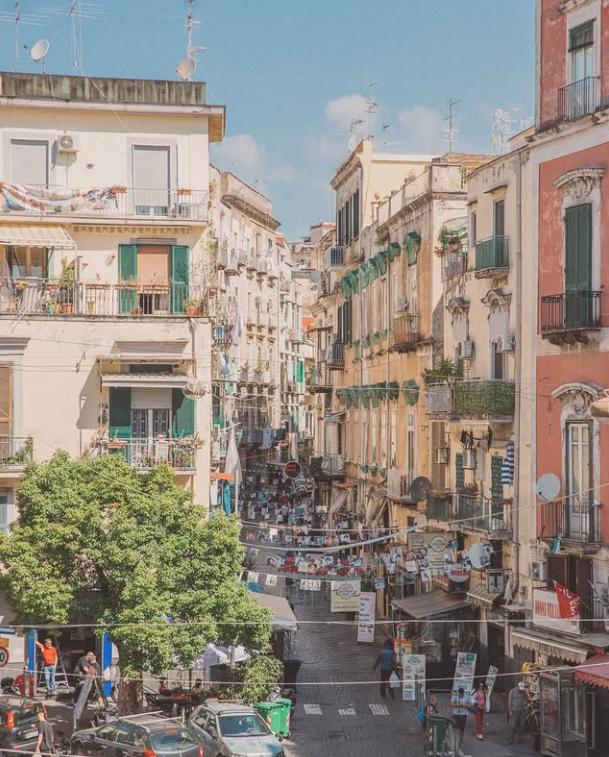
The neighbourhood of Rione Sanita
This time we were staying in a neighbourhood I had never been to or heard of.
Located north of the city, Rione Sanità was a burial place in Roman times, a pleasant 18th and 19th century garden suburb, as evidenced by the now crumbling Palazzi located there, and then, as the city expanded, a no-go area until relatively recently. It is now, after a resident-led clean-up campaign, one of the most enthralling and captivating spots in Naples. It’s also strategically well placed for exploring the city and its main sights, with the metro delivering you to the centre or the bay side in around 10 minutes, the wonderful Archaeological museum is just around the corner, and the via Toledo and via Tribunali, which intersect the Centro Storico, are less than a 20-minute walk away.
This is a working-class district bustling with real life. The old alleyways are alive with people, laundry hangs in colourful displays above your head, scooters whizz by constantly – this is an area where life is happening at speed and with passion. Tasty snacks and excellent wine are bought and eaten on the streets or in the pop-up Cantine, which dot the nearby via Vergini. The local speciality to eat on the go is pizza portafoglio, which is a folded pizza sold by many of the stalls and cafes on the streets.
It’s a neighbourhood rich in history, where glassmakers and shoe makers still live and work, an area where street art tells stories of the past and present, where poets and artists thrive. I found it absolutely fascinating, captivating and a great base for our time in Naples.
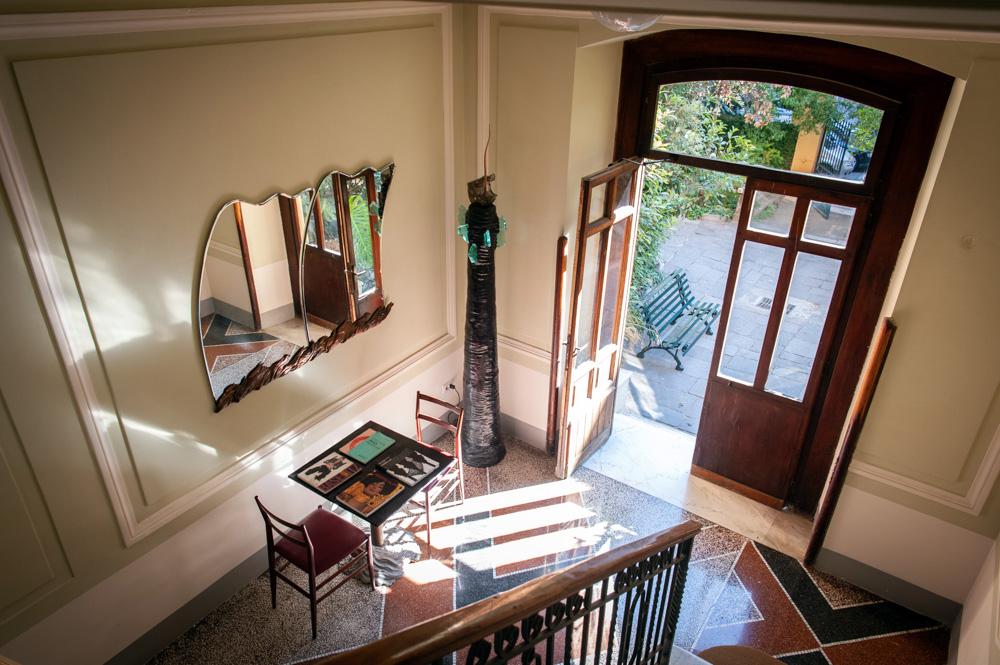
Image Courtesy of Rory Doyle
Atelier Inès Arts & Suites
Amazingly, in the middle of this noise and chaos, a large gate opens, and suddenly you are in a large, shady courtyard in front of a 16th-century palazzo. This is the home of Ines Sellami and Vincenzo Oste, both working artists, who are utterly charming and welcome us warmly. We quickly learn the history of the building, which was built in 1947 by Vincenzo’s grandfather. Then it was used mostly to store and sell wood, before becoming the art studio of Vincenzo’s father Annibale Oste, one of Naples’ most celebrated sculptors and designers.
Atelier Inès started its life in 2017 with the initial opening of 3 rooms, then over the years, 6 more, plus the art studio in the courtyard, which Vincenzo works in.
Atelier Inès is part museum, part boutique hotel, part working space – but so much more than the sum of its parts. It has a stylish, modern boutique feel to it, with all the wonderful objects and furniture in the building made by either Vincenzo or his father. The items, from furniture to napkin rings, are also on sale. It’s offbeat and very charming.
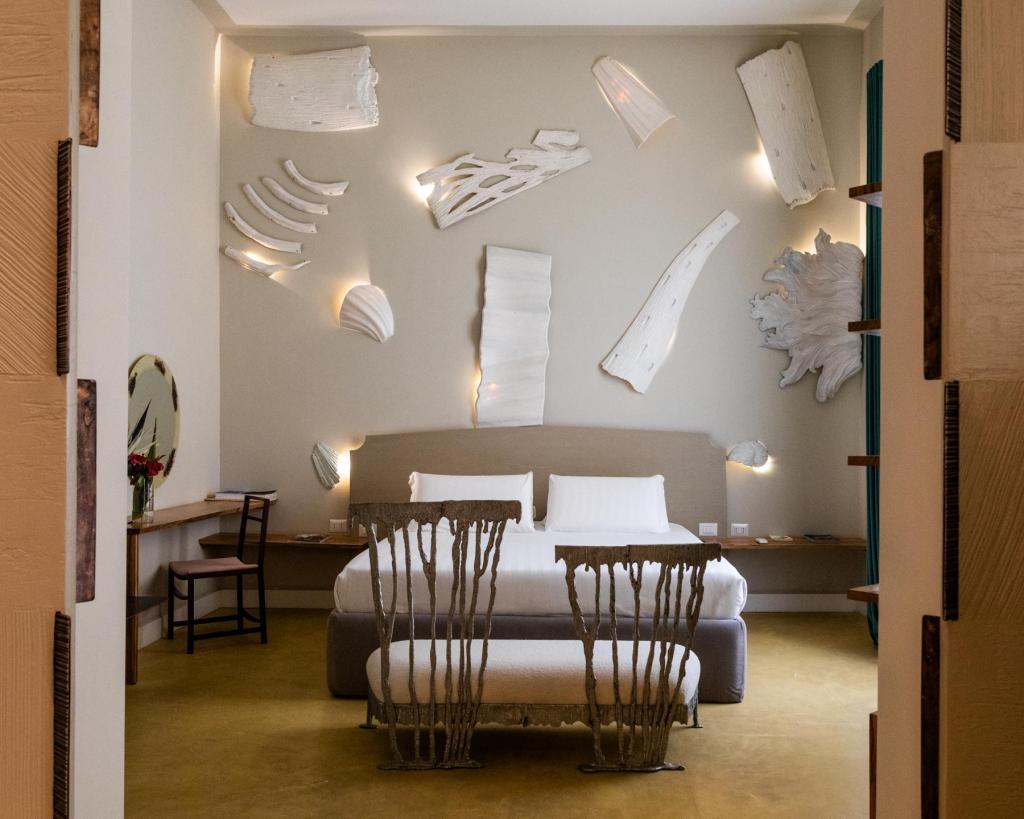
Image Courtesy of David Katzenstein
Our beautiful space
We stayed in one of the suites, Prototipi, which was large with high ceilings and a beautiful floor-to-ceiling set of doors which divided the living and sleeping areas. The large, white sculptures over the bed were carefully placed and appeared to come straight from the sea – a shell, a piece of wood, for instance. The piece of art in the bathroom was asymmetrical and vibrantly coloured, and it was also a practical, large cupboard with 4 spaces to place your toiletries.
The living area was light and airy with windows opening onto the garden area and a table and chairs. The bathroom was sumptuously large, bright and contemporary. There are no televisions in the rooms; you are here to relax. The overriding feeling was one of calm and quiet, which we enjoyed after a day in the hustle and bustle of the city.
The culinary experience
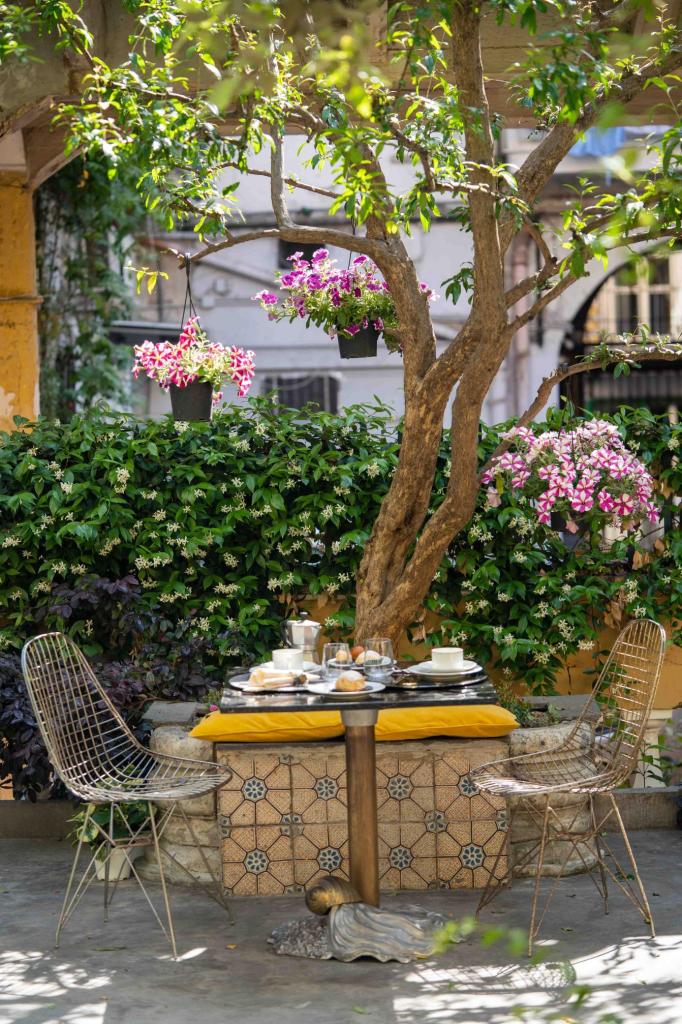
When the weather is good, breakfast is served in the garden, where the garden tables are white with swirls of colour on them, and the garden seat has remnants of old, local tiles on it and in the floor below. Breakfast is plentiful with freshly squeezed orange juice, pastries, homemade jams and cooked items made to order.
Atelier Inès does not have a restaurant, but given the number that are within 5 minutes’ walk away, it certainly is no hardship. Luckily for us, one of the best places to eat pizza in Naples was just around the corner, Concettina ai Tre Santi. The pizza was incredible, and we ate there twice in the few days we were in the city.
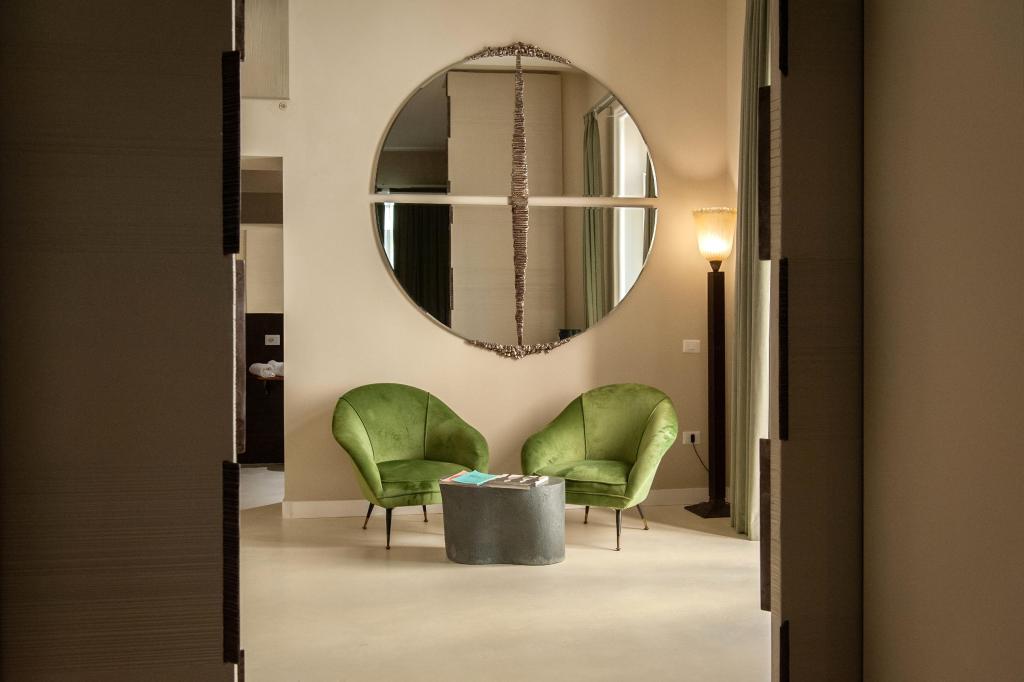
Image Courtesy of Rory Doyle
A beautiful home
Atelier Inès is about as far apart from the big hotel chains as you can imagine; it’s honestly like staying in someone’s home, surrounded by their own art collection. Ines and Vincenzo were incredibly kind and helpful, whether it was suggesting places to eat or shops to buy good-quality Parmesan from. We enjoyed every minute of our stay in this oasis of calmness. As for the neighbourhood of Rione Sanita, I wouldn’t want to stay anywhere else in Naples.
For more information, visit Atelier Inès
Ver esta publicación en Instagram
All Images Courtesy of Atelier Inès unless stated otherwise.