There are hotel bars, and there are bars which happen to be in hotels. The former are institutions – deeply upholstered, knowingly lit, confidently themselves. Places where drinks are not just served but staged, by teams which behave as though part of the same hive – precise, instinctive, quietly in sync. Avra Bar, at the prow of the Four Seasons Astir Palace, belongs to this rare breed. A salon of spirits, sometimes cheeky stories, and increasingly, vinyl.
Fifteen years ago, I came to this pine-cloaked peninsula for a cocktail competition of Homeric drama. Among the international hopefuls was a serene Slovak named Erik Lorincz – young, elegant, with Dracula-slicked hair and the slick movements of a man who could uncork a bottle underwater. He made an Aviation Sour of impossible grace: lemon-sharp, violette-perfumed, the colour of optimism in exile. It has lingered in my taste memory ever since to become the north star of cocktails.
Rebirth of a Riviera
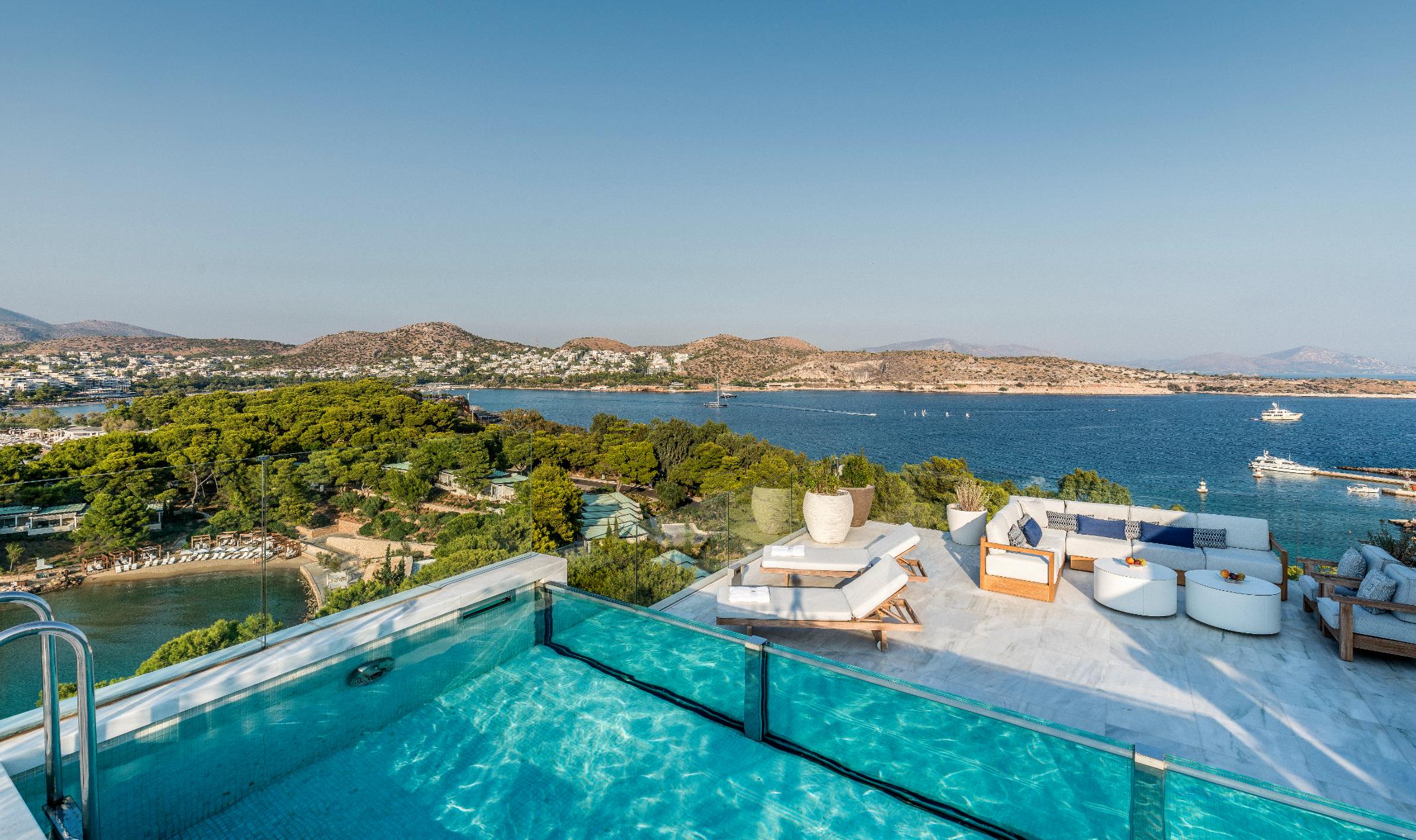
This spring, I returned. Not for nostalgia – which is memory dressed up as meaning – but to see what had risen from the peninsula’s dust. In 2019, the resort was resurrected at a cost exceeding €650 million. By 2023, it landed at 35th place in The World’s 50 Best Hotels. Two years later, it came fully under the command of Greek shipping magnate George Procopiou – a man who understands scale, ballast, and the theatrics of ownership. He has turned this Riviera finger into a fiefdom.
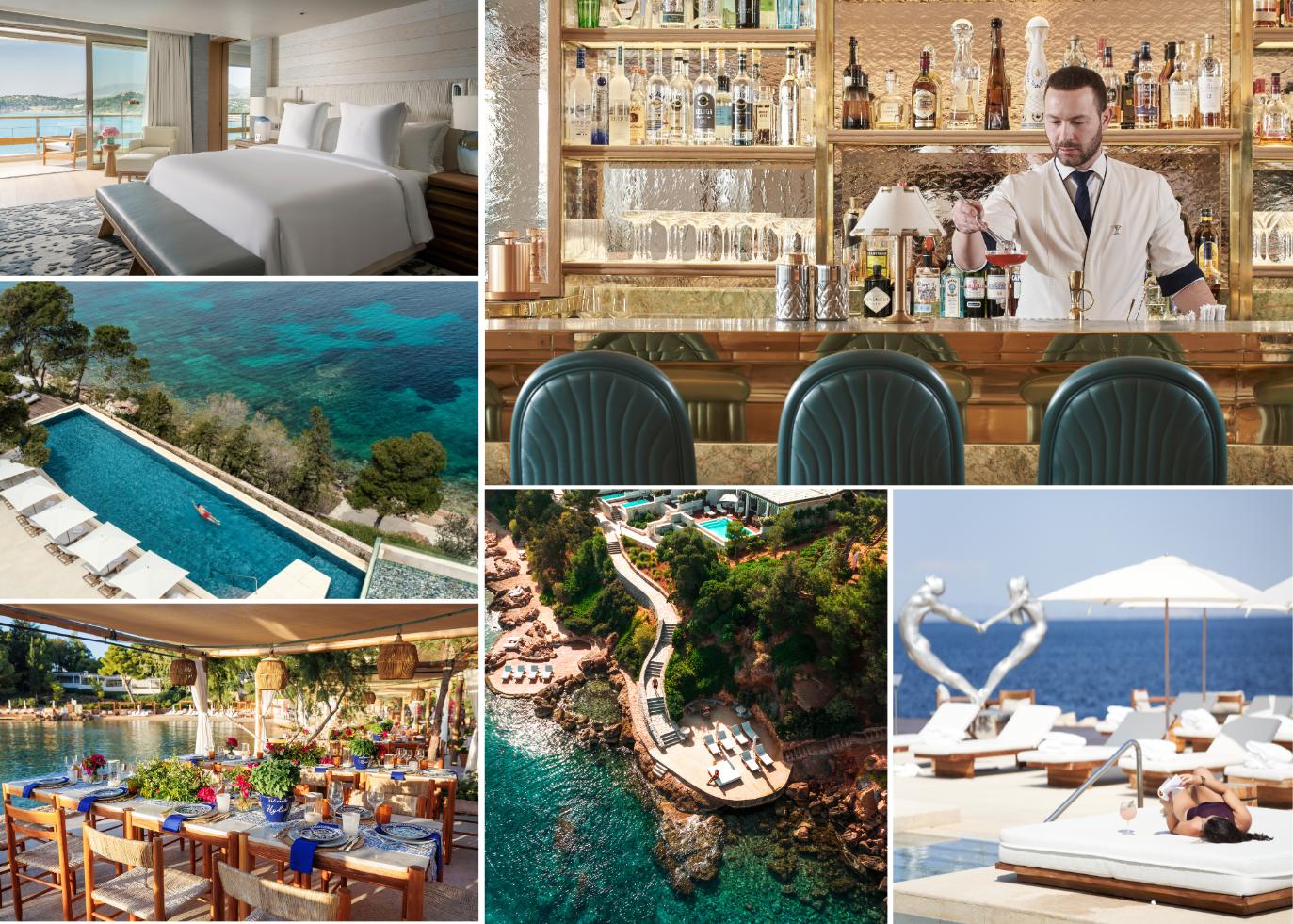
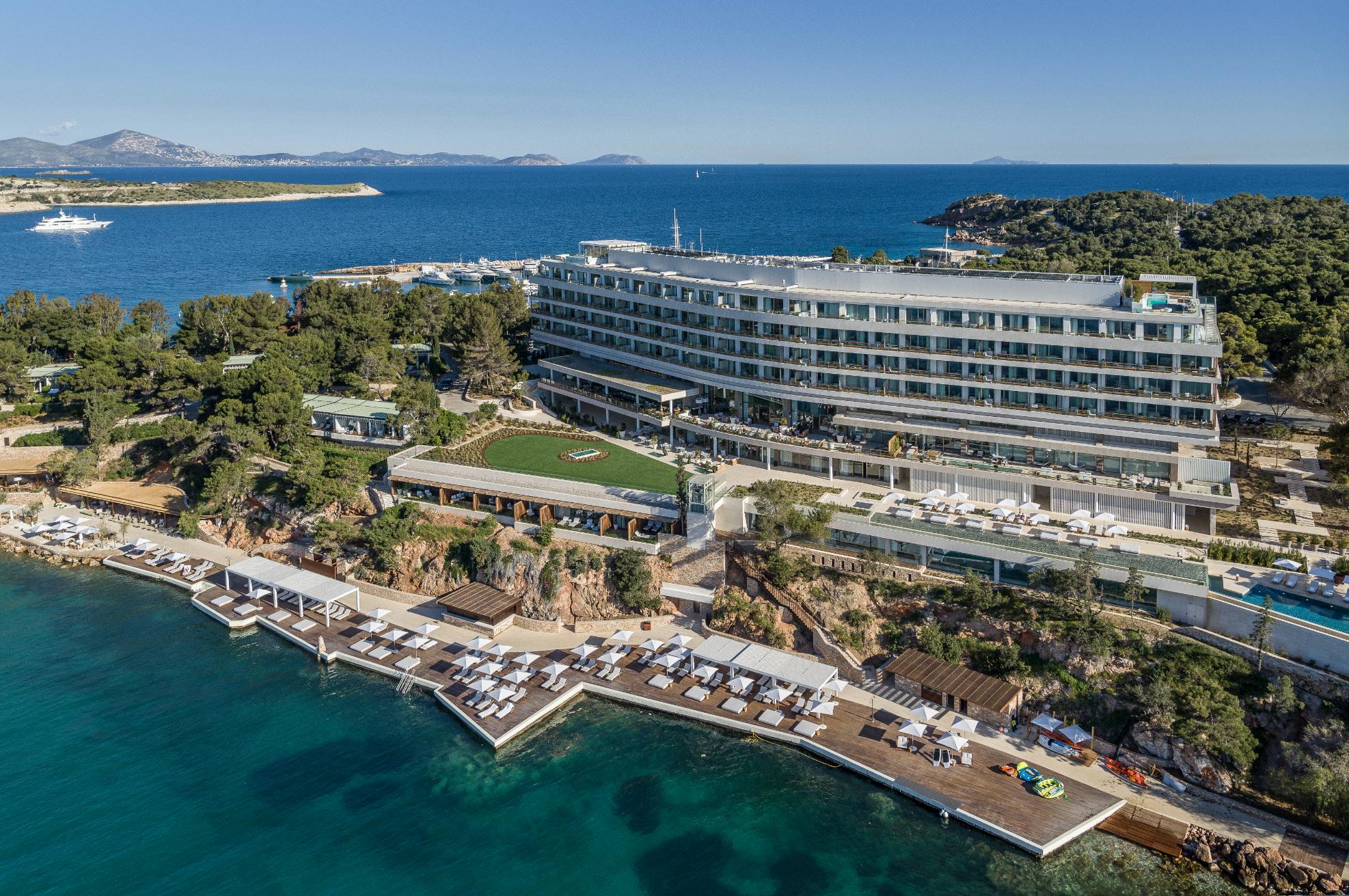
This is not so much a hotel, but a ship divided into three dominions. Reached by corridors which absorb sound like cashmere, the original, neat 1950’s Arion wing offers spa-scented serenity, an adults-only pool, and a yoga terrace. Nafsika, a ziggurat built into a mountainside in the 1970’s, is the social heart – noisy, glossy, saturated with energy – where families, even those whose offspring are Michelin-accustomed, tend to be deposited. A taco counter, a Margarita bar, a blue haze of cigar smoke, and the soundtrack of a beach club with better luggage. Not the place to drift off to the music of the sea unless the sea has recently taken up DJing. And then the Bungalows – secluded enclaves where the wealthy retreat to pretend they’re not being watched. Several have their own pools. Our preference.
The property occupies 74 acres and comprises 300 keys. Inside, terrazzo, brass, and furniture speak fluent Milanese. Vast mirrors conceal TVs which should stay off. Not so many artworks, just windows and the occasional reflexive poster of when the resort opened. The view, you see, is the hotel’s best performance.
Avra Reimagined
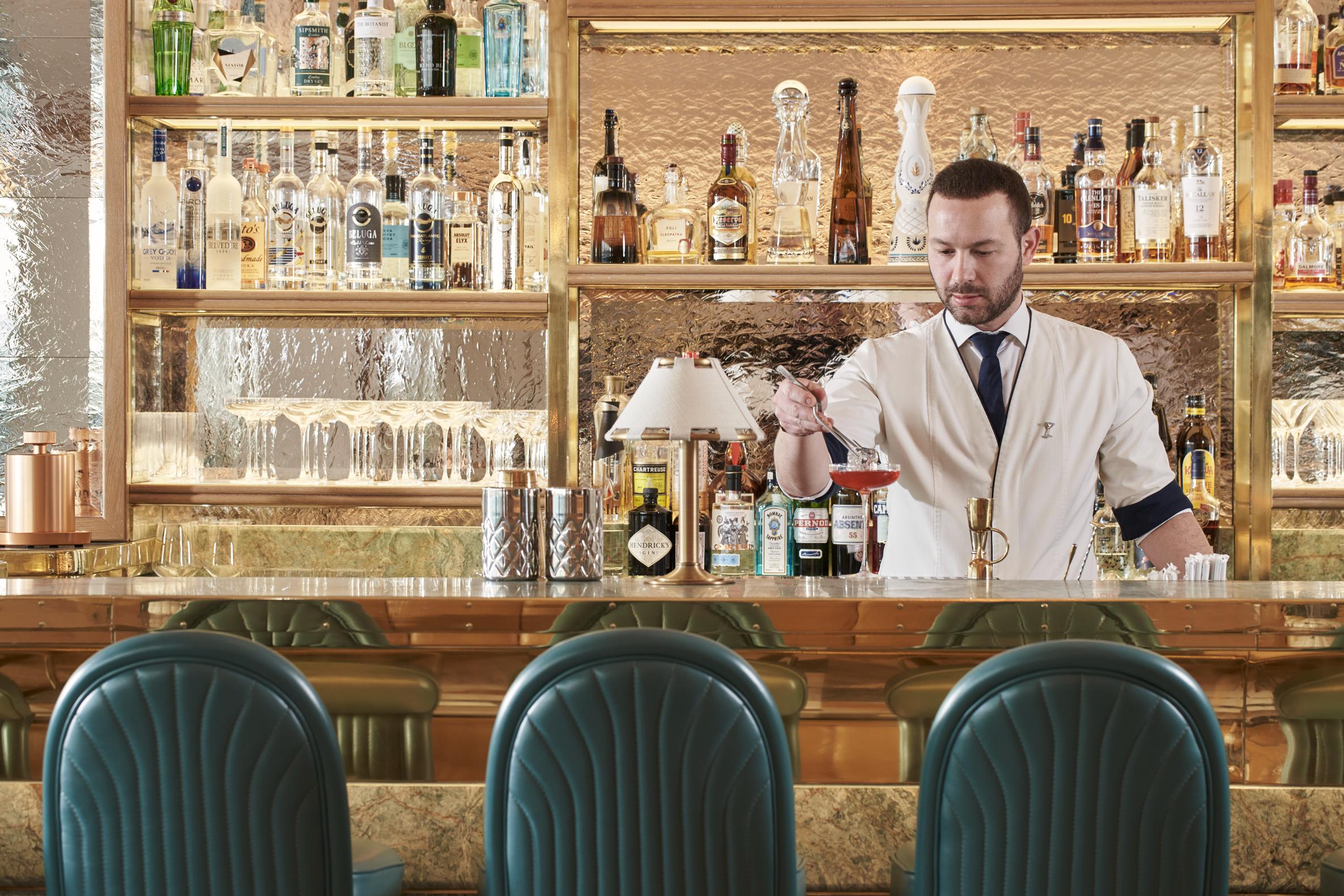
Avra, meanwhile, has changed the most. Once a lobby bar – an architectural pause between check-in and departure while luggage is wheeled from points – it has now come alive. Bar Manager, Manon Kapfer – Strasbourg-born, London-trained – has breathed perfume, provocation and narrative into the space. A gastronome who has visited 29 Michelin-starred establishments (and counting), she spent six years in London, learning from the mixology greats at The Connaught (where Lorincz worked when he won his award), Bar Termini, The Zetter Townhouse and 69 Colebrooke Row. She arrived in Athens to find a bar with no identity and gave it one which now draws locals, not just residents. ‘Hotels in Greece aren’t known for fun,’ she says. ‘That happens in the street bars. But I wanted Avra to become the neighbourhood bar.’
And it has. She introduced vinyl days and summer parties which migrate between pool and beach. The complex yet minimalist-looking drinks, born in her lab, are snappy, but the pricing deliberately softened – €14 or €15 apiece, not €30 – to remain within reach of those who don’t arrive by helicopter. Even the menu, printed on wood from old pallets and bound in recycled leather, is a statement. So are the coasters – their design echoing the chandeliers above. Nothing is random. Everything refracts.
An Aviation Shaken Bedside
That first evening, room service arrived unexpectedly on a mobile trolley steered by Avra’s crew and delivered an Aviation shaken bedside. A duet of silver shakers, chilled coupes, and a drink which wasn’t blue, but silvery. Like mercury. Or London before lunch. This, it turned out, was ideal. If an Aviation arrives too blue, it’s drowning in crème de violette and tastes like your aunt’s drawer liners. The best versions are grey – understated, poised, sour-souled. The colour of control.
It was created by Hugo Ensslin, bartender at Hotel Wallick, Times Square (it appears in Ensslin’s 1916 Recipes for Mixed Drinks). However, by 1930, émigré Harry Craddock, who swapped prohibition-time USA for elite London, had omitted crème de violette from the recipe in the almanac The Savoy Cocktail Book.
While some bartenders believe the ingrediental casualty stems from an inaccurate lifting of Ensslin’s recipe, others insist he did it on purpose. Indeed, the aromatic balance crème de violette brings to the otherwise subtly bracing sour can polarise, as Dale DeGroff attested at an event billed ‘Do Not Resuscitate’ when he remarked that the traditional Aviation ‘tastes like hand soap.’
But, for me, crème de violette brings identity. That the precious liqueur was scarcely in production for much of last century has ensured the original cocktail an elusive reputation.

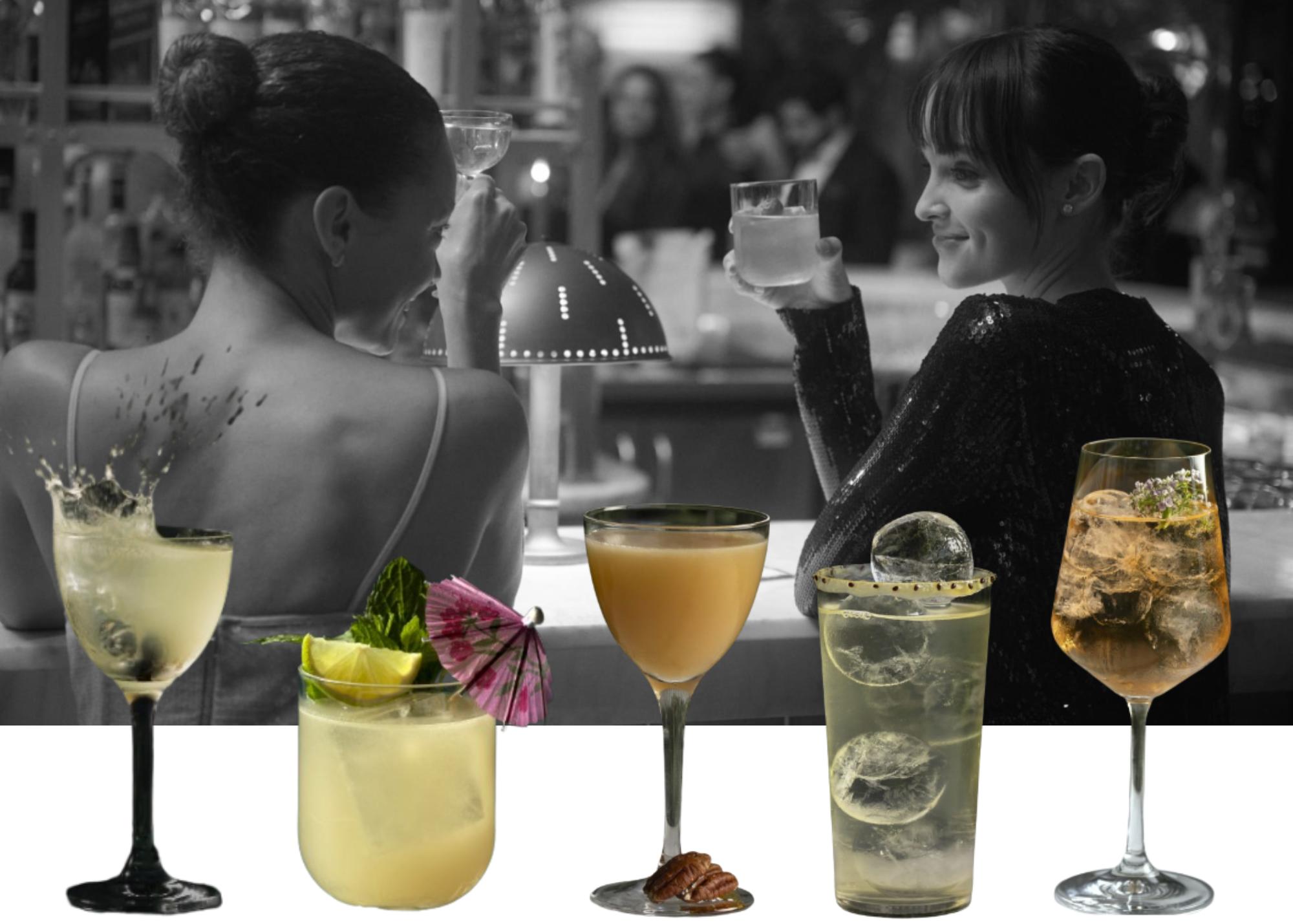
Kapfer’s current cocktail canon – Seasonal, Original, Sustainable – revolves around four local ingredients: orange, pine, pear, and dairy. Dairy defies definition, realised as a layered collision of clarified goat’s cheese, melon, vodka, and vermouth, while pine brushes up against toothpaste-scented digestive aid, mastiha, mezcal, and kiwi. There’s also the Classics Memoir – 24 cocktails, each with its own backstory, some cheekier than the Four Seasons Astir Palace marketing team might comfortably endorse, including a deft Hanky Panky and the raspberry-peppered Daisy N3, described on the menu as ‘fresh as a… Molly?’ The colophon notes, ‘This book is a work of feelings, aromas, flavours, and bartenders’ eavesdropping. Names, characters, places, and incidents are products of the authors’ memories.’ Naturally.
Manon is now exporting her formula – from Athens to Dubai to Geneva – advising operators on how to turn sterile lobby lounges into actual destinations by coaxing bar teams to make their ideas not just drinkable, but desirable, i.e. ‘get marketing on-board’. Her drinks, like good novels, are about memory more than ingredients.
Soft Serve and Rosé
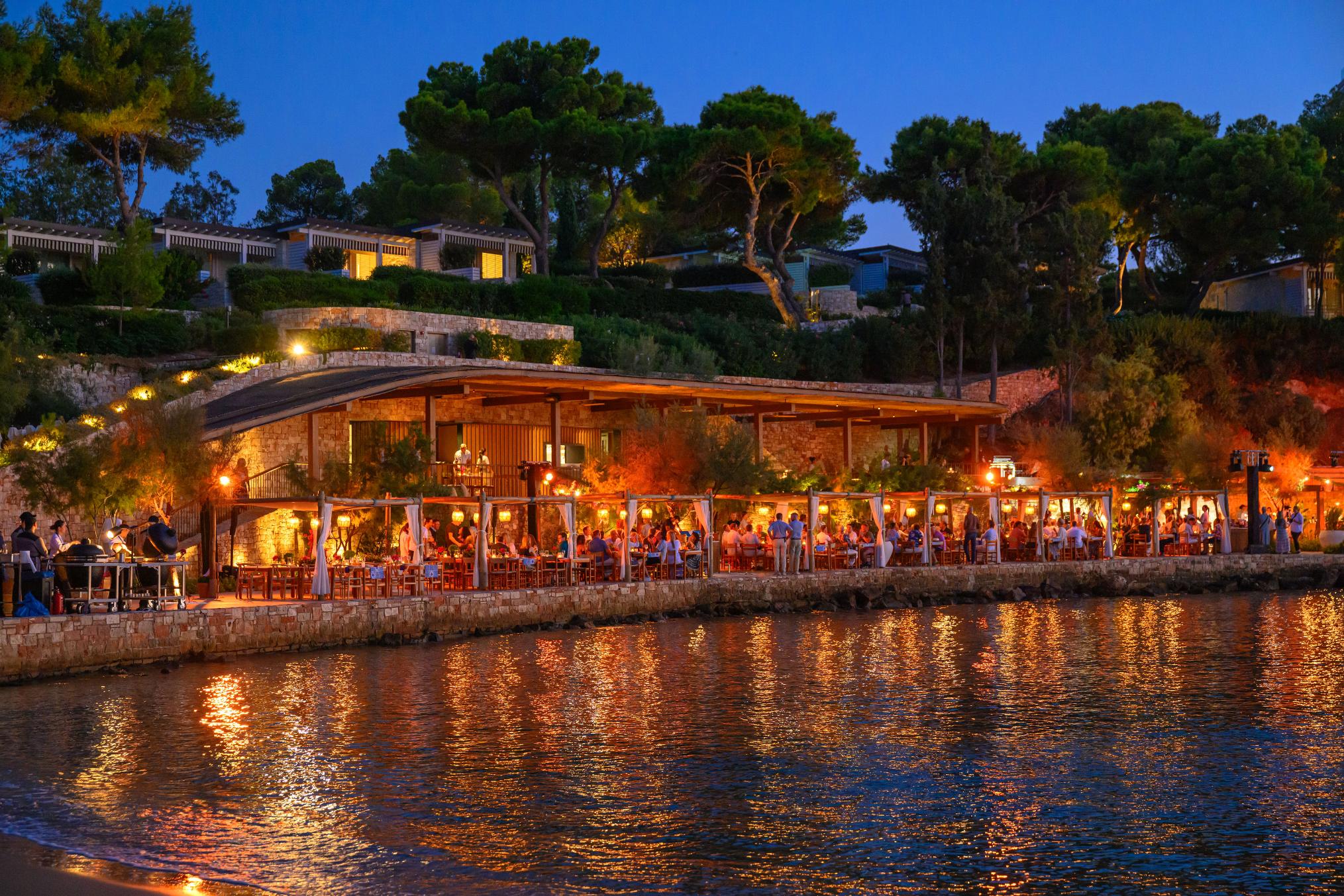
Food across the peninsula follows suit. Mercato’s brunch, again aimed at locals, now includes a kitchen tour where, after a polarising strawberry and chilli salad and roasts, guests are invited to dispense their own soft serve to the throb of curated beats. It is absurd and popular. Taverna 37 plays at Cycladic rusticity with bonito tartare, char-grilled cuttlefish, and rosé kept colder than an NDA.
Pelagos, the Michelin-starred enclave, is not always open. One must time it right or know someone. When available, it delivers a tasting menu – perhaps including dry-aged seabass and the unlikely bedfellows of rabbit and lobster brushed with sea urchin sauce – all precise, composed, and seemingly edited by a former ballet director. The view over the water is criminally seductive – framed, inevitably, by the hand of Martin Brudnizki, a designer so wired into hospitality it wouldn’t be surprising if he redesigned Waitrose next.
Filtering the Guests
And then there are the beaches. Raked, composed, lined with cabanas where I watched an influencer in close-fitting golden sequins direct her partner, propped on a pair of colossal Gucci trainers which looked like miniature replicas of the Mancini-designed Azimut yacht moored just offshore – to recline at the perfect angle to reflect the sun. Then they swapped roles. True love for likes. Alan Whicker wouldn’t have given them a second glance. Brigitte Bardot, Jackie Onassis, and Frank Sinatra once strolled these same sands, trailing cigarette smoke, scandal, and something resembling mystique – a far cry from ring lights, reels, and content strategy. Just beyond, nets perforate the shallows – not to keep things out but to let selected fish in. Lean, pretty ones, their painterly bodies flitting past the slower, heavier shadows below. It’s a visual metaphor for the hotel itself, where architecture and experience sort the guests as efficiently as any concierge. Each building, like each net, catches a different kind.
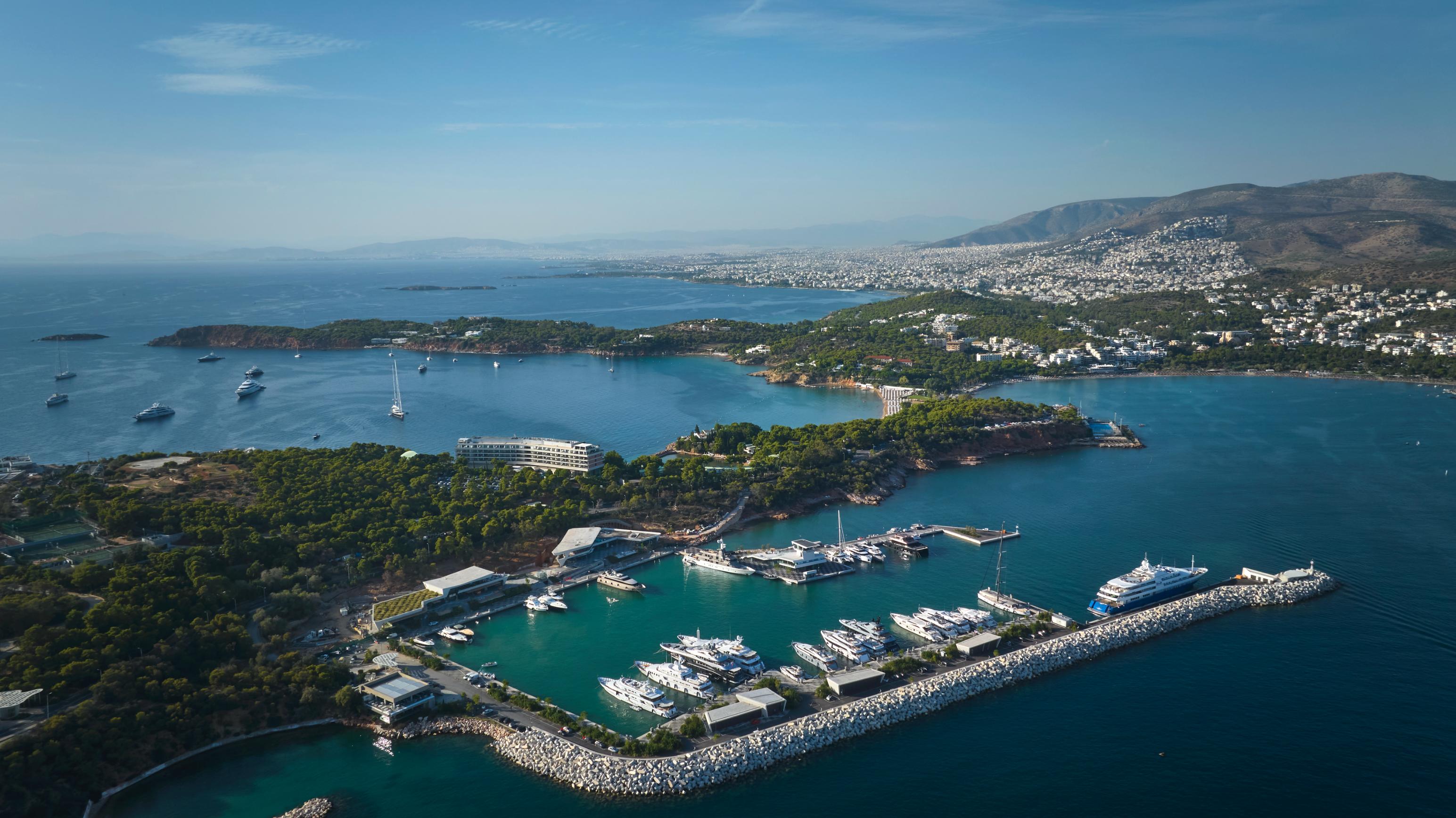
For those more sea-bound than shore-stuck, the nearby Astir Marina Vouliagmenis caters to visiting yachts up to 45 metres in length. The marina kept buoyant not only by superyachts but also by outlets of Gucci, Rolex, and – for swanky swim shorts – Orlebar Brown, completing the mise-en-sea.
A Departure, Almost
I didn’t leave Avra that night. I stayed. Slept in a room below the bar, where, sometime between 1 and 2 am, a man on a neighbouring balcony began to sing – beautifully, mournfully, and very much at the expense of my hangover-curing sleep. I woke to a low tide and a haute buffet breakfast which, regrettably, didn’t include Manon’s extraordinarily complex, allegedly ‘toxin-combatting’ Bloody Mary. And for a moment, I thought of Lorincz – his spectral cocktail, his slicked-back focus, the precision of his pour.
Astir, as ever, knows how to leave a lasting note – stirred, shaken, and unforgettable.
For more information, visit Four Season Athens
View this post on Instagram
All images courtesy of Four Seasons Astir Palace Athens.