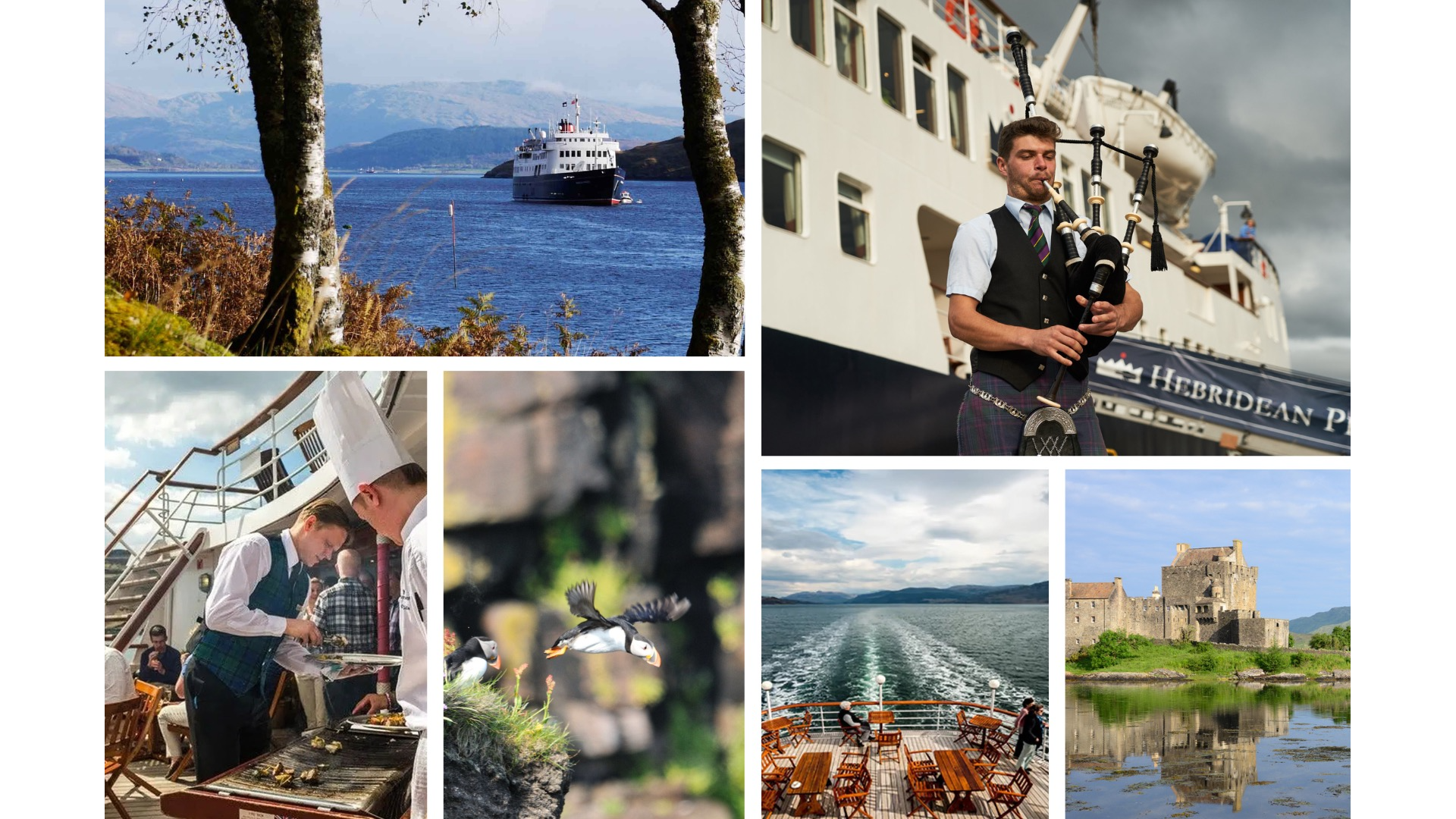
There are boutique cruises and then there is Hebridean Island Cruises. The epitome of a boutique cruise, where everything feels so personal and delivered with so much pride.
There is a real sense of departure as the Hebridean Princess leaves Oban. A bagpipe plays. The coastline holds for a while, familiar and close, until it doesn’t. On board, the atmosphere settles just as quickly. A glass of cold champagne appears, a quiet greeting in passing, and the pace adjusts without needing to be announced. Conversations soften. Movement slows.
It does not feel like a departure in the usual sense. There is no clear starting point, no moment staged to mark the beginning. You simply find yourself in it, already moving. As the shoreline fades, so does everything that felt tied to it. Routine, noise, the sense of urgency that usually follows you. What replaces it is something simpler: space, clarity, and a steady rhythm that asks very little of you.
This particular journey, departing in late May, follows a route through Islay, Mull, Iona, Skye and the Scottish Highlands, at a time of year when the coastline feels especially alive, with seabirds in constant motion and marine life often visible just beyond the ship.
Hebridean Island Cruises – Very fully inclusive
For over 35 years, Hebridean Island Cruises has done something quite simple, and increasingly rare: it has stayed small. There are only two ships, the Hebridean Princess and the Lord of the Highlands. Both carry fewer than 50 guests and are designed for routes that larger vessels cannot easily reach. That scale sets the tone early. The experience is truly all-inclusive. There are no hidden sneaky extras anywhere. This is honest all-inclusive cruising where everything is taken care of, including meals, drinks, shore excursions, port taxes, tips, and even transfers. This approach creates a sense of relaxation and a worry-free cruise.
A single route along Scotland’s west coast and the Hebrides, without any attempt to take everything in at once. In an industry that often leans towards expansion, the decision feels deliberate. There is more control, more consistency, and a level of attention that would be difficult to sustain at a larger size.
Journeys typically last between five and ten nights, long enough to settle into the rhythm without feeling extended. The routes follow a different logic. Rather than moving between major ports, the ship slips into smaller harbours, through narrow sea lochs, and out towards more remote anchorages.
Many of these places remain out of reach for larger vessels, and the difference is immediately apparent on arrival. You step ashore without crowds, without the infrastructure designed to absorb them. The places you visit feel intact, shaped by their own rhythm rather than adjusted around visitors. Movement changes as a result. You are not being transferred between destinations, but moving through them gradually, with enough time to notice what shifts.
The water deepens and softens in tone, occasionally broken by dolphins or the distant arc of seabirds cutting across the horizon. Weather moves in and out, sometimes within the same hour, becoming part of the experience rather than something to work around.
That continuity carries throughout. Days do not divide into clear segments of activity and pause. One part leads into the next, forming a single, connected experience shaped as much by where you are as by how you move through it.
The Hebridean Princess
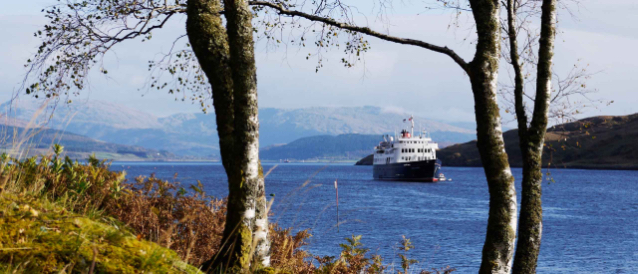
At the centre of it all is the Hebridean Princess, a ship entirely at ease within its own limits.
Small in scale, with just a handful of decks, including the open Boat Deck and the more sheltered Princess and Promenade levels, it never feels sprawling or difficult to navigate. Movement on board is simple, and spaces remain close enough to feel connected.
With a maximum of 48 guests and a crew that closely matches that number, the balance between attentiveness and space comes naturally. There is always someone nearby when needed, yet the atmosphere remains calm and unforced.
The ship itself is modest in scale, and deliberately so. It does not attempt to compete with larger vessels, nor does it need to. Its design leans towards something more residential, closer in character to a private house than a traditional cruise ship. Interiors are defined by polished wood, layered fabrics, and a palette that reflects the surroundings beyond the windows. Soft greys, greens, and warm neutrals sit comfortably within spaces that are well proportioned and quietly composed.
Nothing is oversized. Nothing feels exaggerated.
Seating is arranged with a clear sense of purpose. Some places draw your attention outward, towards the horizon. Others encourage conversation, or simply allow you to sit without distraction. You can be alone without feeling separate, or among others without any sense of uncomfortable formality.
The ship’s history adds another layer to its identity. Having been privately chartered by Queen Elizabeth II, it carries an association with discretion that sits naturally within the experience. It is not emphasised, but it lingers quietly in the background.
What becomes clear over time is that the Hebridean Princess is not trying to redefine cruising. It refines a particular version of it, one built around proximity, consistency, and a level of calm that is rarely prioritised elsewhere.
The Cabins
The cabins follow the same thinking.
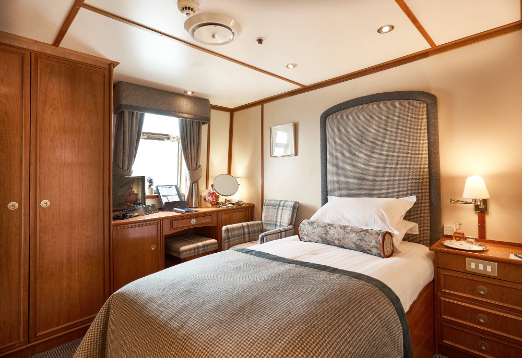
Names like Isle of Iona, Isle of Raasay, Kinloch Castle, and Loch Harport hint at what lies beyond the windows, each space individually designed and quietly distinct. The differences are subtle, but enough to give each cabin its own sense of character without disrupting the overall coherence of the ship.
They are also MUCH more spacious than expected. There is room to move comfortably, space to settle into, and a layout that separates practical elements from areas intended for rest. Lighting is handled with intent. Bathrooms are generous, with a standard closer to that of a well-appointed hotel than a typical ship cabin. Materials and finishes are considered without becoming decorative.
Taken together, it creates a space that feels settled rather than temporary, somewhere you return to rather than simply pass through.
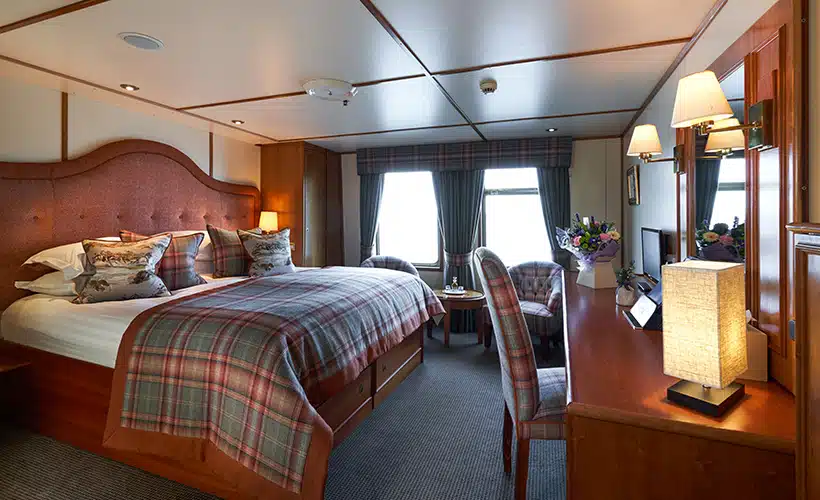
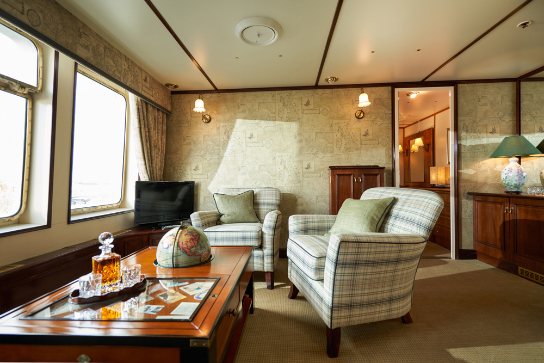
The Isle of Iona
The Isle of Iona, located on the Promenade Deck, captures this balance particularly well.
There is an immediate sense of warmth, created through material rather than decoration. Polished wood, soft fabrics, and layered textures come together in a way that feels cohesive without drawing attention to any single element.
A writing desk runs along the room, becoming a natural place to sit. Whether for reading, writing, or simply watching the view pass, it anchors the room in a quiet, practical way. Opposite, a deep armchair offers a second place to rest, allowing the space to shift with the rhythm of the day.
A slightly elevated bed, available in king or twin configuration, is framed with upholstered detailing. It is comfortable in a way that feels familiar, more in line with a well-considered hotel room than a ship cabin. The bathroom continues that same standard. A full bath, thermostatic shower, and generous counter space provide an extra layer of practical comfort that is typically not found at sea. Windows that actually open are a rarity and felt like our own little balcony. It becomes somewhere to sit and observe, particularly in the early morning or late evening.
After time ashore, often in shifting conditions, returning to a comforting space that remains constant becomes part of the rhythm of the journey.

Life On Board
Life on board follows its own pace, shaped more by rhythm than by schedule. Excursions are included but not compulsory. If you want to stay on the ship, that is absolutely fine. Even if you were the only ones on board, the team will look after you, make you lunch and make sure you are well taken care of. Life on board is really comfortable, and you can do as little or as much as you like. There is a well-equipped gym on board as well as the option to try some fishing or have a ride in the ship’s speedboat.
Mornings begin quietly as the ship adjusts position, noticeable in the changing view beyond the windows. Some step out onto the deck early, drawn by the air, the clarity of the surroundings, and the possibility of spotting seabirds or dolphins moving alongside the ship.
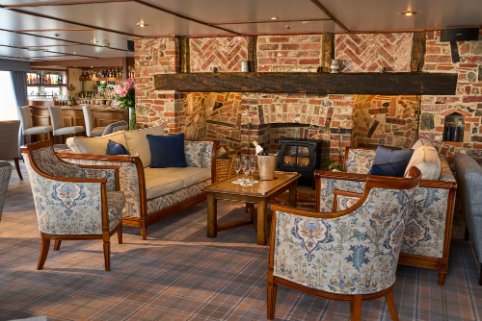
The ship’s public spaces support this without directing it. The Tiree Lounge acts as a central point, its bar and fireplace creating a space that feels social without becoming crowded. Seating is arranged in smaller groups, allowing conversations to form and fade naturally.
There is an ease to it. People drift between spaces, settle, move on, and return again without much thought.
The library offers a quieter alternative. More enclosed, with wood-panelled walls and a softer atmosphere, it provides a place to step away while remaining connected. Elsewhere, the Look Out Lounge and conservatory draw attention outward, reinforcing the sense of movement, and serving as a reminder of the picturesque nature of this journey.
Afternoons extend easily. Time passes between reading, conversation, and observation, without any pressure to fill it. While evenings introduce a gentle shift.
Drinks are served, we gather gradually, and the atmosphere becomes more defined while remaining relaxed. Familiarity develops quickly and conversations carry across days, and the space begins to feel shared rather than temporary. Talking of familiarity, many of the other guests on our cruise were repeat visitors, some even joining the same cruise as before. Hebridean Cruises has a VERY loyal fan base, and it is easy to see why.

Hospitality
The warmth of hospitality is one of the most consistent elements of the experience, and one of the least visible. With a crew-to-guest ratio close to one to one, attentiveness is immediate. Preferences are remembered early, routines noted, and details handled before they need to be mentioned. The team are experienced, and some have been on board for 20-plus years. A testament to their commitment to excellence. Leading this cruise was Chief Purser Ajit More, a seasoned professional who embodies passion, dedication, hospitality and kindness in every way.
What stands out is how naturally this is delivered. There is no sense of performance, no formality that creates distance. Interactions are warm, direct, and easy. Names are learned quickly. Drinks appear at the right moment. Cocktails are remembered. Small adjustments are made quietly, often without acknowledgement. This consistency carries across the entire ship. Whether in the lounge, the restaurant, or on deck, the tone remains the same.
Over time, it becomes one of the defining aspects of the journey, not because it draws attention, but because nothing interrupts it.
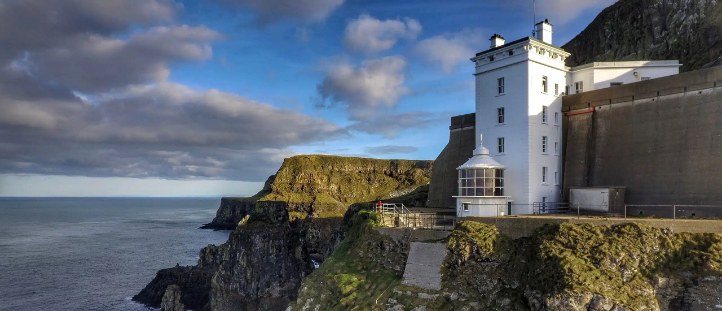
A Different Kind of Access
One of the most noticeable differences lies in where the ship can go.
Its size allows access to smaller and more remote destinations that remain out of reach for larger vessels. This changes the experience of arrival entirely.
You step into places that feel undisturbed, where the presence of visitors has not reshaped the environment. There is a sense of entering somewhere as it is, rather than somewhere prepared. Excursions follow the same approach. Groups remain small, and the pace is measured. Guided walks and local visits replace larger tours, allowing for a more direct and intimate experience of each place.
On board guides and guest speakers provide context when needed, adding depth without directing the experience too heavily. The result is a slower form of exploration, one that builds gradually rather than presenting everything at once.
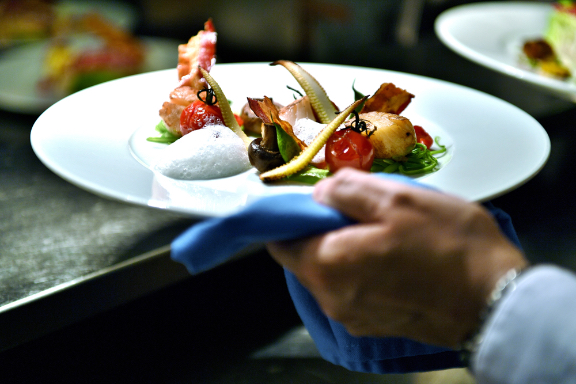
Dining
Dining is one of the most considered parts of the experience, both in execution and in how it fits into the day.
Meals are served in the Columba Restaurant, where large windows keep you connected to the surroundings. Menus are shaped by region and season. Seafood features prominently, often reflecting the waters you are travelling through, while meats and produce are sourced locally where possible.
Breakfast is unhurried, with a very thoughtful buffet. Options range from porridge and eggs to potato scones, fresh fruit, and other familiar choices, all prepared to a consistent standard. Look out for a daily breakfast special too from house-made pancakes to Eggs Benedict. Lunch shifts with the day. Dishes might include locally caught fish, followed by a traditional dessert such as sticky toffee pudding and a well-considered cheese selection.

What becomes clear is that dining is treated with care throughout. Ingredients are handled thoughtfully, and the menu remains responsive rather than fixed.
Afternoon tea in the bar introduces a natural pause, anchoring the day without imposing structure.
Dinner is the focal point. Served in a single sitting, it unfolds over several courses, allowing time for both the food and the setting to develop. Dishes range from familiar classics to more seasonal offerings, with mains such as duck breast, grilled turbot, or mushroom gnocchi. Gala night dinners were so elegant with multi-course experiences. Our favourite dishes included lobster, a parma ham monkfish fillet and the best haggis we have ever had. The final evening featured a gala menu which was a real celebration of Scotland.
The cooking leans towards clarity. Flavours remain distinct, ingredients are given space, and presentation is measured rather than decorative. In between the truly delicate courses, it can be easy to forget that you are in fact at sea.
Wine, Whisky and Drinks
The drinks offering follows the same approach.
Wines are selected to complement the menu, while the whisky selection reflects the regions being explored. This becomes more meaningful when visits ashore include local distilleries, creating a natural connection between place and what is poured on board. Wines are carefully selected to match the food and they are REALLY excellent. We really enjoyed the pre-dinner rituals. Everyone gathers in the bar pre-dinner for cocktails and canapés.
Everything is included, which shifts how it is experienced. There is no sense of transaction, no need to consider each choice. Drinks become part of the day, appearing quietly and at the right moment. Champagne is included at all times and generously poured. The bar team can mix anything you like and there is a strong focus on whiskies with over 100 types available. This is Scotland after all and the whiskies on board as well as the other spirits, are locally sourced. We enjoyed ice cold Martinis made with Hebridean gin and a range of whiskies with a drop of water.
The Itinerary
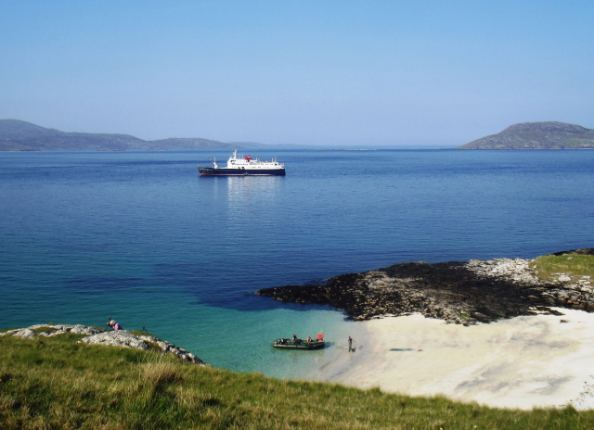
This particular journey, departing in late May, followed a route through Islay, Rathlin Island, Northern Ireland, the Isle of Man, and back along Scotland’s west coast. It is a landscape shaped as much by wildlife as by history, where seabird colonies, wetlands, and coastal ecosystems define each stage of the journey.
Each day ashore offers a different way of experiencing that environment, from exposed Atlantic shorelines to sheltered loughs rich in birdlife, with the route unfolding gradually, each place distinct yet connected to what came before. We were joined onboard by two expert guides, Richard and Mhorag. Richard specialised in bird watching, keeping everyone abreast of the wildlife. Mhorag truly showcased the best of Scotland through her passion and knowledge of Scotland’s natural beauty and extensive history.
Day 1 – Oban
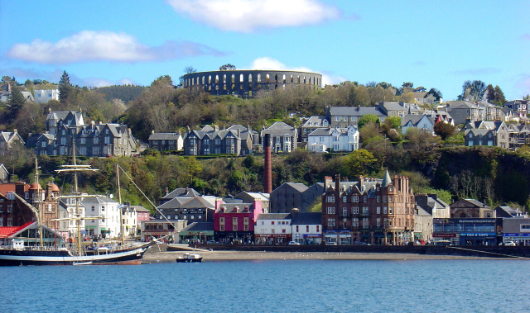
We leave Oban with the sound of bagpipes ringing and a glass of Champagne in hand, the harbour slipping behind us as the town gives way to open water. Known as the “Gateway to the Isles,” it sits between sea and mountains, its bay still watched over by Dunollie Castle. As the ship eases outward, the outline of the town recedes gradually. Gannets begin to follow, folding into the wind before dropping cleanly into the water, and the rhythm shifts almost without notice.
Day 2 – Isle of Islay
By the next morning, the horizon has widened. Islay feels exposed, shaped by the Atlantic, its coastline stretching low and uninterrupted. Once the seat of the Lords of the Isles, it now carries a different identity, defined as much by wildlife as by its distilleries.
At Loch Gruinart, the landscape opens into wetlands alive with movement. Wading birds cross the shallows, barnacle geese gather in shifting groups, and from deep within the grass, the corncrake calls, unseen but unmistakable. It becomes less about searching for a single sighting and more about learning how to look, as the detail of the landscape begins to emerge.
We visited a distillery! Bruichladdich was so educational with such a sense of history and place. A guided walk through the reserve offers the clearest way to experience this–with time to pause and observe the subtle movement that defines the area.
Day 3 – Rathlin Island
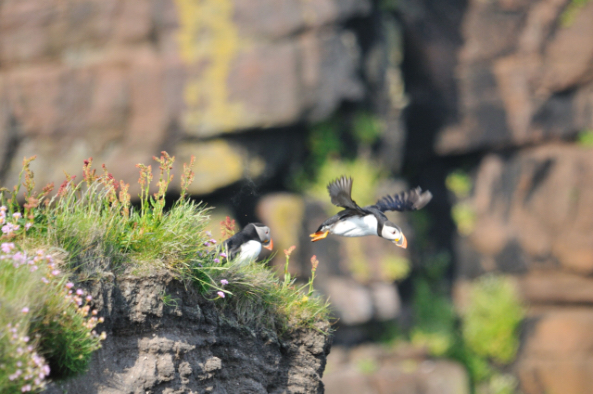
Rathlin appears gradually, six miles off the Northern Irish coast, but its presence is felt long before arrival. The cliffs begin to animate, first sparsely, then in overwhelming number.
At the West Light Seabird Centre, the scale becomes clear. This is Northern Ireland’s largest seabird colony. Thousands of birds layer the rock face, circling, diving, settling. Puffins cut low across the water, while guillemots and razorbills cluster tightly along the ledges.
Standing there, the wind carries everything at once: sound, movement, distance. Until it becomes less something you observe, and more something you are part of.
Time at the seabird centre, particularly along the cliff paths, brings you closest to this movement, offering uninterrupted views across the colony and out to sea.
Day 4 – Bangor, Strangford Lough & Portaferry
Entering Strangford Lough, the shift is immediate. The open sea gives way to sheltered water, and the landscape draws inward. Beneath the surface lies one of the richest marine ecosystems in Europe, while above it, birdlife moves in hypnotising, continuous patterns.
At Castle Espie, wetlands stretch along the shoreline, animated by flocks that rise and turn in unison. Later, at Mount Stewart, the environment becomes more composed, as formal gardens and carefully structured landscapes offer contrast to the rawness of previous days.
By the time we reach Portaferry, at the narrow entrance to the lough, the day feels unbroken. Here, the water funnels through the Narrows, one of the fastest tidal flows in the British Isles, creating a subtle tension beneath the surface.
A visit to Castle Espie provides one of the most immediate encounters with birdlife, while Mount Stewart offers a slower, more considered way to experience the landscape.
Day 5 – Isle of Man (Peel & Castletown)
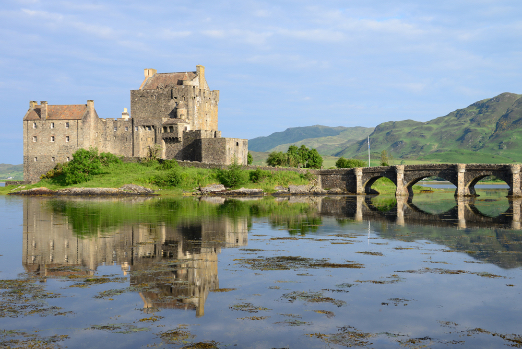
Peel arrives with light and space. Facing west, its coastline is defined by long horizons and shifting colour, earning its name “Sunset City.” Peel Castle stands on St Patrick’s Isle, its Viking origins still evident against the sea.
At the Scarlett Peninsula, the landscape becomes more elemental, with exposed rock formations, coastal paths edged with early wildflowers, and seabirds moving steadily along the cliffs. It is a place shaped by geology but experienced through its openness and clarity.
In Castletown, history takes a more defined form. Castle Rushen anchors the town, its thick stone walls and towers still intact, offering a direct connection to the island’s medieval past. This is such a wonderful town and the ice cream shops are a must.
Exploring the coastal paths around the Scarlett Peninsula offers the most immediate sense of the island’s natural character, while Castletown provides a deeper historical perspective.
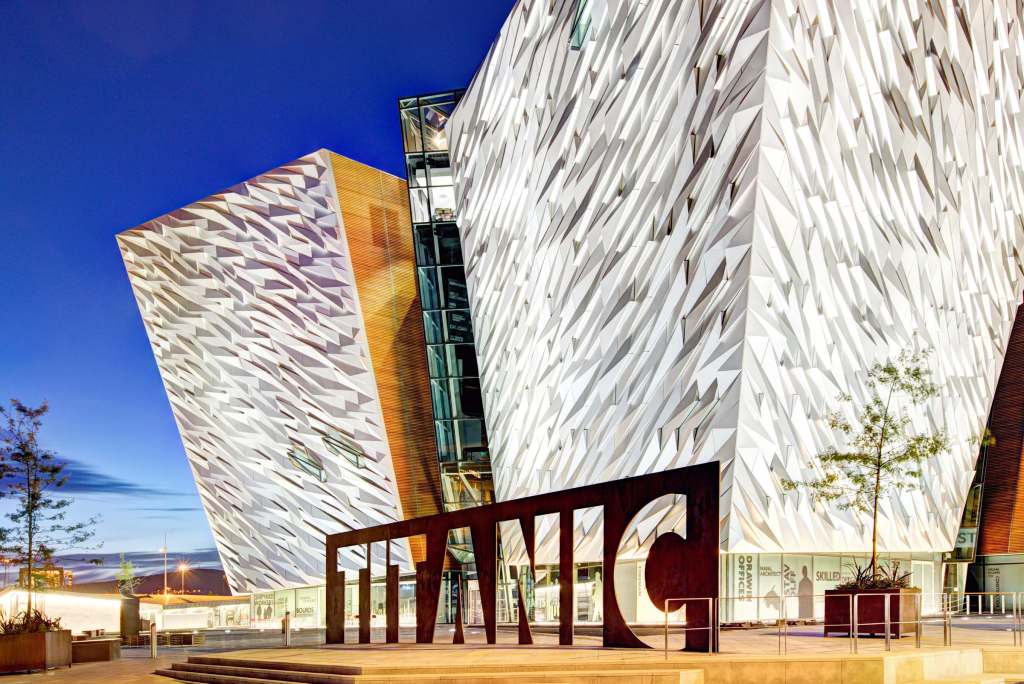
Image courtesy of Titanic Belfast.
Day 6 – Belfast & Lough Neagh
Belfast introduces a different scale, shaped not by nature alone but by industry and history. Once a small settlement known as Béal Feirste, it grew into a major shipbuilding centre, most famously as the birthplace of the Titanic. A visit to Titanic Belfast is a must. This immersive attraction on the very slipways where the world’s most famous ship was built brings the city’s maritime heritage vividly to life. Blending heritage influences with a contemporary edge, Titanic Belfast Curates…Northern Threads showcases the designers shaping the future of Northern Ireland fashion while exploring the region’s rich textile history and its lasting influence today. Running daily from 1 May–30 September 2026.
Yet just beyond the city, at Oxford Island on Lough Neagh, is the largest freshwater lake in the British Isles and the atmosphere returns to stillness. Reedbeds stretch into open water, birdlife moves quietly across the surface, and the pace settles again, restoring the slower rhythm that defines the journey. Here, attention shifts back to detail, to movement, light, and the subtle presence of wildlife.
Day 7 – Tayvallich & the Slate Islands
By the time we reach Tayvallich, the landscape feels enclosed and settled. The village sits at the head of a small inlet on Loch Sween, arranged around a sheltered horseshoe bay and bordered by dense woodland.
There is little to direct you here. Walking follows the shape of the shoreline, guided more by the surroundings than by intention.
Later, passing through the Slate Islands and the Sound of Luing, the coastline narrows. Seals rest along the rocks, slipping into the water as we pass, while seabirds continue their steady movement overhead.
Time ashore is best spent walking along the shoreline, allowing the landscape to dictate the pace, before rejoining the ship for the final stretch through the islands.
Day 8 – Return to Oban
Oban returns gradually, almost unexpectedly. The same harbour, the same skyline, though it feels more distant now than it did at the start. Disembarkation comes gently. There is no sharp ending to this beautiful journey, only a quiet return to something more structured, with the landscapes and wildlife of the past days still lingering.

Final Thoughts
What defines the Hebridean Princess is not a single feature, but a consistency of approach. Everything is designed to work together, from the scale of the ship to the structure of the journey. The result is an experience that feels steady, measured, and continuous.
Over the course of the journey, that consistency becomes the defining quality. The pace holds. The atmosphere remains calm. Each element supports the next without interruption. It is a quieter form of luxury; one built on precision and attention rather than excess.
And in that, it offers something increasingly rare. A way of travelling that leaves space not just to see these places, but to register them, and to notice the movement of wildlife, the shifts in landscape, and the gradual way each place gives way to the next.
Looking ahead to 2027
2027 prices for the Hebridean Princess start from £2,023 per person for a four-night cruise round-trip from Greenock departing 1 or 5 March, or from £3,536 per person for a seven-night cruise round-trip from Greenock departing 9th March. Price includes all meals and drinks, shore excursions, guides and guest speakers, use of bicycles, gratuities, WiFi, private coach transfers between the local airport or train station and the ship or secure parking at the port.
Hebridean Island Cruises has launched the 2027 collection of voyages for its 38-guest ship, Lord of the Highlands, featuring signature journeys through the intricate waterways of the Caledonian Canal and the Great Glen and the Highlands and islands of Scotland, a selection of theme cruises and four brand new itineraries.
The 2027 programme, which embodies slow travel at its finest, features 23 itineraries of six- or seven-night durations between April and October. Lord of the Highlands will spend the 2027 season navigating the calm scenic waters of the Caledonian Canal and exploring the idyllic Inner Hebrides, offering a rare way to explore the Highlands at an unhurried pace.
To discover more, visit Hebridean Island Cruises
View this post on Instagram
All Images Courtesy of Hebridean Island Cruises unless otherwise stated.