
When the doors swung open at Club 2.0, the eagerly awaited one-night event curated by DJ Fat Tony in collaboration with Ray-Ban Meta— the party scene was expected to change. For decades, club culture has wrestled with a complex relationship with smartphones: indispensable for creating memories, yet often blamed for putting a dampener on the atmosphere. Now, with more than half of UK clubbers admitting to using their phones on the dancefloor and agreeing that screens detract from the experience, in Club 2.0, phones remained pocketed while the night was captured through stylish Ray-Ban Meta glasses instead.

A Gallery Transforms into a Dancefloor
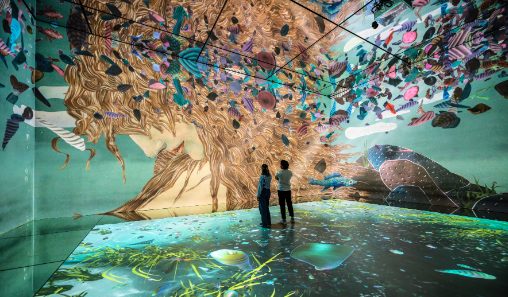
On Saturday, 29 November 2025, London’s FRAMELESS Lates turned its Blank Canvas gallery into a vibrant, immersive Ibiza-sunset setting. For one night only, the venue transformed into a club—complete with a carefully curated soundscape, art, lights, and a soundtrack by DJ Fat Tony. Guests were invited not just to listen and dance, but to immerse themselves in clubbing as a sensory art form, blending nostalgia for Ibiza’s golden era with a visionary outlook for the future.
The ambience was meticulously designed: ambient visuals evoking long summer nights on the island, moody lighting, and a soundtrack that celebrated decades of dancefloor history. For many, the experience felt like stepping into a cherished memory, infused with hope for the future of nightlife.
From Phone-Bans to Embracing Technology
Fat Tony, renowned for his no-phone policy at his gigs for nearly eight years, has often highlighted how smartphones disrupt the energy of a club. “They completely spoil the atmosphere and music,” he has remarked, dismissing the idea of guests swiping or filming during performances.
However, for Club 2.0, he adopted a fresh perspective: perhaps the right technology could reclaim what phones had disrupted. Enter the Ray-Ban Meta Gen 2 Glasses. Sleek and stylish, reminiscent of the classic Ray-Ban aesthetic yet infused with Meta’s cutting-edge wearable technology, these glasses offer high-definition photo and video capture, AI-powered assistance, hands-free communication, and even live translation.
The aim: to allow clubbers to preserve memories—the music, the movement, the people—without the obstruction of a screen. “Clubbing is all about energy and connection to the music,” Fat Tony explained. “Screens pull us away from the moment. Wearable tech like the Ray-Ban Meta Gen 2 glasses gives people the freedom to experience the night while keeping the memories alive. That’s the future of nightlife.”
What Guests Truly Experienced
Attendees at Club 2.0 navigated the evening under a simple guideline: phones were to be kept on aeroplane mode and tucked away. Instead, those wishing to capture or share the night did so through the Meta glasses, which recorded the environment hands-free. The experience extended beyond the dancefloor; every visitor had full access to the immersive art galleries at FRAMELESS, along with the specially crafted Ibiza sunset scene in Blank Canvas.
For those fortunate enough to secure a spot at one of the two live DJ sets (at 7:40 pm and 8:30 pm), the evening offered a unique blend of intimate performance and experimental nightlife. Others could still revel in the sunset-inspired atmosphere, accompanied by a playlist curated by Fat Tony and Ray-Ban Meta.
Beyond music and ambience, the event made a statement—clubbing need not choose between memory and presence. One could fully engage with the beat and energy, while still taking home something more enduring than a blurry phone video.

The Significance for the Future of Nightlife
The shift towards wearable capture technology could signify a pivotal moment for club culture. Historically, smartphones have created a tension: enabling the documentation of experiences while simultaneously pulling individuals out of them. This tension has been particularly pronounced in nightlife, where the allure lies in immersion rather than framing moments for social media.
With Club 2.0, Ray-Ban Meta and Fat Tony didn’t merely attempt to ban phones again; they offered an alternative that honours both human presence and memory. Early coverage of the event suggests that many attendees found this balance refreshing. As one write-up summarised: “phones are officially killing the vibe—… next-gen specs… help people reconnect with the music, the moment, and each other.”
In a broader sense, this could herald a growing trend in nightlife and events: curated, immersive, tech-enabled experiences that prioritise attendance over documentation, presence over posts. As digital saturation increases, perhaps nights like Club 2.0 will emerge as beacons for change—a hopeful blend of analogue energy and digital memory.

Club 2.0: More Than Just a Party — A Vision
Club 2.0 was not merely a thematic event; it was a vision for what clubbing could evolve into—a space where the beauty of shared energy and sonic connection is preserved and celebrated through technology that empowers rather than distracts.
For DJ Fat Tony, for Ray-Ban Meta, and for everyone who stepped into Blank Canvas that November night, the message was unequivocal: the future of nightlife need not be defined by screen-lit isolation. It can revolve around presence, unity, and captured memories that don’t break the enchantment of the night.
As the rave lights dimmed and the final echoes of the Ibiza sunset soundtrack faded away, Club 2.0 left behind more than a memory—it left a possibility.