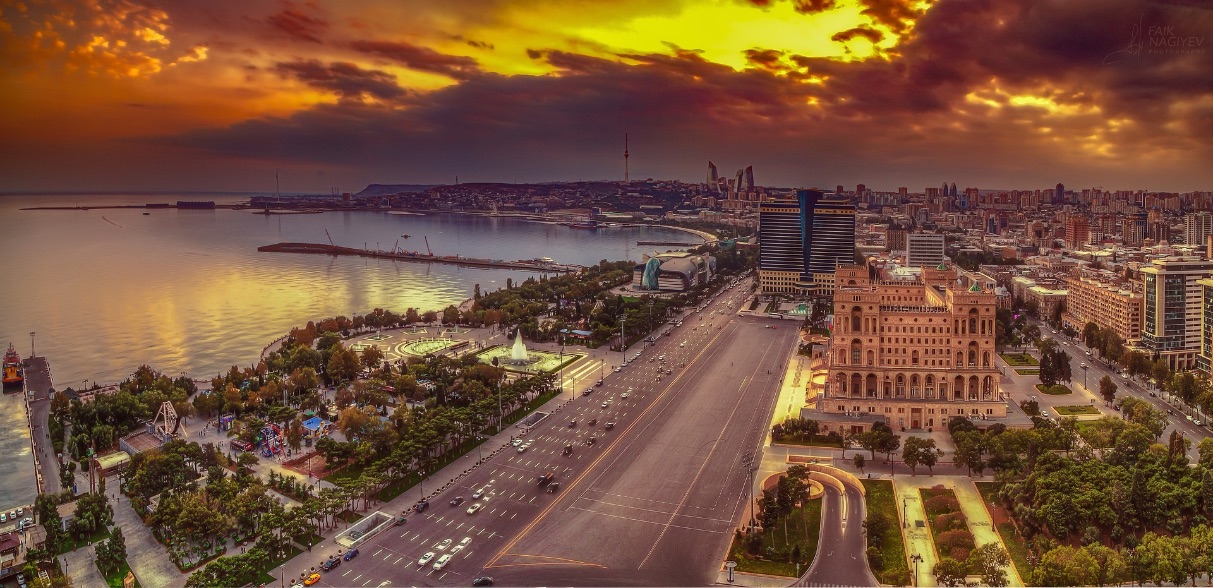
Long ago, I used to think that travel was all about snapping the right photos – and checking off the boxes of what Google recommended were the top places to visit. After returning, I’d invariably show off my pictures to friends and on social media, but soon enough, the memories merely became long-faded images in my head. What remained, however, were my conversations with locals. With that realisation, I made it a point to put as much emphasis on what I visit, and do as much as I could to learn from people. My trips, as a result, became more meaningful. One recent example was my trip to Azerbaijan.
Sandwiched between Iran and Russia, Azerbaijan is around the size of South Carolina. It has many Western-type attractions – like Americanized restaurants, modern architecture, coffee chains, malls, and so on. But it also has an ancient character and culture all its own, as it is after all a region that has been lived in for many thousands of years. (And yes, it is perfectly safe to visit, despite their neighbour countries).
Upon first arrival, a few Azerbaijan locals randomly asked me if I was a British businessman – which was admittedly a bizarre way to start a conversation. I was told that my hat (a souvenir from London), my button down shirt (because my wife told me I had to look presentable), combined with me rolling around my Bentley Tracker bag, made me, a Canadian journalist, appear like an upper-class Brit! Interestingly, those impromptu conversations unexpectedly led me to further exchanges with locals, finding out about how the Azerbaijanis live, work, and incredibly, how much acceptance they have for the dozens of ethnicities that live as their neighbours. It also made me realise that interaction with various nationalities is one of the key benefits of travel. It helps to broaden horizons and break down barriers. It allows us to develop a deeper understanding and appreciation of different cultures, and helps foster relationships based on mutual respect and understanding.
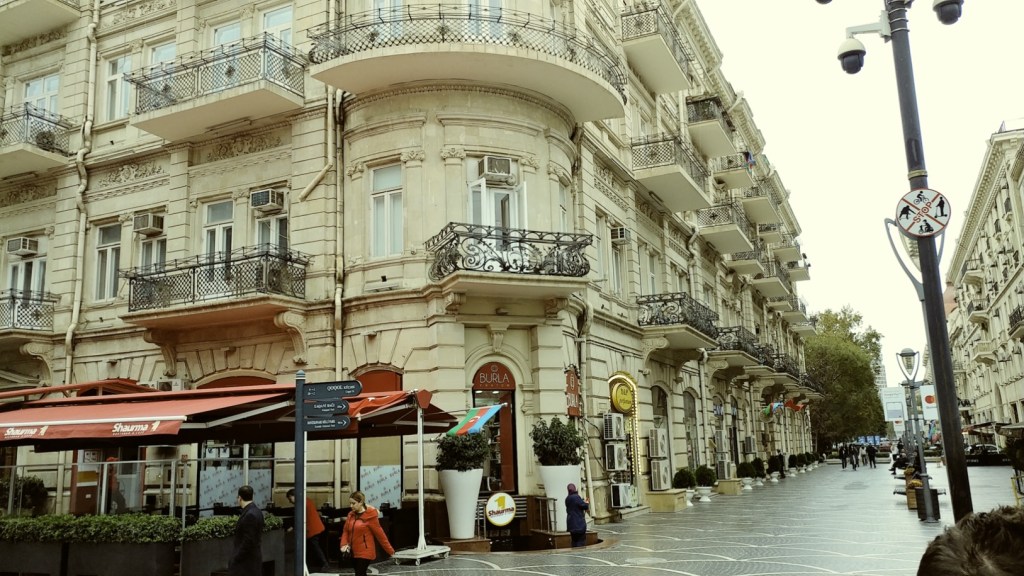
Of course, you also want to tour, and there are many reasons to start the visit with Baku, the capital of Azerbaijan! There’s much to explore amongst the city’s rich history, vendors, museums, monuments, and natural wonders. Lonely Planet describes it as “the architectural love child of Paris and Dubai.” For a country that has a population of just ten million, it’s impressive that it normally gets almost two million tourists each year.
One popular itinerary includes visits to the Gobustan Rock Art Cultural Landscape, Maiden Tower, Flame Towers, and Mud Volcanoes.
About an hour’s drive from Baku, the Gobustan Rock Art Cultural Landscape’s attraction is its ancient rock carvings and petroglyphs, which archaeologists say date back ten thousand years. The area is also home to the famous mud volcanoes — natural wonders that spew out a mixture of water and mud, creating unusual landscapes and geological formations.
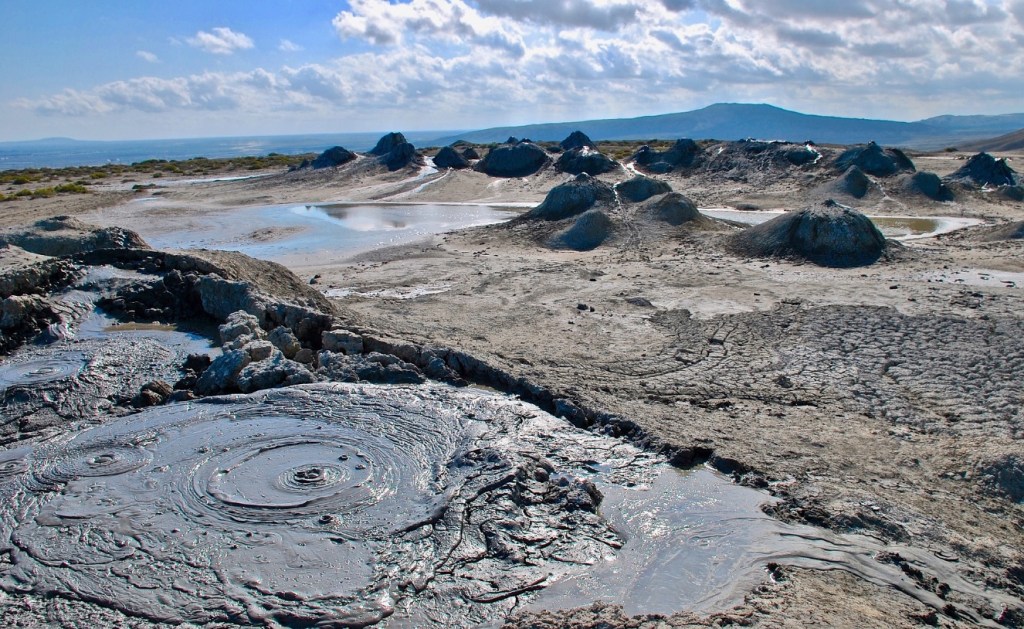
This natural phenomenon is found only in a few places around the world and is caused by underground gases and minerals pushing up mud to the surface. Visitors can walk around the mud volcanoes and even take a mud bath, which is said to have therapeutic properties.
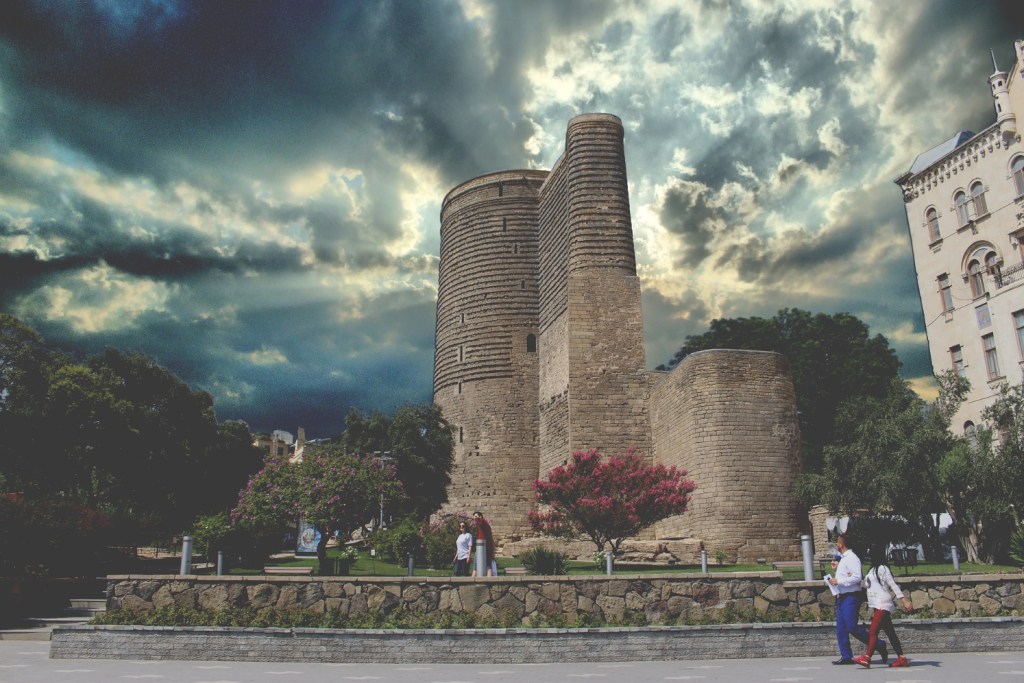
After exploring Gobustan, head back to Baku to visit the Maiden Tower, a historical landmark that dates back to the 12th century. The tower is an iconic symbol of Baku, and has been well-preserved over the centuries. Visitors can climb to the top of the tower to take in panoramic views of the city and the Caspian Sea.
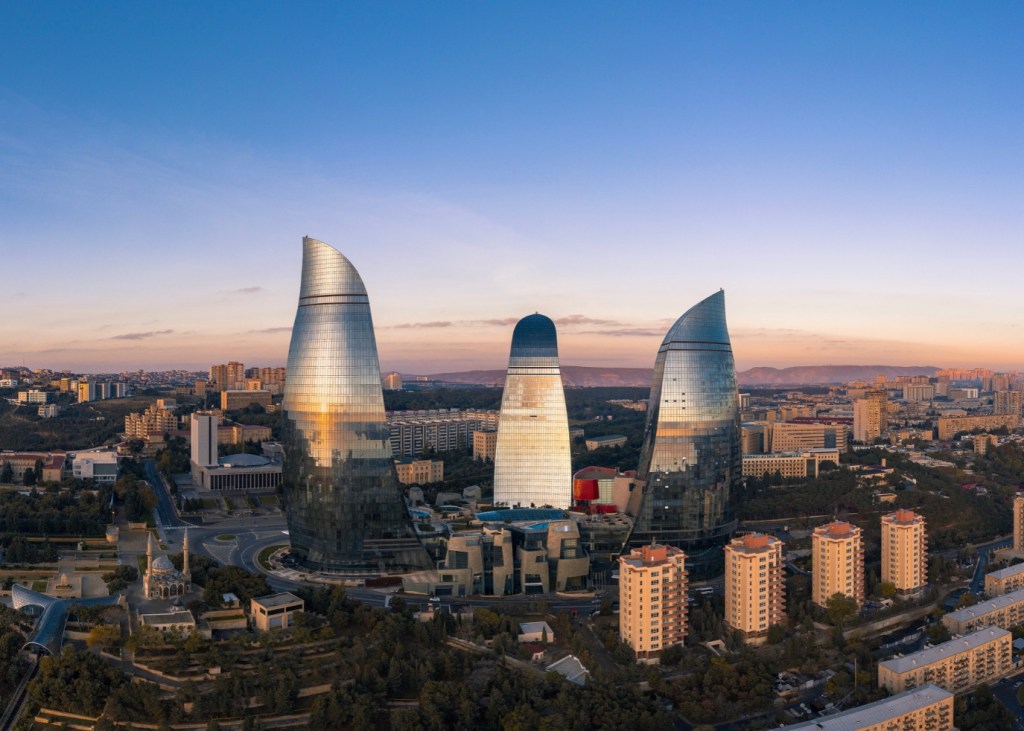
Next are the Flame Towers, a modern architectural marvel that dominates the Baku skyline. These three towering structures are designed to resemble flames and are covered in LED screens that display vibrant, colourful images. Visitors can admire the Flame Towers from afar or take a closer look by visiting the observation deck on the 29th floor.
Speaking of flames, the Yanar Dag fires have a “cool factor”: it’s a hillside with several small fireballs coming out of it, burning naturally off the oil seeping through the rock pores. It’s quite the site, and my tour guide said that it has been uninterrupted for five thousand years, and will only burn out when the oil reserves deep inside the ground run dry.
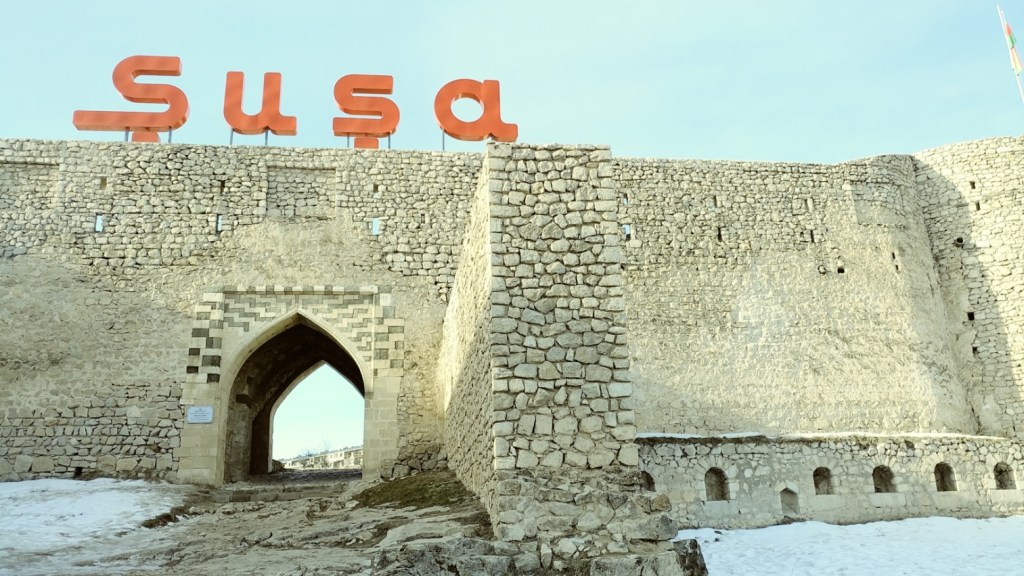
A few hours out of Baku, in the Karabakh area, there’s a gorgeous walled fortress which was the entrance to Old Shusha, dubbed Ganja Gate, a popular trading route for its time. As told by my guide, Shusha is the New Persian word for “glass”, called such because when the Iranian ruler Agha Muhammed Khan Qajar saw the area, he thought it had splendour like shiny glass. Shusha has an altitude of 1,400-1,800 metres, and was a mountain resort in the Soviet era. The city was founded by Panah Ali Khan, in the 1750s. It was at one point considered to be the cradle of Azerbaijani culture, music and poetry. Mugham, a local musical tradition, originates here, as do Sileh rugs. Last May, the city hosted its annual music festival.
Visitors can, and should, treat themselves to traditional Azerbaijani cuisine at local restaurants. Like Saj, a dish served on a sizzling platter on the flame, that includes seasoned lamb, and beef, with assorted veggies. Shah Plov, meanwhile, is basmati rice with apricots, plums, raisins and chestnuts. And Dushboreh is a dumpling stuffed with ground meat, seasoned with herbs and sauce. Just a few examples of the exquisite and must-try cuisine of the Caucasus region.
Beyond the tourist sites, I discovered things that elicited my empathy for the Azerbaijani people. One example – which the Western news media seemed to not pay much attention to – was on Feb. 25, 1992, when a tragedy befell the Azerbaijanis, in the city of Khojaly. According to Azerbaijanis, Armenian armed units, assisted by the former Soviet Army, killed some six hundred civilians. It reminded me how much work we all need to do to make the world a better place, and something that’s even now more in my heart. (It should be noted, that there hasn’t been a military conflict in very many years, and when there was, it was a five hour drive away from Baku. Again, it’s a safe country to visit.)
I know that Baku’s not typically on people’s radar as a destination, but two million tourists a year can’t be wrong. I learned about the area’s fascinating history going back millennia and enjoyed finding out how diverse the country is. Whether you’re a history buff, an architecture enthusiast, or a nature lover, there is something for everyone to enjoy in Azerbaijan.
To discover more, visit: azerbaijan.travel
View this post on Instagram
All imagery courtesy of Dave Gordon.