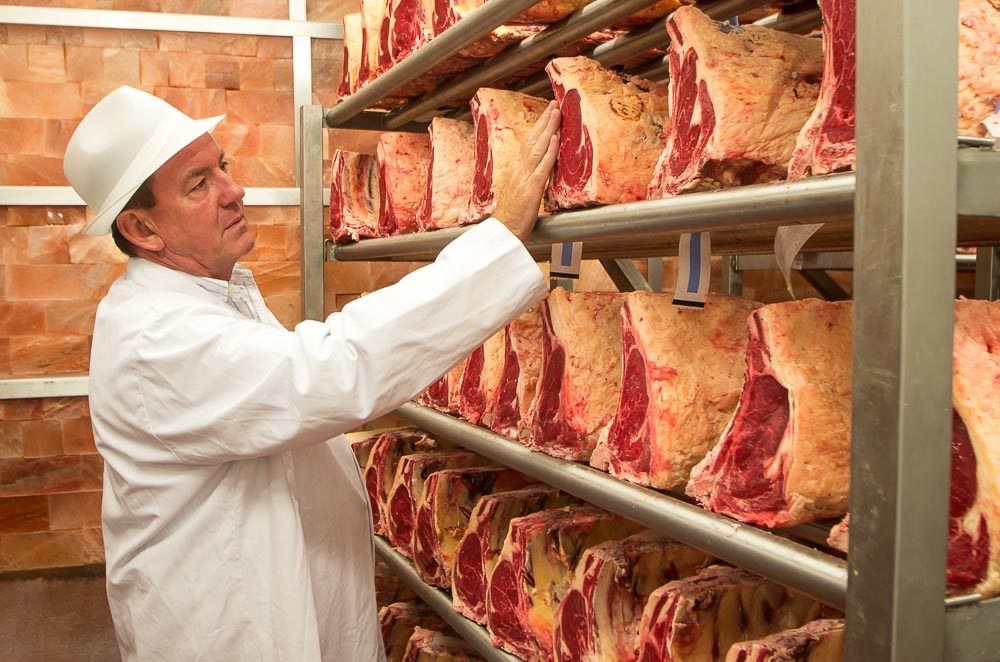
Located in the heart of London’s historic square mile, 1 Lombard Street hosted a wine pairing evening with Peter Hannan, master of beef. A 200-million-year-old mineral might not be the first thing that comes to mind while feasting on a juicy côte de bouef. Yet, this tender steak owes its delicate flavour to the Himalayan salt chamber in which it was dry-aged.
Peter Hannan talks about his salt ageing process, which has enabled him to produce among the finest meat in the country. He supplies to restaurants in the UK such as 1 Lombard Street as well as throughout Europe. With over 40 years in the trade, Hannan is passionate about meat. What he doesn’t know about meat is not worth knowing.
Himalayan Salt Chambers
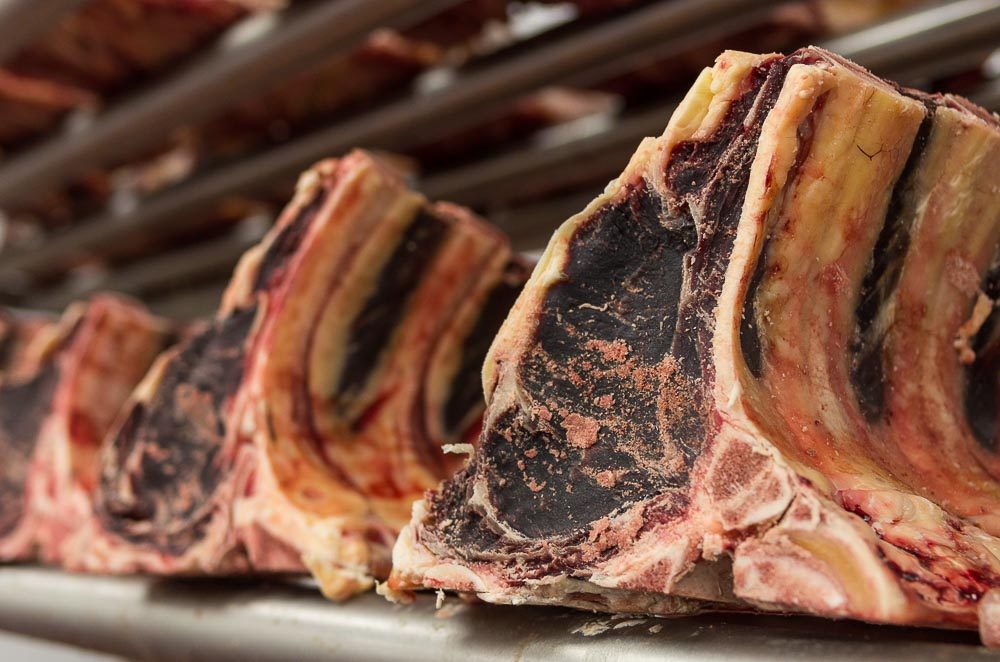
Hannan explains how he came to use this distinctive salt with its pink hue as part of the ageing method. The concept of using salt came to him soon after he bought a meat curing company. It took him seven years to develop a way of ageing the meat that ‘concentrates the flavour, while displacing the moisture’. There are many challenges in taking what is an inconsistent raw material and then maturing it to improve its flavour to a consistent high standard. If the conditions inside the chamber are not met, the meat will deteriorate, and bacteria will soon begin to rot the meat.
Having tried using many different varieties of salts, Hannan chose Himalayan, which at 98.7% is one of the purest. The salt chambers create the perfect atmosphere for maturing meat. They also inhibit the bacteria that decomposes meat. To demonstrate this, the oldest cut of meat has been inside the chamber since 1st April 2015!
Meat Producers in partnership
Hannan explains that the chamber is not a magic box; it will only work if you place inside meat of the highest quality. To do this, Hannan has cultivated a partnership with seventy producers in Northern Ireland. These farmers are among the best on the island of Ireland. Hannan uses Glenarm Shorthorn beef. The breed originated in Durham in the 18th century. The farmers breed the cattle to Hannan’s exact specification. This includes ensuring that the cattle graze on clover-based grass. Knowing about the welfare of the animals allow consumers to make informed decisions. Where is the meat sourced and is it sourced ethically? These are questions that consumers are increasingly asking.

Hannan Meat: The taste test
Tonight’s menu is created by head Chef, James Holden, and Hannan. We first enjoy Hannan’s salt-aged, rump barrel steak tartare with a Clarence Court egg yolk. This classic dish would certainly do the French proud. The meat was simply seasoned, and the quality of the dish was evidenced by the way the tartare melted in your mouth. The dish was paired with Moulin de Gassac, Languedoc, France, 2022. A light wine with cherry notes that paired exceptionally well with the tartare.
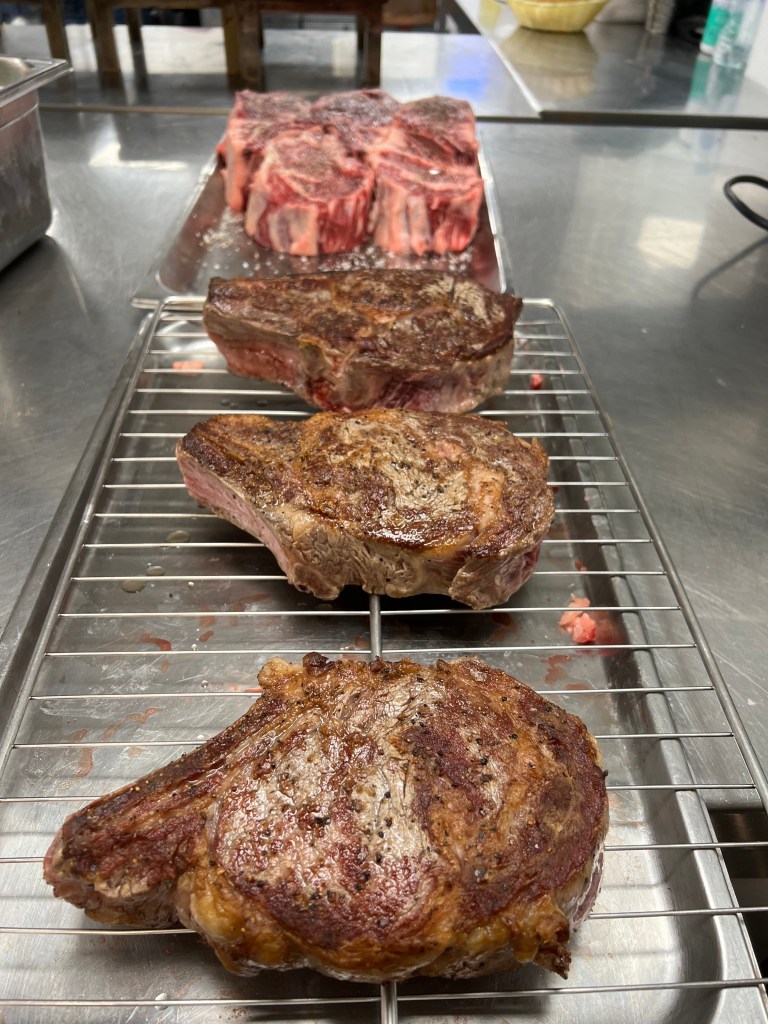
So on to the côte de boeuf, which is a rib eye steak with the bone left in. The 40-day, dry-aged steak was presented rare – is there any other way? The steak had texture and marbling throughout the meat. The layer of fat around the outside provided for an incredible sweet and salty lingering taste. The steak was packed with flavour, largely due to the rib having been being hung and dry-aged on the bone. The dish was accompanied with béarnaise sauce; however, one could have easily enjoyed the steak on its own. The dish was beautifully paired with a Chateau Saint Ahon, Haut-Medoc, France, 2013. The fruity wine with cherry and blackberry notes, complemented the dish perfectly.
This was one of the best steaks I’ve eaten. There was no fanfare, no gold-leaf, no salt throwing. With a steak this good, Hannan is seriously worth his salt.
To discover more, visit: hannanmeats.com and 1lombardstreet.com
View this post on Instagram
Imagery courtesy of Peter Hannan / The Wonder Group.