
Few distilleries in Scotland feel as deeply rooted in a place as The Annandale Distillery. Standing quietly on the edge of Dumfries & Galloway, it carries nearly two centuries of history, yet everything about its revival feels precise, intentional and personal. Behind the restored sandstone buildings and the rare Doig pagoda is a story of vision, science and devotion — shaped by Professor David Thomson and Teresa Church, the husband-and-wife team who brought Annandale back to life.

How did it all start?
The idea for Annandale began when I came across the book Scotch Missed: Lost Distilleries of Scotland by Brian Townsend, and read about a closed distillery called Annandale that was founded in 1836. I’m originally from Dumfries, so this part of Scotland has always been home to me, but even I was surprised that the building was still standing.
We went to visit the site and, after a lot of discussion with my wife Teresa, we asked ourselves the question: did Scotland need another single malt distillery? Possibly not. But did the South of Scotland need one? Absolutely. We were woefully underrepresented here in the South.
Teresa and I decided we couldn’t just let Annandale Distillery disappear. Teresa has a fantastic eye and vision when it comes to architecture and historical restoration. We realised that this was likely to be a huge project, but we weren’t deterred. My background is in sensory science and consumer psychology, so the challenge for me was a sensory one: Could we create something genuinely distinctive that respects the history of the space and adds something different to the Scotch whisky scene.
We spent a lot of time and money (£10.5 million over 7 years) restoring the site. We used the original local sandstone and slate wherever possible, and we took care to preserve the rare features like the original Charles Doig pagoda-roofed malt kiln.
When we started producing whisky, I’ll admit I was something of a perfectionist. I wanted to be certain that our whisky, made in the South of Scotland, could stand alongside the very best and perhaps be just a little better.
We used MMR’s research capabilities to run 65 different whiskies through a trained sensory panel and identify areas where there could be clear space from a flavour profile perspective. This helped identify the specific sensory profiles for the whisky we wanted to make.
This became what we now call “Annandaleness” – a fruit-forward, orchard-inspired character that works for both our peated and unpeated spirits. Counter to the common misconception of Lowland whisky, Annandale Distillery historically produced a peated spirit. So we were keen to continue this tradition of peated whisky at Annandale and also to produce an unpeated spirit using largely the same plant.
We built out production to deliver these specifications. Thankfully, a good friend of ours, the late great Dr Jim Swan, was there to guide us. Jim had a remarkable understanding of the relationship between the flavour characteristics of whisky and the plant, process and raw materials that would be needed to produce it. He immediately understood what we were trying to achieve at Annandale. As part of this, he designed our twin copper stills to optimise copper contact, which allows us to produce a central core of fruitiness in our new make.
One of the most important principles at Annandale is that we don’t work to an age statement. Instead, we work to the whisky’s readiness. We call this the concept of ‘sensory maturity’. We have an in-house sensory panel that routinely assesses casks. It is their role to determine when a whisky has reached optimum maturity. That could be at anything from 6 to 11 years. The number itself is not important. The balance, the complexity, the flavour, and the readiness of the whisky are what matter rather than age.
Today, all of our single malt releases come from one single individual cask with no chill filtration or blending. As I often say, when you adopt a single cask philosophy, there’s nowhere to hide – you are reliant on the quality of your spirit, the calibre of your wood, and perhaps most importantly, your patience.

You are Scotland’s only Single Cask Single Malt Whisky Distillery. How do you maintain this innovative niche?
We made a very deliberate move towards a single cask philosophy, which, while the simplest way of making whisky, is a rather complicated way of marketing and selling whisky.
But I truly believe celebrating this spirit of individuality is the most honest way to express the character of our spirit, showcase the quality of our casks, and stand out.
From a quality perspective, bottling each release as a single cask means there is nowhere to hide. You cannot rely on blending to level out any inconsistencies or flaws; each cask has to stand on its own merit. What becomes most important is the character of the new make spirit, the quality of the wood selection, and careful cask custodianship to keep a watchful eye on the maturation.
A key part of maintaining this approach is our sensory panel. We regularly assess our stock by the development of the whisky and its balance rather than its age. We only release a whisky when the cask is ready (i.e. it has reached what we describe as ‘sensory maturity) rather than working towards a predetermined age.
It is not the easiest way to make whisky but, for us, it is the most transparent. Single Cask Single Malt is Scotch whisky at its purest!

Tell us about your whiskies and what makes them special.
For me, everything starts with the spirit’s character. Coming from a sensory science background, I wanted us to create a very clear identity for our whisky, something I describe as “Annandaleness”. That’s our orchard-fruit, fruit-forward character of both our peated and unpeated styles.
Annandale produces two core single cask, single malt ranges, both named in tribute to legendary figures of Dumfries & Galloway:
Man O’Words (unpeated)
This is our more elegant, fruit-driven style of stewed apples and pears with vanilla, coconut, and soft toffee. The name is inspired by the poet, Robert Burns, who spent some of the most productive years of his life in Dumfries. Burns was an exciseman as well as a poet, and his area of responsibility included the River Annan.
Man O’Sword (peated)
This reflects our historic peated roots and draws inspiration from Robert the Bruce, who was the 7th Lord of Annandale. It’s more robust but always balanced – smouldering peat, sweet orchard fruits, vanilla, toffee, and gentle wood smoke.
No two releases are quite the same because no two single casks are ever the same. And that is exciting!
What makes Scotland better than the rest of the world for whisky production?
Scotland is known for its heritage but also for a genuine willingness to understand whisky-making at a scientific level. For me, there’s something very special when tradition and innovation come together – we don’t just rely on techniques from the old ways, we study them, refine them. Beyond the centuries of whisky-making experience, we do have two clear advantages: our climate (which is ideal for maturing whisky) and an ample supply of fresh, clean water.
We have used sensory science, consumer research, and flavour chemistry to reverse-engineer exactly the spirit profile we wanted. This is what I believe is very much part of Scotland’s strength and is central to how we do things at Annandale.
You are very much a family business. How do you work together?
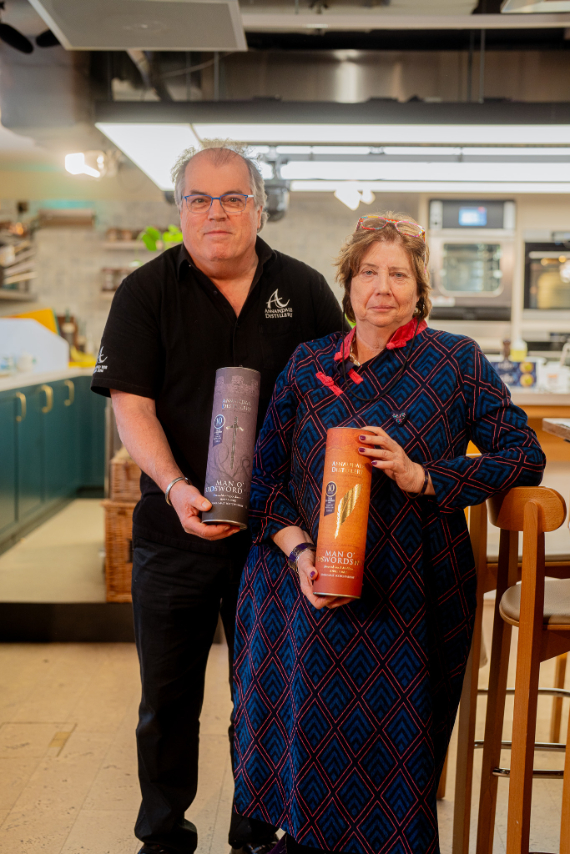
Teresa and I have very clear, but complementary roles. Teresa is interested in the restoration of historic buildings. Her focus is on preserving the history of the places we take on, so the look and feel and the authenticity is spot on. Whereas my role is focused more on the whisky itself, so the distillation, the casks, and the quality of the liquid. But we share the same standards. We’re focused on doing things properly, respecting the heritage, and leaving things better than when we found them.
That mentality runs through everything: The Annandale Distillery, The Globe Inn, and the people we work with and the community in which we operate.

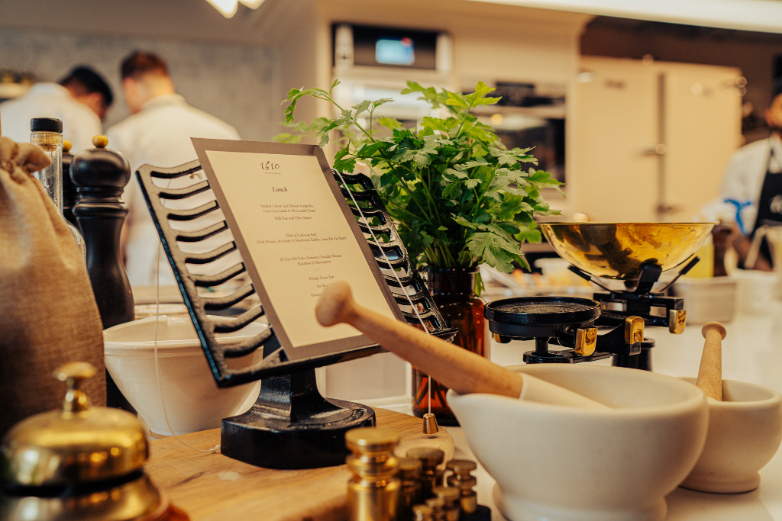
Tell us about The Globe Inn and the Michelin-recommended restaurant 1610.
The Globe Inn is one of the most important Robert Burns sites in Scotland. When we acquired it, it genuinely felt more like a responsibility than a business project. This was Burns’ “favourite howff” (meeting/drinking place), and you can still feel the history when you walk through the door.
When we refurbished The Globe Inn, we chose to create a fine-dining restaurant with character. This is something we felt was missing in Dumfries. Our 1610 restaurant is now Michelin-listed, but what matters most to us is provenance. Our very talented team of chefs use local, seasonal ingredients with real care and attention, including produce sourced from the kitchen gardens on the nearby Comlongon Estate.

Can sustainability in whisky ever become the norm?
I believe it can and, in time, it has to. We’re actively working on a 12-step decarbonisation plan, which includes opting to bottle and mature the whisky on site to reduce road miles, switching to electric vehicles where possible, and exploring alternative waste reuse options for its spent grain and carbon dioxide.
We’re actively trialling low-carbon technologies and working towards net-zero distilling, because I see this now as a responsibility rather than an aspiration. When you’re making a spirit that you may not release for 10, 20, or even 30 years, you have to think very carefully about future impacts.

Tell us about your special releases.
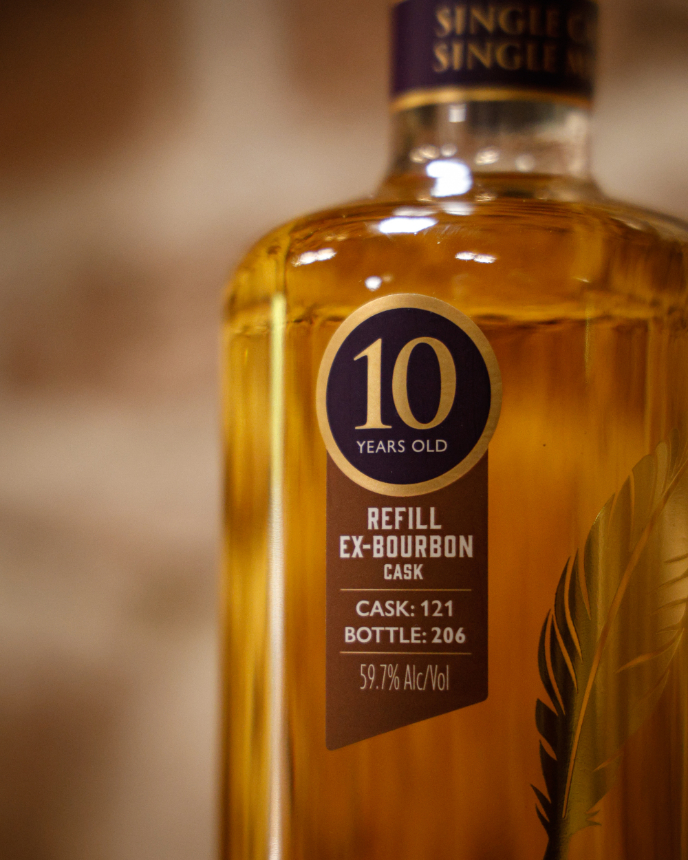
Last year, we celebrated 10 years of the new era of Annandale and released a 10-year-old Man O’Words and Man O’Sword from first-fill ex-bourbon casks. We have plenty more maturing and will continue with a 10-year-old expression of these two whiskies.
Being small and independent, we have plenty of freedom and scope to produce special releases using all manner of interesting casks when we feel they are at the peak of maturity.
What is next for Annandale Distillery and The Globe Inn?
For us, the future of Annandale is about refining and keeping what we have, making sure more people can experience the true spirit of individuality that comes with single cask, single malt. We’re working with retail partners that understand our fixation on single cask, single malt and they help us ensure more whisky lovers have the chance to try it.
With The Globe Inn, it very much comes down to custodianship. We see ourselves as caretakers rather than owners. Our role is to protect Burns’ heritage while making it meaningful and accessible for people today and in the future. By creating 1610 at The Globe as a fine dining destination, it will help preserve the historic legacy of this building for generations to come. We’d love to see 1610 at The Globe Inn as being revered among the very best dining experiences in Scotland, and we’re already on our way to that through the various awards and recognition the team is quite rightfully receiving.
For more information, visit The Annandale Distillery
View this post on Instagram
All images courtesy of Annandale Distillery.