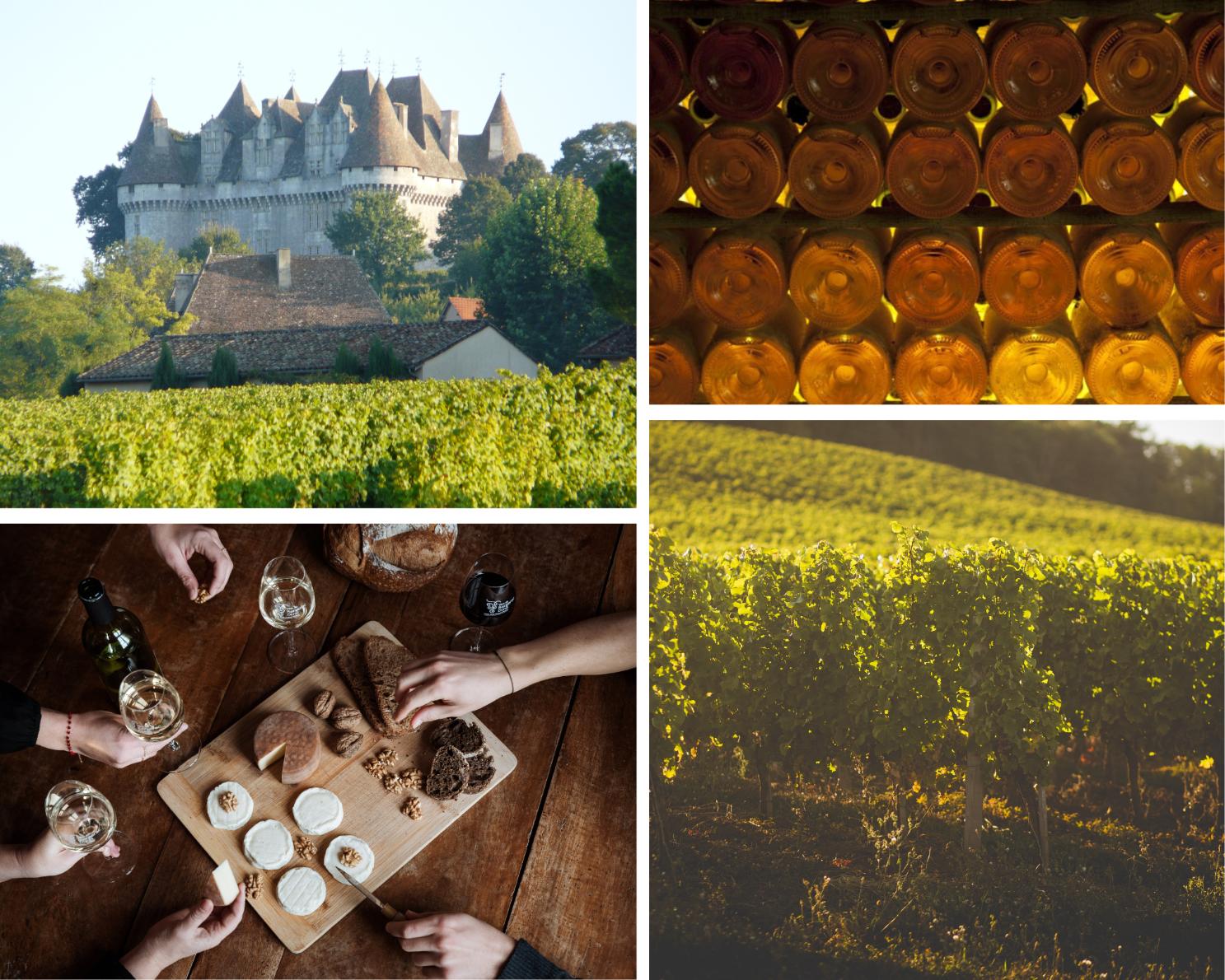
To be honest, before this trip, Bergerac was a name I knew from a wine list and a play about a man with a famous nose. I had a vague idea it sat somewhere near Bordeaux, and that its wines were good value. Three days later I flew home to London with a phone filled with memories of the Bergerac wine region, a notebook full of names, and the slightly annoying feeling that I had been missing out for years.
The flight from London takes under two hours. By early afternoon I was on a quiet lane outside Saint-Nexans, the October sun doing that thing it does in south-west France where everything turns gold. We were there as guests of the Interprofession des Vins de Bergerac et Duras, and over three days they introduced us to a region that has spent centuries in the shadow of its famous neighbour. Bordeaux is barely an hour downstream. But Bergerac has a story of its own, and by the end of the trip I was hooked.
La Chartreuse du Bignac: A Home Among the Ponds
I didn’t expect to get attached to a hotel in three nights. Bignac managed it.
Our base was La Chartreuse du Bignac, an eighteenth-century house set among ponds and woodland ten kilometres south of Bergerac, now a small hotel with a gourmet restaurant. Some of the bedrooms are in the old stables, converted with care: beamed ceilings, terracotta floors and French windows onto the garden. The main house keeps its period salon, fireplace and all.
There’s a pool looking out over the Périgord hills, a garden terrace for aperitifs as the sun goes down, and a breakfast spread of local breads, pastries, homemade cakes, charcuterie and cheese that I went back to more than once. But what makes Bignac is the hospitality. The team are warm and attentive without ever being stiff, and after a long day of tastings, coming back here felt like coming home.
A River Full of History
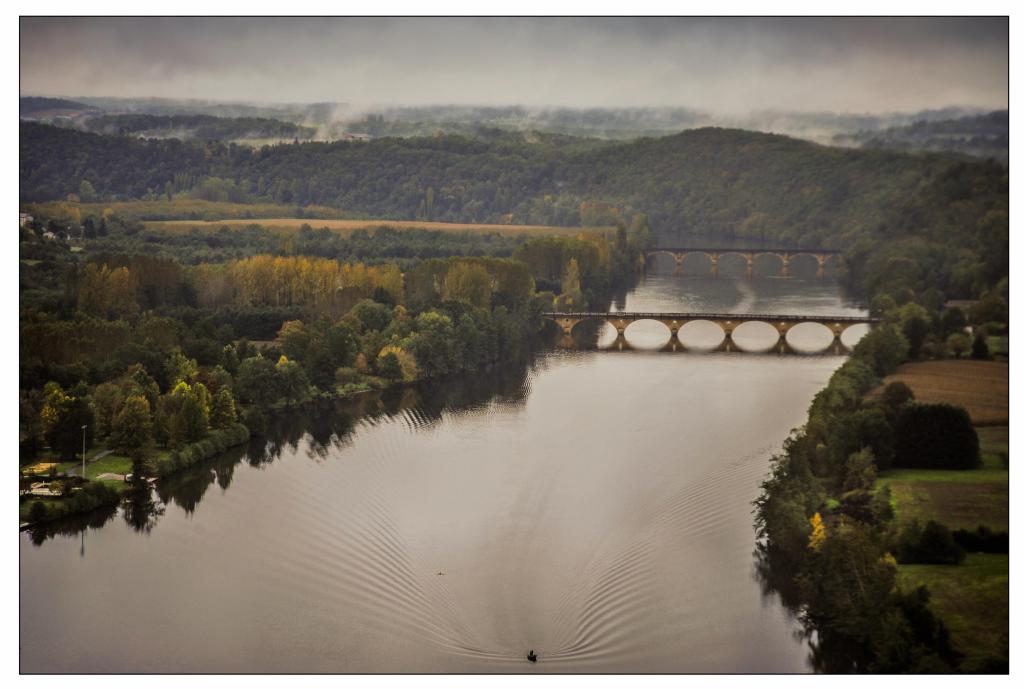
You can’t really understand Bergerac without the Dordogne. For two thousand years the river has carried wine from these slopes, ever since the Gallo-Romans planted the first vines.
In 1152 Eleanor of Aquitaine married Henry Plantagenet, and this corner of France came under the English crown. Bergerac’s wines sailed down the river and across the Channel, and the English developed a taste for them that, as a Londoner, I can confirm is alive and well. Bordeaux was not thrilled. Under the so-called privilège, wines from upriver had to wait until the Bordeaux merchants had sold their own harvest. Imagine making your best wine and then being told to queue.
So, Bergerac found other friends. During the Wars of Religion, the town became a Protestant stronghold, and its growers built strong ties with Dutch merchants who loved sweet golden wine. Monbazillac went north to Amsterdam by the barrel. Phylloxera almost wiped the vineyard out in the late nineteenth century, but it recovered, and in 1936 Bergerac and Monbazillac were among the first French wines to be given appellation status. The quality was always there. What I found is a generation of winemakers doing something really interesting with it.
Getting to Know the Land
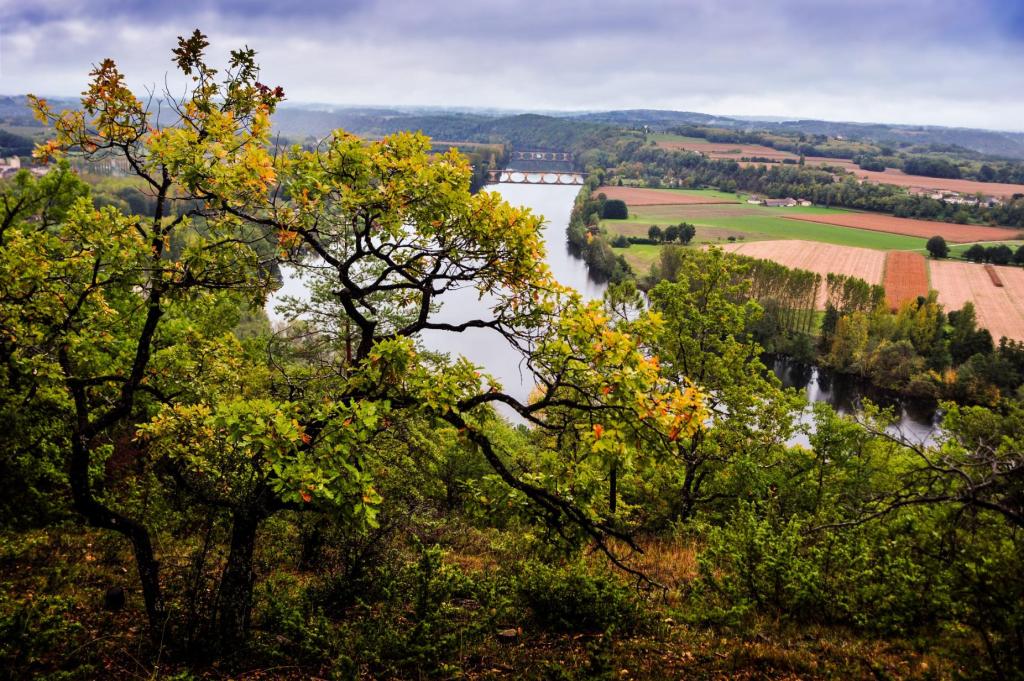
What surprised me most was how much variety is packed into one compact area. There are some 12,000 hectares of vines and around 1,200 growers, producing 17 appellation wines in five colours: red, rosé, dry white, sweet white and the rich, golden liquoreux. Pécharmant, on the hills north-east of town, is the red locals are proudest of. South of the river, Monbazillac and Saussignac make sweet wines, and little Rosette makes delicate, gently sweet whites. Out west, Montravel runs up to the Bordeaux border, and to the south the Côtes de Duras carries on towards the Garonne.
The soils change as you drive. Clay and limestone on the plateaus give the wines freshness. Around Pécharmant, the “sables et graviers du Périgord,” sand and gravel, give the reds finesse and help them age. At Monbazillac the slopes face north across the river, and in autumn the mist rolls up off the water each morning and burns off by lunchtime. That cycle is exactly what noble rot needs, and noble rot is what turns those grapes into liquid gold.
If you drink Bordeaux, the grapes will feel familiar. Merlot, Cabernet Sauvignon, Cabernet Franc and Malbec make the reds. Sémillon, Sauvignon Blanc, Sauvignon Gris and Muscadelle, a floral, slightly spicy grape I fell for, make the whites. But growers are also reviving forgotten varieties like Fer Servadou and playing with Chenin Blanc and Chardonnay. And almost every estate I visited was organic, biodynamic or converting. And nobody made a big song and dance about it.

The People Behind It All
A word about the IVBD, because without them I wouldn’t have seen half of this.
The Interprofession des Vins de Bergerac et Duras speaks for the whole vineyard. It was created in November 2014, when two older bodies joined forces: the CIVRB, the interprofessional council for Bergerac wines, founded in 1953, and the CID, its Duras counterpart, founded in 1985. The name is young, but the work behind it goes back more than seventy years.
It brings together the two families of the wine trade: the winegrowers, from small family estates to big cooperative cellars, and the négociants, the merchants who buy, blend and sell. It’s recognised by the State but run by the profession itself, with growers and merchants in balance and the big decisions taken unanimously. In a region with this much character, I suspect that makes for some lively meetings. It’s funded by contributions on wine sold, and around three-quarters of its budget goes on promoting Bergerac and Duras at home and abroad, with the rest spent on market data, quality and research.
That research impressed me. According to the IVBD, around 80 per cent of the vineyard now carries an environmental label. They’ve planted 800 fruit trees around the vines at Monbazillac, installed a network of ten weather stations that has cut plant treatments by about 30 per cent, and even had local students build bat boxes, because bats eat the grape moths that would otherwise be dealt with by insecticide.
They also run the Maison des Vins at Quai Cyrano, and they built our itinerary with real care. Their pitch was simple: come and see for yourself. I did, and I’m glad.
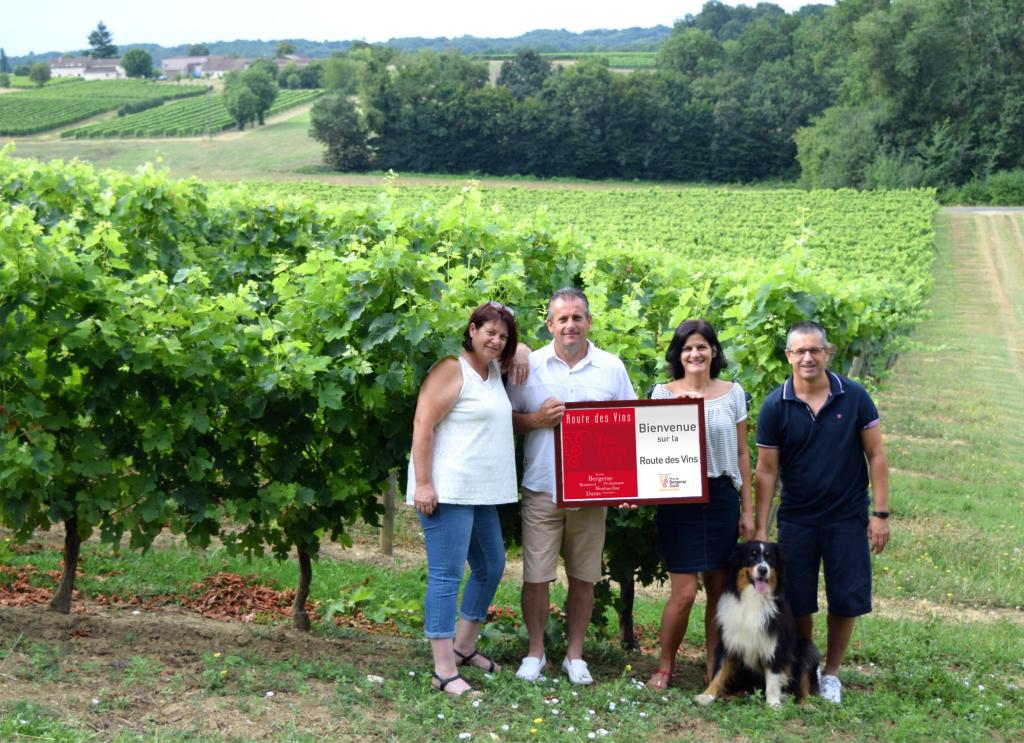
Day One: Sweet Beginnings
Château de Monbazillac: Golden Hours Above the Dordogne
You see the towers long before you reach the door: sixteenth-century stone rising over vineyards that tumble towards Bergerac, warm in the October light.
The Périgord has more than a thousand châteaux, and this must be one of the most beautiful examples, with a view across the Dordogne valley, a UNESCO Biosphere Reserve. It has belonged to the winegrowers of the Monbazillac cooperative since 1960, and you can tell they love it.
Pauline Auban, head of wine tourism, took us round the exhibition “A World of Art and Aromas,” all about sweet wine. Upstairs, under the old beams, hung a huge cardboard figure, head bowed, arms looping down to the floor, every panel numbered by hand. It made the whole room go quiet. I still think about it.
Then we enjoyed a tasting at the Cave de Monbazillac. Secret de M, a Bergerac Sec, and the Euphonie Rosé 2025 were bright and fresh, and the Marquis de Chamterac Pécharmant 2022 had lovely structure. But the sweet wines were the reason we came. The Château Monbazillac 2023 and gold-medal 2024 were honeyed and glowing, all apricot and acacia, with enough freshness that you never feel weighed down. If you think you don’t like sweet wine, try one of these and see.

Famille Mauro at La Chartreuse du Bignac: Where the Grape Takes the Lead
Corine Mauro makes wine by listening to the land, to the weather, and to whatever kind of year it has been.
That evening, back at Bignac, we had dinner with Corine Mauro, who makes the wines of Vignobles Mauro Guicheney in the Côtes de Duras with her partner Didier and their son Audric. She farms biodynamically and does as little as possible in the cellar. Every vintage is different, she told us, because every year on the land is different. She listens to the land and lets the humble grape be the star.
À l’Abri du Monde, “sheltered from the world,” was pure and calm. Cueille l’Instant, made without added sulphites, was bright and alive. Mille Petits Gestes, with its gold label of hands climbing the bottle, honours all the small gestures behind every harvest.
Bignac’s kitchen, recognised by Michelin and named a Restaurant de Qualité by the Collège Culinaire de France, matched her care: whipped mousse with caviar and dill, seared tuna with pickled red onion, a herb-crusted fillet in a buttery foam, girolles and sweetcorn, and a cheese board with fig chutney. Every course found its wine, and nobody at the table was in any hurry to leave.
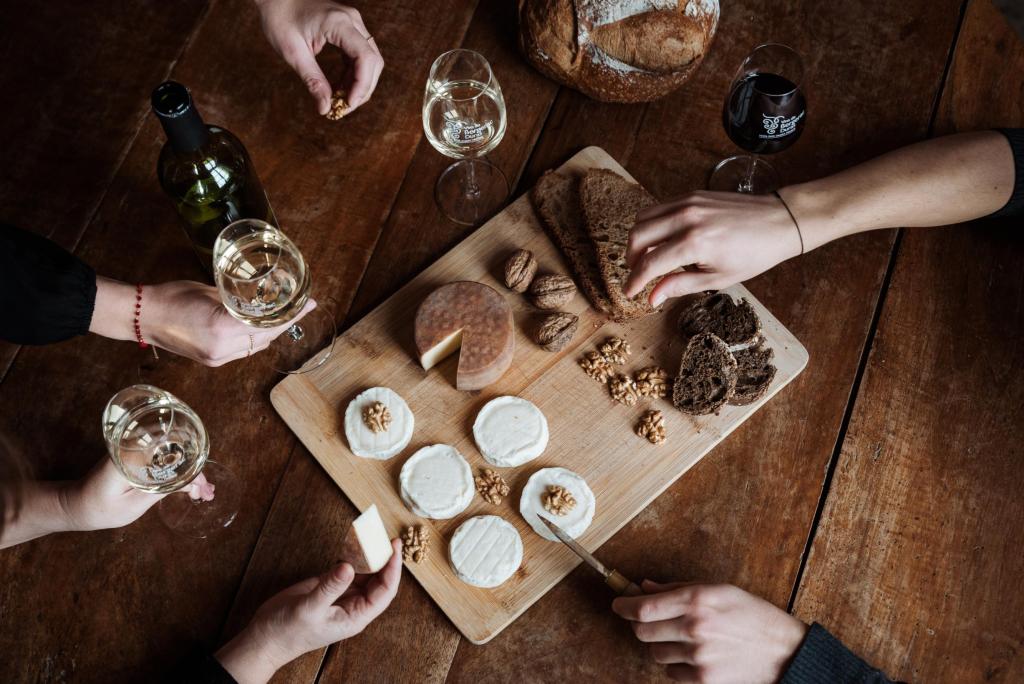
Day Two: Kings, Cousins and a Lot of Wine
Château de la Jaubertie: A Royal Retreat with an English Accent
Walk up the gravel avenue at Château de la Jaubertie in Colombier, between the clipped yews, and the history reaches you before you reach the door.
This was a hunting lodge of Henri IV, who gave it to his beloved Gabrielle d’Estrées, and later the home of a doctor to Marie-Antoinette. Today it’s a listed historic monument and a working, certified organic estate.
It’s also, surprisingly, an English story. Hugh Ryman, one of the original “flying winemakers,” runs it with his wife Anne, and walking the vines with him I got the sense of someone who has seen a lot of vineyards and chose this one for good reasons.
The whites were lovely, from a zesty Cuvée Tradition Sauvignon Blanc 2025 to a richer Monologue Chardonnay 2024, and Mirabelle, the numbered flagship, showed how a good blend lifts every grape in it. But the rosé is what I’m still talking about. The Mirabelle Rosé 2025 is pale, elegant and refined, and I think it could take on the leading Côtes de Provence rosés. I didn’t buy a case. I wish I had.

Château de Tiregand: Old Stone, New Hands
High above the Dordogne, just upstream from Bergerac, Château de Tiregand stands at the heart of Pécharmant, the region’s most celebrated red wine appellation.
For nearly two hundred years this estate in Creysse belonged to the family line that later took the Saint-Exupéry name, distant cousins of the man who wrote The Little Prince. In 2023 Côme Piat and his family took over the vineyards. Côme is young, relaxed and clearly knows what he’s doing, and he’s converting the estate to organic. I liked his playful side too, from Les Bulles de Tiregand, a limited-edition sparkling wine, to Rosette, a gently sweet white.
But Pécharmant is red wine country. Clos Montalbanie 2022 is easy and elegant. The Château de Tiregand 2023, a blend of Merlot, the Cabernets and a touch of Malbec with twelve months in French oak, has real depth. And then the Grand Millésime 2023, my favourite: darker, deeper, with ripe black fruit, smooth tannins and a long finish. Drink it now or put it away for a few years. They also offer a chocolate pairing with Hervé Robin’s 72% Idukki, which sounds like a perfect match. Next time.
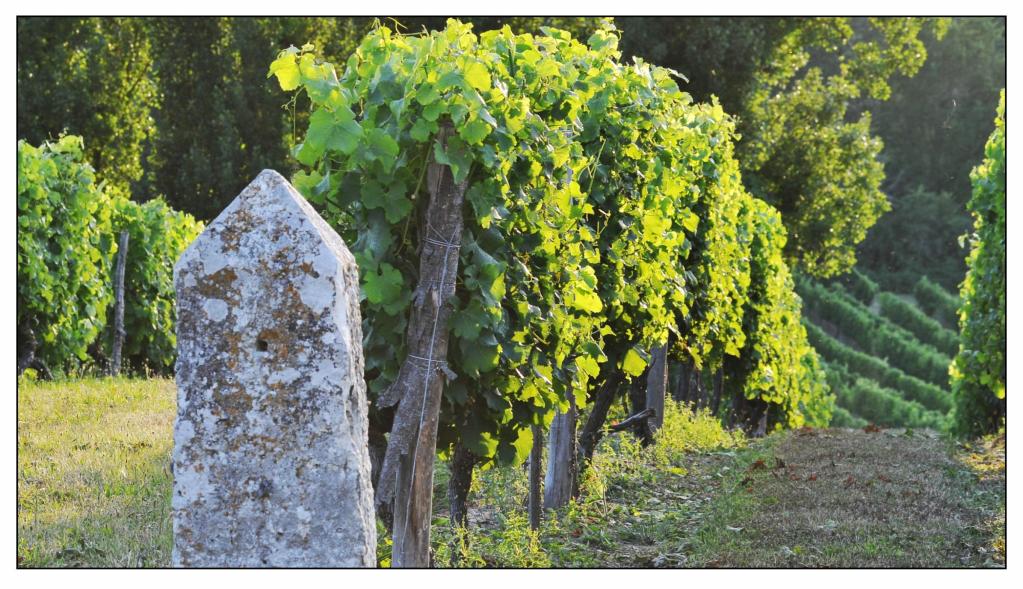
Quai Cyrano: Bergerac’s Wine Showcase
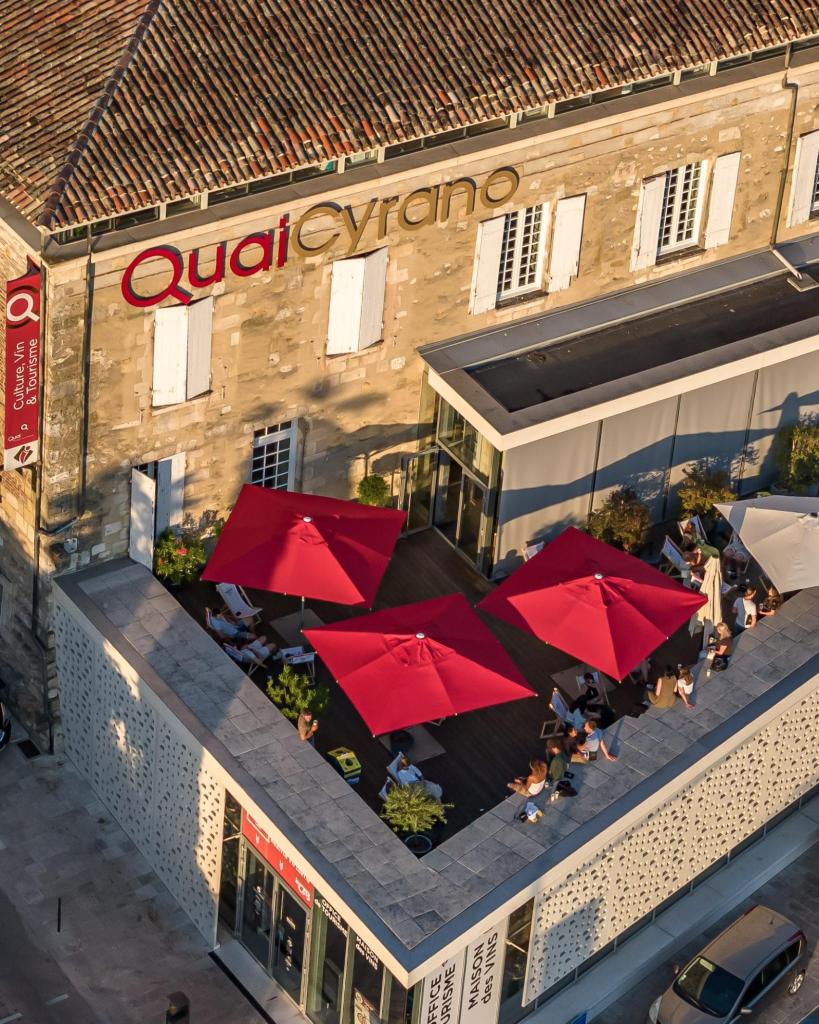
In the heart of Bergerac, within the seventeenth-century Cloître des Récollets, Quai Cyrano is the ideal introduction to the region.
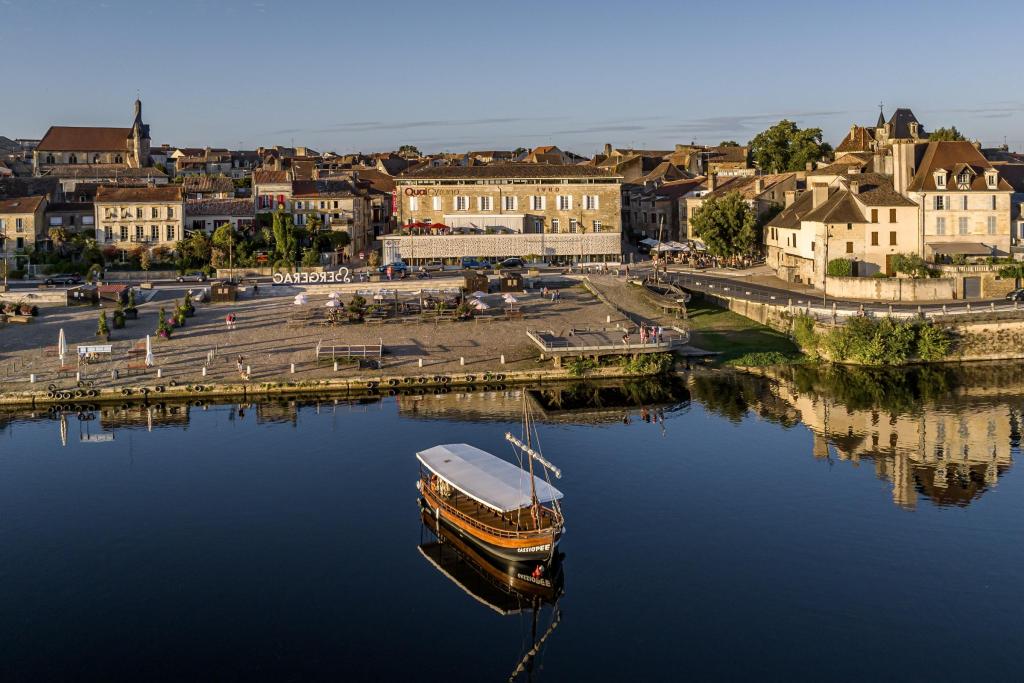
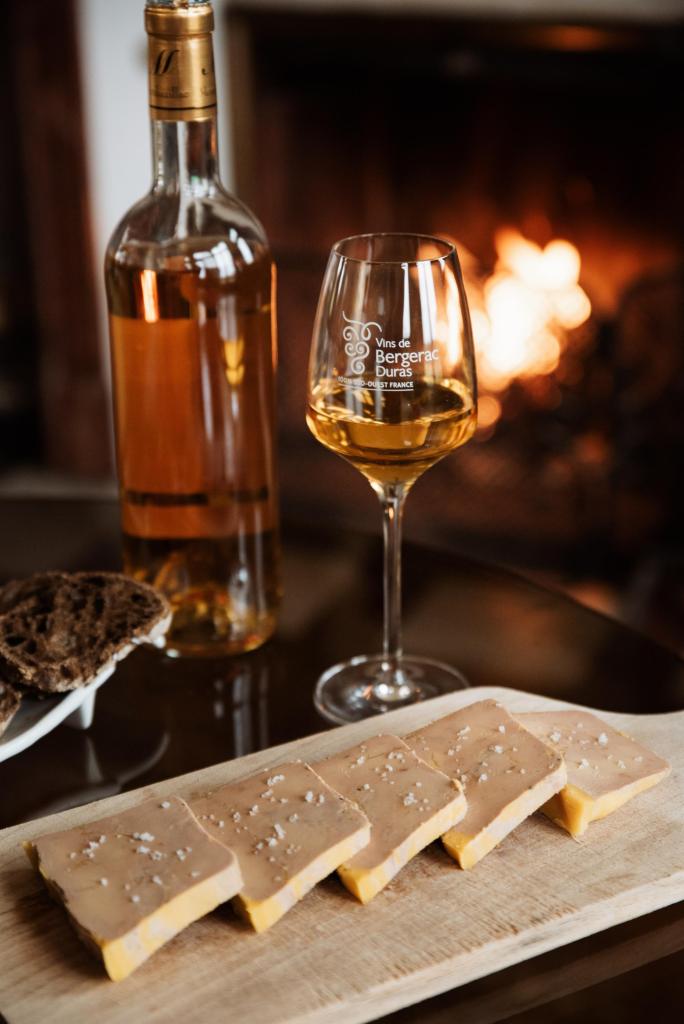
Lunch here was a proper Périgord feast: foie gras, then a sublime confit duck with walnut salad and chips, a fresh mint sorbet and a chocolate mousse. Around 1,000 wines from across the appellations line the shelves, and every week a selection is opened to taste by the glass. We were on a schedule, so we browsed, wandered through L’Expérience Cyrano, an immersive space devoted to the town’s most famous son, and then walked the old town’s half-timbered lanes down to the river. It’s a town made for a late-afternoon aperitif, and I’ve promised myself I’ll go back and do exactly that.
Château Le Raz: Four Centuries Young
At Château Le Raz, it’s the people you remember.
Out west in Montravel, the Barde family have been on this land in Saint-Méard-de-Gurçon since 1610 and making wine since 1979. The welcome was as warm as the bright red T-shirts the team were wearing.
The person I want to celebrate is their young winemaker, who came from Italy and joined the family estate at just 23. The medals followed quickly. What struck me most was the passion: talking about grapes like old friends, and about the new varieties they’re planting alongside the classics.
The tasting was generous, from the floral Le Floréal Sauvignon to the oak-aged Cuvée Grand Chêne, but for me the reds shine. Les Filles, a Montravel Rouge in a gorgeous copper label, is elegant and juicy, and one I would happily drink any day of the week. Ter’Raz Nº1 Vieux Ceps, from old vines, is round, velvety and rated by the Guide Hachette.
Maison Wessman: Bergerac in Evening Dress
If Le Raz was warm and down to earth, our evening at Conne-de-Labarde was pure opulence. Glowing bottles hang above a curved oak bar, pop-art murals cover the walls, and the wines of the Vignoble des Verdots rest in an underground cellar carved into the rock. Our host was Lise Sadirac, operations manager and Winemaker of the Year.
Tours des Verdots Sec 2024, a gold-medal blend of Sauvignon Blanc, Sémillon and Sauvignon Gris, was full of nectarine and kumquat. Tours des Verdots 2022, rated 90 points by James Suckling, gave black cherry and pepper, and the Grand Vin Les Verdots 2023 was dense, polished and built to last.
Dinner was at Maison Wessman par Thierry Marx, the Michelin-starred chef’s restaurant on the estate and a Michelin Bib Gourmand for 2026. Silky scallop with caviar, beef carpaccio with fresh figs, foie gras with plum and toasted sesame, squid ink risotto, and glazed duck breast, which we paired with the N°1 Saint-Cernin 2019: velvety, layered and beautifully mature.

Day Three: The Future, Poured
Domaine Albert de Conti: Three Generations, One Bold Vision
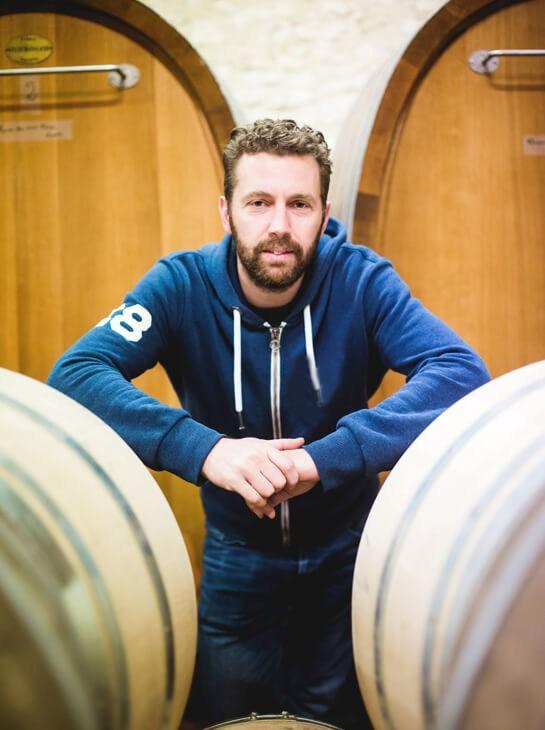
Our final visit was in Saint-Julien-d’Eymet, and honestly, this place is exciting. Guillaume de Conti is the owner and winemaker, and three generations of his family have worked this land. You find them all on the bottles. La Vigne d’Albert comes from vines his grandfather planted in 1966, where Merlot and the Cabernets grow alongside forgotten varieties like Fer Servadou. Odette, a Cabernet Sauvignon rosé, is named after his grandmother. Chez Paul is named after his grandparents’ house, where his younger brother Paul now lives. It’s Cabernet Sauvignon aged twelve months in foudre, and very moreish.
The labels are works of art, from witty pen-and-ink portraits to a Renaissance-style painting for L’Infidèle, and the reds are delicious. Galapia, named after a local word for kids who aren’t always well behaved, is fresh and best served a little chilled. The pét-nat is very drinkable, and I can see it becoming a new alternative to Champagne. The Chenin Blanc, Le Bois de Vie, is aged in stoneware amphorae and is very different from a typical Chenin, but the new batch, made without added sulphites, is something else. We also tasted new wines straight from the oak barrels, made from two grape varieties new to Bergerac, Mondeuse and Étraire de la Dui. L’Infidèle, a limited-release Sauvignon sold as a boxed trio for €120, is worth every cent, and I’d keep at least one bottle for a few more years.
What stayed with me most, though, was what Guillaume is building beyond the wine: a place that brings the community together, with neighbours, visitors and friends around the bar, sharing a glass. That’s something you can’t buy.
So, Should You Go?
On the flight home I tried to sum Bergerac up in one word, and I couldn’t. There’s the history, of course, and the golden wine made by river mist, and a rosé I’m still thinking about. But mostly it’s the people: families who have looked after the same vines for generations, and young winemakers happily breaking the rules.
Bordeaux gets the headlines. For now, Bergerac gets to keep its secrets. My advice? Go before that changes, while the lanes are still quiet and the welcome is still personal.
PLAN YOUR ESCAPE
Getting there: Direct flights from London to Bergerac take under two hours.
Where to stay: La Chartreuse du Bignac, Saint-Nexans, ten kilometres south of Bergerac.
Where to dine: Maison Wessman par Thierry Marx, Conne-de-Labarde (Michelin Bib Gourmand 2026), and the restaurant at La Chartreuse du Bignac.
Start here: Quai Cyrano, Maison des Vins de Bergerac et Duras, 1 rue des Récollets, Bergerac.
Estates featured: Château de Monbazillac, Vignobles Mauro Guicheney, Château de la Jaubertie, Château de Tiregand, Château Le Raz, Maison Wessman, Domaine Albert de Conti.
Discover More HERE.
All imagery courtesy of Les Vins de Bergerac Duras.