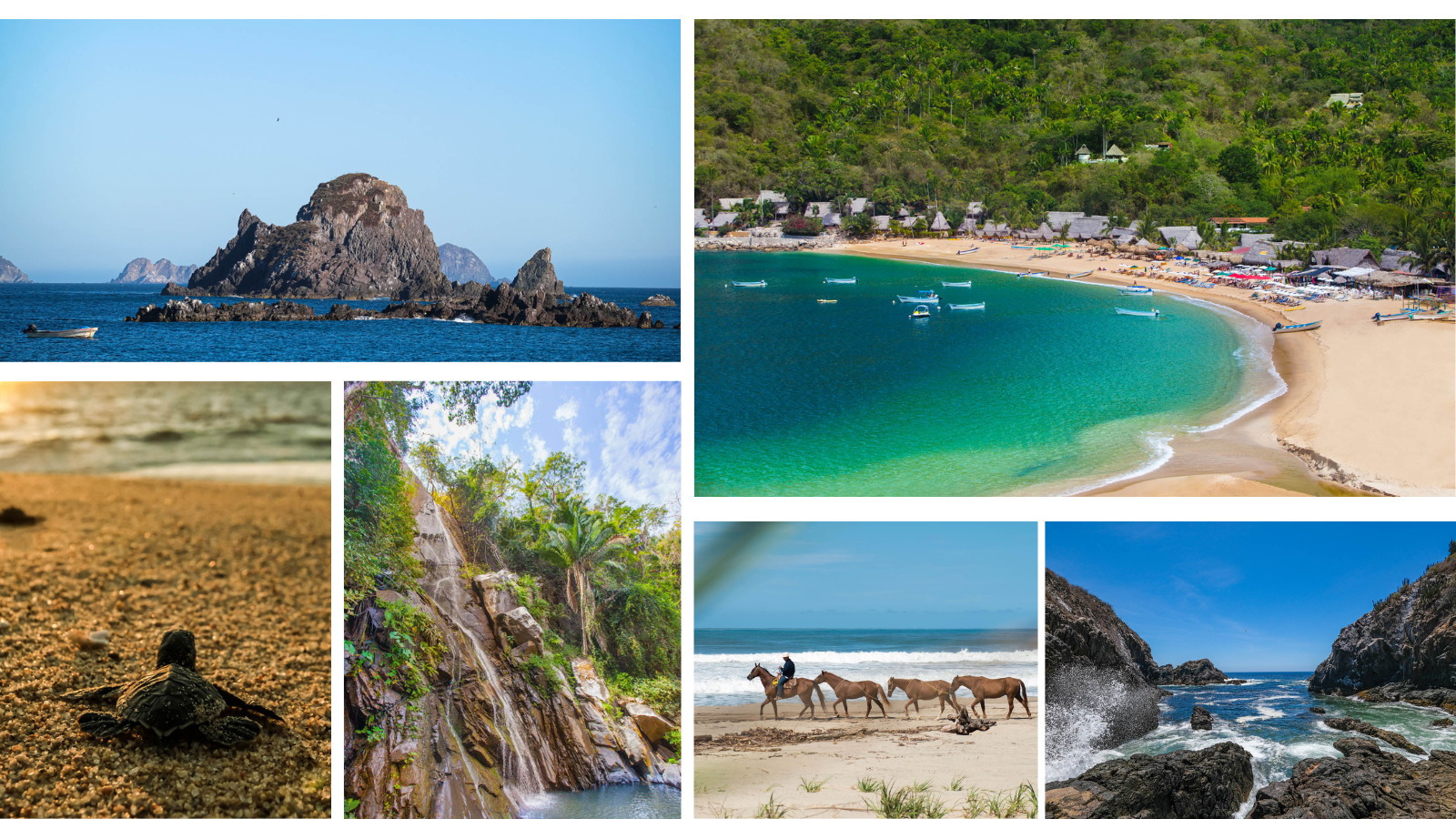
Stretching along the Pacific coast of Jalisco, Costalegre has it all. It’s a 284-kilometre stretch of coastline that feels decades away from the neon lights and high-rise crowds of the all-inclusive resorts. Visiting Costalegre is different. It’s less about following an itinerary and more about following a road to an untouched beach or sitting down in a village square where tradition isn’t a performance for tourists; it’s just daily life. Costalegre reveals itself as a natural sanctuary waiting to be discovered.
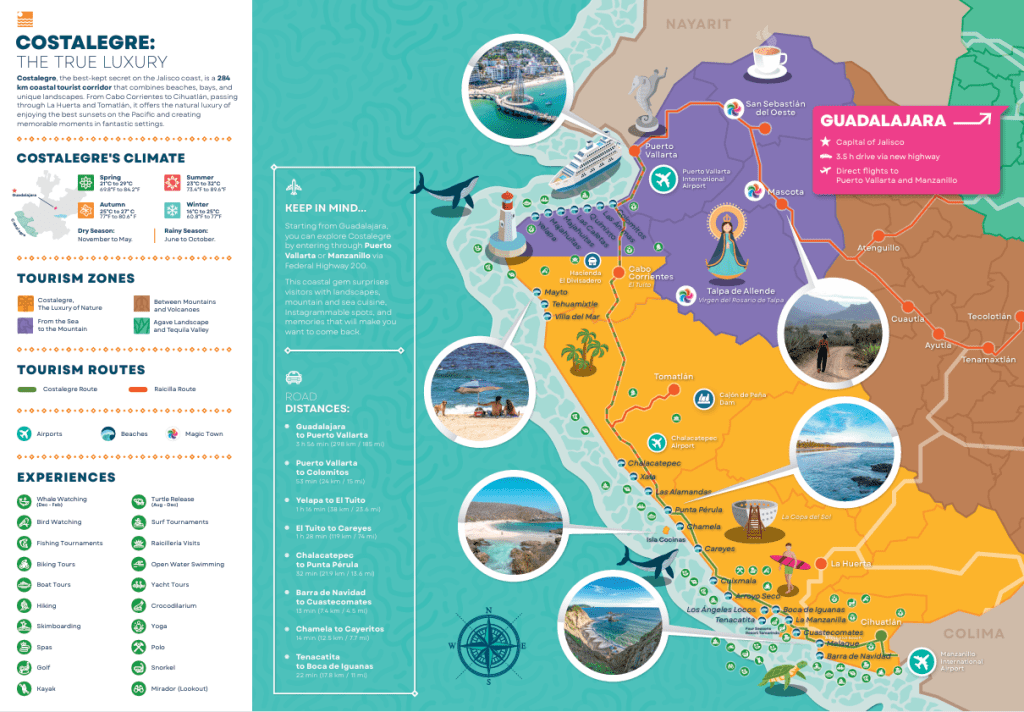
Transportation and Location
Although Costalegre feels wonderfully remote, reaching the region was straightforward. Two international airports serve as gateways: Puerto Vallarta, approximately a two-and-a-half-hour drive away, and Manzanillo, just over an hour from the coast.
From either airport, you can continue by bus or car, with hiring a car offering the greatest flexibility, as many of Costalegre’s experiences are spread across the region. Costalegre doesn’t do crowds. Most of the coastline is still wild, hidden behind dirt tracks and accessible only by water. It’s not unusual to have an entire beach to yourself, just you and the sound of the waves. It feels less like a tourist destination and more like a secret you’ve stumbled onto.
Image Courtesy of Costalegre’s Official Website
Weather
With average temperatures ranging between 25 and 27°C, Costalegre is well-suited to beach life throughout the year. Although rainfall is more common from June to August, it tends to be short-lived, leaving much of the day bright and inviting. Between November and March, the heat is manageable, and you’re almost guaranteed to see humpback whales or tiny sea turtles making their first run for the sea.

Image Courtesy of Costalegre’s Official Instagram account
Food & Local Culture
In Costalegre, the food is basically a map of the landscape. Mexico is incredible for ingredients and you can really find whatever you are looking for. Ingredients are abundant, fresh and so varied. The Pacific provides a constant supply of fresh seafood, but you’ll quickly learn that the local salsas don’t hold back on the heat. The region’s kitchen is really a balance between the sea and the soil. On one side, you have fishermen bringing in the daily catch, think tostadas piled with jaiba (crab), or octopus and snapper tacos. On the other side, small inland villages like El Tuito supply seasonal produce and artisanal mountain cheeses that you won’t find at a standard resort.
A local obsession you shouldn’t miss is chacales, which are small river prawns usually served simply so you can actually taste how fresh they are. These meals aren’t meant to be rushed; they’re best enjoyed slowly under a palapa on the sand, washed down with a cold tejuino (a fermented corn drink) or a hit of tropical fruit ponche.
You can’t really talk about the food here without mentioning Raicilla, the region’s go-to agave spirit. While it’s a cousin to tequila and mezcal, it has a much punchier, earthier, more saline profile that tastes more like the wildflowers and minerals of the Jalisco mountains. It has been distilled the same way for generations, and sitting down with a glass feels less like a tourist activity and more like a history lesson you actually want to take.
Where to Stay
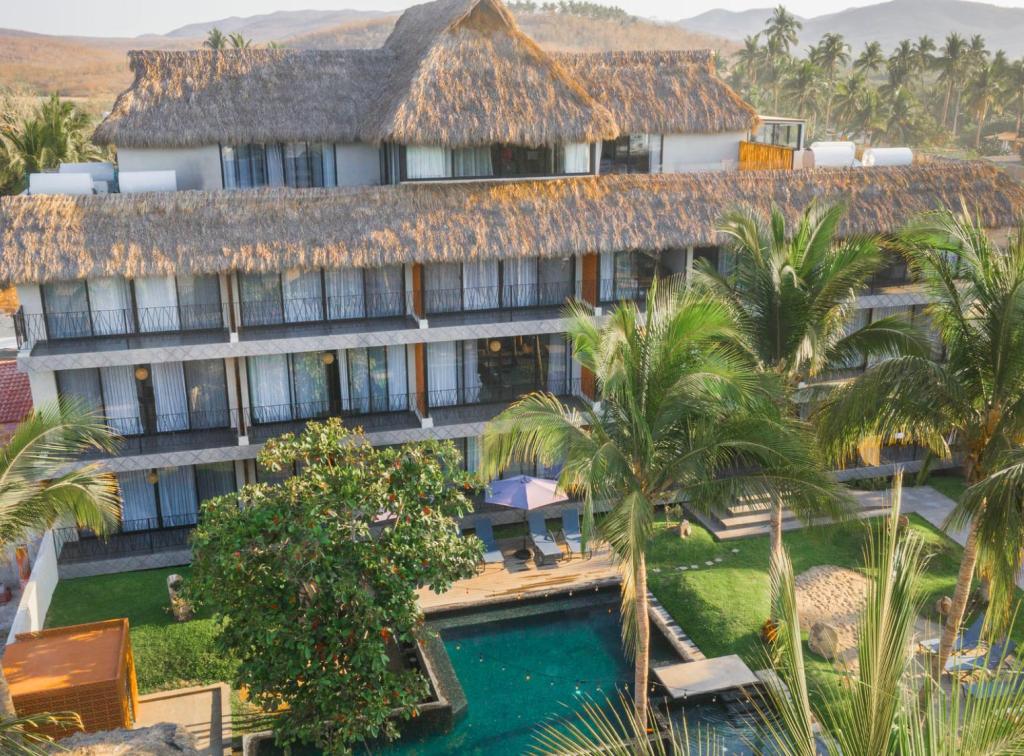
Image Courtesy of Casa Tilmcalli
Casa Tilmcalli, Punta Pérula
Our first nights in Costalegre were spent at Casa Tilmcalli, a boutique hideaway in Punta Pérula that immediately set the pace for the journey. It’s unpretentious. The kind of place where you forget what day it is, and by Tuesday, you’ve stopped checking your calendar entirely.
Set among almond trees and coconut palms, the property is fully integrated into its surroundings. The pool sits partly shaded, offering a welcome retreat from the sun, while the beach and the sea are just a few steps away. With a focus on simple, well-prepared dishes, meals here felt personal. It’s the kind of place that quietly encourages you to settle in and let the rhythm of the coast guide the trip.
The best part about staying here is that you’re actually in the village, not isolated from it. You can hear the panga boats heading out early in the morning, but the hotel itself feels tucked away enough to be quiet. It’s the kind of place where luxury is just having an ocean view on the terrace at the end of the day, without anyone bothering you. It feels way more like staying at a friend’s beach house than a formal hotel. On a Sunday, locals enjoy the beach, and the atmosphere is fantastic. Restaurants are abuzz with life, traders sell oysters and coconuts on the beach and the water is beautifully warm.
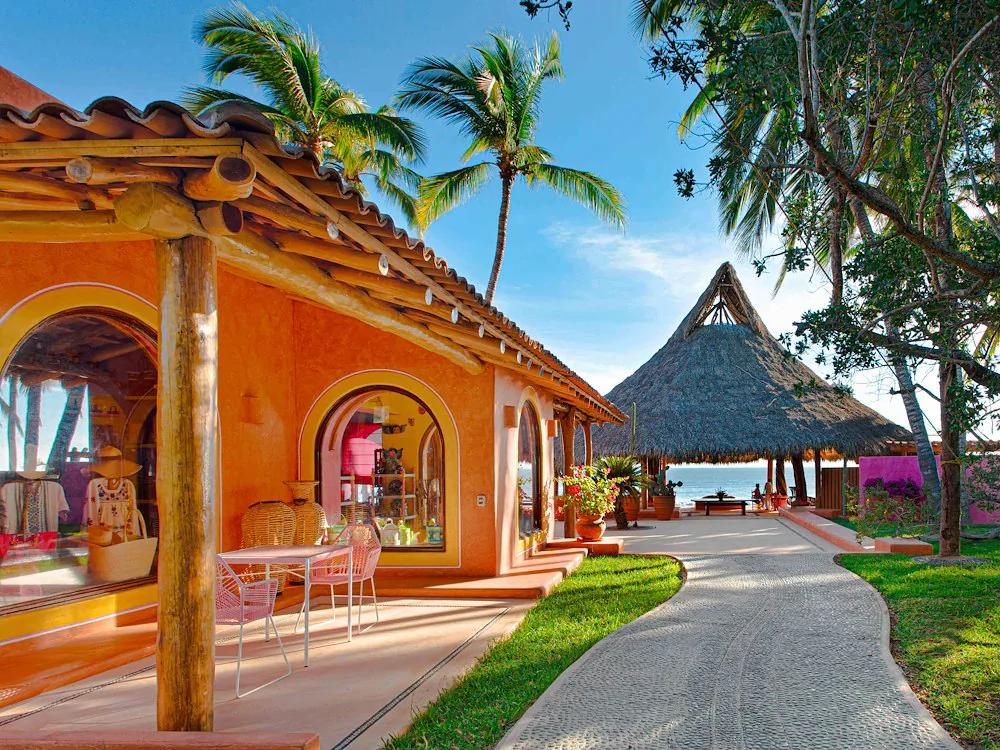
Image Courtesy of Las Alamandas Resort
Las Alamandas, Costalegre
Tucked away along an untouched part of Costalegre’s shore, the property balances elegance with a deep sense of privacy, offering six kilometres of beachfront that felt almost entirely our own.
The design at Las Alamandas is loud and playful, think bold pinks and oranges that somehow work perfectly against the blue of the ocean. Due to the privacy, you can spend a whole afternoon in a hammock without seeing another soul. Days passed at a slow pace, spent drifting between secluded beaches and enjoying a quiet lunch overlooking the water.
The scale of this place is actually pretty wild. It’s essentially a massive 2,000-acre nature reserve that happens to have a hotel inside it. You’ll see many types of birds (Costalegre is home to about 270 species) flying around, and because there are four different private beaches, you almost never run into other guests. We watched the sunset and enjoyed ingredients from the hotel’s orchard, and having that much space to ourselves felt like a total fluke compared to how crowded most Mexican beaches usually are.
Experiences That Define Costalegre
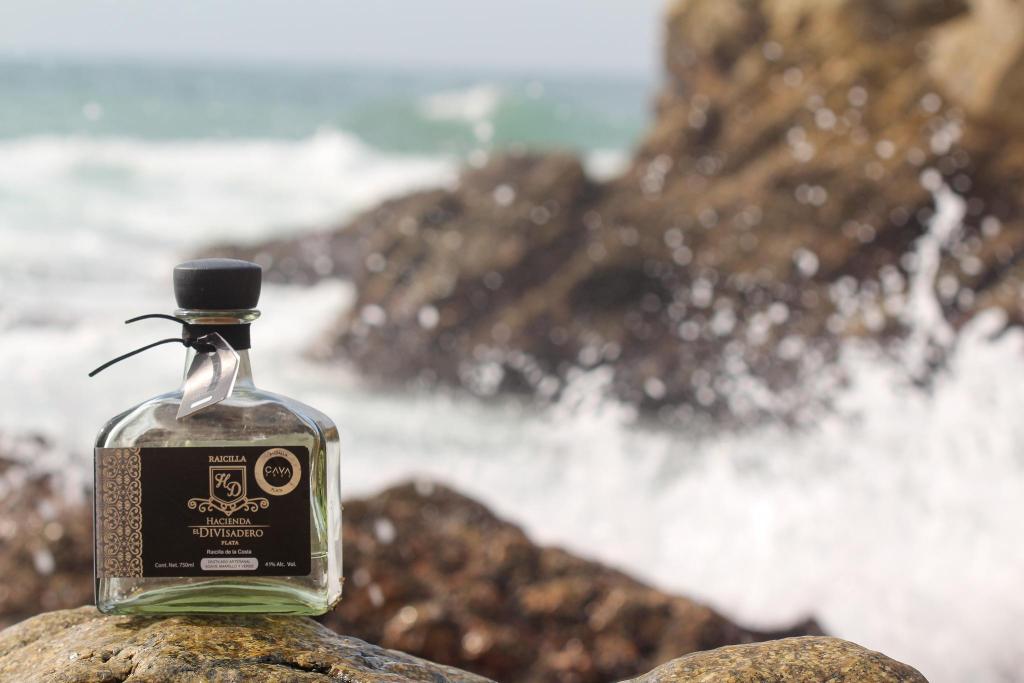
Image Courtesy of Hacienda El Divisadero
Discovering Raicilla at Hacienda El Divisadero
In the heart of El Tuito, Hacienda El Divisadero offers a window into one of Jalisco’s most deeply rooted traditions: the production of raicilla. Often referred to as mezcal’s lesser-known cousin, raicilla carries its own identity: earthy, complex, and closely tied to the land it comes from.
A visit to the hacienda revealed a hands-on process that has remained largely unchanged for generations. Agave is harvested from the surrounding landscape, slowly cooked, fermented, and distilled with patience and care. As we walked through the working distillery, at an altitude of 1000 metres above sea level, it became clear that raicilla here is not a trend, but a cultural inheritance ingrained in the mineral-rich soil of the hacienda. We tasted the three different expressions and talked to the master distiller about their beautiful artisinal product. The agave are nourished by a soil rich in minerals and an ideal climate for their ripening. This process takes time with agave plants taking up to 16 years to be ready for harvesting.
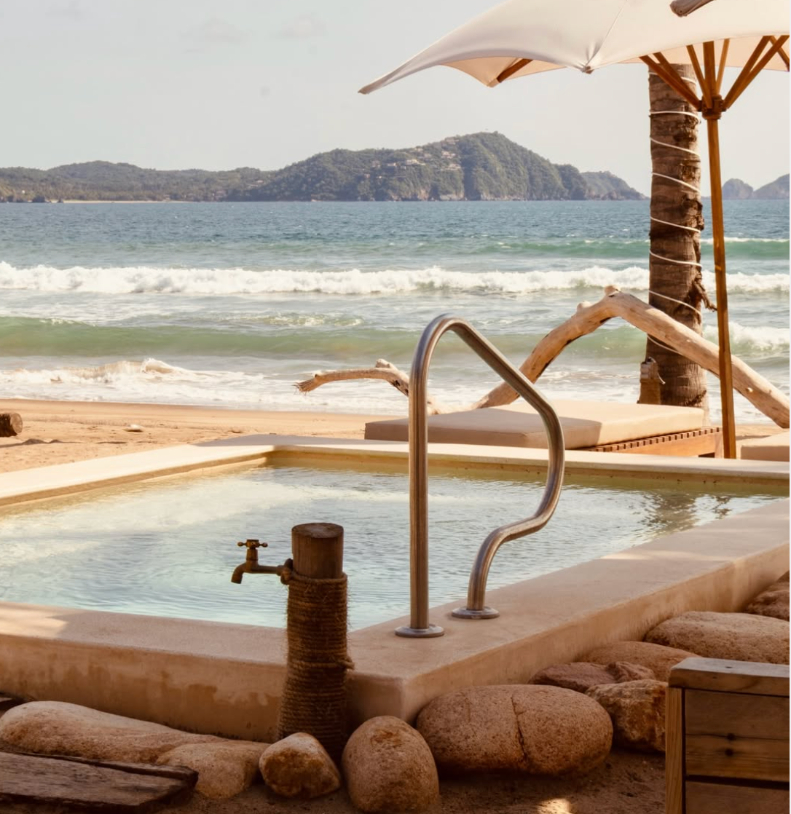
Image Courtesy of Wana Wana Beach Club
Lunch at Wana Wana Beach Club
By the time we arrived at Wana Wana Beach Club, shoes felt optional, and, quite frankly, unnecessary. Set directly on the sand, with the Pacific stretching endlessly ahead, this is the kind of place where lunch turns into an afternoon. A table shaded from the sun, a sea breeze doing most of the work, and the background sound of waves set the tone before the food even arrives. Wana Wana is somewhere you want to stay until sunset because the sunset here was stunning.
The menu leans into the region’s seafood, and every dish was a cultural experience. You can either choose to take a swim in the ocean or the Beach Club’s jacuzzi-style pool. There is also a swanky new coffee shop where you can find frappes, capuccinos and much more. Wana Wana doesn’t try to impress, and that is its greatest charm.
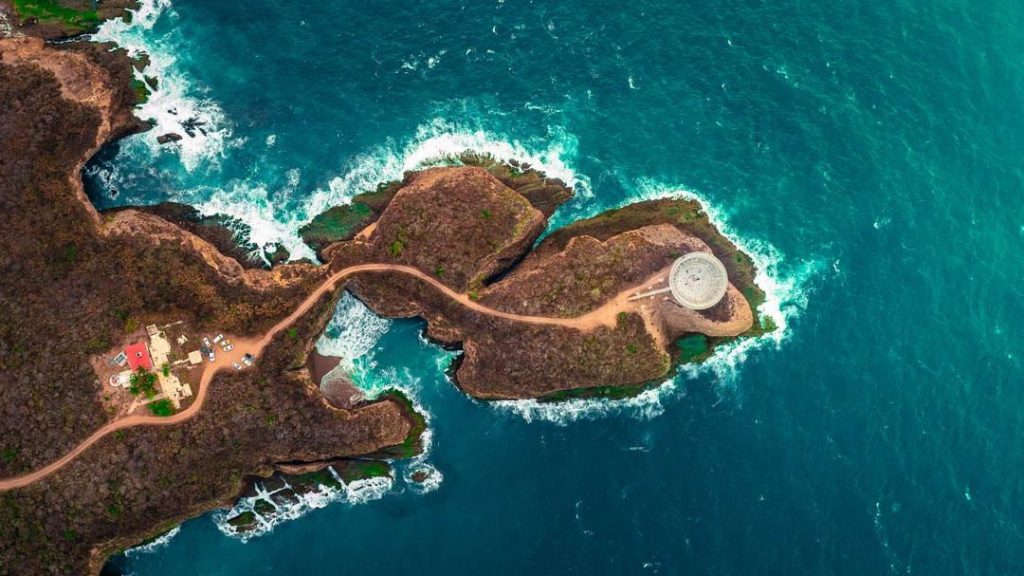
Image Courrtesy of Costalegre’s Official Website
Sound Healing at La Copa del Sol in Careyes
Sound Healing uses the powers of frequency and intention to reset the nervous system, return the body to a natural state of ease and harmony. Perched high above the Pacific, La Copa del Sol is impossible to miss, a monumental, sculptural space that feels otherworldly. The sound healing session unfolded slowly, guided by experienced practitioners and coordinated with the support of Pacific Adventures, whose understanding of the region ensured a thoughtful, unhurried experience.
Standing inside that massive concrete bowl with the sound of the ocean echoing off the walls, the ‘schedule’ of the trip completely disappeared. It’s a strange, beautiful place that forces you to just listen. The 35-foot-high structure offers a serene, resonant, and cliff-side setting with ocean views, designed to facilitate deep meditation, relaxation, and reconnection with nature.
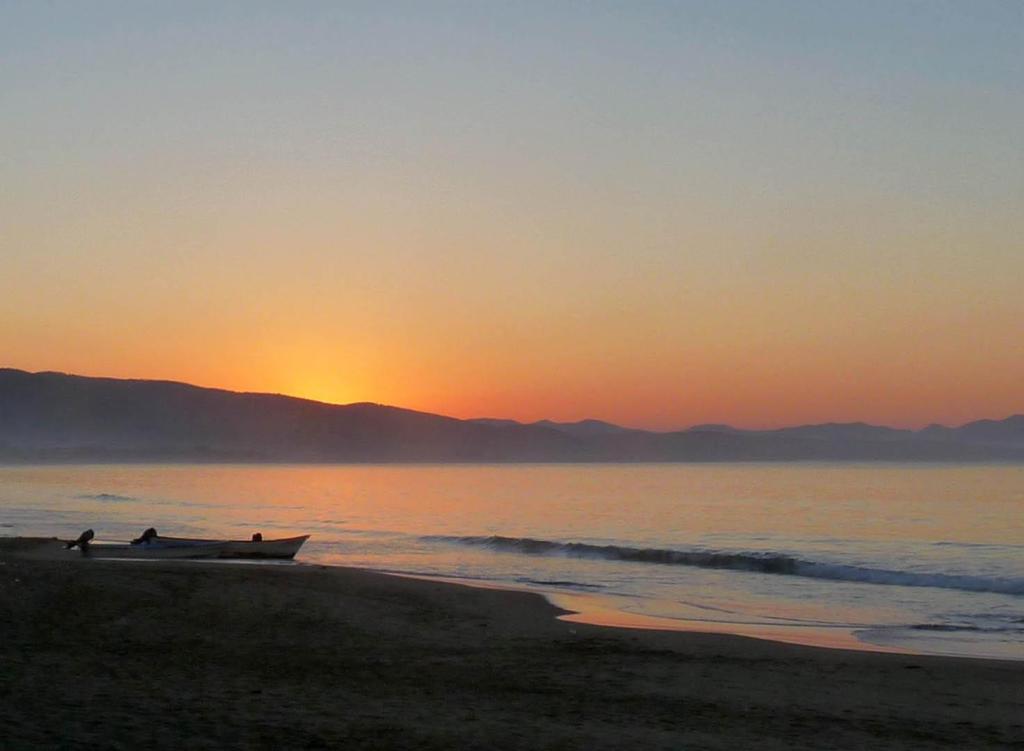
Image Courtesy of Costalegre’s Official Website
Sunrise in Chamela Bay and the Islas Cocinas
Before the sun fully rose, we did too, stepping quietly onto a boat as dawn began to hint at the horizon. Gliding across the glassy waters of Chamela Bay, we headed toward the protected Islas Cocinas, watching as the sky shifted from deep blue to soft gold. Gradually, jungle-covered hills and volcanic rock formations emerged from the darkness, their reflections mirrored on the surface of the sea. We reached a beach, and it was just us. Isla Cocinas is an undeveloped, protected, and tranquil island with crystal-clear turquoise waters and white sand beaches, and it was just a 20-minute boat ride from Punta Perula.
Once the sun climbed higher, we slipped into the water to explore the bay’s marine life, spotting dolphins nearby as they moved effortlessly through the waves. Curated with the support of Danny at Pacific Adventures, the experience felt intimate and respectful, allowing nature to lead the moment. Floating in the warm Pacific waters as the day began, it became clear why Costalegre is often described as one of Mexico’s last truly wild coastlines.
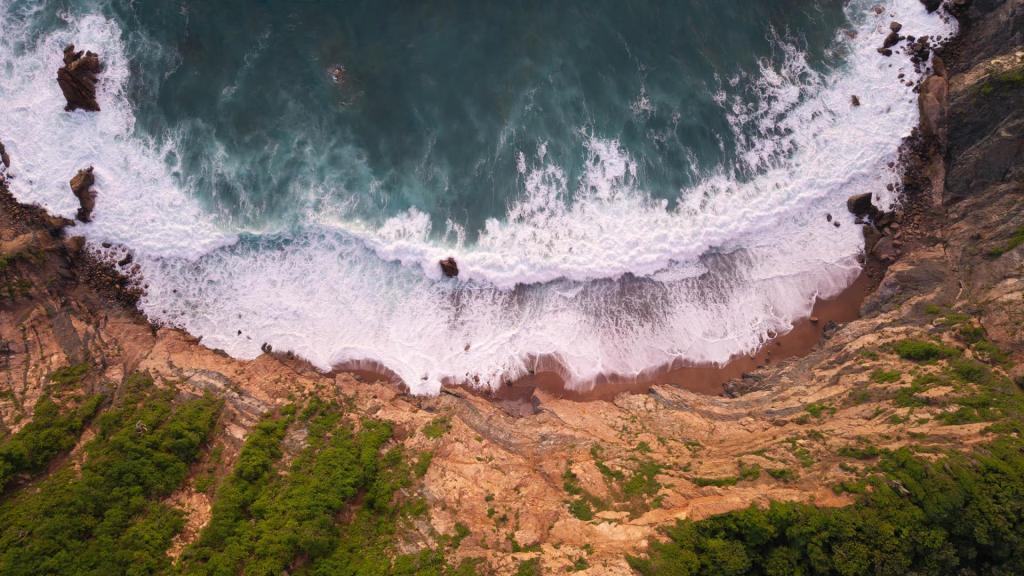
Image Courtesy of Costalegre’s Official Website
What Makes Costalegre Special
Nature isn’t a side-show in Costalegre; it’s the main event. You’ll see crocodiles in the mangroves and whales in the bay, but it doesn’t feel like a staged tourist attraction. It feels like you’re just a guest in their home. That same respect for nature shapes daily life beyond the shoreline. El Tuito offered us a glimpse into a slower rhythm rooted in tradition, where craftsmanship, local produce, and social life revolve around the town plaza. Along the coast, Careyes presented a contrasting expression of Costalegre, one shaped by art, architecture, and a long-standing dialogue with nature.
As well as nature, Costalegre offers a lot of luxury. This is true luxury that never feels forced, but luxury delivered by locals that creates memories, relaxation and a deep desire to return quickly to this magical part of Mexico. Off the beaten track is a term often used, but for Costalegre, it felt like we were coming home to a cherished place.
To discover more, visit: costalegre.com
View this post on Instagram