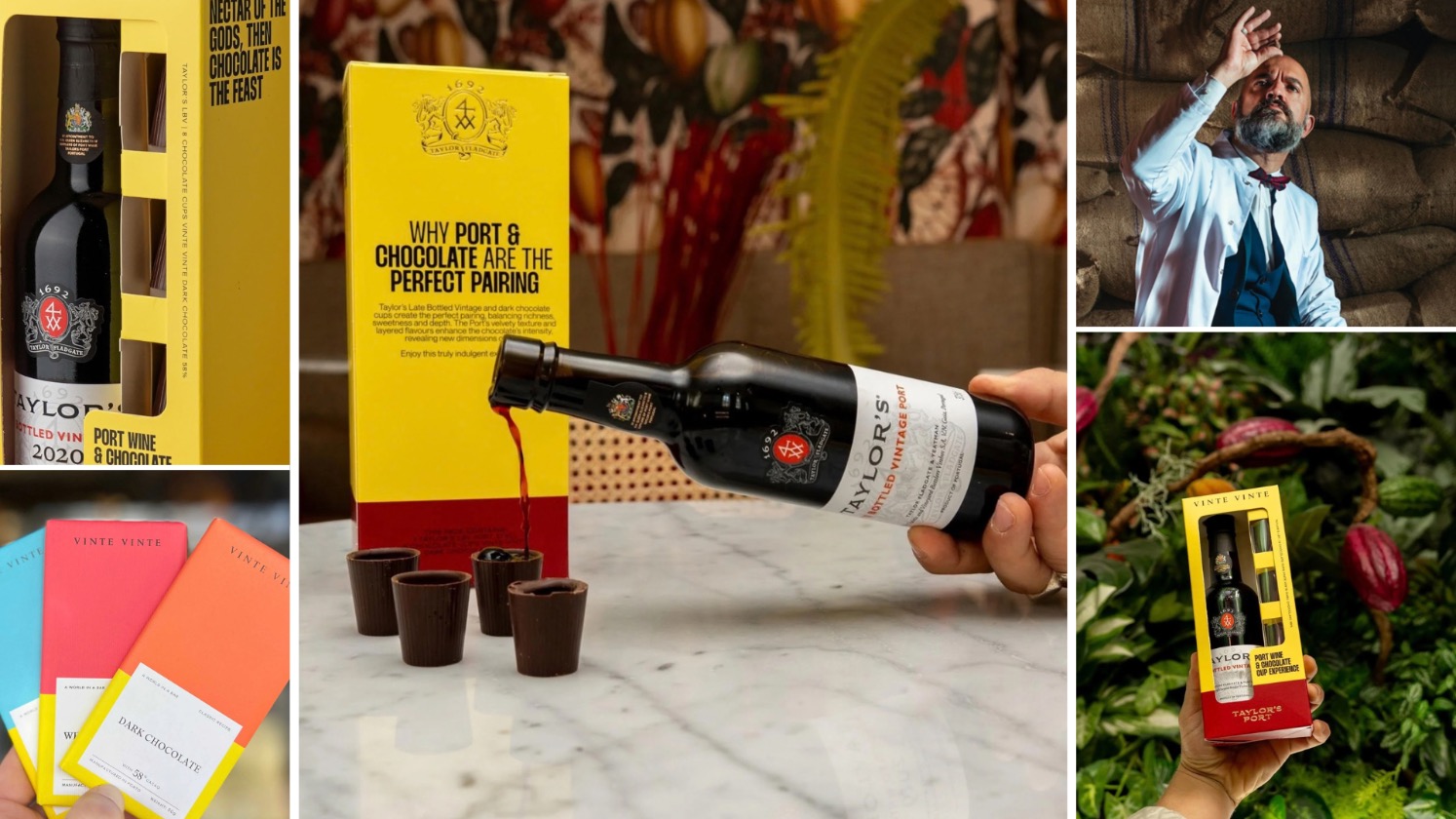
Few pairings are as naturally harmonious as Port and chocolate — two products of terroir defined by richness, depth, and centuries of expertise. At the intersection of these worlds sits Vinte Vinte, the chocolate house created by Taylor’s Port to explore the remarkable pairing between fine cocoa and fortified wine. Rooted in Douro and influenced by the finest cacao origins, the brand represents a blend of heritage and modernity.
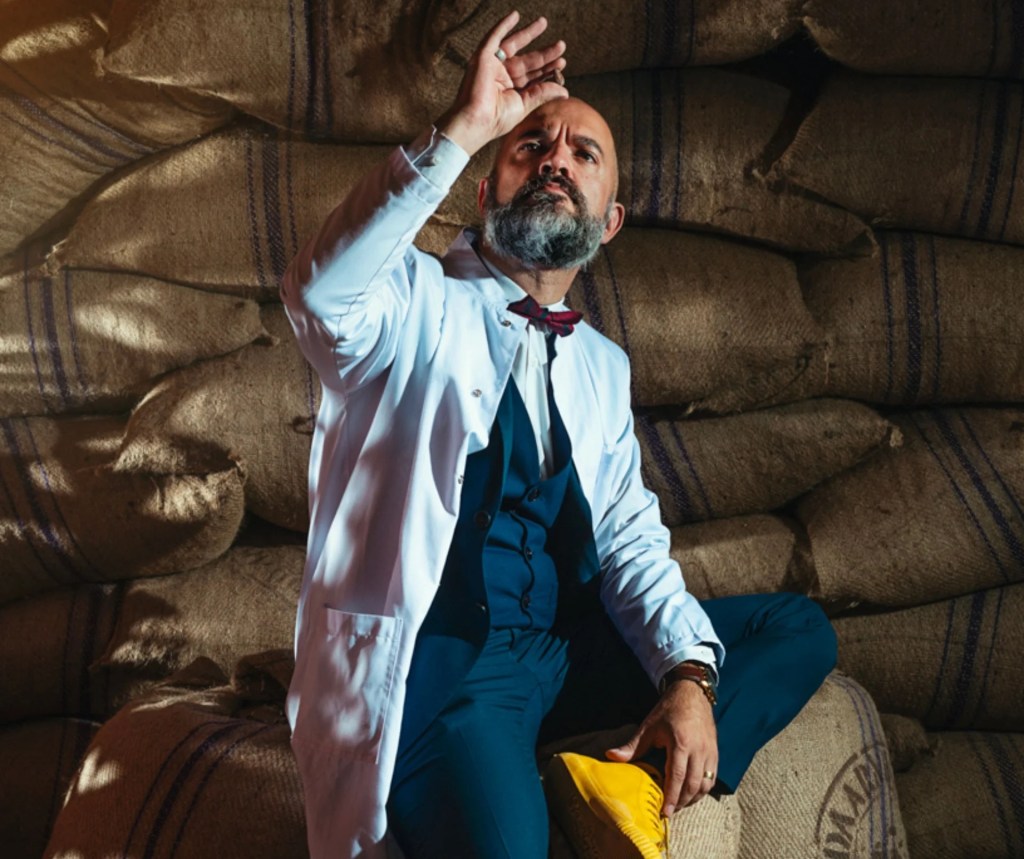
We caught up with Pedro, the driving force behind Vinte Vinte, to examine how artisan chocolate can reinterpret centuries of Port heritage. From bean-to-bar craftsmanship to innovative tasting experiences such as Taylor’s x Vinte Vinte Port Cups, he shares his philosophy, experience, and sensory artistry behind this advancing partnership.
How did it all start?
Vinte Vinte was born from a simple but ambitious idea: to create a chocolate brand that reflects the same dedication to provenance, craftsmanship, and excellence that defines Taylor’s Port.
The name, Vinte Vinte, translates as ‘20/20’, referring to the geographical location of the so-called cocoa belt: twenty degrees North and twenty degrees South of the equator, and the year 2020, when the project truly came to life. The brand is committed to the creation of bean-to-bar chocolate, sourced from the highest-quality raw materials from the best cocoa plantations and handcrafted in Vila Nova de Gaia, Portugal.
From there, Vinte Vinte has become a highly decorated chocolate house, taking home thirty-six medals at the Academy of Chocolate Awards since 2021. (6 Gold, 14 Silver, 19 Bronze).
You come from a family deeply rooted in the Douro. How did that heritage shape your relationship with port, chocolate and other luxury ingredients from an early age?
I started my professional career as a Chef many years ago, before evolving into chocolate making. Since the very start of my career, I’ve had absolute respect for the ingredients, the terroir and the process, and have always been very aware that eating it is only the final step of the agricultural process: we cannot and should not disconnect the end product from all the previous stages. What started as a small project long ago ended up being a career change, thus the statement “chocolate chose me”.
Training and working across the world as an Executive Chef brought global influences back to my work in Portugal. Exposure to different cultures and ingredients during my 31 years in the food and drink industry has inspired me to create flavours and textures that provide a truly sensory experience.
To gather all the knowledge necessary to inform Taylor’s The Chocolate Experience by 20/20 museums, I began extensive research – travelling to cacao-producing regions along the cacao belt. The expertise gathered on the cultivation, harvesting and processing of cocoa returned with me to Portugal — the perfect bean-to-bar recipe in hand.
Wherever I travelled, I carried this passion with me — that deep respect for terroir and craftsmanship. Vinte Vinte is, in many ways, the meeting point between that global experience and my roots.
Port and chocolate are both products of place. How does the terroir of the Douro express itself differently when paired with fine chocolate?
Port is the purest expression of the Douro’s dramatic landscape: intense sunlight, steep vineyards, schist soils. It gives us structure, depth, concentration and remarkable aromatic complexity.
A single-origin bar, like Vinte Vinte’s Terroir Madagascan 70%, magnifies Port’s specific terroir and ageing process. High-fat, single-origin beans create a silky barrier, reducing alcohol sensation and making a powerful wine feel velvety and much sweeter.
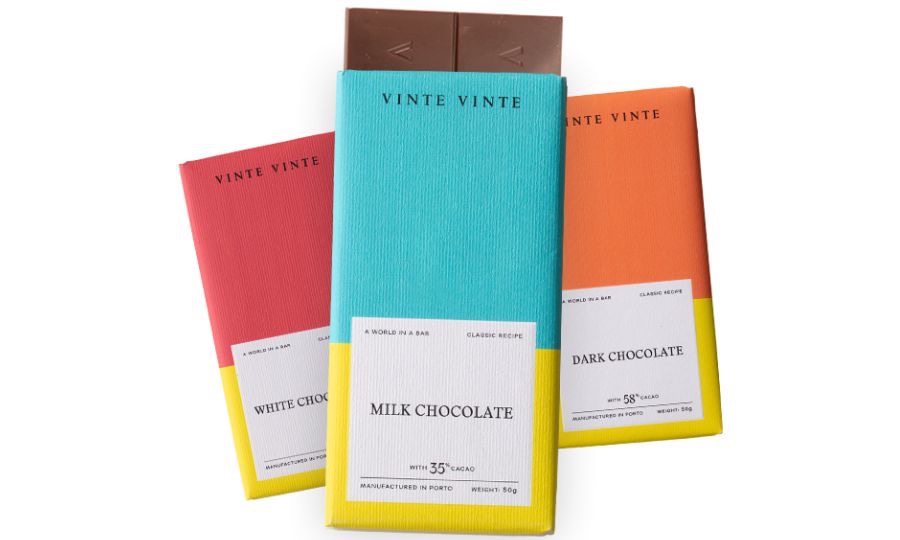
Single-origin cocoa isn’t blended for consistency; it retains wild, volatile flavour compounds like citrus, tobacco, or earth that can enhance Port when paired perfectly. Vinte Vinte’s Classic 70% dark chocolate will amplify a Ruby Port’s fruity notes, whilst Vinte Vinte’s Classic 35% milk chocolate enhances the caramel flavours created by wood-ageing when matched with Taylor’s 10-Year-Old Tawny Port.
What makes Vinte Vinte special?
In 2020, Taylor’s became the first major Port house to create its own dedicated chocolate brand, Vinte Vinte, specifically to pair with its wines, revolutionising the way we enjoy Port.
The bitterness of chocolate and the sweetness of Port combine to create something special, the kind of contrast that works best in a pairing. To delve into the science: chocolate’s high-fat content protects a consumer’s palate from Port wine’s alcohol taste, minimising alcohol sensation. Thanks to this, you get an enjoyable pairing, with each enhancing the flavour of the other.
Vinte Vinte is working to remove stereotypes of Port as an ‘old man’s drink’, making it resonate with a modern audience. Who isn’t a fan of chocolate? It is an everyman’s treat and has helped broaden Taylor’s audience.
Port isn’t just for cheese boards or Christmas. Tell us about the Taylor’s x Vinte Vinte Port Cups and what makes them special?
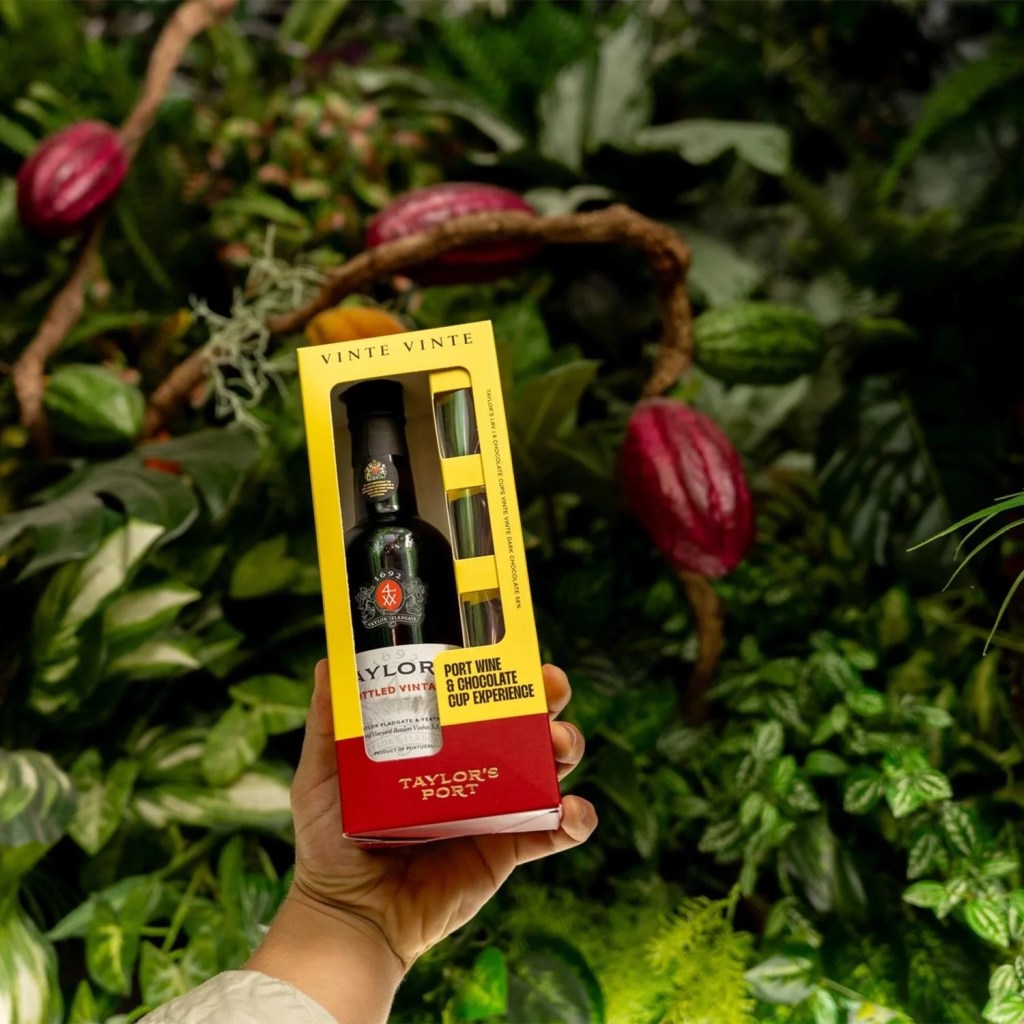
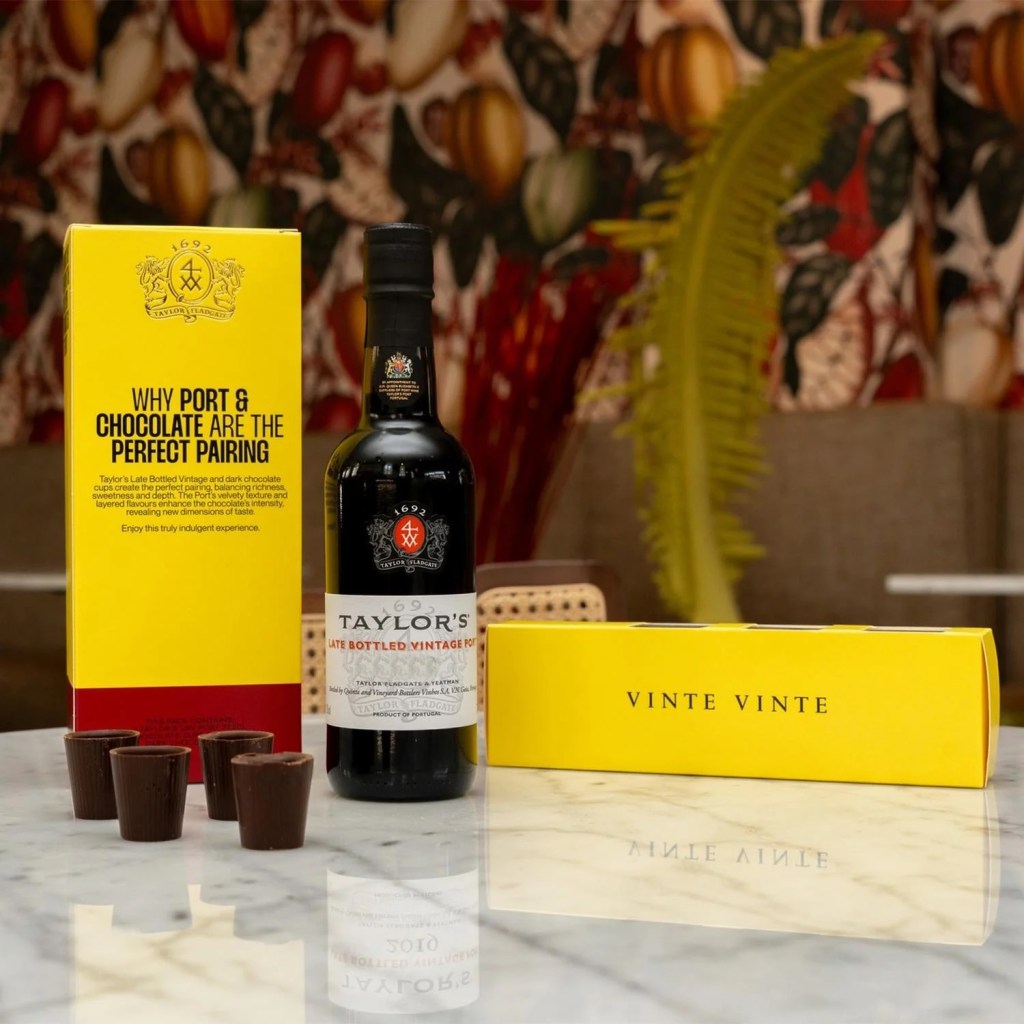
The Taylor’s x Vinte Vinte Port Cups were created to challenge convention. Port deserves modern rituals. These chocolate cups are handcrafted with fine dark chocolate and designed to be filled with Port, whether a vibrant Late Bottled Vintage or a silky 20-Year-Old Tawny. The warmth of your hand slightly melts the chocolate as you sip, subtly integrating cocoa aromas into the wine.
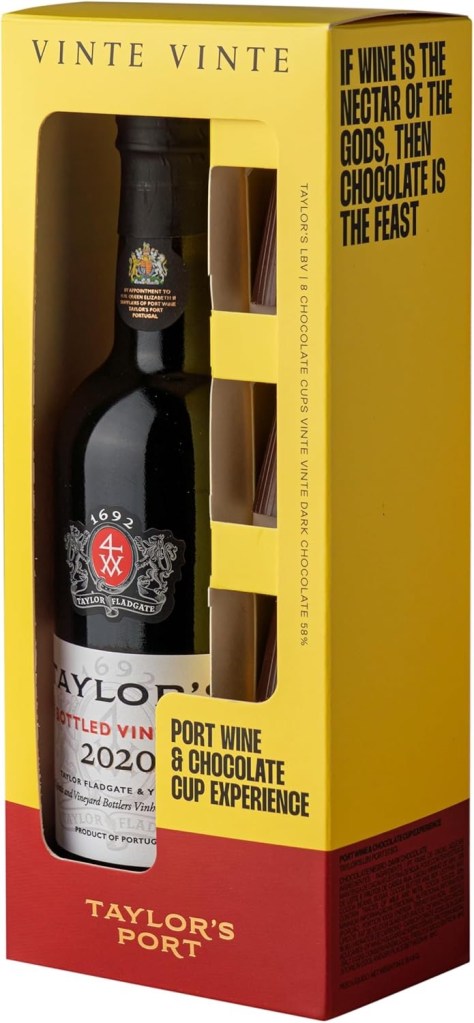
Consumers are seeking experience; they don’t want boring products — they want to be entertained by their food and drink. Vinte Vinte Chocolate Cups are edible, artisan 58% dark chocolate cups designed specifically to pair with Taylor’s Late Bottled Vintage Port. Pour the Port into the chocolate cups, drink the Port, eat the Cup. Simple. Delicious.
A modern pairing twist (and a great conversation starter at any dinner party), this product assists the de-seasonalisation of Port, moving beyond its stereotypical associations with older generations and Christmas in a more accessible format. For instance, Vinte Vinte Port Cups make a thoughtful gift for non-festive, chocolate-led occasions such as Valentine’s Day or Easter. The Vinte Vinte x Taylor’s Port Cup Pack is priced at £20 and available from Amazon.
Aside from chocolate, Taylor’s is a total industry innovator, having brought new bottles like Taylor’s Late Bottled Vintage and Chip Dry White Port to market. By opening up more occasions for consumption (try Chip Dry Port & Tonic as a sessionable, low-ABV summer cocktail), Taylor’s naturally pours itself into the glasses of a modern drinker.
Does texture — silkiness, snap, ganache versus single-origin bar — change the way Port behaves on the palate?
Texture can significantly change the way Port behaves on the palate because it influences how the wine and chocolate interact through melting rate, fat content, and flavour release. In chocolate, three textural sensory properties are particularly important for perception: smoothness, melting behaviour, and hardness. These characteristics affect how quickly the chocolate dissolves in the mouth and how it interacts with the flavours and structure of the wine.
Very smooth or silky chocolate, with fine particles and a high cocoa butter content, melts quickly in the mouth and creates a creamy coating on the palate. This coating effect tends to soften the perception of alcohol and tannins in Port wine, making the wine appear rounder, sweeter, and more harmonious. Because the chocolate melts rapidly, the flavours of both the chocolate and the wine are released gradually and blend more smoothly.
Chocolate with a firm structure and a clean snap behaves differently. Its hardness means that it melts more slowly, so the wine often reaches the palate before the chocolate has fully dissolved. This can make the sweetness, acidity, and aromatic intensity of the Port more noticeable at first, while the chocolate flavours develop slightly later. The desirable texture of chocolate is precisely this balance: a product that is solid and firm at room temperature but melts easily in the mouth due to body temperature, creating a transition from a hard material to a liquid.
The format of the chocolate also plays an important role. A ganache, which contains additional fat from cream or butter, has a very smooth and rich texture that coats the palate and reduces the perception of alcohol in the wine, often making the Port feel softer and richer. In contrast, a single-origin chocolate bar is typically firmer and melts more slowly, releasing its cocoa flavours gradually and allowing the aromatic complexity of the Port to stand out more clearly.
Overall, texture not only influences the mouthfeel of chocolate but also determines how flavours dissolve and how the sweetness, acidity, and alcohol of Port wine are perceived, ultimately shaping the balance and sensory experience of the pairing.
Port has centuries of tradition. Is pairing it with artisanal chocolate a contemporary reinvention or a natural evolution?
There are three classical pairings of Port: cheese, cigars and chocolate. Of the three, Port and chocolate are a match made in heaven.
Although the specific pairing of Port with chocolate is a more modern culinary development, gaining significant popularity in the late 20th to early 21st century, the partnership is natural in that chocolate brings out the technical detail of a sweet, fortified wine. All pairings are good, but some are better than others.
There is still more that can be done. I’m eager to see Port and chocolate at the centre of dining experiences, for instance, in hospitality. As a past Executive Chef, I’d like to see professionals push their culinary creativity when it comes to dessert and make Port the highlight of the course, not just an ingredient or flavour.
If you could create a bespoke chocolate to match one specific Port from your cellar, what would it taste like?
For this exercise, I choose the Taylor’s 1980 Vintage, a ruby Port with cherry-red tones gently fading at the edges and a fresh fruit and spice bouquet, which I would match with a 45% dark milk chocolate made with Java B varietal beans from Indonesia. These cocoa beans have a high citrus acidic profile, strong flavours of leather and smoke, accompanied by notes of tobacco that, when combined with milk, in order to make a dark milk chocolate, will develop a very strong blue cheese note with hints of cigar.
If someone wanted to host a Port and chocolate tasting at home, where should they start?
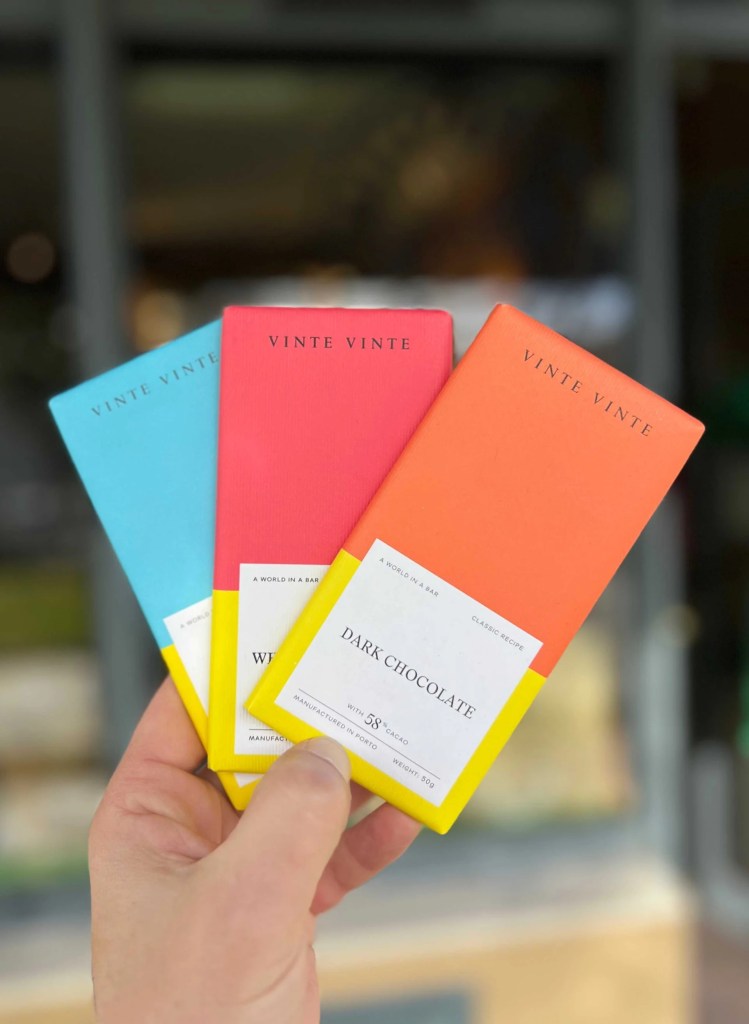
Start with a reliably strong pairing. A reserved Ruby Port, like Taylor’s Late Bottled Vintage, will perfectly complement a 58% dark chocolate like Vinte Vinte’s Classic 58%.
As a general pairing rule, bitterness complements sweetness, and Taylor’s is the best place to start for inspiration. To suggest two exceptional pairings that will delight your guests: Vinte Vinte 70% Dark Chocolate Mexico Soconusco Finca La Rioja with Taylor’s Vintage 2007, and Vinte Vinte 65% Dark Chocolate Limited Edition Peru with Taylor’s 50-Year-Old Golden Age Tawny.
Outside of this, experiment! The perfect pairing is out there; it’s a question of exploring vintages to find their ideal chocolate partner. Good luck!
What is next for Vinte Vinte and Taylor’s?
We’ve had wonderful feedback from younger, Gen Z consumers who have had an enthusiastic response to Port Cups in particular. Vinte Vinte is going from strength to strength, growing at an average rate of 30–35% year on year, and we’d like to continue to grow at this pace, proving that Port is a trendy choice and not just your grandpa’s drink.
The goal is to keep educating on the pairing to a point where consumers automatically associate Port with chocolate. We want the world to know that Taylor’s and Vinte Vinte are at the centre of this movement, teaching the world to buy their chocolate like they buy their wine; to taste, savour and enjoy.
To discover more, visit Vinte Vinte Chocolate
View this post on Instagram
All imagery courtesy of Vinte Vinte.