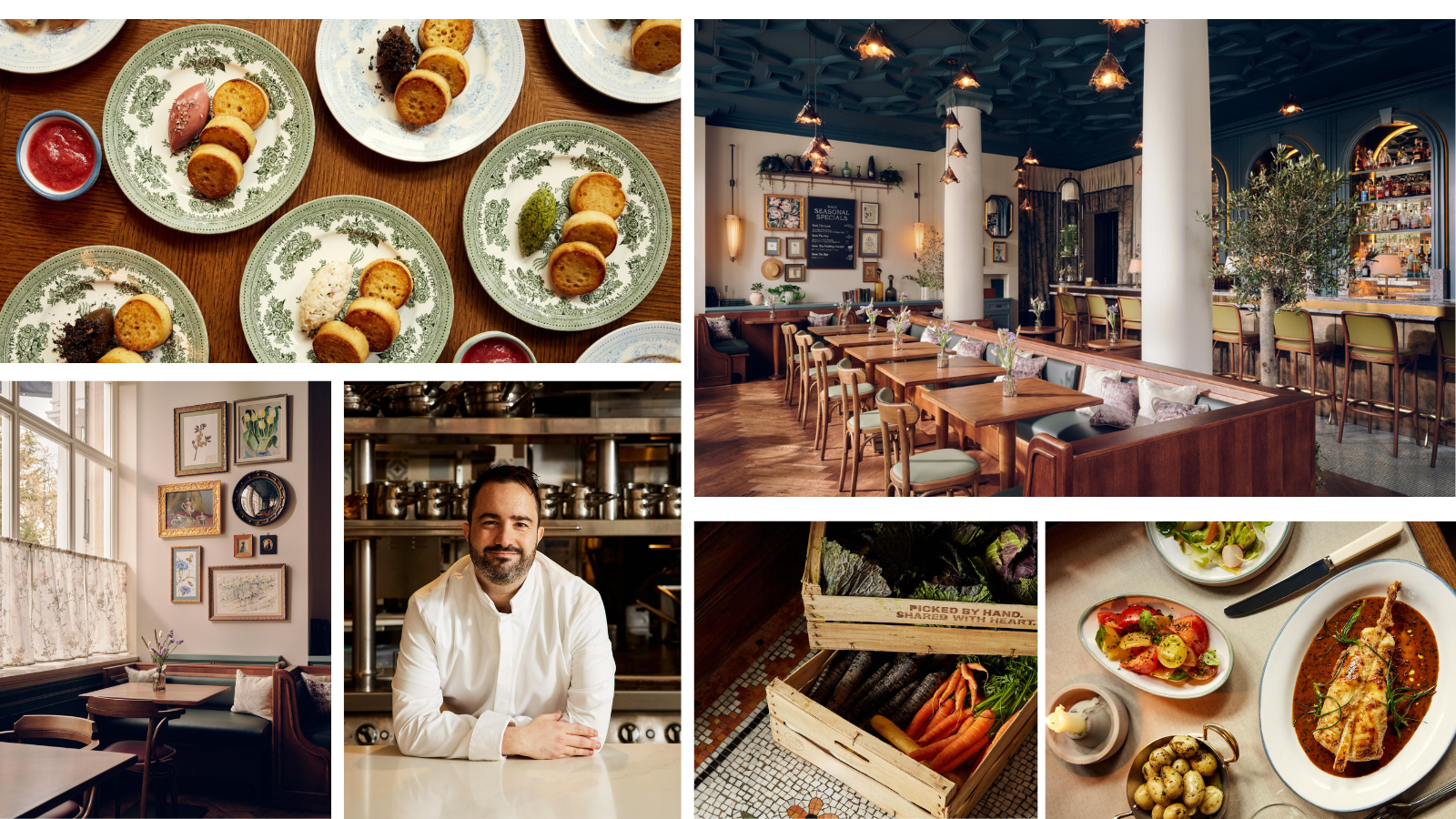
There is a particular trick that very few hotel restaurants ever quite manage: feeling less like a hotel restaurant and more like a proper neighbourhood bistro. Somewhere you would walk past on a Tuesday evening, glance into, and decide on the spot to pop in. Willett’s, the new British bistro at The Cadogan, A Belmond Hotel, pulls it off with ease.
Willett’s sits at the crossroads of Chelsea, Knightsbridge, and Belgravia. It may sit inside The Cadogan, but it has been built first and foremost as a neighbourhood bistro in its own right. Cocktails start at £14, beer is on tap, and a great value two-course set menu runs in the early evening, which, in this postcode, is a rare thing. Look out for some activations throughout the year too like the “Out of This World” concept for the Chelsea Flower Show 2026. The installation features a striking armillary sphere set amongst apple and pear trees, a nod to both celestial time and the traditional British garden. The theme extends to the plate and glass, with a menu that champions UK sourcing from the Isle of Wight to Herefordshire. To mark the festival, “Willett’s Hour” will run daily from 6pm to 7pm, offering signature cocktails for £8, pints for £6, and oysters or sausage rolls for just £1.
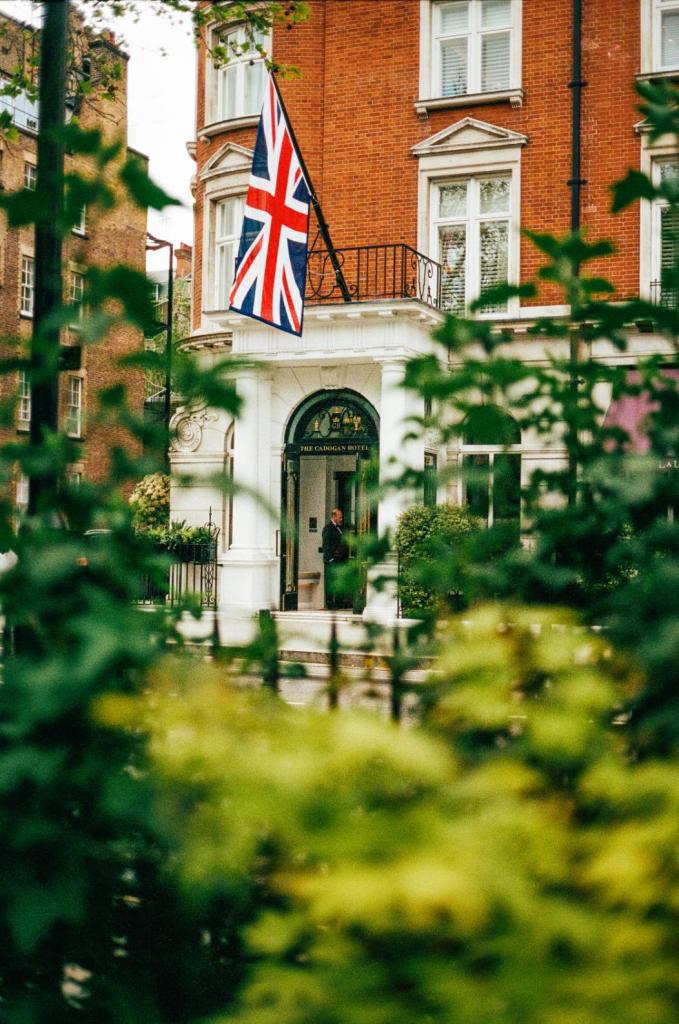
A Proper Neighbourhood Bistro in Chelsea
Willett’s takes its name from William Willett and son, the Victorian builders behind the original 1887 Cadogan townhouse. The reference is more than nostalgic. The whole project has been shaped around the idea of a restaurant rooted in its local fabric, with breakfast, lunch, and dinner served every day and sharing-style Sunday lunches at the weekend.
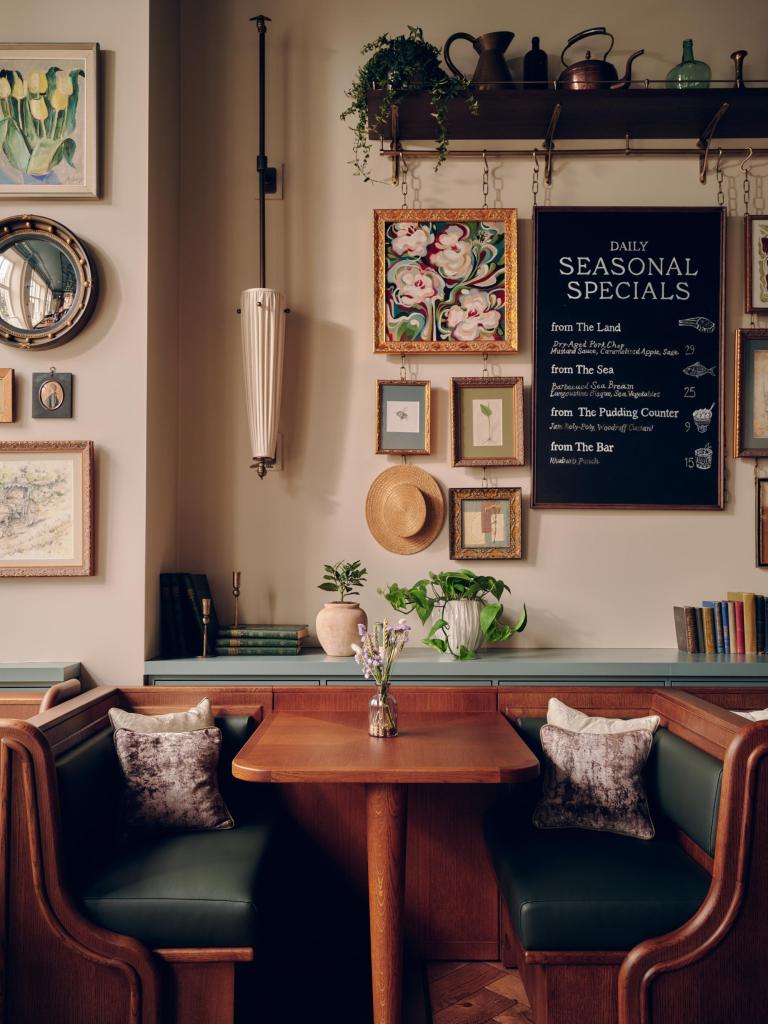
The à la carte menu of confident, unfussy British cooking is served across the bistro, the dining counter, and the bar. Beside it sits a daily specials board organised into four sections that double as a kind of in-house map of the kitchen: from the Land, from the Sea, from the Pudding Counter, and from the Bar. The board is chalked up each morning according to what has come in. On a recent visit, it ran to a dry-aged pork chop with mustard sauce, caramelised apple and sage, a barbecued sea bream with langoustine bisque and sea vegetables, a jam roly-poly with woodruff custard, and a Rhubarb Punch from the bar.
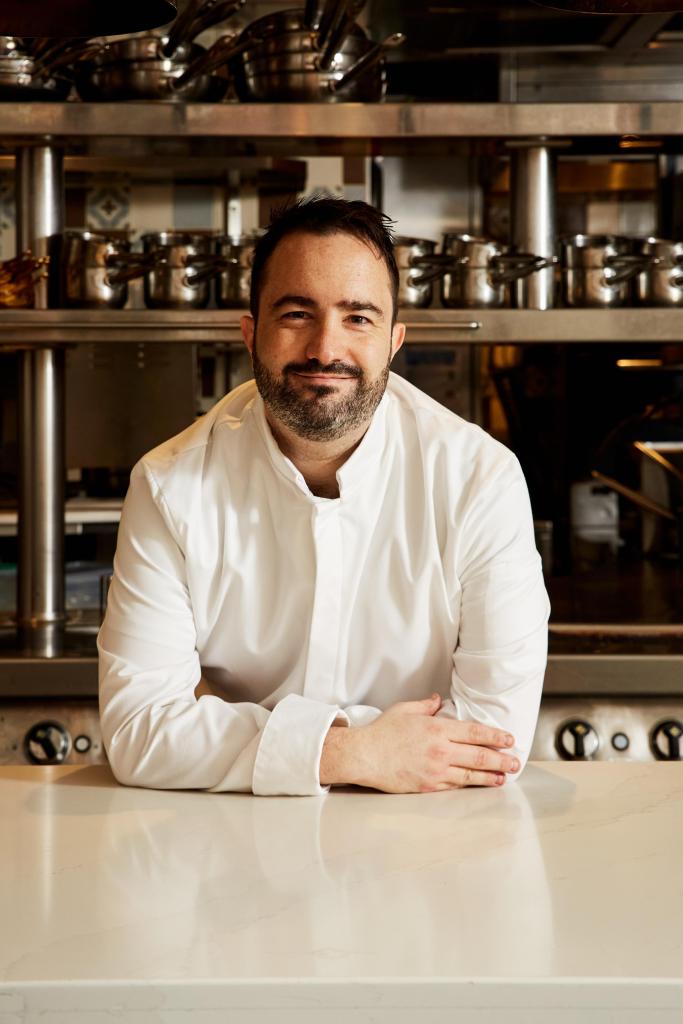
Michael Turner
The kitchen is led by Executive Chef Michael Turner, who spent 13 years inside the Gordon Ramsay Group, most of them at the very top. The Willett’s concept is fundamentally different. There are no white tablecloths to hide behind, no tasting-menu theatrics. Just British produce, a solid classical technique, and a kitchen confident enough to make the best bloody crumpet in London.
Michael has spoken about the ambition for Willett’s in plain terms: a true neighbourhood bistro centred on British cooking and produce, focused on well-loved classics and seasonal ingredients. The result is a menu that feels assured rather than showy, the work of a kitchen that knows exactly what it is doing and does not need to prove it twice. Something is telling, too, about a photo I saw: not a chef-portrait pose, but a chef in his domain holding a great pink-and-yellow bundle of Yorkshire rhubarb. The produce is the headline, and Michael showcases this produce and concept with so much pride and precision.
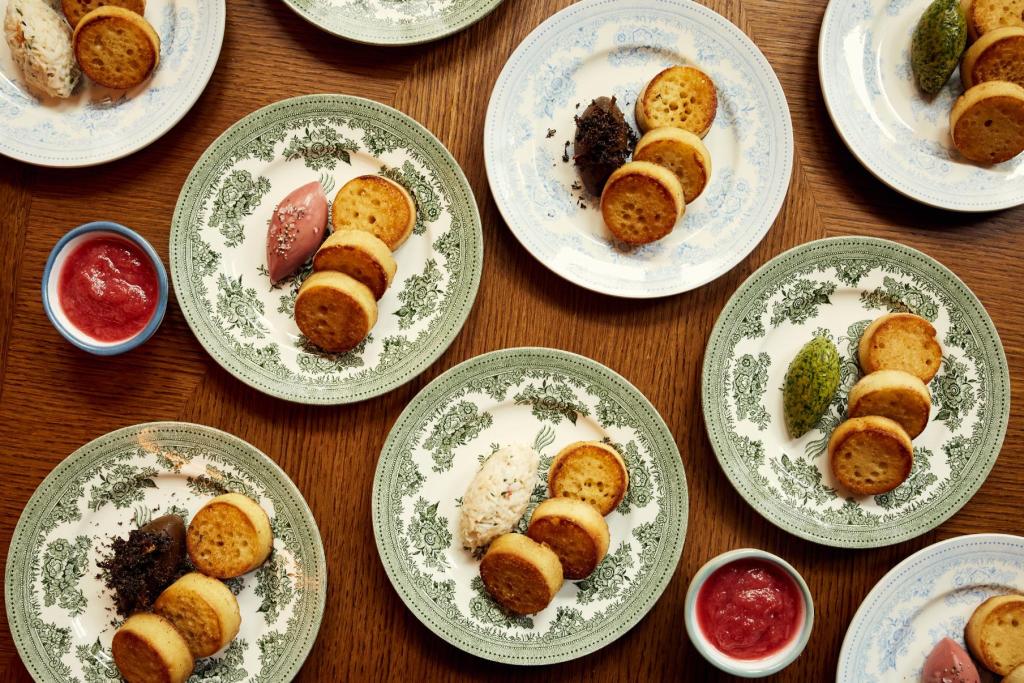
The Crumpets: A Brief History, and Why These Are Worth a Trip Alone
Crumpets are one of the great British contributions to the carbohydrate canon: cratered, spongy, batter-based griddle cakes distinguished from their dough-based cousin, the English muffin, by their porous, butter-trapping top.
The earliest reference dates to 1382, when the theologian John Wycliffe described a “crompid cake” in his translation of the Old Testament. The crumpet as we recognise it today, soft and yeasted with a touch of bicarbonate of soda, is a Victorian invention. Elizabeth David famously dismissed supermarket crumpets as a “travesty”, and she was right. A proper one, fried in butter with a crisp golden underside and a trembling, cave-riddled interior, is a different animal entirely.
At Willett’s, they are made from a homegrown sourdough batter, fried fresh throughout the day and served from breakfast through to late-night. They arrive on pretty pale-blue and green Victorian-style transferware, in trios, with a little quenelle of whatever has been whipped or folded that day, fanning alongside three or four mini sourdough crumpets. The toppings rotate with the seasons, and they are brilliant: Gentleman’s Relish butter (the classic Victorian anchovy paste, whipped through butter), Penny Bun mushrooms with Wiltshire truffle (ceps, basically, and very good ones), duck liver parfait with Yorkshire rhubarb, and dressed Dorset crab. There is a pretty pink one too, and a chocolatey one for the late-night sweet-toothed. You could happily make a meal of these alone at the bar, and many will.
Starters and Bar Snacks
The first item brought to every table was a curious little cup of something alongside a biscuit. I could see other guests smiling and asking what was going on. This surprise, courtesy of the chef, was a savoury take on tea and biscuits. A chicken consommé with a caramelised onion biscuit that looked like a Bourbon. It does not get more British than this. We even went in for a dunk, and it was just wonderful.
From the cold section, there is hand-chopped ex-dairy beef (the older, better-flavoured cattle, properly treated) with mushroom ketchup and the house Willett’s mustard. The beef tartare was ever so tender and cut so well. A Scottish langoustine cocktail with Marie Rose sauce and pink grapefruit is exactly as retro and knowing as it sounds, and quite delicious. There is an English garden salad of radishes, peas, and herbs, and a chilled pea and mint soup for warmer days.
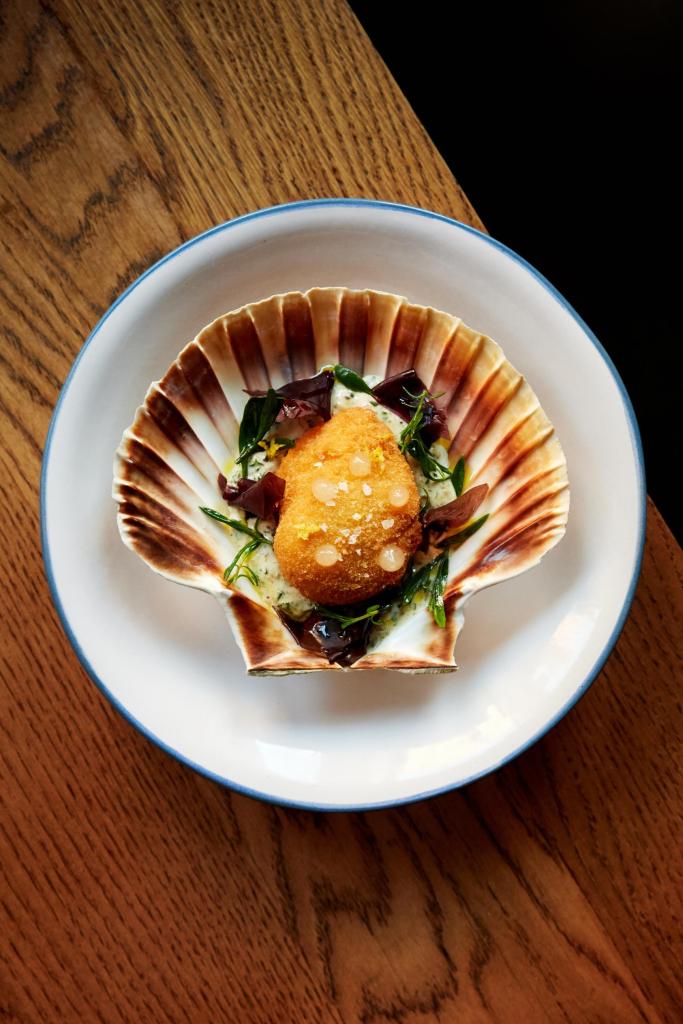
From the warmer end, a small plate of fried duck egg with English asparagus, morels, and wild garlic pesto is one of the most appealing things on the menu: a soft yellow yolk, a green slick of pesto, the earthy chew of morel, all served in a shallow blue-rimmed bowl. Simple, seasonal, and absurdly pretty. Our favourite dish was the Orkney scallop “scampi” with tartare sauce. The scallop is delicately breaded, classic British scampi but very lightly fried, showcasing the flavour of the scallop. This arrived with a very creamy, homemade tartare sauce. Genius, deceptively simple and so precise. This dish was all about respecting this precious ingredient and keeping the dish very bistro-friendly.
The bar gets its own short menu of snacks designed for a beer or a cocktail. Halved Scotch eggs arrive on the same blue-rimmed pottery, the yolk a vivid orange against a herby sausage meat and crisp coating, with a little cup of mustard mayonnaise on the side. Sausage rolls come bronzed and lacquered, sprinkled with black sesame seeds, with house brown sauce. A bowl of pickled vegetables. A pint of properly pulled lager. It is the kind of menu that turns a quick stop-in for a drink into two hours. There is also a terrace, which I am sure will see some delicious summer nights.
Mains
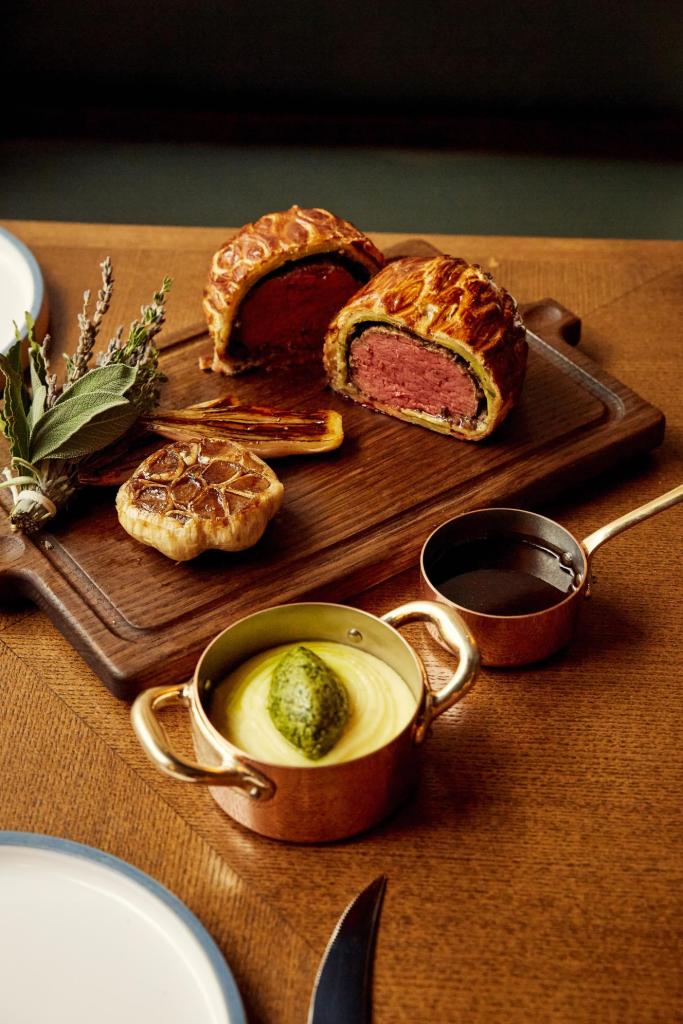
This is where Michael’s years of experience quietly assert themselves. The Willett’s beef Wellington is the dish people are going to talk about: a burnished, lattice-topped dome of fillet and mushroom duxelles in golden pastry, set on a glossy pool of Madeira jus with wrinkled prunes and a scatter of fresh herbs. This dish is also precisely finished at the table for a little bit of theatre. We shared a grilled monkfish shank with a peppercorn sauce. A peppercorn sauce so gentle that it caresses the fish. Pairing a peppercorn sauce with a meaty monkfish sounds simple, but it can so easily overpower delicate white fish, and this was expertly created.
Elsewhere on the à la carte menu sits a Sutton Hoo chicken and morel pie, and a cider-battered gurnard with chip-shop chips and mushy peas served with a little atomiser of malt vinegar, the one moment of theatre on an otherwise grown-up menu. There is a braised lamb faggot for the offal-curious, and a hearty pearl barley porridge with courgette, basil, and Isle of Wight tomatoes. Sundays are given over entirely to British roasts with the finest cuts, served family-style at the table.
Puddings
The pudding counter at Willett’s is treated as a proper department, not an afterthought. Jam roly-poly arrives with woodruff custard, woodruff being an old English herb with notes of fresh hay and vanilla that rarely appears on modern menus. There is a rice pudding with Yorkshire rhubarb jam, and proper custard tarts.
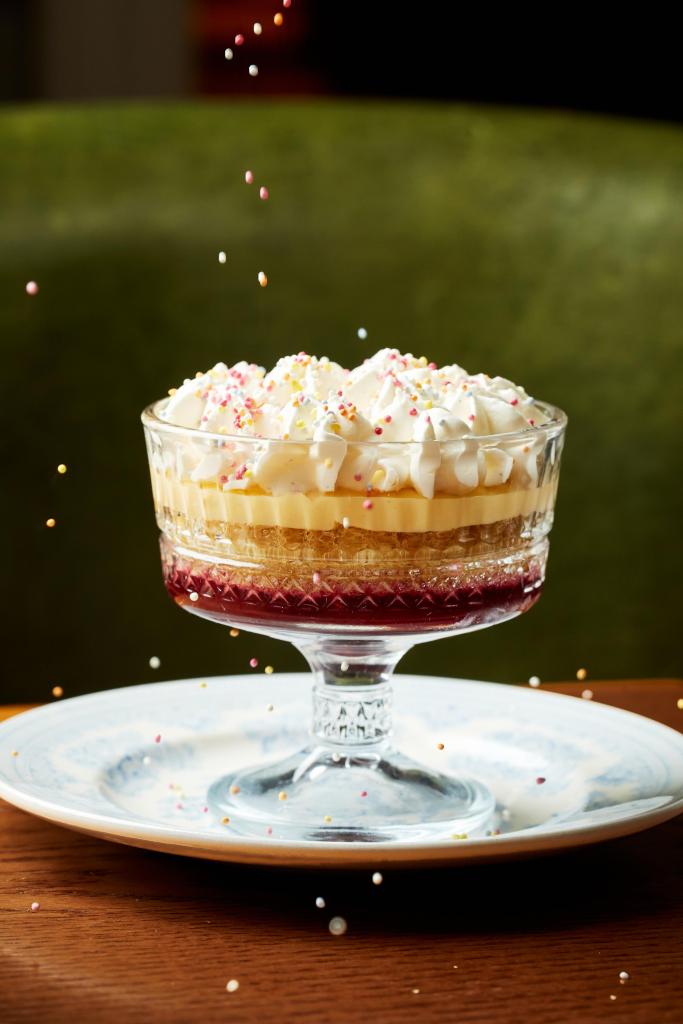
And then there is Granny Campbell’s sherry trifle, the dish that will inevitably become the restaurant’s most-photographed: a cut-glass coupe stacked with visible strata of set custard, sherry-soaked sponge and rhubarb jelly, topped with a dense cloud of vanilla cream piped into tight little rosettes and showered in rainbow hundreds-and-thousands. It looks like a very smart birthday party. And just when you think dinner is over, a petit four trolley arrives with an array of little goodies, full of British flavours to finish the meal.
The Bar: 50 English Wines by the Glass and a Sommelier with a Mission
The drinks programme is where Willett’s makes a confident statement. The wine list runs to 50 English wines available by the glass, which, for the avoidance of doubt, is a seriously ambitious number for any London restaurant, never mind a brand-new one. English wine has come a long way over the last decade, and Willett’s leans into it with real intent. This is thanks to Alessandro Medas, who is on a mission to champion English wine. He is very charismatic and his passion for the grapes of England is infectious.
The wines available by the glass come from producers that the restaurant genuinely believes in. There is London Cru, the capital’s first urban winery, based in a converted warehouse in Fulham and producing surprisingly assured whites and reds, a lovely local tie-in for a Chelsea bistro. Blackbook Winery, another London operation, is pushing serious Pinot Noir from English fruit. From further afield, there is Hattingley Valley in Hampshire, one of the benchmark English sparkling houses, and Chapel Down in Kent.
The thinking is what makes the list interesting. By pouring so widely by the glass, they can gently steer people away from the usual Sancerre-and-Chablis reflex and into English Bacchus, English Pinot Noir, and English sparkling. It is a subtle way of introducing something closer to home, built on the assumption that one glass of Blackbook’s red alongside the beef Wellington will do most of the convincing on its own. For those who want the broader European canon, that is here too, but the centre of gravity sits firmly at home.
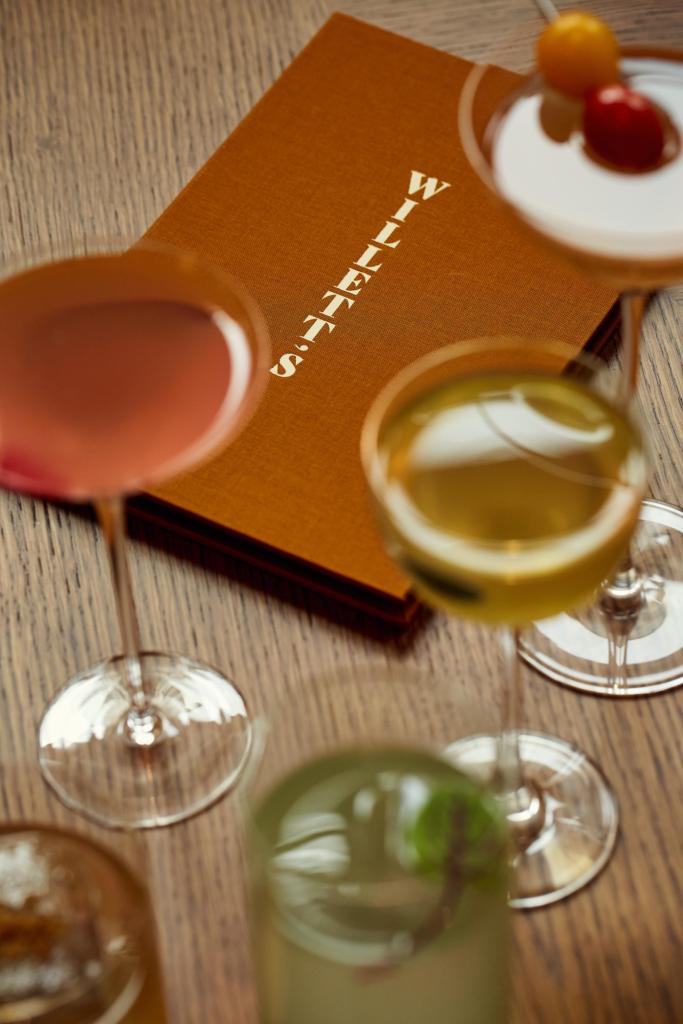
The bar is thoughtfully put together, with a cocktail list that shifts with the seasons. Signature drinks include a Clarified Willett’s Bloody Mary, a Smoked Blackcurrant Old Fashioned, and a Rhubarb Punch made with Yorkshire rhubarb and goat’s milk. Each is carefully considered, with a zero-waste approach and non-alcoholic versions available so nobody is left out.
Heritage Greens, Bronze Detailing, and a Working Open Kitchen
The interiors have been reimagined by Studio Shayne Brady, and the work is accomplished. The original 1887 herringbone parquet has been preserved and worked around, with a palette of heritage greens, warm neutrals, and bronze detailing layered over the top. Forest-green leather banquettes line the walls. Antique mirrors catch the light. Linen café curtains soften the huge sash windows that look onto Sloane Street.
Gallery walls are densely hung with antique botanical prints, gilt-framed miniatures, watercolours, and the occasional convex mirror, the kind of considered clutter that takes months to get right. Terracotta pots of fresh herbs march along the marble mantelpiece, beside lit candles and tall floor lamps with curvy, wavy-trimmed shades.
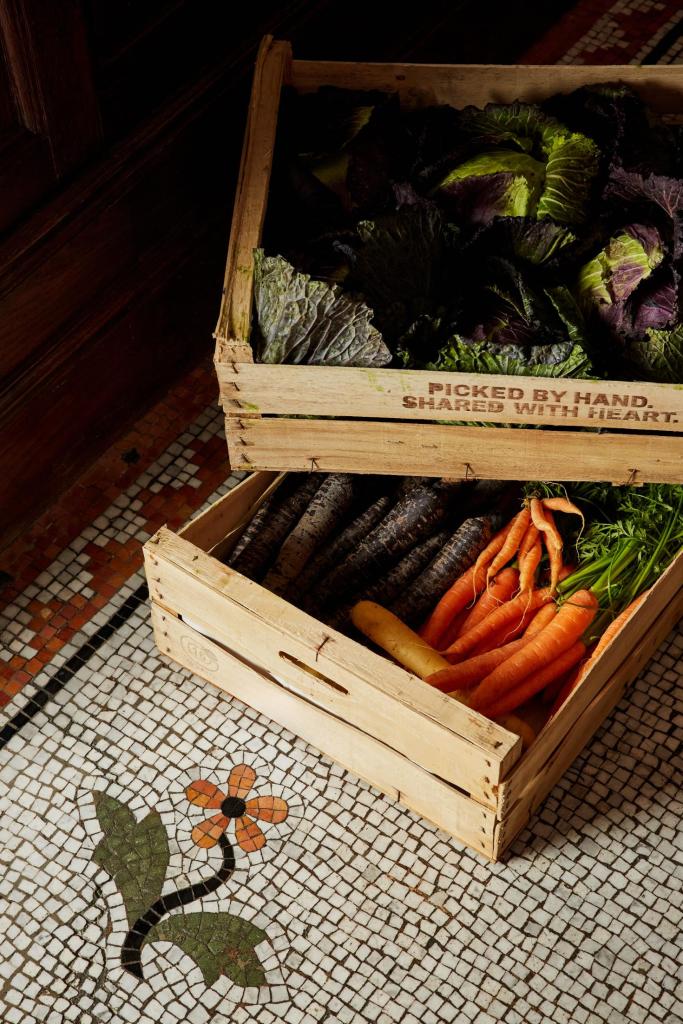
Shayne Brady has spoken of wanting to celebrate the King’s Road’s history of market gardens, and the influence is felt throughout: craftsmanship, agriculture, and abundance, all softened by the warmth of the lighting and the patina of the room.
Rooted in Chelsea, Built for Every Day
Willett’s is not trying to dazzle anyone. That is the point. It feels like the place you walk into twice a week: for a proper Full English on a Tuesday morning, for a glass of London-made Bacchus at the bar on a Thursday, and for that tableside beef Wellington when somebody’s birthday comes around.
For Chelsea, which has spent too many years being either very expensive or very dull, the arrival of a serious, seasonal, sensibly-priced British bistro like Willett’s feels overdue. The Willett family would very much approve.
To discover more, visit Willett’s at The Cadogan
View this post on Instagram
All imagery courtesy of Belmond.