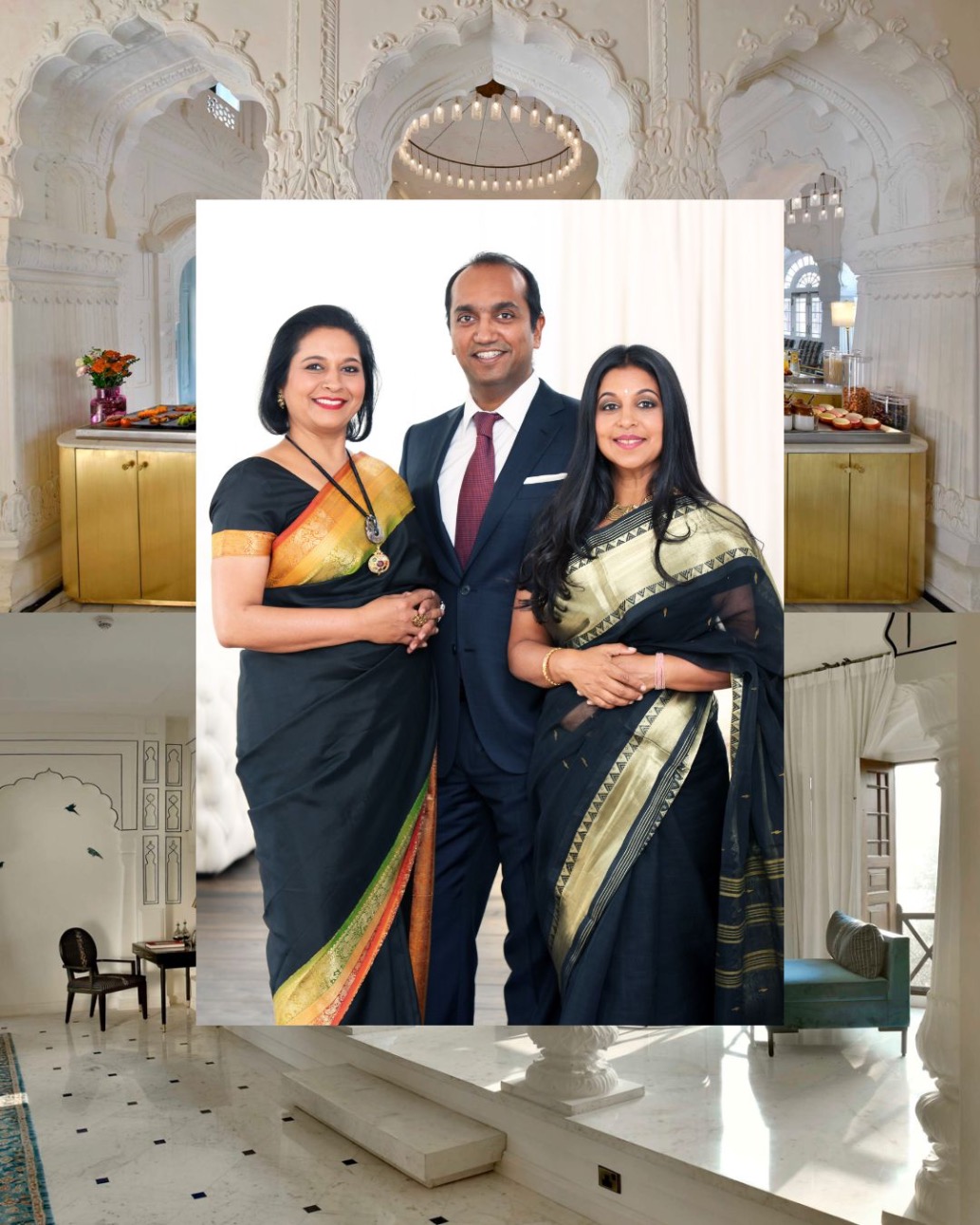
Priya Paul has never believed that a hotel should simply be a place to stay. As Chairperson and Executive Director of Apeejay Surrendra Park Hotels, she has spent decades bringing together bold design, contemporary art and intuitive hospitality, helping to shape THE Park into one of India’s most distinctive boutique hotel brands. A Padma Shri recipient and passionate advocate for innovation and women’s empowerment, Priya has built a career defined by creativity, individuality and a determination to challenge convention.
We spoke with her about the family legacy behind the business, the evolution of Indian luxury and her vision for creating hotel experiences that are Anything But Ordinary.
How did your journey in hospitality begin?
I came into hospitality quite young. I was 22 when I started working in the business and, at the time, I certainly didn’t imagine it would become such a defining part of my life. My father believed hotels were an excellent place to learn because they brought together people, culture, and business under one roof.
When my father passed away, I had to step into a leadership role much earlier than expected. It was a period of intense learning, but it also allowed me to bring my own interests into the business – art, design, music, food, and culture. Those interests eventually shaped THE Park Hotels and our belief that hotels can be far more than places to stay. Whether it is our connection with contemporary art or cultural programming or iconic nightlife, I have always believed hotels should create experiences that connect people to a place.
You have been described as “India’s hotel revolutionary”, but revolutions often begin with a sense that something is missing. What did you feel Indian hospitality was missing when you first began reshaping the hotels?
What I felt was missing was a stronger reflection of contemporary India. Luxury was often defined by formality and grandeur, but India’s cities and people were changing. There was incredible energy in art, fashion, music and food, yet very little of that found its way into hotels.
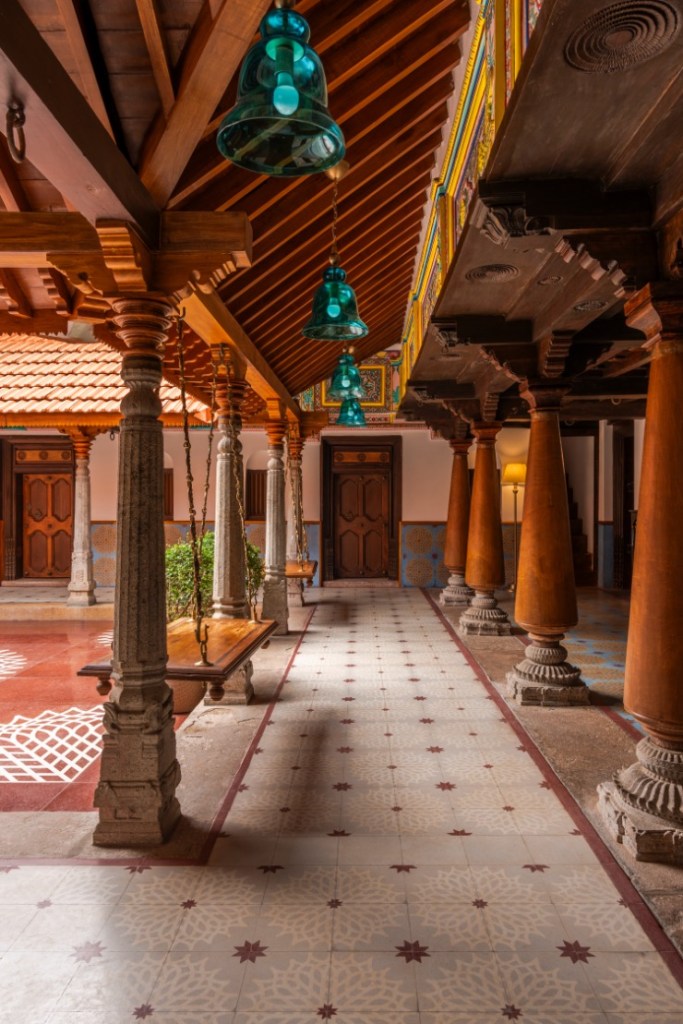
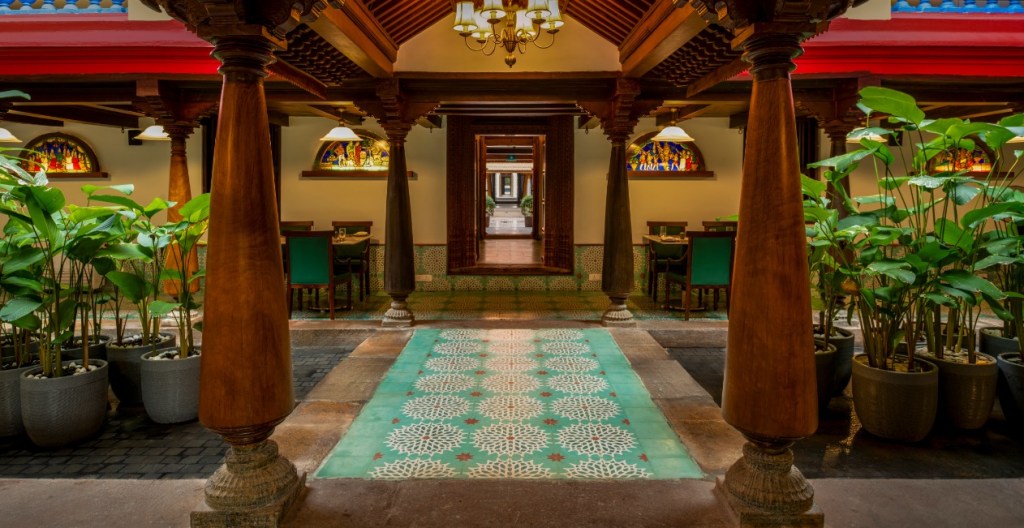
With THE Park Hotels, I wanted to create places that felt more socially connected to their surroundings and more relevant to the way people were actually living. Hotels should be part of the cultural fabric of a city, not separate from it. More recently, we have applied the same thinking in different ways across our portfolio. Zone by The Park was designed around the needs of a younger, more connected traveller, while The Lotus Palace Chettinad and Ran Baas The Palace interpret culture and heritage through a contemporary lens rather than nostalgia.
Luxury in India has often been associated with palaces, grandeur and nostalgia. How do you balance heritage with a more modern, design-led idea of Indian luxury?
I don’t think luxury has a single definition anymore. For some people it is privacy, for others it is service, nature, beauty, space, or being looked after very very well. For us, luxury is still about comfort and service, delivered with warmth and passion.
With heritage, the important thing is not to make it feel like a museum. You have to understand what is important in the history of the place, and then decide how to carry that forward in a way that feels relevant to living now.
The same thinking has shaped THE Park Hotels over the years. While each hotel is contemporary in its design, every property draws inspiration from its city and its cultural context. At Ran Baas, we weren’t interested in recreating the past. We wanted to understand the spirit of Patiala and Punjab, to interpret it for today’s traveller. Similarly, at The Lotus Palace Chettinad, the focus is not simply on preserving architecture, but on creating a living experience of the region’s culture, food and traditions.
Ran Baas brings Punjab into the luxury palace hotel conversation, a space long dominated by Rajasthan. What did you want travellers to understand about Punjab that they may not have seen before?
Punjab has such a rich culture and history, but it has never been part of the international luxury travel conversation in the same way as Rajasthan.
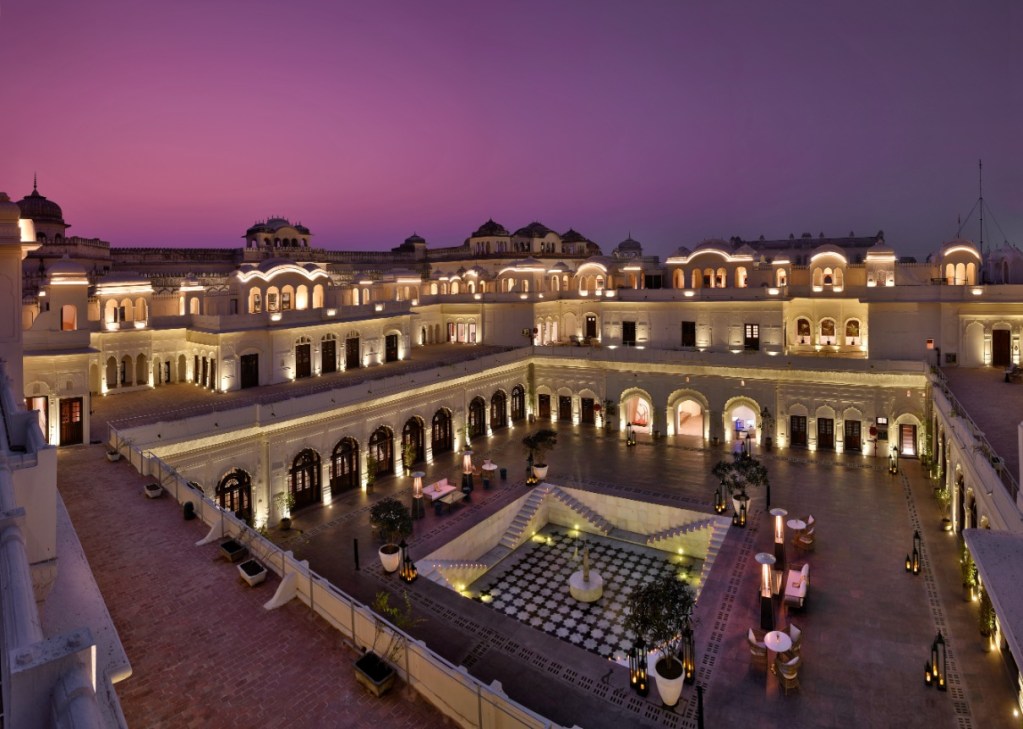
With Ran Baas, we had an opportunity to explore Punjab through Patiala: the history, food, music, craft, royal heritage, spirituality and warm approach to hospitality. Apeejay Surrendra Group has roots in Jalandhar, so there was also a meaningful connection to Punjab from the beginning.
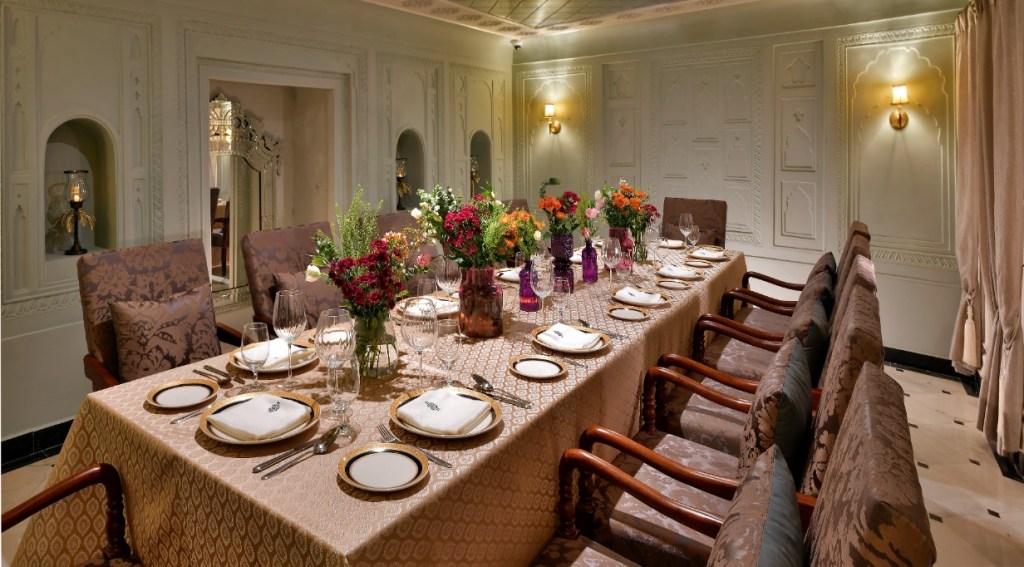
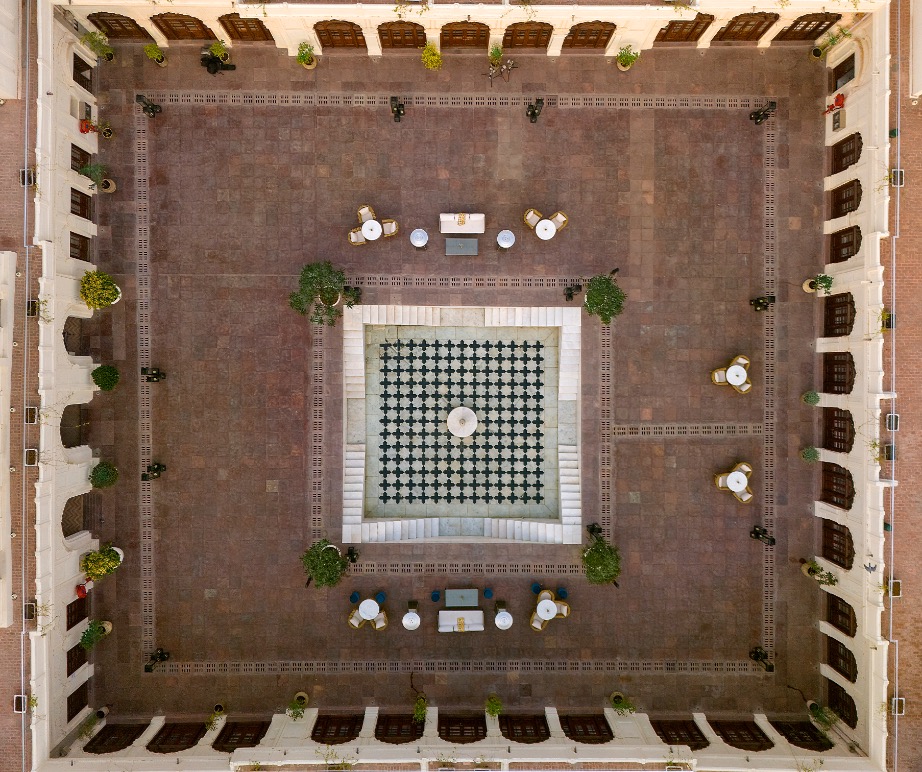
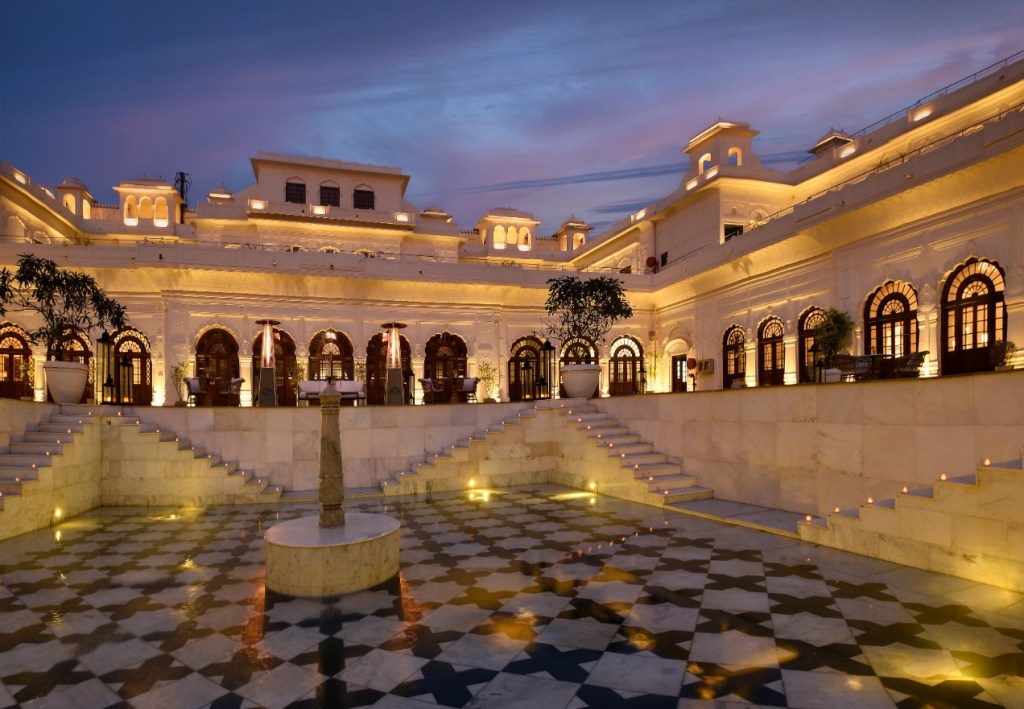
Patiala has a layered history and what was important to us was that every part of the hotel contributed to that story. The Lassi Khana, once the established erstwhile kitchens, now has a stunning pool and wellness space. Our bar, The Patiala, celebrates the city’s convivial spirit and the Punjabi fondness for gathering over food and drink, while our culinary experiences draw inspiration from recipes across the original eight provinces of Punjab, bringing together flavours and traditions that transcend present-day borders.
I hope travellers leave with a deeper understanding of Punjab – not simply as a destination known for its exuberance, but as a place of remarkable depth, refinement and cultural richness. If they leave feeling they have experienced the true spirit of Punjab, connected with its people and traditions, and discovered a side of the region they hadn’t expected, then I think Ran Baas has done what it has set out to do.
India is increasingly attracting luxury travellers who have “done” the obvious routes. What do you think they are now searching for emotionally, not just geographically?
I think people want to feel more connected to a place when they travel. They still want comfort and beauty, of course, but they also want to feel that they have discovered something, learned something, or experienced a place in a more personal way.
India is so vast that even people who know the country well have only seen a small part of it. The obvious routes are wonderful, but there are many other parts of India with extraordinary histories, food, craft, architecture and ways of living. Punjab and Chettinad are both examples of that and there are many rich discoveries for travellers.
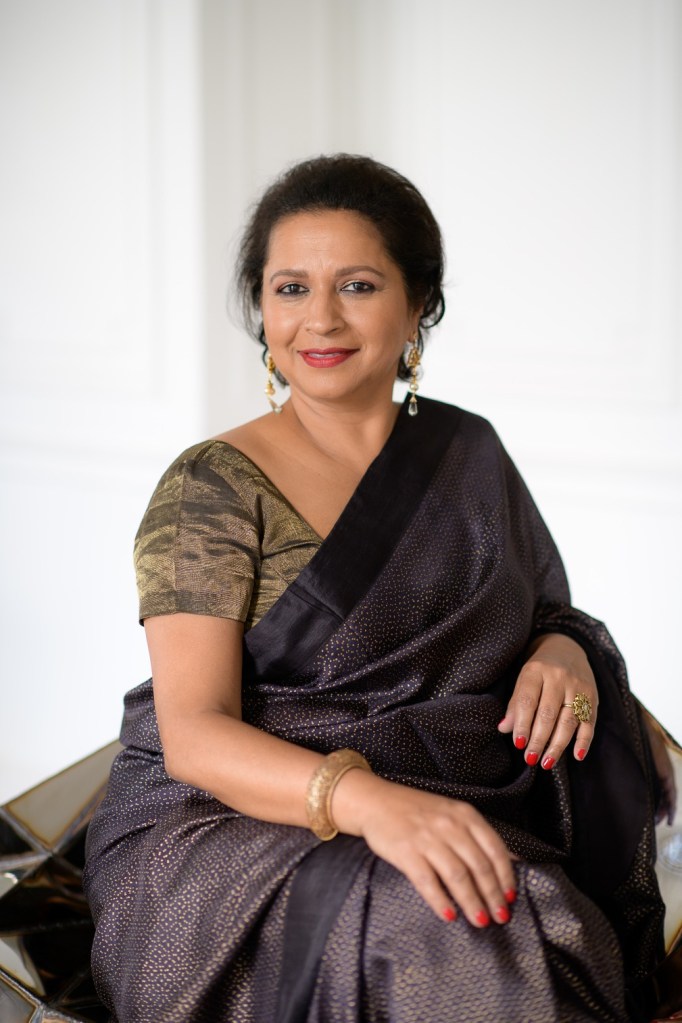
Priya Paul
You have spent significant time between India, the UK and the US. Has that international perspective changed the way you see Indian hospitality, or made you more protective of its distinctiveness?
Both, I think. Spending time outside India gives you perspective because you see what works internationally, how people travel, what they expect, and how design and service continue to evolve. But it also makes you more aware of what is distinctive about India.
Indian hospitality has a warmth and generosity that is very special, and I don’t think we should lose that in the pursuit of being international. The challenge is to meet global expectations without becoming generic. We need to deliver world-class comfort, service and professionalism, while staying true to what makes India unique. Its colour, warmth, informality and sense of occasion are all part of our identity, and those are strengths we should celebrate rather than dilute.
Design has always been central to your hotels. Do you see design as decoration, storytelling, provocation, or something more strategic than all three?
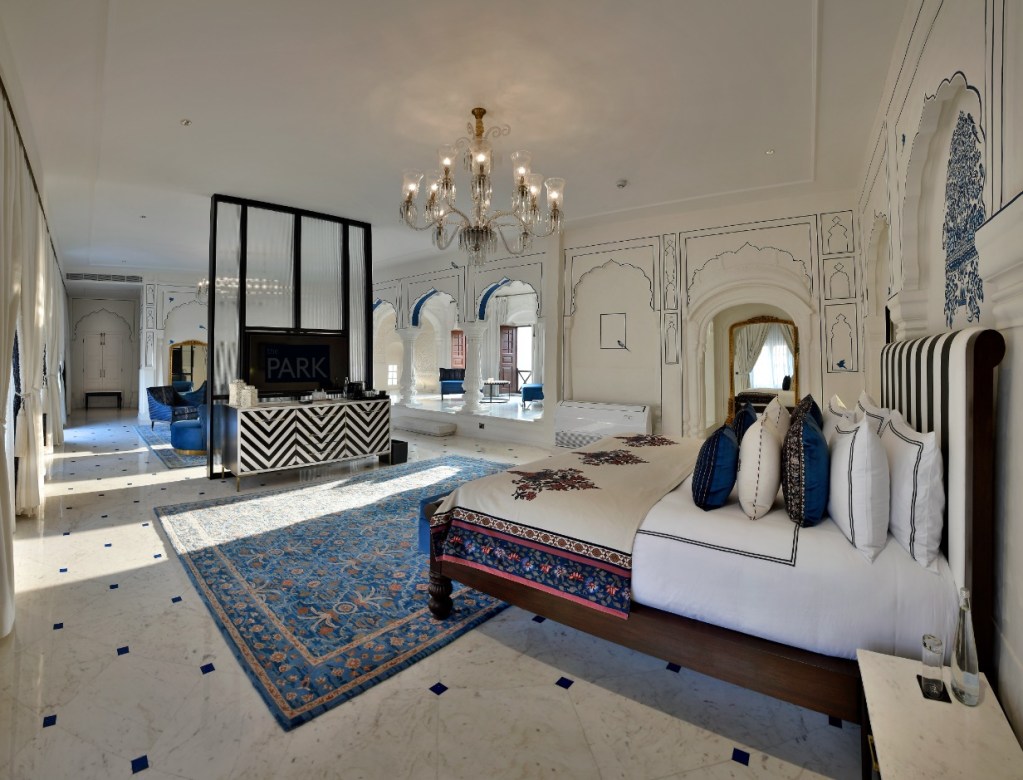
Design to me is a way of expressing identity, telling you where you are, what the hotel believes in, and how it wants you to feel. It can provoke, delight and create memory, but it also has to work. A hotel cannot only be an art installation. People have to live in it, sleep in it, eat in it and move through it. For me, there has to be a balance between form, function and a sense of fun.
At THE Park Hotels, design has always been central to who we are. Every property has its own character because every city has its own story, and I’ve always believed that no two hotels should feel the same, just as no two cities or buildings are the same. We use design and art to express each hotel’s individuality. 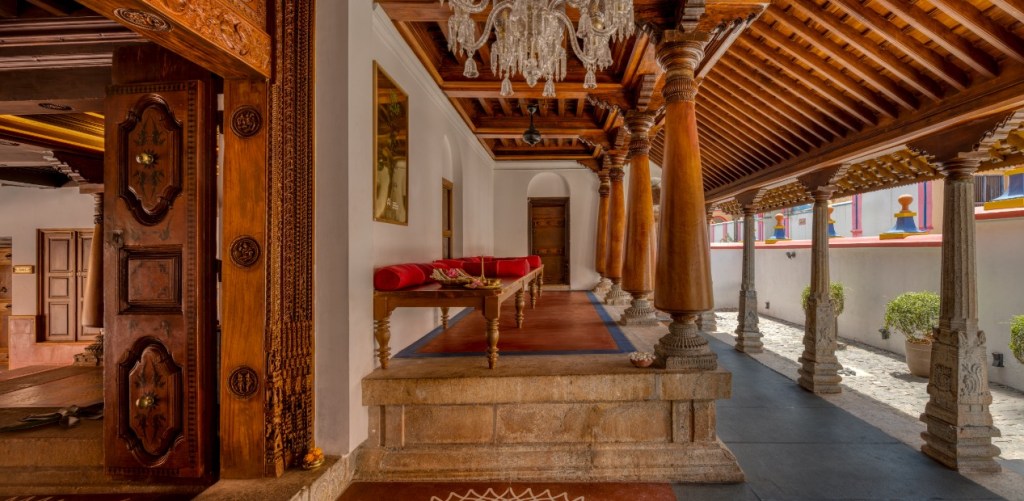
As an art collector and a champion of Indian design talent, how do you decide when a hotel should showcase culture quietly, and when it should make a bold statement?
It always starts with the place. You have to understand the building, the city, the history and the people around it, and then work out what feels right for that hotel space. Sometimes that is instinctive, and sometimes it requires thought.
I don’t think everything has to reveal itself immediately. Sometimes a small detail can say more than a grand gesture, but at other times you need something bold, whether it is a colour, an artwork, a bar or a piece of furniture, to give the hotel its own character.
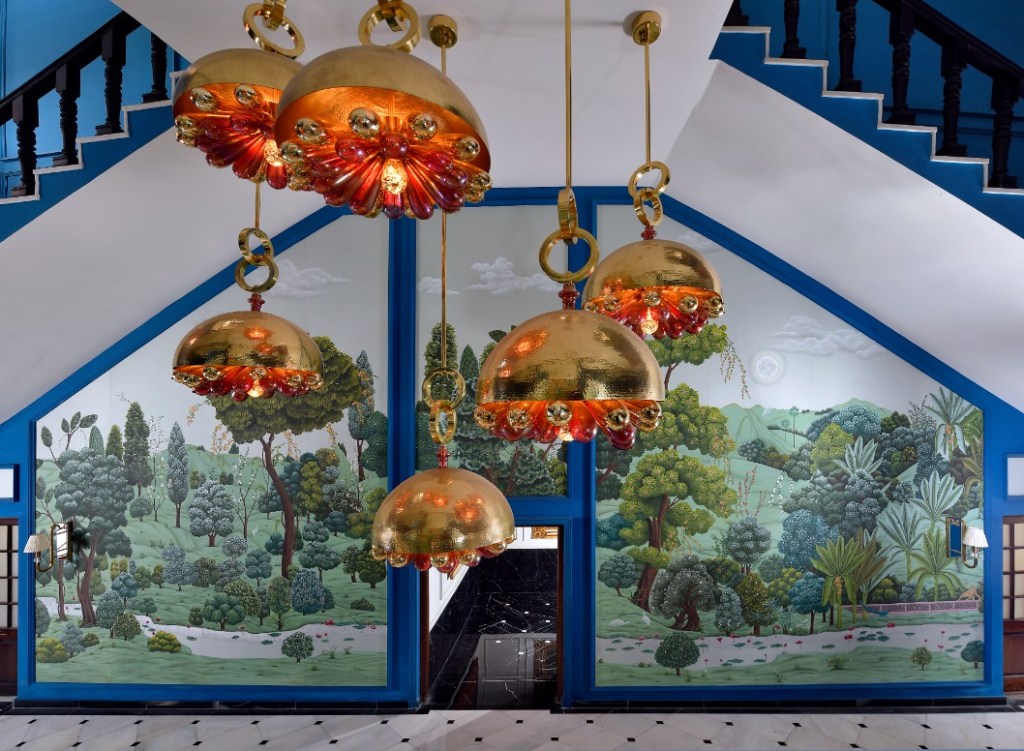
Many luxury hotels around the world now speak the same visual language. How do you resist the global sameness that can creep into high-end hospitality?
I am not interested in making hotels that could be anywhere. Even when we work with contemporary design, it should still feel rooted, with a sense of city, neighbourhood, culture and personality. That is why we always try to begin with the place, rather than with a trend. We create a story or an identity for each hotel and then build on that layer by layer. For example, THE Park Kolkata is built around chakras, and THE Park Chennai takes its cues from being the original location of the Gemini Film Studios, blending film, theatre and performance through the hotel’s design elements and artwork. Meanwhile, THE Park Bangalore blends its landscape into the design, alongside THE Park Delhi, which reflects the Five Elements.
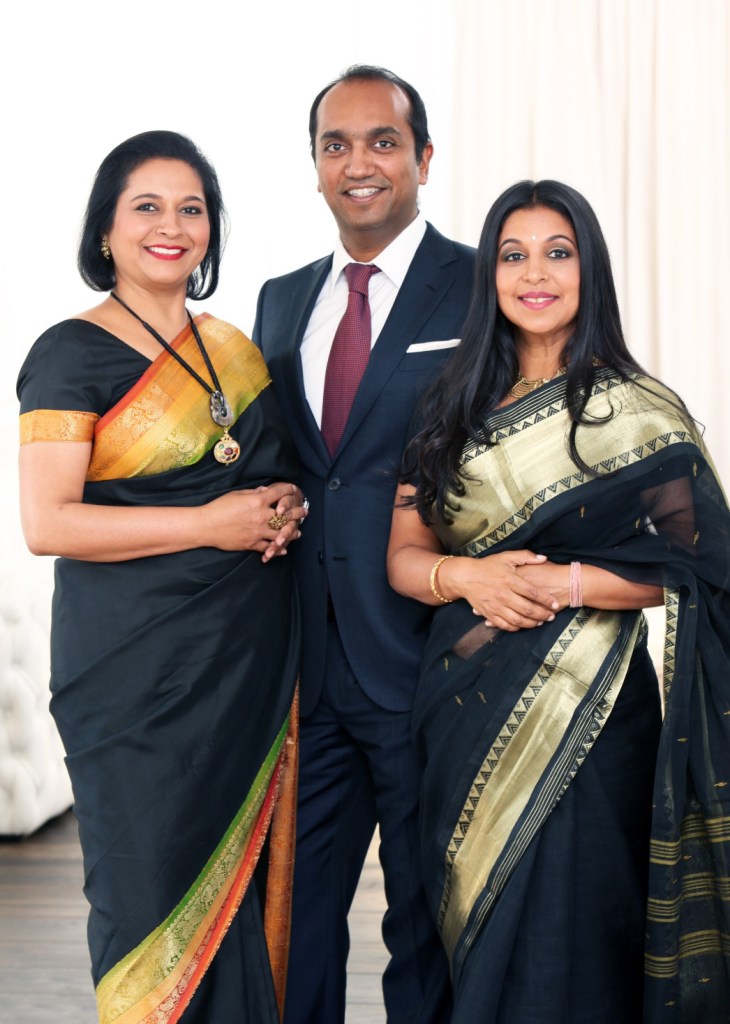
Priya Paul with her siblings Priti and Karan
Apeejay Surrendra Group is one of India’s longstanding family businesses. What does stewardship mean to you when you are responsible not only for a company, but for a legacy?
The Apeejay Surrendra Group was founded in 1910, and my sister, brother and I have a deep understanding of our legacy and history. For us, the focus is about our responsibility to the family, the teams, the community we work with and the next generation. For me, stewardship means holding on to what makes us who we are, while never being afraid to evolve.
Through South Asia Women Foundation India, you support women-led organisations across the country. Has that work influenced the way you think about power, opportunity and responsibility in business?
Yes, very much. Business gives you a platform, and I think you have to use that platform with some sense of responsibility.
Through South Asia Women Foundation India, I have seen the extraordinary work being done by women-led organisations at grassroots level, and it reminds you that opportunity is not evenly distributed.
In business, we talk about leadership and growth, but we also have to think about who gets access, who is heard, and who is able to participate.
What is next for you?
We are at an important stage in the company’s journey. The IPO in 2024 marked a significant new chapter, giving us the opportunity to strengthen the business and invest in our future. But as we grow, what matters most is that we don’t lose what has always made us distinctive.
THE Park Hotels has always been about creativity, differentiation and doing things a little differently, and that philosophy continues to guide us. As we expand, the challenge is not to become more conventional, but to stay true to that spirit. We are adding over 900 rooms across five new properties in the next few years. Each has its own character.
Today, we operate 42 hotels across 32 locations, with a development pipeline that will take us to 85 hotels and over 6,600 keys by FY30. With projects such as THE Park Mumbai and our upcoming destination in Kerala, alongside the continued growth of Zone by The Park, we are building a portfolio of brands with distinct identities, while staying true to what has always defined us – creating experiences that are locally rooted, culturally relevant and Anything But Ordinary.
To discover more, visit: Apeejay Surrendra Park Hotels
View this post on Instagram
Images Courtesy of Appejay Surrendra Park Hotels.