
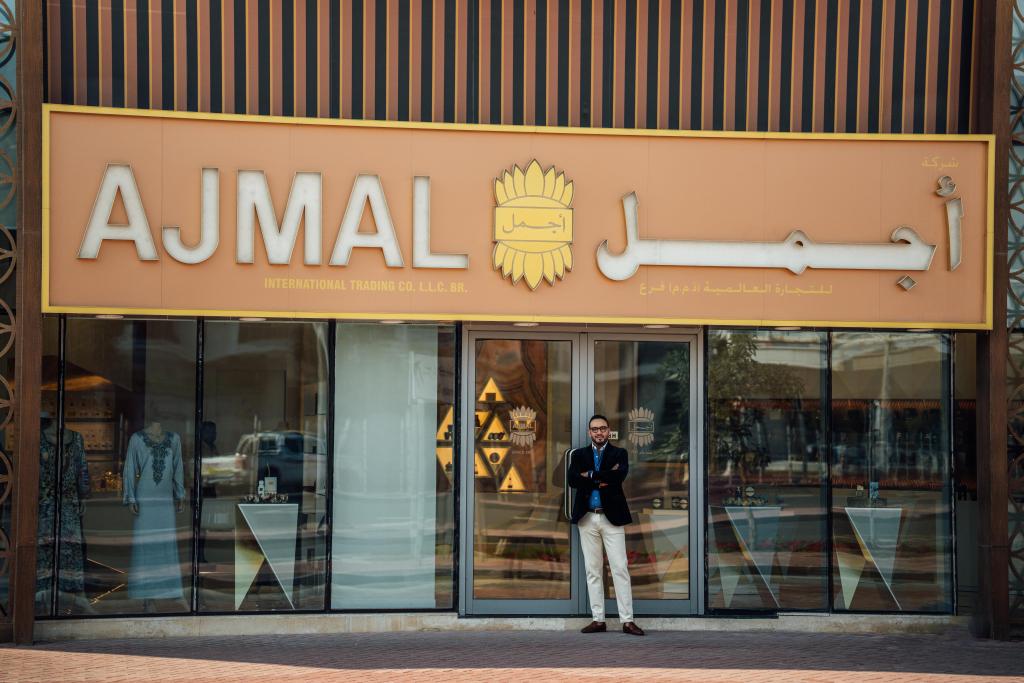
Ajmal Perfumes is more than a renowned perfumery, it is a cherished family legacy deeply rooted in tradition and innovation. At the helm of his family legacy is Abdulla Ajmal, the CEO of Ajmal Perfumes, who continues the journey initiated by his grandfather, Haji Ajmal Ali, in 1951. From the jungles of Assam to the bustling city of Dubai, Ajmal Perfumes has rewritten the rules of scent.
Join us for an exclusive interview with the driving force behind Ajmal Perfume where we uncover the secrets of scent sophistication.
How did it all start?
Ajmal Perfumes isn’t just a brand – it’s a cherished family legacy that began with my grandfather, Haji Ajmal Ali, a true entrepreneur at heart. Ajmal’s origins can be traced to a little village, Hojai in Assam, India – when he ventured into the jungles with nothing more than a dream. A rice farmer by trade, Haji Ajmal Ali was searching for precious Oudh from the Agarwood trees to change his family’s fortunes and the face of perfumery. With Oudh procured by his effort and his meagre savings, he made the momentous move to Mumbai and later Dubai.
In an era when Oudh oil was yet to capture the world’s imagination, he ventured into trading it, laying the foundation for Ajmal. The product and the people have evolved tremendously today. We work with the biggest perfumery houses in the world, maintaining excellent relations with them. I’ve been fortunate to be mentored and continue to work with master perfumers worldwide, who have tremendous respect for our brand. Our team has evolved significantly since the days of my uncle behind the counter. What started as a trading commodity house has evolved into an end-to-end fragrance house.
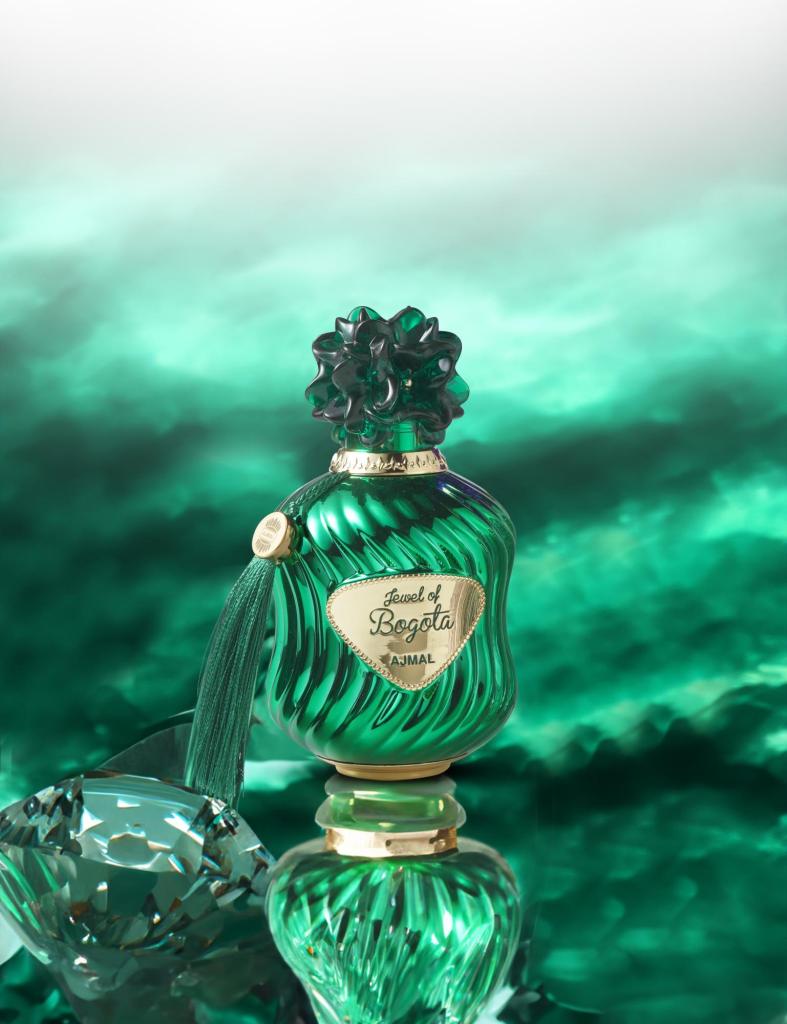
Could you describe how you were mentored by Jacques Chabert to become CEO of the company?
I was fortunate to receive guidance from my uncle, Late Nazir Ajmal, an esteemed figure in traditional and Arabic perfumery. As the only recognized perfumer in the region at the time, Ajmal created the first fusion fragrances, including Sarah, setting a trend that others followed. Nazir Ajmal encouraged continuous innovation, leading us to explore new blends and set trends bridging the East and West.
Additionally, my mentorship under master perfumer Jacques Chabert was a transformative experience that profoundly shaped my journey as the CEO of Ajmal Perfumes. Under his guidance, I refined my olfactory skills and deepened my understanding of fragrance creation, drawing from Eastern and Western traditions. It laid the groundwork for my journey towards blending Eastern and Western perfumery seamlessly, ensuring our brand’s relevance on a global scale.
Have you always been a perfume enthusiast?
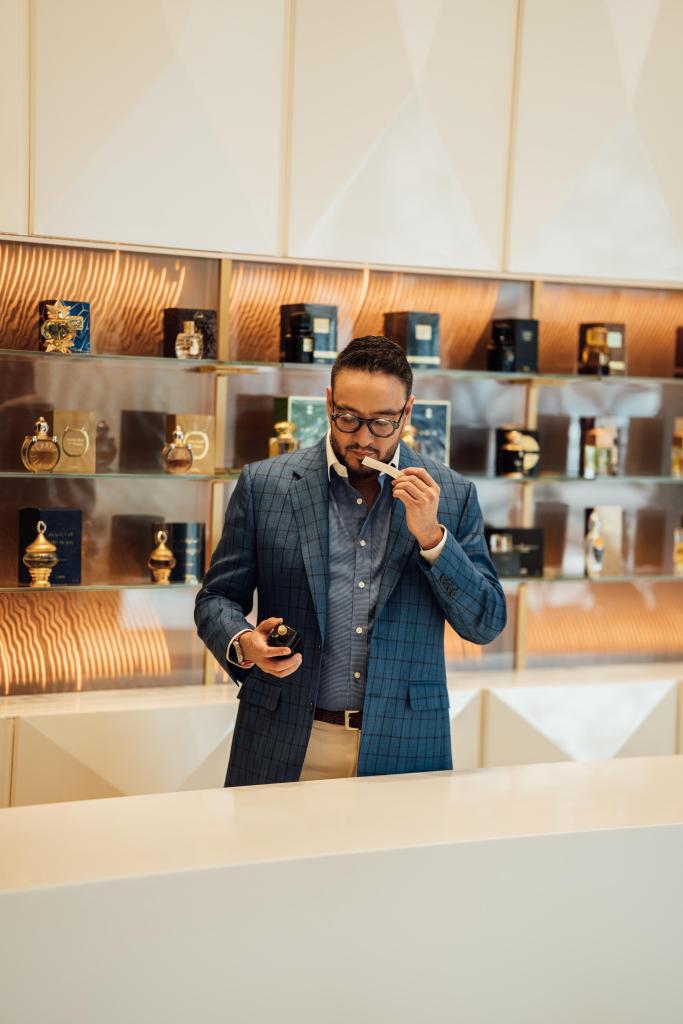
Absolutely. Perfumery is practically in my genes—part of the Ajmal DNA. Growing up, I was surrounded by fragrance and had the privilege of being trained by my uncle. He made sure I knew the ins and outs of perfumes, from memorising their notes to understanding their complexities.
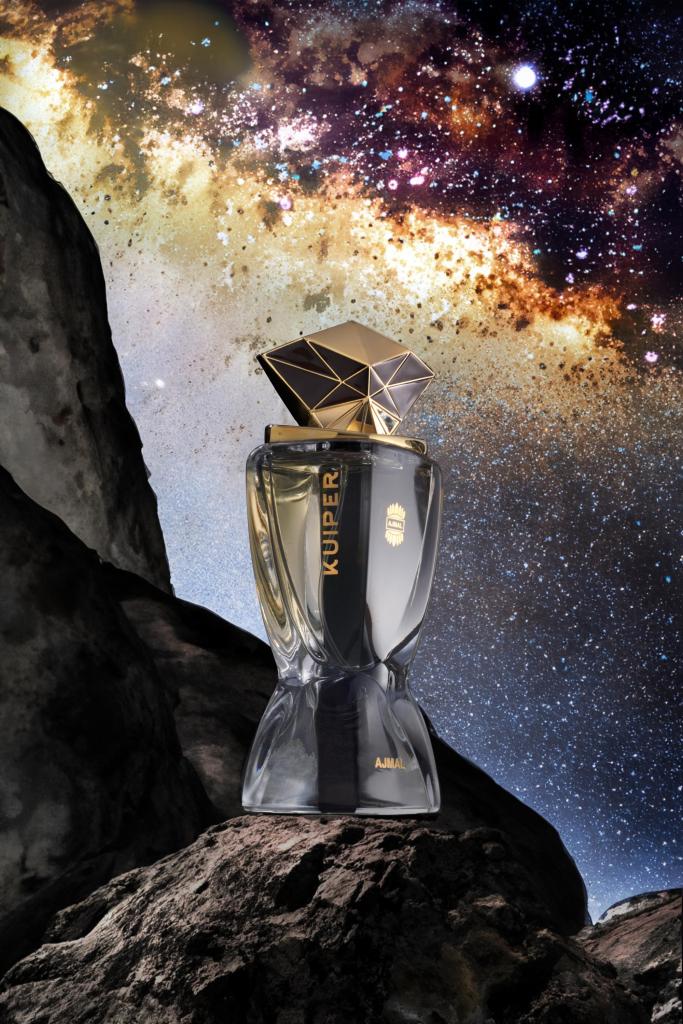
As a family-oriented business, how does the quality of your products compare to those of other leading perfume brands?
As a family-oriented business at Ajmal Perfumes, the quality of our products is deeply intertwined with our core values. When consumers think of Ajmal, they immediately associate trust, authenticity, and reliability. Research conducted a few years ago affirmed this belief, revealing that these qualities are central to our brand’s identity. While these traits may be more commonly linked with sectors like healthcare, education or finance, they hold paramount importance in every industry, particularly ours.
In the perfumery business, where unbranded products lack a benchmark, trustworthiness becomes even more critical. Unlike commodities like gold or diamonds, there are no established norms or governing bodies for products like oudh. Therefore, buyers must heavily rely on the integrity of the seller. We take immense pride in the quality of our products, especially oudh.
What’s particularly intriguing to us, as a third-generation perfume family, is the evolution of the ‘perfume factory’ from the modest kitchen of a farmer to one of the leading state-of-the-art global perfume factories based in Dubai. Our research studio or factory is the heart of our business philosophy: keeping our time-tested perfume traditions relevant and up-to-date with the latest perfumery manufacturing processes. For example, while our processes in the factory are automated, we still have an army of artisans who come and help with the process. As a brand and family, we firmly believe that modernisation should not come at the cost of employment. We want to grow, and as we grow, we want our workforce to succeed.
This farm-to-fragrance model ensures the highest quality standards and provides us with unparalleled credibility and authority in the industry. The integrity of our products cannot be compromised at any level in the supply chain or distribution because we meticulously oversee every function. This level of control allows us to deliver perfumes that not only meet but exceed our customers’ expectations, setting us apart from other leading brands in the market.
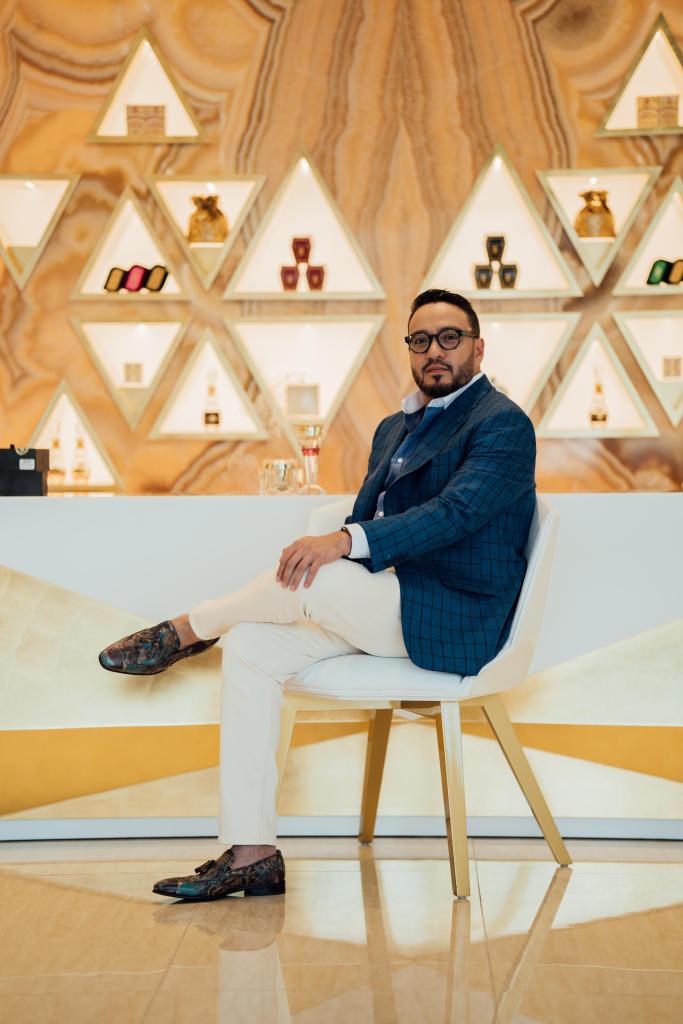
Ajmal has 70 years of history—how is the company’s history woven into the products?
I must start with how it’s 73 years now. At Ajmal Perfumes, innovation and purity are the guiding principles that shape every fragrance we create. With a legacy spanning over seven decades, our journey is deeply intertwined with the essence of each product we craft. We produce the finest Oudh globally, a cornerstone of our legacy that symbolises our unwavering dedication to quality and craftsmanship since our inception.
Behind the scenes, our in-house research and development division, led by our seasoned chief with a background in organic chemistry, plays a pivotal role. With over 25 years of experience and a portfolio of published research papers, our R&D team continuously strives to discover and manufacture raw materials not readily available in the market.
This dedication to innovation ensures that each Ajmal fragrance is distinctive and authentic, setting us apart from competitors. It also fosters trust in our customers and partners, who recognise that anything bearing the Ajmal name epitomises the pinnacle of quality and excellence.
The Ajmal history serves as the foundation for each product, infusing it with the spirit of our founder’s vision and our ongoing commitment to pushing the boundaries of perfumery.

Ajmal is the world’s only international fragrance house with a “Farm to Fragrance” ethos. Could you describe this concept?
As far as I know, we’re pioneers in this “Farm to Fragrance” journey. And if memory serves, we might have even coined that term. At Ajmal, it’s about crafting experiences, not just fragrances. Our dedication to these principles ensures we remain at the forefront of the industry.
Where did the idea to merge fragrance concepts from the East and West, and how has this differentiated your brand?
The transformative period spent in the UK has inspired me to merge the two worlds of traditional scents with modern fragrance concepts. Growing up surrounded by the rich aromas of traditional Eastern perfumery, my time in the UK exposed me to a different olfactory landscape characterised by a diverse array of Western fragrances.
I consider myself very fortunate to be trained under my uncle, Nazir Ajmal, who I mentioned earlier also, was one of the first and most respected perfumers in the Middle East at that time. French and Arabic perfumes dominated separate markets until the 90s when my uncle Nazir Ajmal, inspired by his exposure to master perfumers in France and Switzerland, envisioned pioneering a true fusion of Eastern and Western scents. As the only recognised perfumer in the region at the time, Ajmal created the first fusion fragrances, including Sarah, setting a trend that others followed. He encouraged continuous innovation, leading me to explore new blends and set trends bridging the East and West.
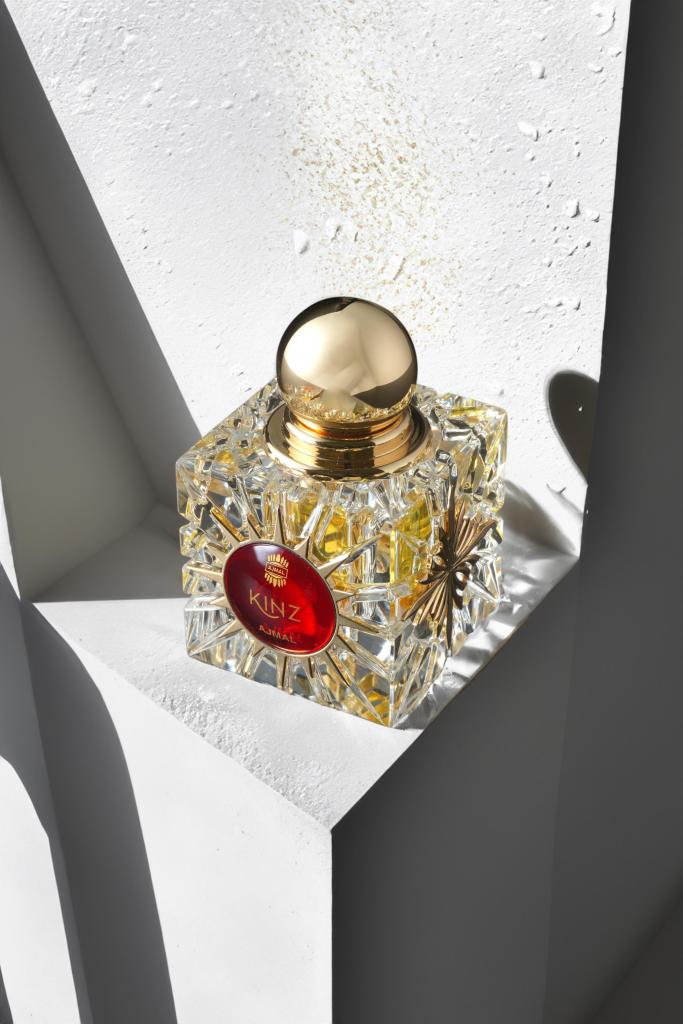
What are the benefits of utilising Agarwood trees in your perfume?
Oudh, once a niche element in Middle Eastern perfumery, has become a prominent feature worldwide in traditional and contemporary fragrances. It’s a unique blend of warm sweetness and a complex blend of woody and balsamic / animalic notes. Oudh’s versatility as an ingredient allows it to harmonise effortlessly with various olfactory families. In an era of gender-neutral fragrances, perfumers and designers are increasingly drawn to Oudh for its ability to enhance and differentiate compositions. Traditionally paired with rosy notes, saffron, and woody accords, Oudh now complements a range of aromatics, including fresh and floral elements. Its distinctive character, which is both luxurious and earthy, adds a touch of seduction to any fragrance. As a base note in perfumery, Oudh adds depth and character to compositions. It lingers on the skin long after the other notes have faded, making the composition very long-lasting and precious.
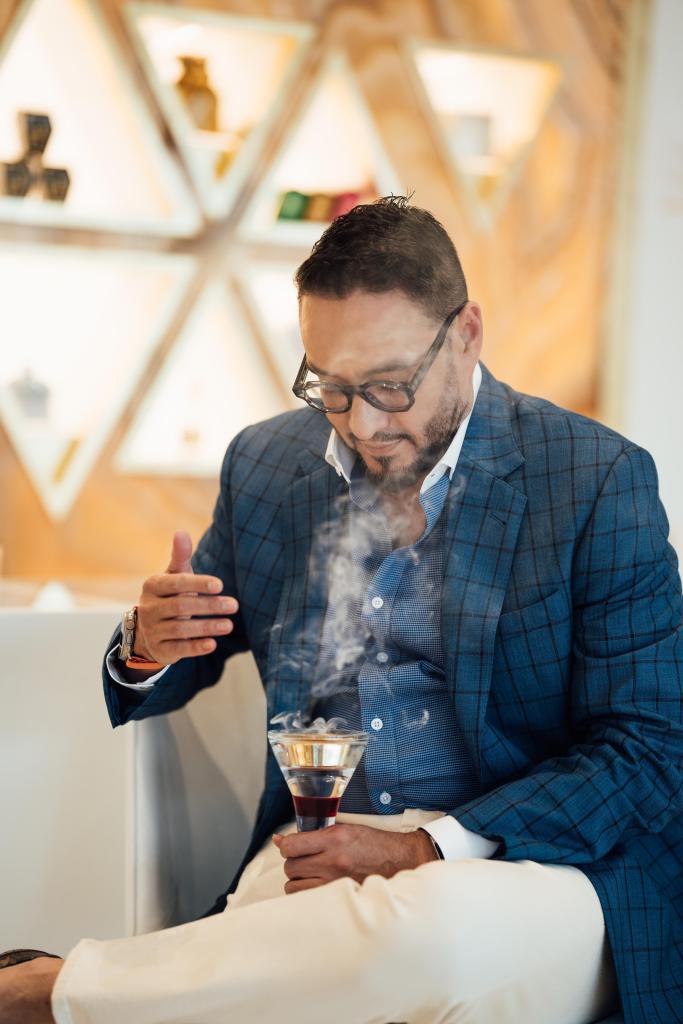
What is your creative and experimental approach to crafting perfume? What are some boundaries you are pushing with your work?
Crafting perfume is a blend of artistry and practicality. I draw inspiration from the world around me – from the scents of nature to the aromas of everyday life. These inspirations guide me as I carefully select and blend ingredients to create unique fragrances.
When working on bespoke perfumes, my team and I take a personalised approach. We collaborate closely with clients to understand their preferences and experiences, ensuring that each scent reflects individuality. For example, I recently crafted a fragrance for a Russian businessman that captured his love for adventure like motorbiking and luxury, using leather and spice notes to create a scent that resonated with his personality. In developing new fragrance lines, I work closely with Marketing teams to ensure that each scent meets the needs and desires of its intended audience. By staying informed about consumer trends and preferences, we create current and timeless perfumes, offering something for everyone.
Ultimately, my goal as a Perfumist is to push the boundaries of traditional fragrance-making. Whether creating bespoke perfumes or developing new lines, I strive to create scents that captivate the senses and leave a lasting impression.
Ajmal was one of the first companies to launch an extensive afforestation program in the hills of NE India. Tell us all about it.
Before sustainability became a trend, my grandfather started sustainability back in 1979 by planting the afforestation program. Ajmal was one of the first companies to launch an extensive afforestation program in the hills of NE India, with over 10 million trees planted so far. They remain a vital source of income, employment, and financial independence for the female community within the Assam region and provide care for orphaned children in the region.
How do you keep your senses sharp when testing and developing the scents?
By taking mini-breaks, travelling, and food. By exploring new places and trying out new cuisines. For example, when I visited Georgia, I saw many churches. Unlike the churches and cathedrals in Western Europe, where a strong fragrance of frankincense has settled in the walls of these establishments due to dampness in weather, everything is made of stone in Georgia. So, the temperature is cooler. The smell of frankincense is also cold, which gets etched in the memory, so use a note traditionally considered warm as a cooling component.

What’s next for you?
I want Ajmal to be the leading perfume house, not just in the GCC region but globally. I want to revolutionise the way people smell and wear fragrances. I see Ajmal becoming a globally recognised brand available in major cities of the world. Right now, we are available in 60 countries; the next milestone will be to take this number to 100.
To find more visit Ajmal.com
Ver esta publicación en Instagram
All imagery courtesy of Ajmal Perfumes.