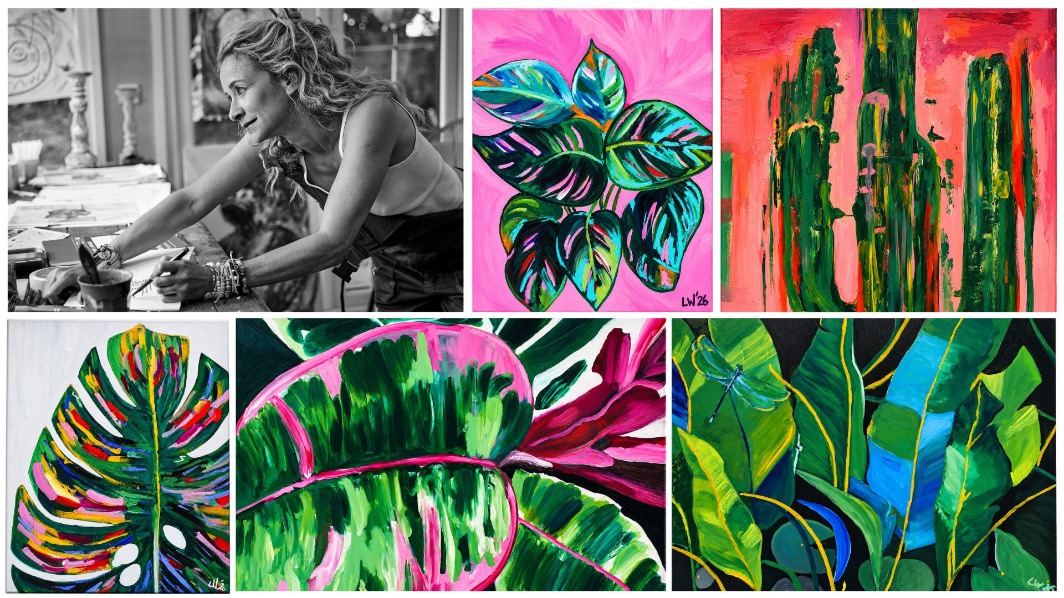
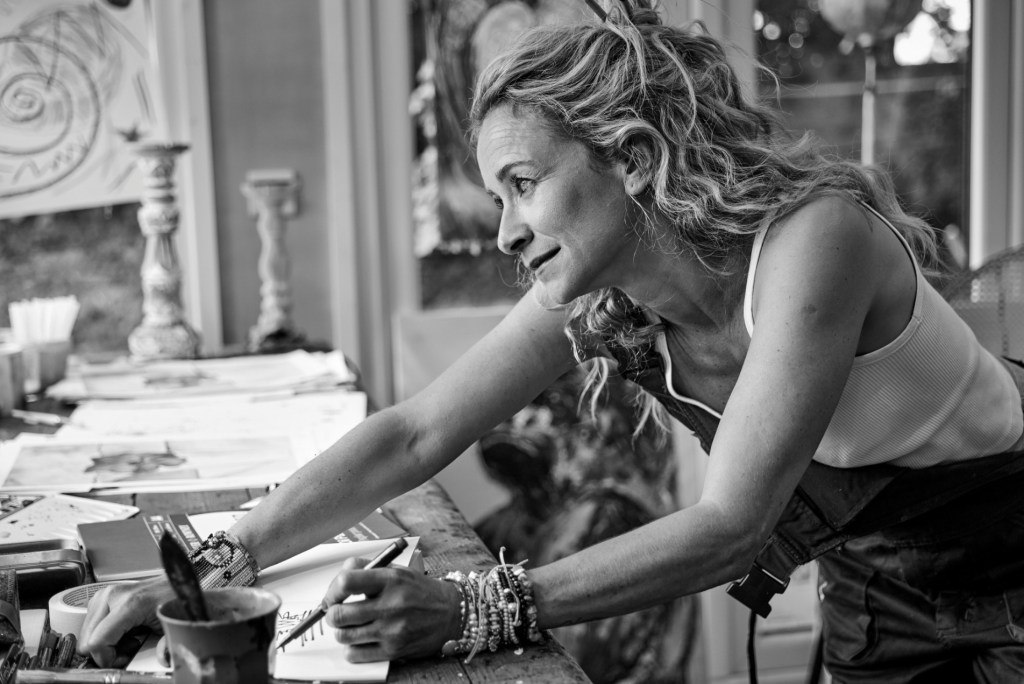
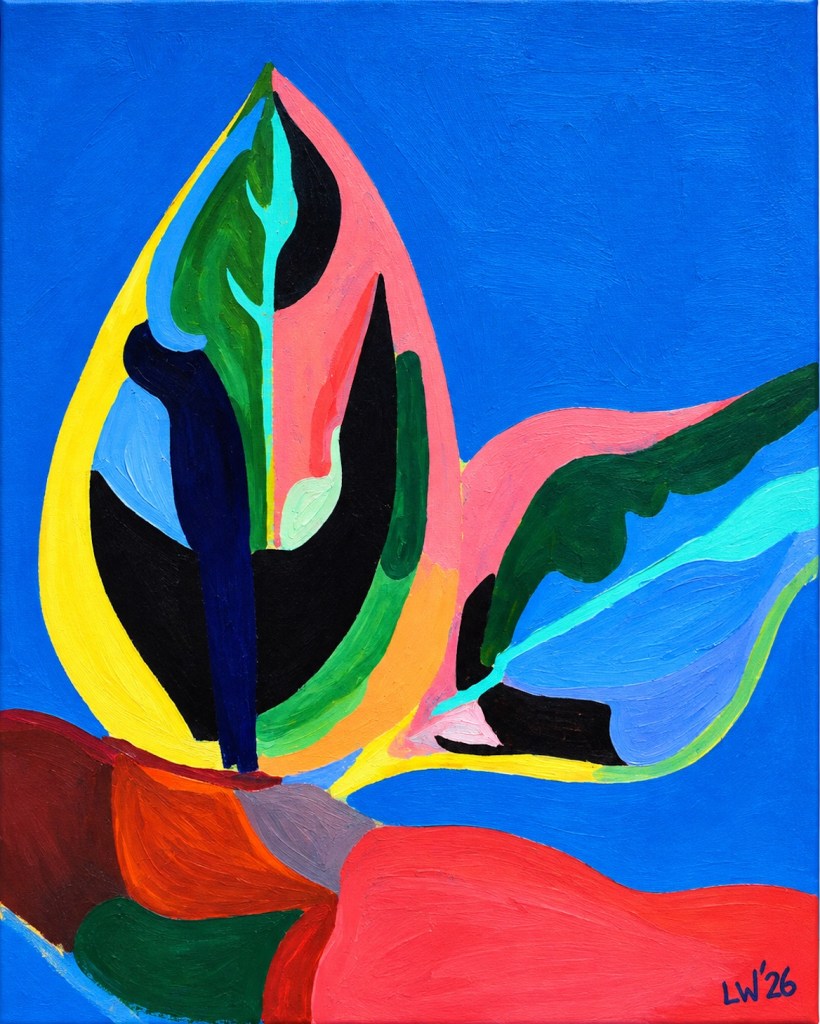
British artist Leah Wood brings life to her lived experiences in the arts, music and the natural world. Through her use of rich, vibrant colours, intuitive interplay of shapes and textures, Leah Wood characterises her worldview of botanical forms, wildlife and landscapes. Wood derives her influence from artists such as David Hockney, but adds her own flair and distinctive visual communication through striking a chord between the spontaneity of nature and its deep-rooted beauty. Leah Wood doesn’t aim to make art, but to sell a sensory experience where viewers can pause, look closer, and emulate the feeling of experiencing nature in all its omnipresent wonder.
We caught up with Leah to talk all about her career and art.
How did it all start?
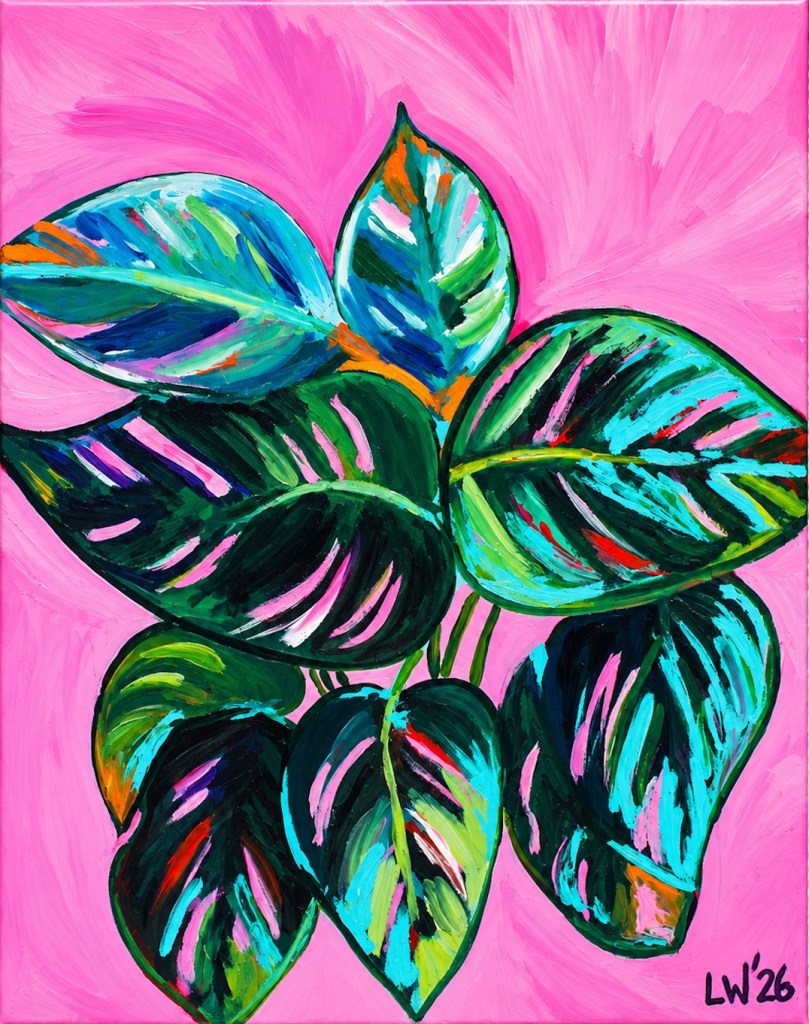
I grew up surrounded by art and music, so creating always felt very natural to me. Nature became the thing I kept coming back to in my own work – animals, landscapes, and now plants. With this collection, I wanted to give myself more freedom with colour and shape, and explore that feeling of being somewhere lush and full of life. But my concern for the environment is always there too. The beauty and the worry sit alongside each other.
The title Last Days of Paradise is beautiful but also quite ominous. What exactly is the “paradise” you fear we’re witnessing the last days of?
For me, paradise is the natural world in all its extraordinary variety. It can be a forest or an ocean, but it can also be something much closer to home- a tree, a patch of wildflowers, birds in the garden. We have so much beauty around us, and we can be terribly casual about it. The title comes from that fear of losing things we’ve taken for granted. But there’s hope in the paintings too. I want us to recognise what we still have and care enough to protect it.
Do you think beauty can make people confront uncomfortable truths more effectively than fear can?
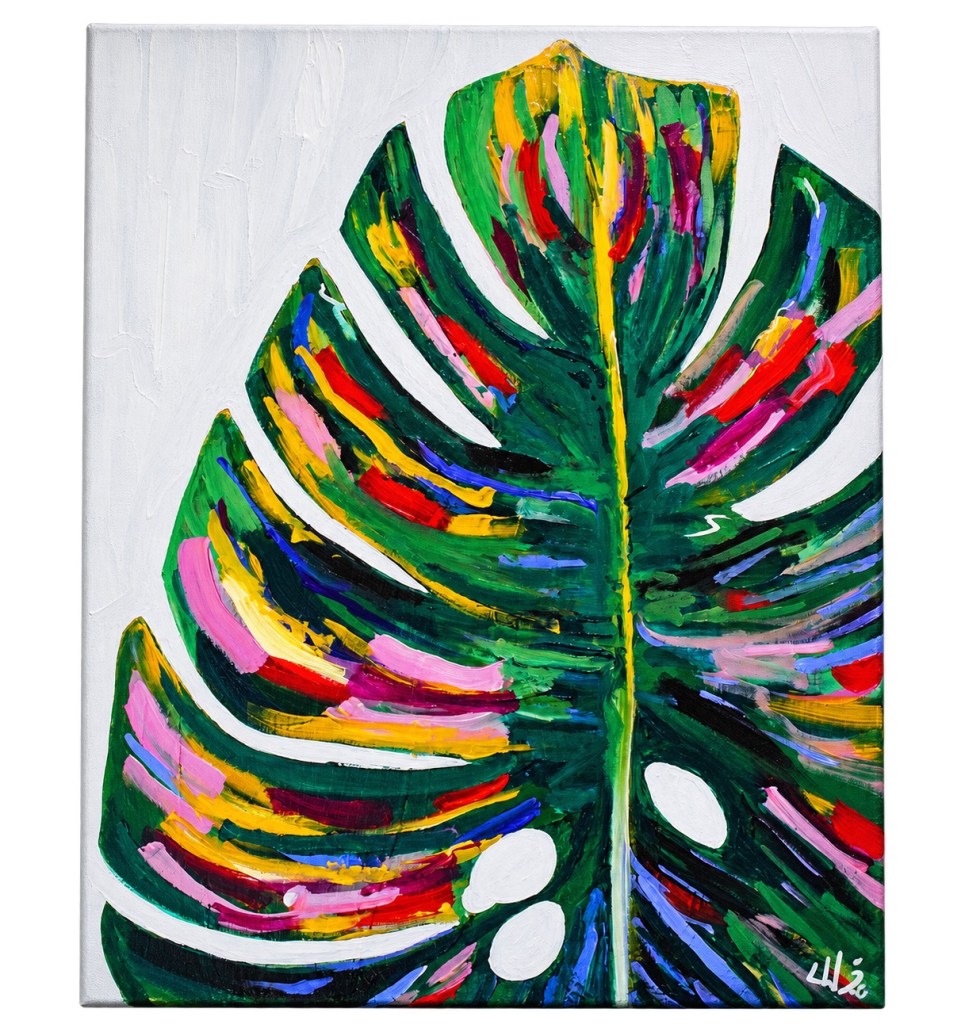
Yes, I think it can. Fear can feel overwhelming, and sometimes people switch off because they don’t know what to do with it. Beauty gives you a way in. You’re drawn to the colour or a shape, and you spend a little longer looking. Perhaps then you start thinking about what’s behind it. I love colour, so that pleasure is very much part of the work. I hope it helps people feel a connection, because it’s much harder to be indifferent to something you’ve come to love.
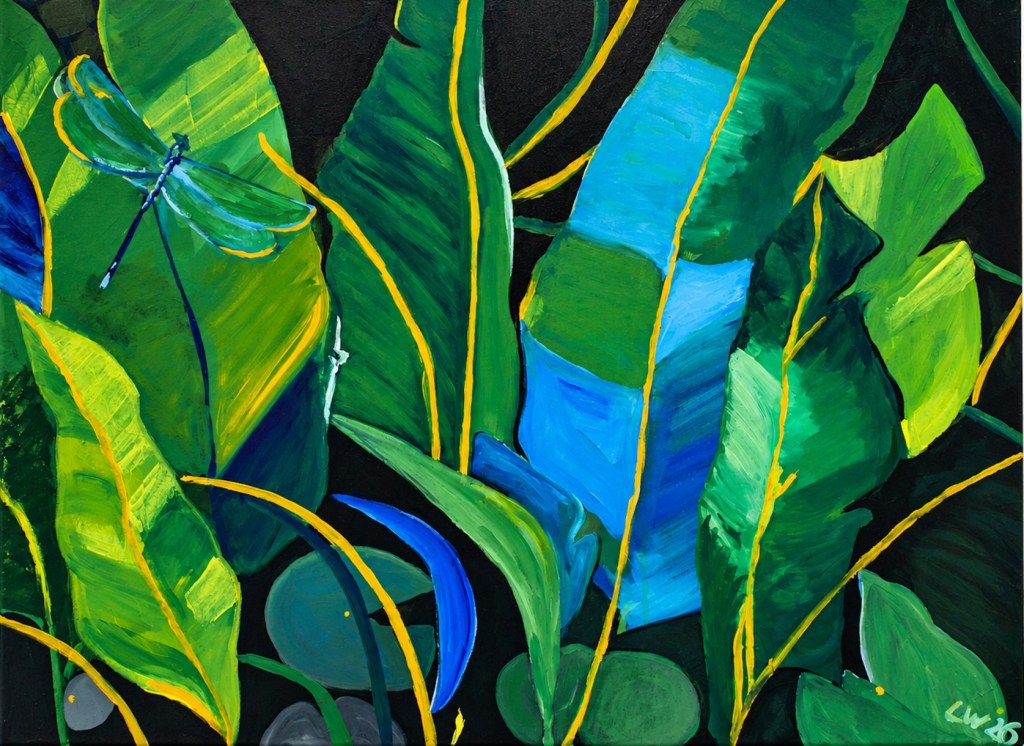
You wanted your work to become looser and more expressive. Do you feel you’ve achieved that, and where did you have to stop yourself from becoming too controlled?
I feel I’ve moved towards it, yes. There’s more freedom in the colour and the shapes, and I’ve enjoyed allowing things to be less literal. Hockney’s sense of colour and freedom is something I find hugely inspiring. The challenge is resisting the urge to tidy everything up. A painting can have a lovely energy, and then you keep working on it and lose the very thing that made it interesting. I’m learning to trust those moments more, and to let something feel alive without having to make it perfect.
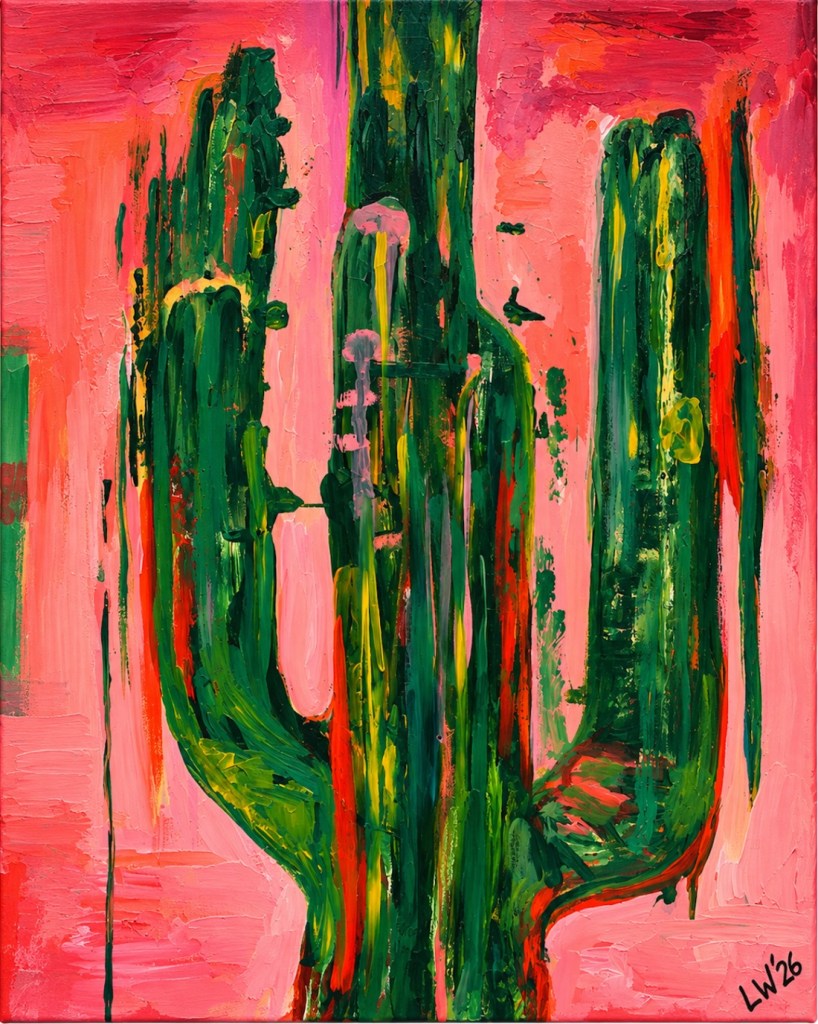
Is it harder to persuade somebody to care about a disappearing plant or habitat than an endangered animal?
I think the connection can take a little longer. With an animal, you look into its eyes and immediately feel something. Plants ask us to pay attention in a different way. But once you start looking at their shapes, their colours and how extraordinary they are, there’s so much to fall in love with. And they’re part of the same story: we can’t care about an animal and ignore the place it needs to survive. I’d love these paintings to make someone notice a plant they might otherwise have walked straight past.
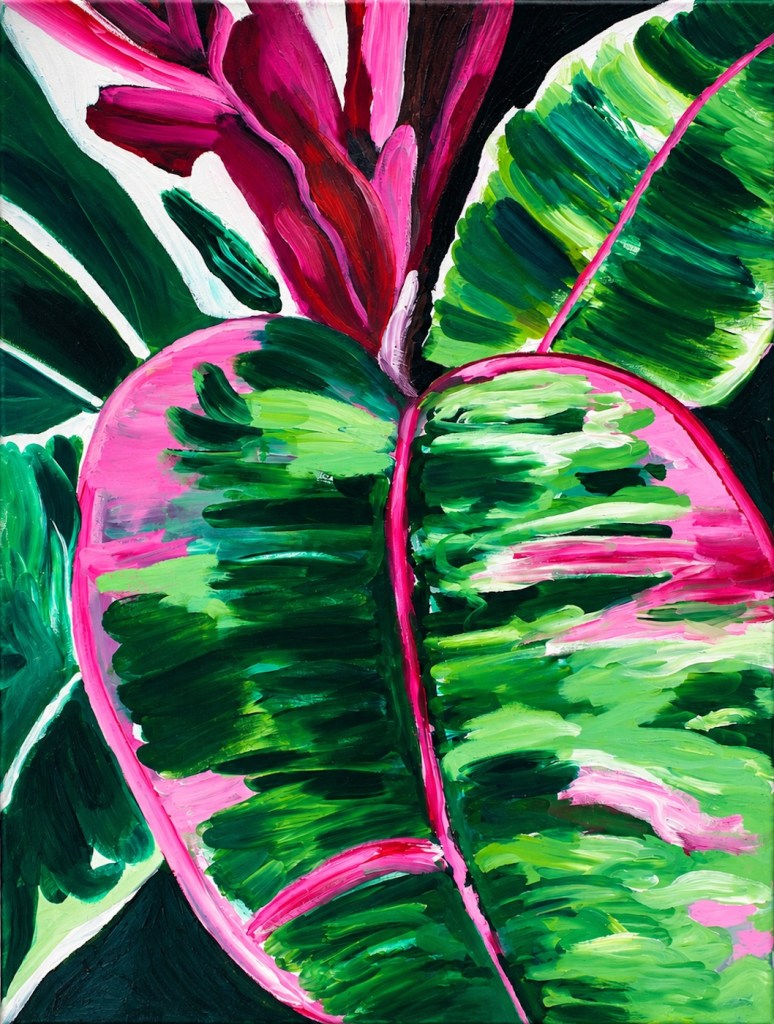
Does a painting have to communicate its environmental message without explanation, or are you happy for somebody to simply fall in love with it because it’s beautiful?
I’m very happy for somebody to fall in love with it because it’s beautiful. That’s a lovely connection to have with a painting. I don’t feel I need to dictate what someone takes from it. My concern for nature is part of why I make the work, and I’m happy to talk about that, but people bring their own feelings and memories too. If someone is drawn to a painting and then becomes curious about the thinking behind it, that opens up a conversation.

You’re exhibiting work about endangered environments during one of the most commercially intense weeks in the art calendar. Tell us all about it.
I’m excited to show this collection during Frieze Week. There’s so much energy around art, and it feels like an opportunity to bring these paintings, and the questions behind them, to a wider audience.
Of course, the commercial side is part of that week, and I want the work to find homes where it will be loved. But I also hope people spend time with it and think about what it’s saying. A painting can become part of someone’s everyday life, and I like the idea that its connection to nature stays with them long after the exhibition.
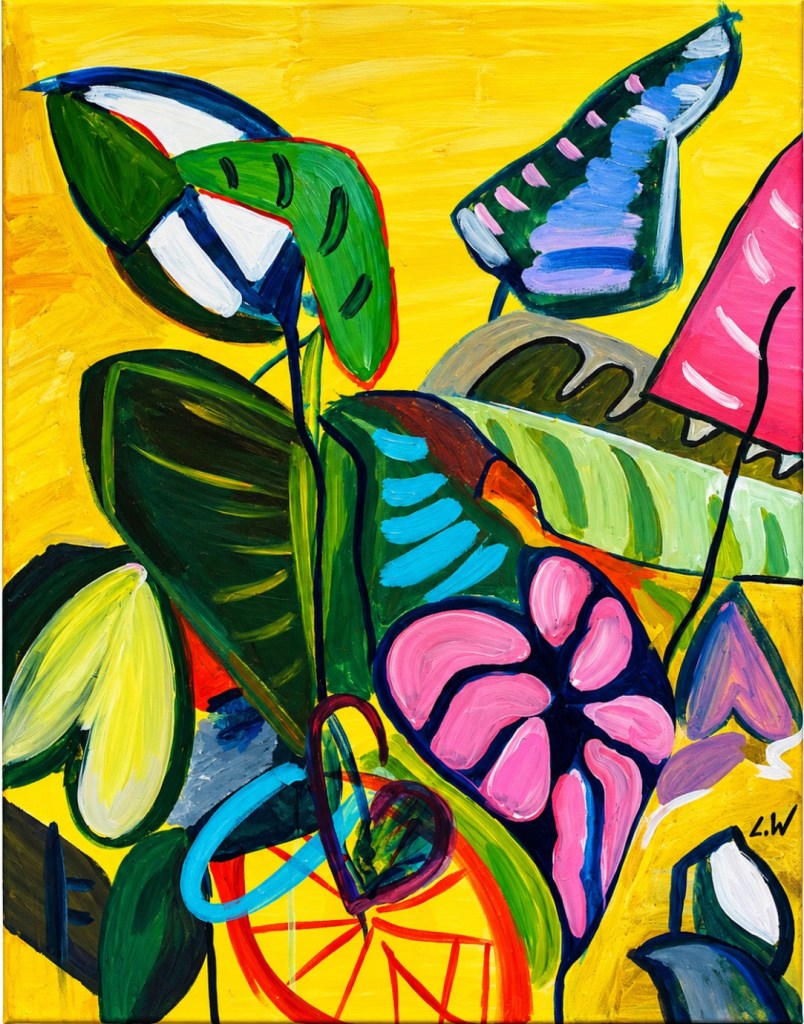
Was there anything you eventually had to unlearn in order to discover what a Leah Wood painting actually looked like?
I wouldn’t necessarily describe it as unlearning something from my father. Growing up around creativity gave me a great deal. But finding your own voice means learning to trust your own taste and instincts. For me, that’s meant following my connection to nature and allowing myself to be more adventurous with colour and materials. I don’t think you discover your style once and then stop. It keeps changing as you do. This collection feels like another step in becoming more comfortable with my own decisions.
When you paint, do you ever think musically in terms of rhythm, improvisation, crescendos and knowing when something needs to stop?
I can certainly see that connection. Music has been such a big part of my life, and there’s a rhythm to a painting- the way shapes repeat, colours come forward, and your eye moves around it. There are quieter areas and places where everything feels quite exuberant. The improvisation is familiar too: you begin with an idea, but you have to leave room for something unexpected. And knowing when to stop is probably the hardest part. Sometimes one more mark adds something wonderful, and sometimes the painting already has everything it needs.
View all the work at www.leahwoodartwork.com
View this post on Instagram
All images courtesy of Leah Wood.