
The Norwegian Fjords should be on every bucket list, up there with the Orient Express and The Maldives. The landscape in Norway stretches out in long, uninterrupted lines where luxury is softly spoken. Water cuts deep into the land, bordered by near-vertical mountains rising straight from its edge. Light moves slowly across the surface, shifting the colour of the fjord in gradual tones of blue and slate. It takes a few minutes to register the scale of it, and how little competes for your attention within it.
It does not resemble the kind of arrival usually associated with luxury. There are no obvious markers, no sense of announcement. If anything, it feels pared back at first. Almost too simple.
That impression settles quickly.
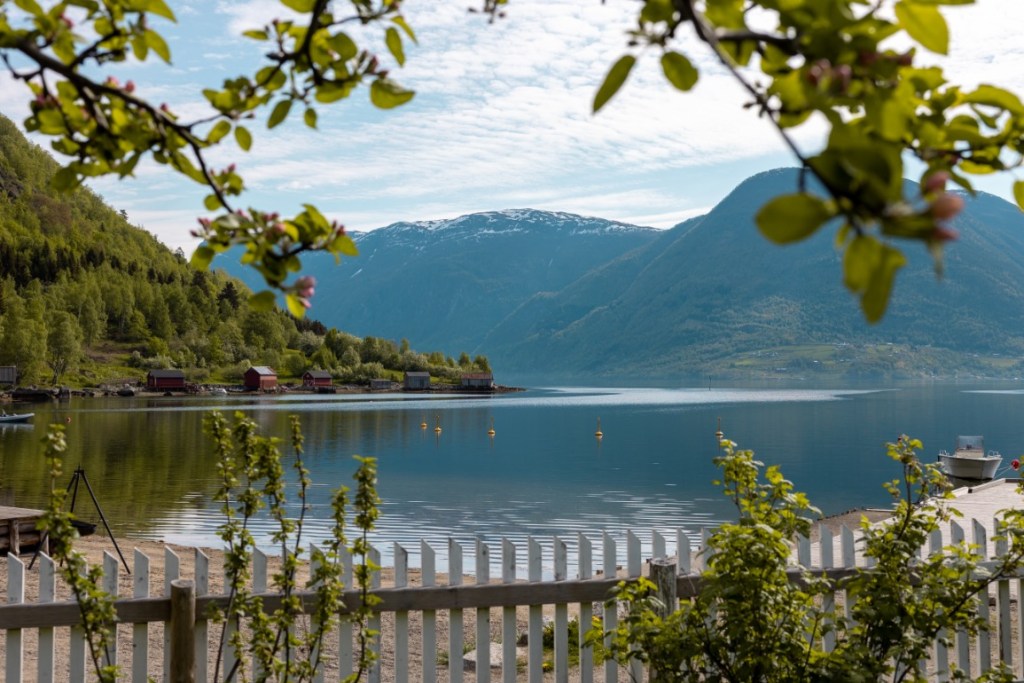
Standing in front of the Sognefjord, scale becomes difficult to measure. On paper, it is the longest and deepest fjord in the country, but those details recede once you are there. What stays with you is the way it alters your sense of distance. Boats move slowly across the water, appearing closer than they are. The opposite shore seems within reach, until your eyes adjust and the distance expands again.

Image courtesy of Norwegian Airlines
Getting There
Reaching western Norway feels considered from the outset. Flying with Norwegian Airlines offers a direct and efficient route from London, with flight times just under two hours, placing the fjords within easy reach. The experience is straightforward in a way that reflects the country itself.
Self-service check-in allows you to print boarding passes, select or adjust seating, and move through the process without delay. Onboard, the cabin is comfortable without excess, designed for ease rather than display. It is a quiet introduction to a destination that values function and clarity over spectacle.
Fjord Norway / Håvard Nesbø – fjordnorway.com
Viewing the Landscape Properly
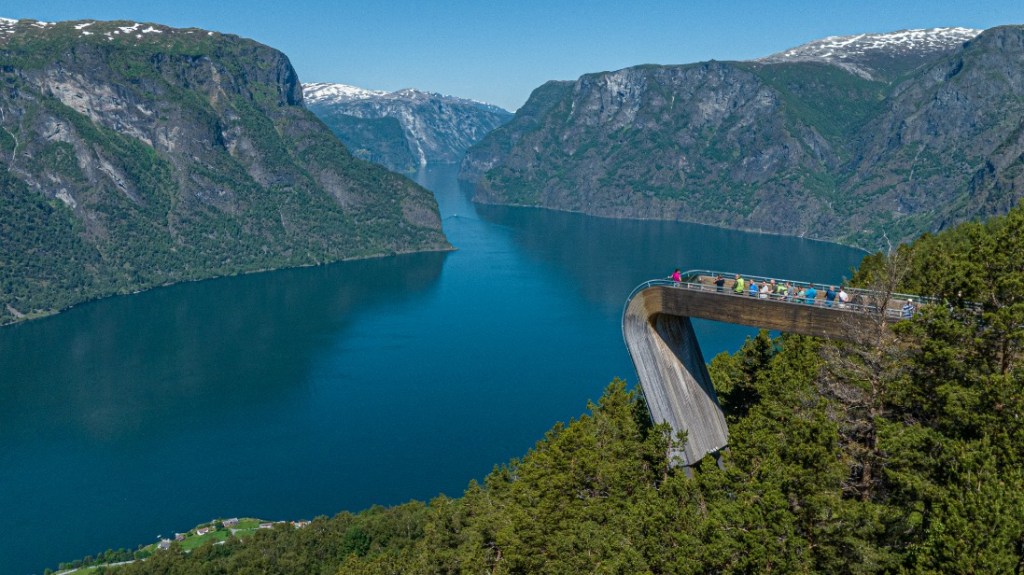
That search for perspective finds a clearer form at Stegastein Viewpoint.
Set high above Aurland, the platform extends thirty metres out from the mountainside, its clean lines cutting into the landscape without disturbing it. From a distance, it feels almost absorbed into the terrain. Up close, the structure becomes more defined, guiding your view rather than framing it too tightly.
Walking towards the edge, the architecture holds your attention briefly.
Then your focus moves outward.
The fjord opens in full, water stretching forward, mountains holding it in place on either side. The horizon remains uninterrupted. Just a continuous line across water, rock and sky.
It holds you there.
Not out of obligation, but because the proportions take time to absorb. Standing at the edge, there is a quiet awareness of scale, something steady rather than dramatic.
Fjord Norway / Håvard Nesbø – fjordnorway.com
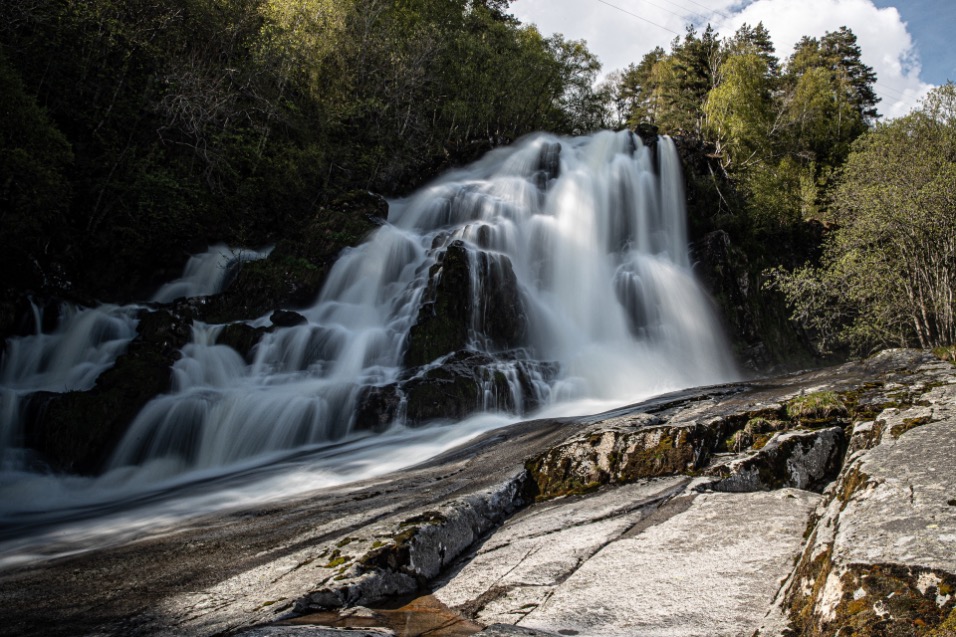
That same attention carries further into the region, at Fardalsfossen.
The waterfall sits close to the road, and within minutes, you are near enough to feel the temperature shift. A fine mist settles lightly on your skin, carrying the faint scent of wet stone and moss. The sound gathers as you approach, moving from a distant rush to a constant presence.
Water falls in a steady line, gathering force as it meets the rocks below. It draws your focus in a different way.
Fjord Tours / Sverre Hjornevik – fjordtours.com
Moving Through the Fjords
That quiet attention carries into how you move through the region.
Roads follow the contours of the fjord, bending with the shoreline, occasionally lifting just enough to reveal a wider stretch of water before dropping back down again. Journeys unfold gradually, shaped by the terrain rather than distance.
But it is the water that defines movement here.
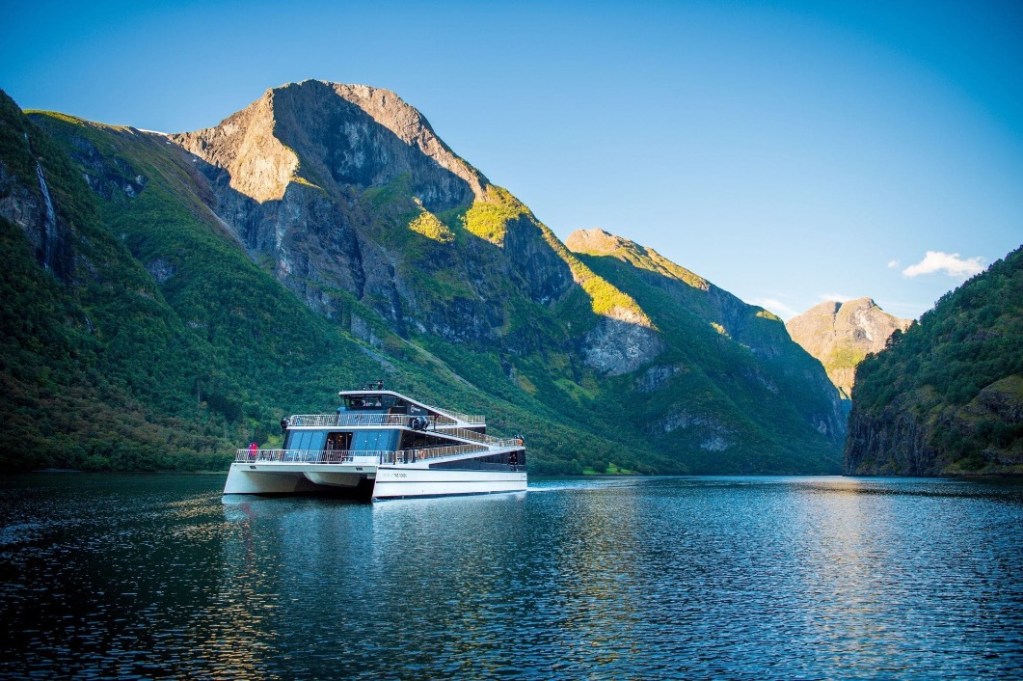
Passenger boats operated by Norled connect towns and villages across the fjords with quiet efficiency. Used by locals as much as visitors, they move steadily between points, offering a perspective that cannot be replicated from land. Travel becomes less about reaching a destination and more about passing through the landscape itself.
For those looking to explore further, curated routes such as Fjord Tours and the well-known Norway in a Nutshell bring together rail, road and water into a single, fluid experience.
It becomes instinctive to take your time.

Fjord Norway /Magnus Furset – fjordnorway.com
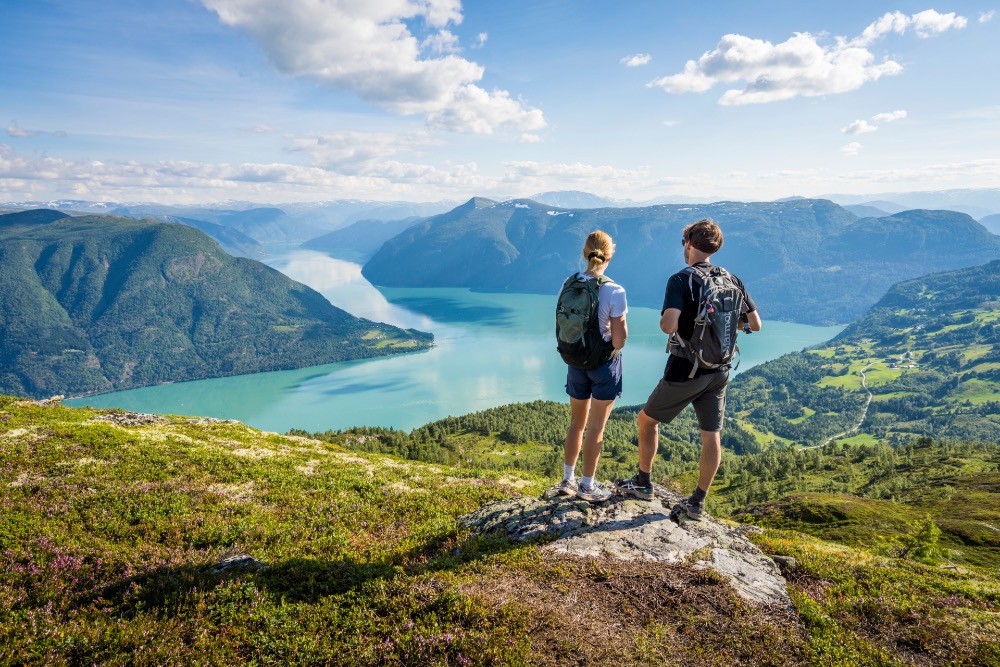
Cycling routes run alongside the water in places like Sogndal and Balestrand, where the pace mirrors the landscape. Inland, hiking trails lead upwards towards viewpoints such as Molden in Luster, where the fjord widens beneath you, its surface catching light in long, reflective bands.
In winter, the same terrain softens under snow. Routes around Aurland open for snowshoe hiking, the ground quiet beneath each step, while Sogndal becomes a base for alpine skiing.
There is a wide range of experiences available, but the days do not revolve around them. A morning can pass by the water, followed by a walk that extends further than intended, then a late lunch where time stretches easily. Plans remain flexible. The day arranges itself.
The weather in April was sublime. Crisp, cold mornings gave way to sunny days, unbroken clouds and over 12 hours of sunshine. The air is as clean as the water. Do not look for bottled water in this wonderful country. The water from the tap is some of the best on earth. We loved it so much that we took 3 litres home with us!

Fjord Norway /Vegard Aasen – fjordnorway.com
Where the Landscape Becomes Personal
In Fjærland, the scale begins to draw in.
The village sits between fjord, mountain and glacier, but what stays with you is how it is lived in. Known as the Book Town of Norway, Fjærland places literature at the centre of everyday life. Books spill out of small shops, fill shelves in old wooden buildings, and appear in quiet corners left open to anyone passing through.
It feels personal, gently layered rather than arranged.
I found myself moving slowly between these spaces, picking up books without much intention, turning a few pages, then setting them back down before moving on. Time stretched slightly, without any clear sense of passing.
Further along the fjord, Solvorn carries that same ease in a more pared-back setting.
Houses sit close to the water, their reflections shifting with the movement of the fjord. Small boats cross steadily, leaving soft trails behind them. The mountains remain present, but feel settled into the background, part of the rhythm rather than dominating it.

Fjord Norway /Håvard Nesbø – fjordnorway.com
From here, a short journey leads to Urnes Stave Church.
Dating back to the 12th century, it stands quietly above the fjord, its wooden structure shaped by centuries of weather and light. The carvings along its exterior are intricate, blending Viking and Christian symbolism with remarkable precision.
Standing nearby, it feels grounded rather than monumental, as though it has always belonged here.

Image Courtesy of Bekkjarvik Experience – bekkjarvikexperience.com
Experiencing Bekkjarvik
Further west, in Bekkjarvik, the connection to place becomes more defined through lived experience.
A historic walking tour with Frank Halstensen, part of the Bekkjarvik Experience, offers a more detailed understanding of the village. Stories of trade, fishing, and daily life unfold gradually, not as a formal narrative, but as something passed down through familiarity. It brings context to what might otherwise remain purely visual. As part of the experience, we also tried out a sauna with a cold plunge into the crisp Norwegian water. A must-try.
The Norwegian people – They are extremely kind and so proud of their country. Norwegians are honest and very thoughtful. We would see couples with young babies taking outside tables and locals going the extra mile. There is a huge love of nature. Cabins, hiking, skiing, fjords, forests, and being outdoors are a part of everyday life. Many often disappear to mountain cabins at weekends from Bergen and vice versa, many from the fjords visit cities. The Norwegians tend to value self-sufficiency and personal freedom and this is a great thing.
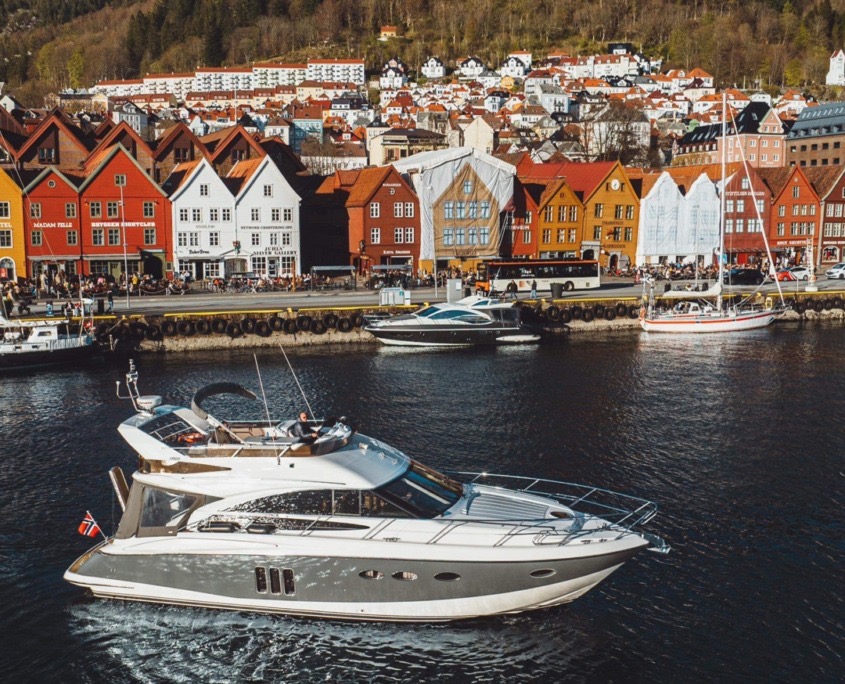
Image Courtesy of See the Fjords – seethefjords.com
On the Water
Spending time on the fjord itself adds another layer.
Heading out with a local fisherman, the experience becomes more intimate. The water, which had previously felt expansive and distant, becomes something closer, more tangible. Lines are cast, local species are identified, and the rhythm of the environment begins to reveal itself through practice rather than observation.
It is a simple experience, but one that reshapes how you understand what surrounds you.
For a different perspective, private journeys with See The Fjords offer access to more remote stretches of water. Travelling by yacht, the landscape opens and narrows in equal measure, moving between wide, exposed passages and enclosed sections where the mountains rise sharply on either side. This ultra-luxury yacht is a beautiful way to see the area. Expect high-end amenities and to be guided by an experienced boating professional. We walked through the yacht and admired the bedrooms, lush carpet and lounge area. This is a very elegant way to see the Fjords.
Walaker Hotel / Marthe Saether – walaker.com
The Unexpected Layer
That sense of place carries into something less immediately visible.
Up to this point, the experience aligns closely with expectations. The landscapes are expansive, the pace unhurried, the surroundings largely untouched.
What reveals itself more gradually is the level of refinement within it.

Image Courtesy of Walaker Hotel
At Walaker Hotel, set along the shores of the Sognefjord, this becomes clear in a quiet, understated way. The surrounding area reflects a softer side of the fjord system, where the scale remains, but the atmosphere feels more settled, shaped by long-standing communities and continuity of use. Near the hotel, there is a walking path where you can enjoy 11 kilometres of land hugging the coastline, with silence, serenity and incredible views awaiting. Solvorn is a special place where quality of life is placed first and you are truly at one with your surroundings.
Everything feels considered and authentic. We enjoyed a few hours with a local guide and visited the oldest church in Norway as well as other historical spots and of course, some waterfalls.
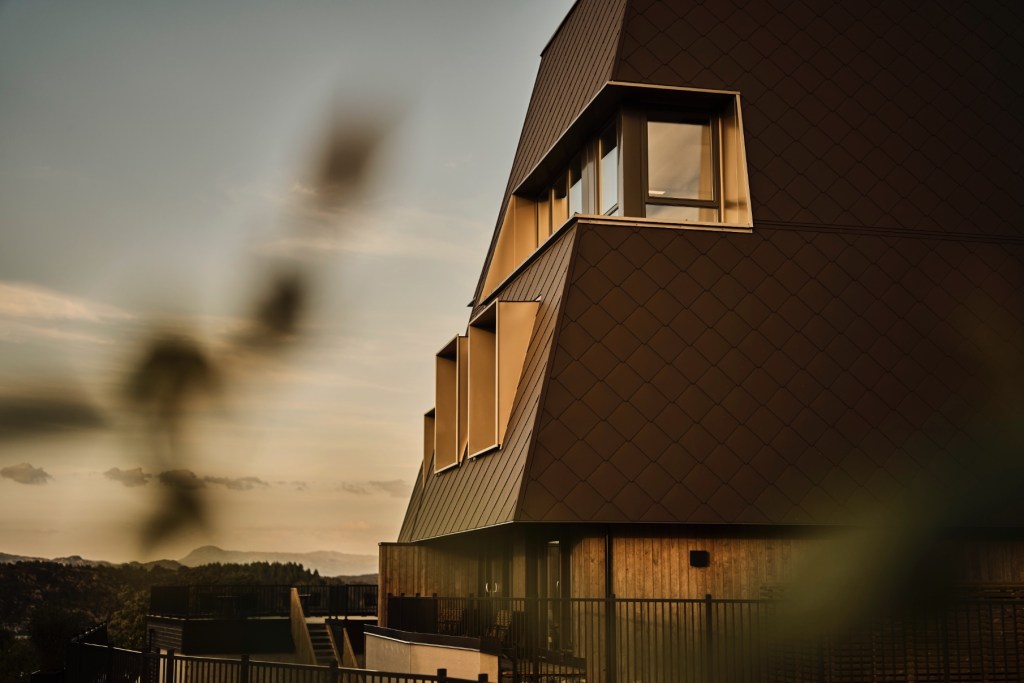
Image Courtesy of Beckerwyc House
Further west, at Beckerwyc House, the interpretation becomes more contemporary.
Set among the islands of Austevoll, the surroundings open towards the sea. The horizon stretches wider, the light shifts more quickly, and the connection to the water feels immediate.
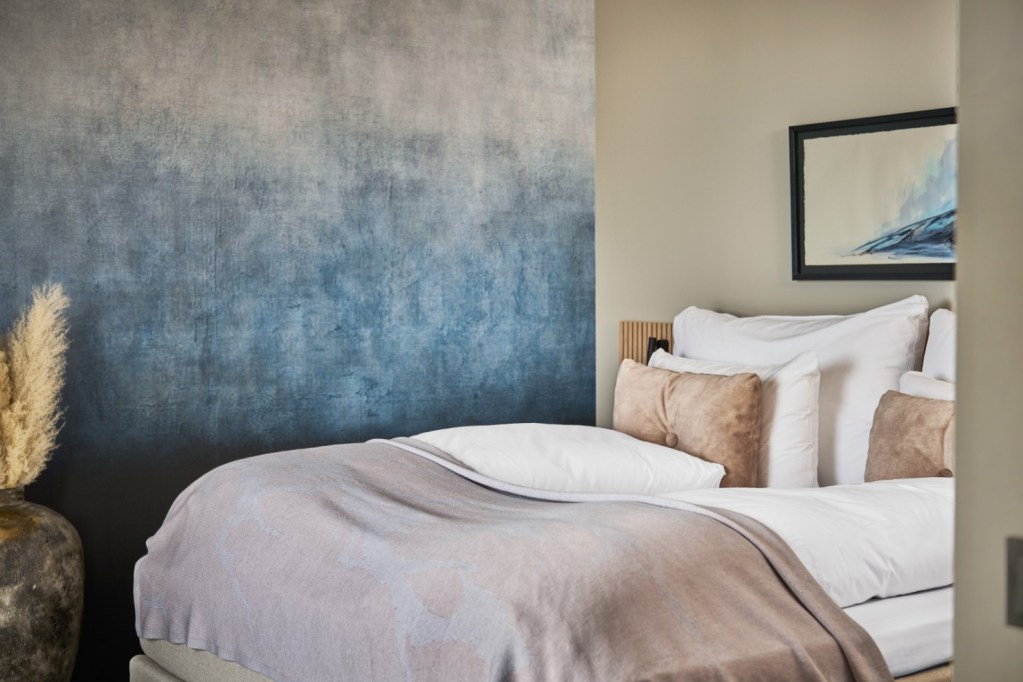
Image Courtesy of Beckerwyc House
Inside, the design is restrained, built around materials and light rather than decoration. Spaces feel deliberate without appearing styled.
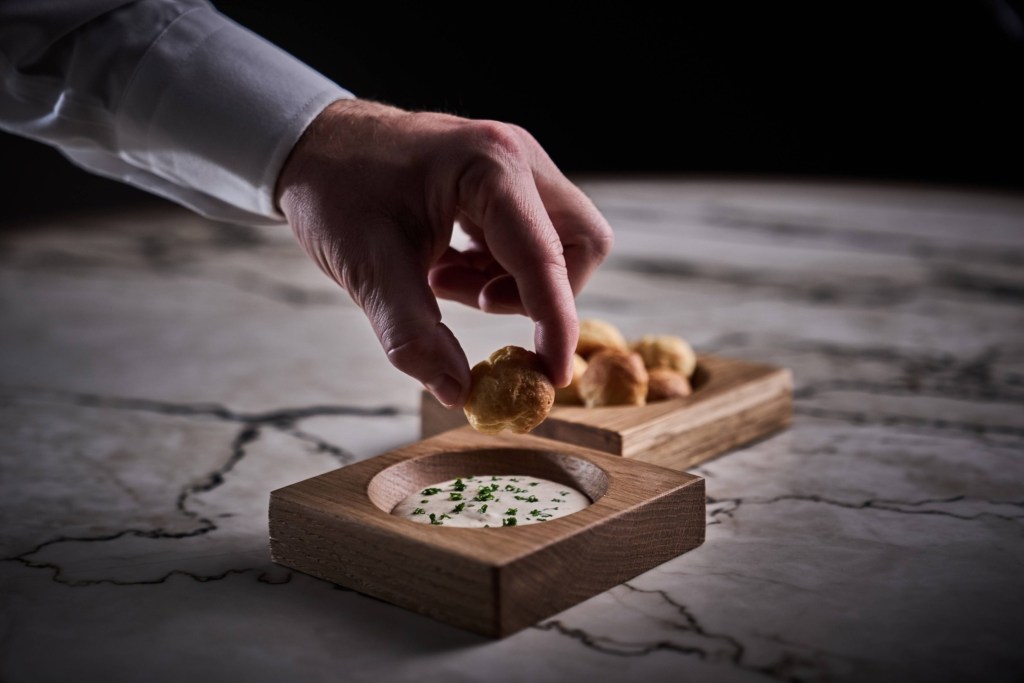
Image Courtesy of Mirabelle
Dinner at Restaurant Mirabelle reflects the same approach. Seafood sourced from the surrounding waters is prepared with precision, each dish focused on clarity of flavour rather than complexity. The quality of the locally sourced ingredients carries the experience. This is the thing about the fjords. They have access to some superb ingredients throughout the year from an abundance of the freshest fish through to moose and deer.

Fjord Norway / Mathias Falcone – fjordnorway.com
Redefining What Luxury Looks Like
Luxury here does not present itself all at once. It builds through detail and consistency.
In the way a meal is prepared. In how a space is arranged. In the balance between simplicity and refinement. It does not rely on scale or visibility to be understood. What defines it is the ease with which everything comes together, a quiet confidence in what is already there.
You arrive expecting a landscape. You leave with a clearer sense of everything held within it.
Fjord Norway / Vegard Aasen – fjordnorway.com
Days That Settle Into Place
Looking back, the days begin to soften at the edges.
Mornings by the water. Walks that extend further than planned. Meals that arrive at an easy pace, followed by long stretches of time where nothing in particular is scheduled, yet the day never feels empty.
A rhythm forms, quietly and without effort.

Fjord Norway / Sverre Hjørnevik – fjordnorway.com
A Different Kind of Departure
By the time it comes to leave, the experience feels more complete. Not because anything has been added, but because of how it has been absorbed.
The landscape remains unchanged.
Your perspective does not.
What first appeared simple reveals itself as something more deliberate, more layered. And somewhere within it, the idea of luxury becomes less about what is visible and more about what stays with you afterwards.
To discover more, visit Fjord Norway
View this post on Instagram