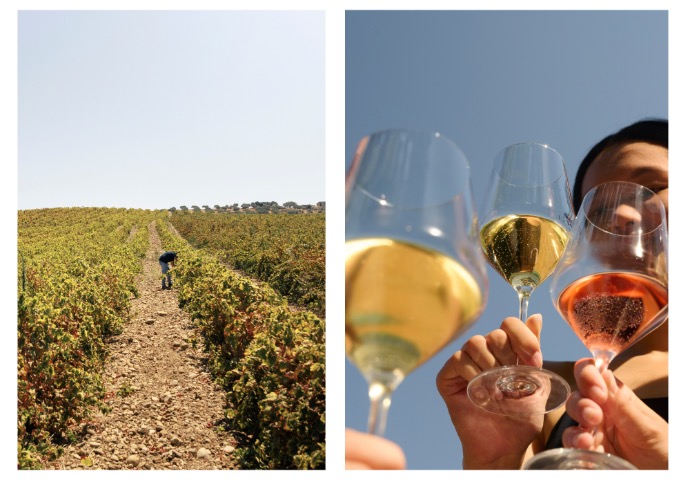
Sicily isn’t just a destination. It’s a feeling. An island that hums with four thousand years of history, where hands in volcanic soil craft wines that tell stories, and where landscape, history, and hospitality aren’t just entwined, but inseparable. Set your watch to island time, because Sicilian wine doesn’t rush.
We were invited by the Consorzio di Tutela Vini DOC Sicilia, the consortium behind Sicilia DOC, to trace a path across the island: through vineyards, temple ruins, and cellars, tasting my way through a region that is only just beginning to get the recognition it deserves.
An Island Shaped by Everyone Who Ever Wanted It
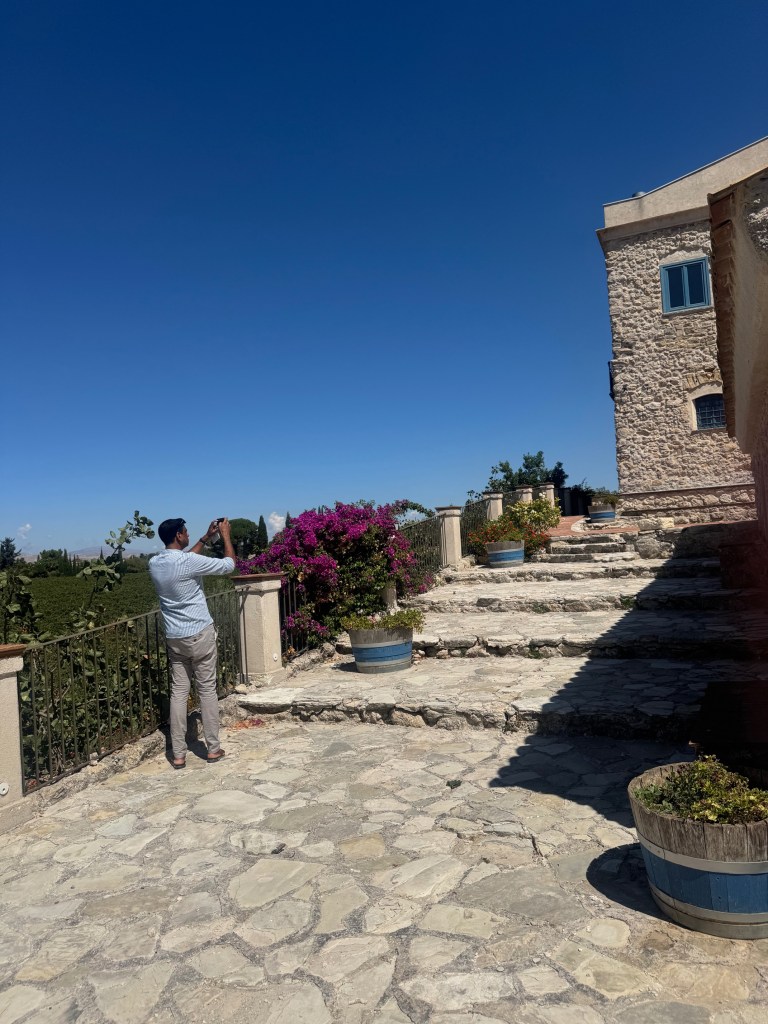
Sicily is the largest island in the Mediterranean, and its wine story reads less like a single narrative and more like a scrapbook kept by every civilisation that ever passed through. The Phoenicians arrived in the eighth century BC and were the first to carry Sicilian wine across the Mediterranean. The Greeks, Romans, Arabs, Normans, French and Spanish followed, each one leaving something behind: a grape, a technique, a taste for sweetness.
I felt that inheritance most while standing among the Doric columns at Segesta, vines rolling down the hillside behind them. History here doesn’t sit quietly in a museum. It grows in the ground.
From Volcano to Coast, in One Glass
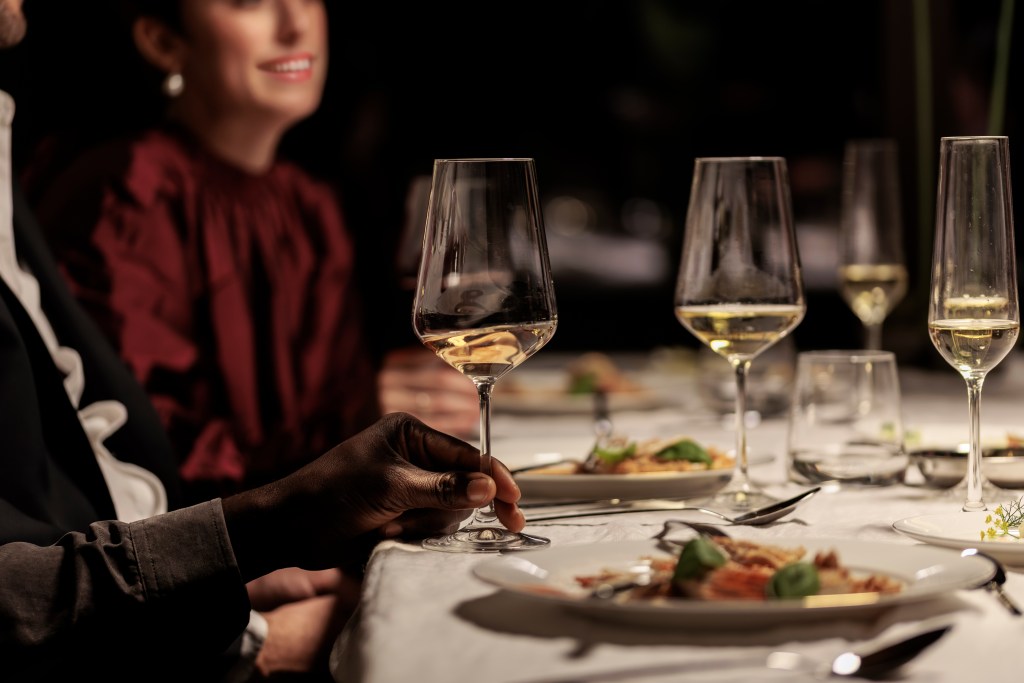
On the eastern slopes of Mount Etna, one of the largest active volcanoes on Earth, the air turns cooler and the wines tighter and more mineral. An hour south, the coastal plains bake under a sun that pushes the grapes to ripen almost defiantly early. Harvest here isn’t a single event so much as a slow wave, beginning with the earliest coastal whites in late July and not finishing until November, high on Etna’s black slopes.
No two glasses of Sicilian wine are really telling the same story, and that was the thing I kept coming back to. Ask a grower here why their wine tastes different from the one three fields over, and they’ll usually just point at the soil.
A Vineyard on a National Scale
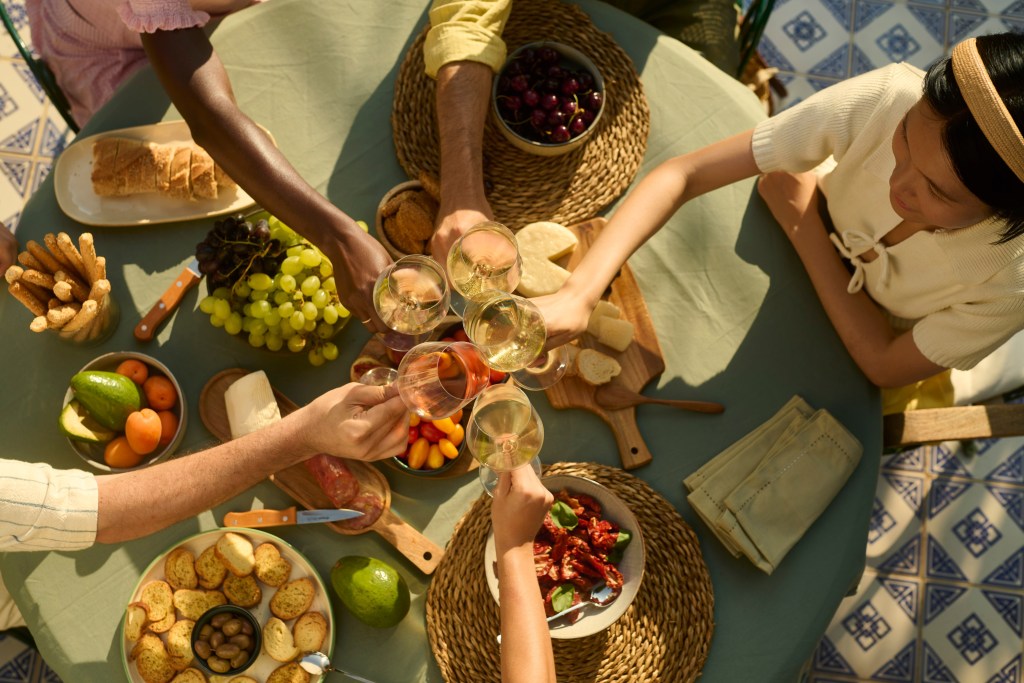
The numbers took me by surprise. Sicily’s vineyards cover almost 97,000 hectares, making it Italy’s second-largest wine region, an expanse three times the size of New Zealand’s entire vineyard footprint and larger than the whole of South Africa’s wine country. Sicily is also Italy’s leading region for organic and sustainable viticulture, with nearly 46,000 hectares farmed with a lightness of touch that felt less like a certification and more like a philosophy, born of a climate that has always been generous to those who listen to it.
Long before anyone catalogued this formally, a Franciscan friar named Francesco Cupani spent the 1690s doing exactly that, describing thirty-five native varieties in a manuscript that reads more like devotion than science. Ten of those same varieties are still in the ground today, which means somewhere on this island you can still taste a grape a seventeenth century monk once wrote about by candlelight.

The Grapes That Became My Companions
By the second day, the wines had stopped being a list of names and started to feel like characters in a story I was being told.
Nero d’Avola arrived first, Sicily’s great red, brooding and generous. Its name is rumoured to trace back to the old Sicilian Calaulisi ‘grapes of Avola.’ I tasted it from the southeast near Vittoria, where it grows in red, sandy loam soils over limestone, and again from further inland, and it was extraordinary how the same grape could sound so different depending on who was pouring it, concentrated and structured in one glass, softer and sun-warmed in the next.
Frappato felt like Nero d’Avola’s more playful sibling: lighter, brighter, almost floral, and, I learned, a genetic cousin of Sangiovese. Blended with Nero d’Avola, it forms Cerasuolo di Vittoria, the island’s only DOCG, and drinking it felt like drinking sunlight that had been given somewhere cool to rest.
Then there was Grillo, the wine that made me want to come straight back. Born in 1904 from a deliberate cross of Catarratto and Zibibbo, engineered originally to strengthen Marsala, it has quietly become one of the most exciting white wines in Italy: intensely aromatic, citrus-bright, full-bodied in a way that surprises people expecting something delicate.
I also tried Catarratto, now often labelled ‘Lucido’ to make it easier to pronounce abroad, a small but telling gesture of an island reaching outward, along with Inzolia, Grecanico, Perricone, and the honeyed, spice-laced Zibibbo of Pantelleria. Each was poured with a story attached, usually involving a grandmother, a specific plot of land, or both.

The Consortium Behind the Glass
None of this happens by accident, and the more time I spent on the island, the more I understood how much of Sicily’s wine renaissance owes itself to one organisation: the Consorzio di Tutela Vini DOC Sicilia.
Founded in 2012, the consortium was the first in the island’s history to be granted ‘erga omnes’ authority, meaning its protections and standards apply to every eligible producer across the region, member or not. That matters enormously on an island this size. Sicilia DOC, recognised the year before in 2011, is unique among Sicilian appellations in that it’s the only one that covers the entire region rather than a single pocket of it, a single quality mark stretched across nine provinces and dozens of microclimates, from Etna’s volcanic northeast to Trapani’s sun-bleached west.
The scale the consortium now oversees is genuinely hard to picture. It represents more than 7,200 winegrowers and 530 bottlers, and together they produce somewhere in the region of 82 million bottles a year. Grapes destined for Sicilia DOC must be grown, vinified, aged, and bottled within Sicily itself, with only rare individual exceptions allowed for bottling elsewhere, a rule that keeps the entire process, and the value it creates, on the island.
But the consortium’s role goes well beyond policing a label. It funds and leads genuine agricultural research, including projects dedicated to rediscovering and propagating the island’s native vine biotypes, some of them relics that had all but disappeared from cultivation. It maintains detailed regulations covering everything from permitted grape varieties and yields to labelling and packaging, all in service of protecting the character of what’s in the bottle. And on a more human level, it’s the reason a visiting journalist can be welcomed into a family’s cellar and hear four generations of history in a single afternoon.
Fourteen native grape varieties fall under the Sicilia DOC umbrella, a deliberate choice to protect the island’s own genetic inheritance rather than lean on international varieties, and it’s that insistence on identity, more than any statistic, that explains why Sicilian wine feels the way it does: unmistakably itself.
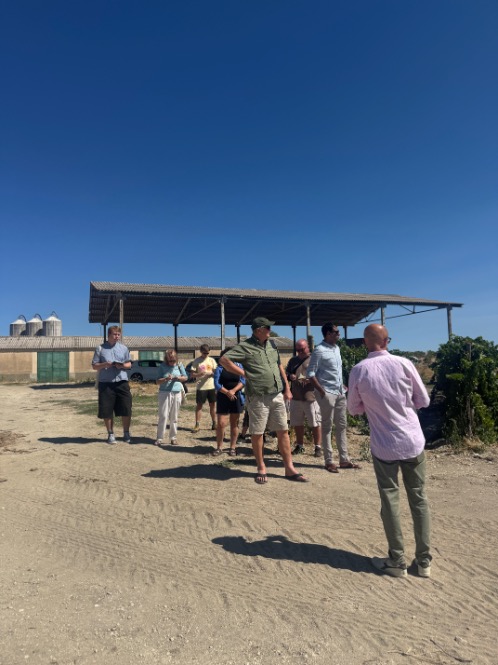
Working With Nature: An ESG Story in the Vines
What struck me most, though, wasn’t just the history the consortium protects. It’s the future it’s actively building, and the island has quietly become a testing ground for what responsible winemaking can look like.
At the centre of it is SOStain Sicilia, a sustainability foundation set up jointly by the Consorzio and Assovini Sicilia, built around the idea that a vineyard’s impact runs well beyond its own fences, touching worker welfare, local communities, and consumer health as much as soil and water. It’s a genuinely Sicilian accreditation, more exacting in places than the industry-standard protocols producers already follow, and it now certifies dozens of member wineries covering thousands of hectares and tens of millions of bottles a year. The commitments are practical rather than performative: energy efficiency in the cellar, eco-friendly materials in the vineyard, and even a redesigned glass bottle, developed with a major glassmaker, that shaved roughly fifty grams off every unit shipped, a small change that adds up fast across an island producing over 80 million bottles annually.
Conservation runs even deeper than the certification. Since 2022, the consortium has coordinated BI.VI.SI., short for Biodiversità Viticola Siciliana, a research project backed by the Universities of Palermo and Milan dedicated to rediscovering and cataloguing Sicily’s ancient vine heritage. Of the more than seventy native varieties still growing somewhere on the island, the project has already identified over 130 promising new clones, several of which may eventually earn a place in the Sicilia DOC production rules themselves. Some of that work lives at the Palermo Botanical Garden, where an experimental plot called Vigna del Gallo functions as a living archive, safeguarding close to a hundred distinct biotypes that might otherwise have vanished from cultivation altogether. Standing among those vines felt less like visiting a vineyard and more like walking through a seed bank, one where every row is a sentence in a story the consortium is determined not to let go quiet.
None of these stays behind closed doors, either. The consortium runs a steady programme of masterclasses and tastings for trade and consumers alike, both on the island and increasingly abroad, treating education as inseparable from conservation. The logic is simple enough: protecting a hundred forgotten biotypes means very little if nobody ever gets to taste what they can become.
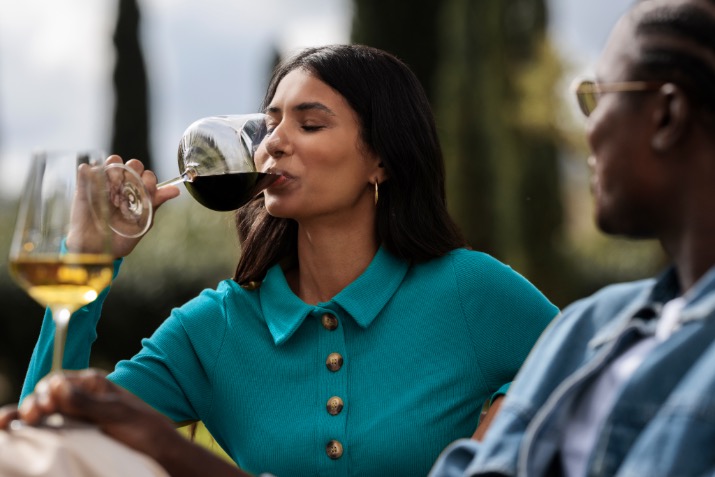
Whites Built to Last, Reds Made to Chill
One thing surprised me more than anything else on the island: the assumption that Sicily only does easy-drinking summer wine turns out to be only half true.
Up on Etna, Carricante quietly breaks the rule. It’s a late ripener, picked as far into the season as September, clinging to a high natural acidity that makes it taut and almost austere in its youth, all green apple and citrus pith. But that same acidity is what gives it the structure to age, sometimes for decades, slowly unfurling into notes of flint, smoke and, dried mountain herbs. A producer on Etna told me it’s often compared to Chablis, and standing in a cellar tasting a decade-old bottle next to that year’s release, I understood why.
The reds, though, are having their own quiet rebellion, and it runs in the opposite direction. On a hot Sicilian afternoon, I watched a grower pull a bottle of Frappato straight from an ice bucket without a flicker of hesitation, and it made sense the moment it hit the glass: light-bodied, fragrant, bursting with sweet red cherry and a bright snap of blood orange once chilled. Even Nero d’Avola, the island’s most serious red, takes well to a light chill, its peppery edge softening to let the black cherry and plum come forward. Up on Etna, chilled Nerello Mascalese does something similar, turning crisp and bright with wild raspberry notes.
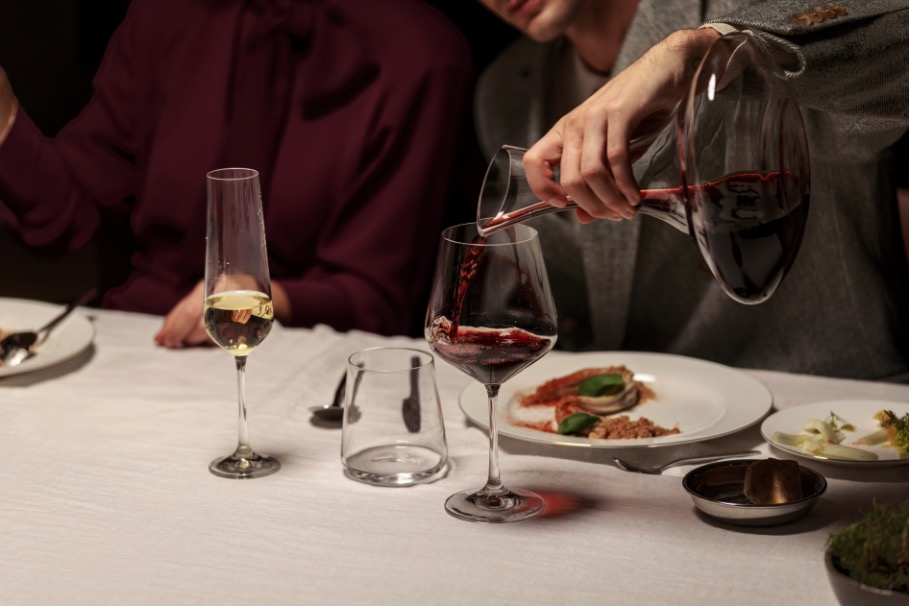
Why This Island Deserves Your Glass
There’s a reason the world is starting to pay closer attention. American importers and retailers have expanded their Sicilian portfolios by nearly fifty per cent in just a couple of years. More than half of US retailers now stock Sicilian wines in that coveted $20–$25 range, and industry watchers have called the island the region “most ripe for growth” in all of southern Italy.
But the statistics were never going to be what stayed with me. What stayed with me was standing in a vineyard as the light went gold over the hills, glass in hand, listening to someone describe soil the way other people describe family.
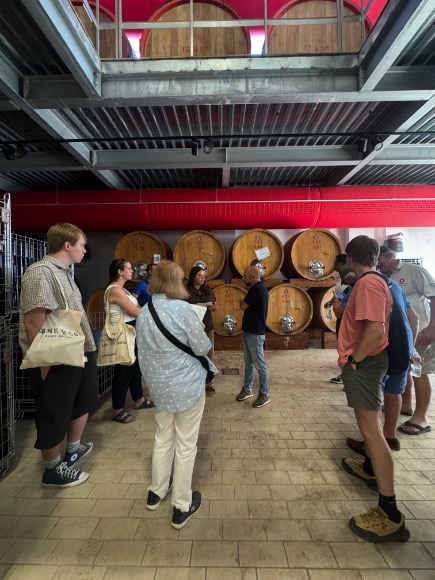
A Parting Toast
Sicily doesn’t hand you a single wine style to file away and forget. It hands you a mosaic: volcanic ash, red clay, and pale sand, cool mountain air and torrid coastal heat, four thousand years of visitors who each left something behind in the glass. You cannot really read that mosaic from a tasting note. You have to stand in it.
We were lucky enough to be invited in. Consider this your invitation too.
For more information, visit siciliadoc.wine
View this post on Instagram
Images courtesy of Sicilia Doc Wine.