Small rooms present unique design challenges, but the right flooring can transform cramped spaces into areas that feel surprisingly spacious. Clever pattern choices create visual depth that extends beyond physical boundaries, making modest rooms appear larger and more open.
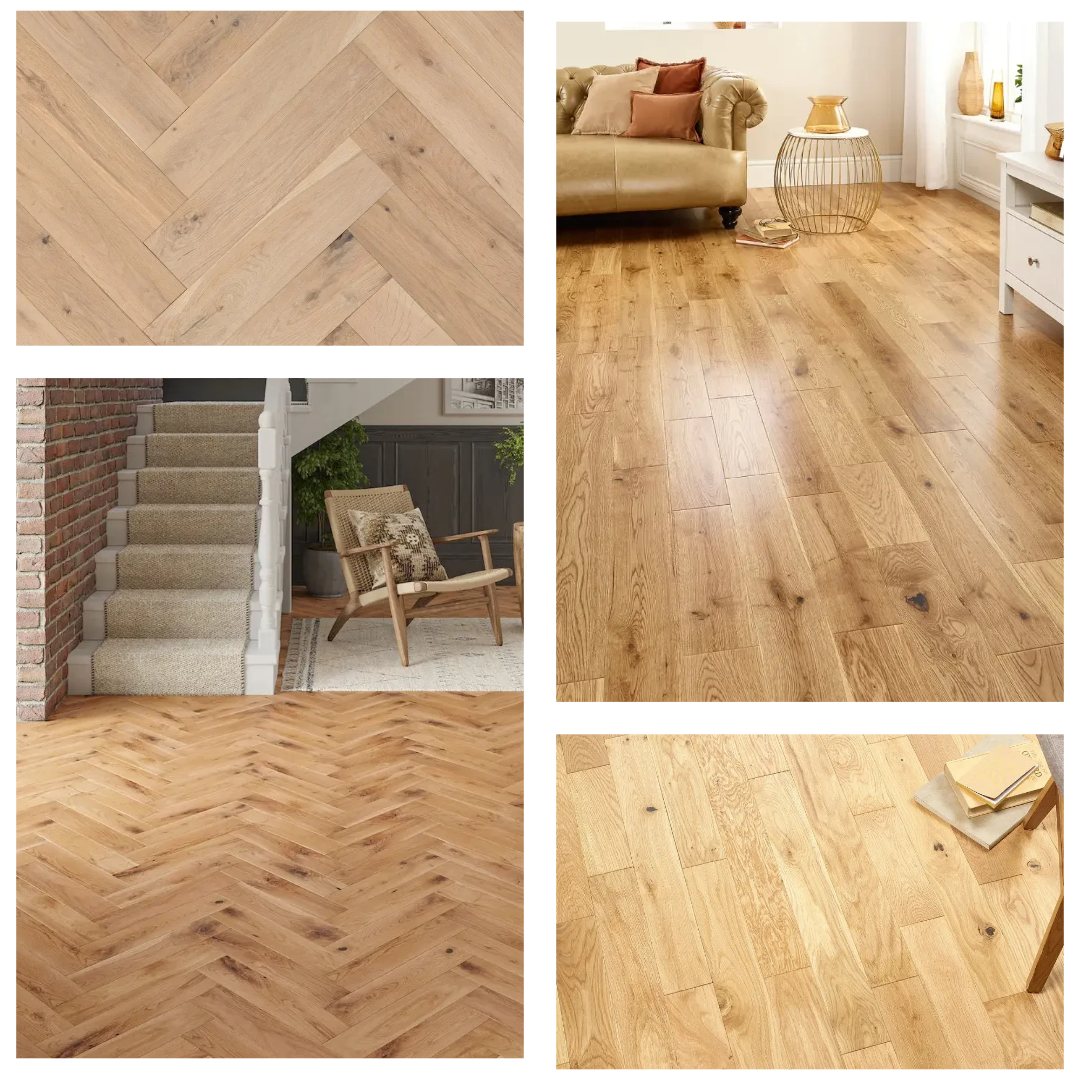
Herringbone solid wood flooring has long been a designer favourite for creating this illusion. The zigzag pattern draws the eye across the floor rather than stopping it at the walls. This simple visual trick makes rooms feel wider and more spacious without sacrificing style or substance.
Solid oak flooring in lighter tones also works wonders in compact spaces. The natural wood grain adds warmth and character while reflecting light throughout the room. When paired with strategic lighting and minimal furniture, these classic flooring patterns can make even the smallest spaces feel unexpectedly generous.

Why Pattern Direction Matters in Small Spaces
Pattern direction shapes how a room is perceived. Diagonal and herringbone layouts break up straightforward lines, leading the eye from one corner to the other. This visual movement draws attention along the longest sightlines, stretching the space in the viewer’s mind. Geometric arrangements like herringbone create what’s known as optical flow, causing the gaze to move continuously instead of stopping at the walls. As a result, small rooms feel less confined because boundaries blur and true dimensions become harder to judge.
Flooring professionals often recommend dry-fitting a few planks or blocks before final installation. This step lets homeowners compare patterns, seeing firsthand which direction makes the room seem deeper or wider. Interior designers report that angled and geometric patterns are especially useful for small flats or boxy rooms. When lines zigzag or run diagonally, the eye no longer lands abruptly at a wall, making the overall space feel more open. This subtle illusion is regularly used to maximise compact layouts without sacrificing design character. Steering away from traditional straight planks allows for greater flexibility and noticeably improves spatial perception.

Herringbone Patterns That Expand Visual Space
Herringbone is consistently chosen for compact rooms because its distinctive V-shaped pattern draws the eye across the floor, creating continuous movement that distracts from fixed perimeters. This movement tricks spatial perception, making it difficult to sense where a wall truly begins or ends, which leads to a space feeling more open. Designers at RIBA report that this pattern’s repeated, interlocking layout interrupts the brain’s usual method of gauging room size, replacing straight, boxy sightlines with dynamic angles.
Smaller herringbone blocks, often used in traditional Victorian-era spaces, amplify this effect by increasing pattern repetition, resulting in greater visual depth — an approach ideal for tighter rooms. An example from a London terrace renovation highlights how using classic smaller blocks helped widen the perceived living area. In contrast, oversized blocks with bold grain are suited to larger, modern interiors where scale won’t overwhelm.
Homeowners choosing between block sizes can ask an installer for an on-site mock fitting. This avoids the common misstep of selecting a style that works online but dominates a small footprint in reality. Oak’s natural grain — especially in lighter tones — balances reflection and texture, bringing warmth while visually stretching a floor. The result is a room that feels both brighter and more expansive, without losing character.

The Mathematics Behind Herringbone’s Visual Expansion
Herringbone patterns rely on geometric angles to disrupt straightforward sightlines, producing what designers call ‘visual confusion’. This effect means the eye moves continually across the floor, making it difficult to interpret the room’s size accurately. Scientific research on spatial perception confirms that this zigzag arrangement tricks the brain, leading viewers to perceive a room as wider or deeper than it is. When used in small areas, herringbone layouts maximise perceived space because angled planks prevent attention from resting at the walls or room edges.
Each block in the pattern forms intersecting lines, redirecting vision in two directions at once. This dual movement helps disguise exact dimensions, especially in compact interiors. As verified in flooring studies, continuous angled lines scatter focus and blur edges, making any area feel more open throughout the space.
Light interaction strengthens this effect. As sunlight moves across the surface, it bounces off each plank at a different angle, generating shifts in brightness and shadow. This variation adds subtle depth, unlike flat patterns that lack this dynamic quality. Using lighter-coloured woods can further increase reflection, boosting openness in small rooms.
Diagonal Board Layouts for Extended Sightlines
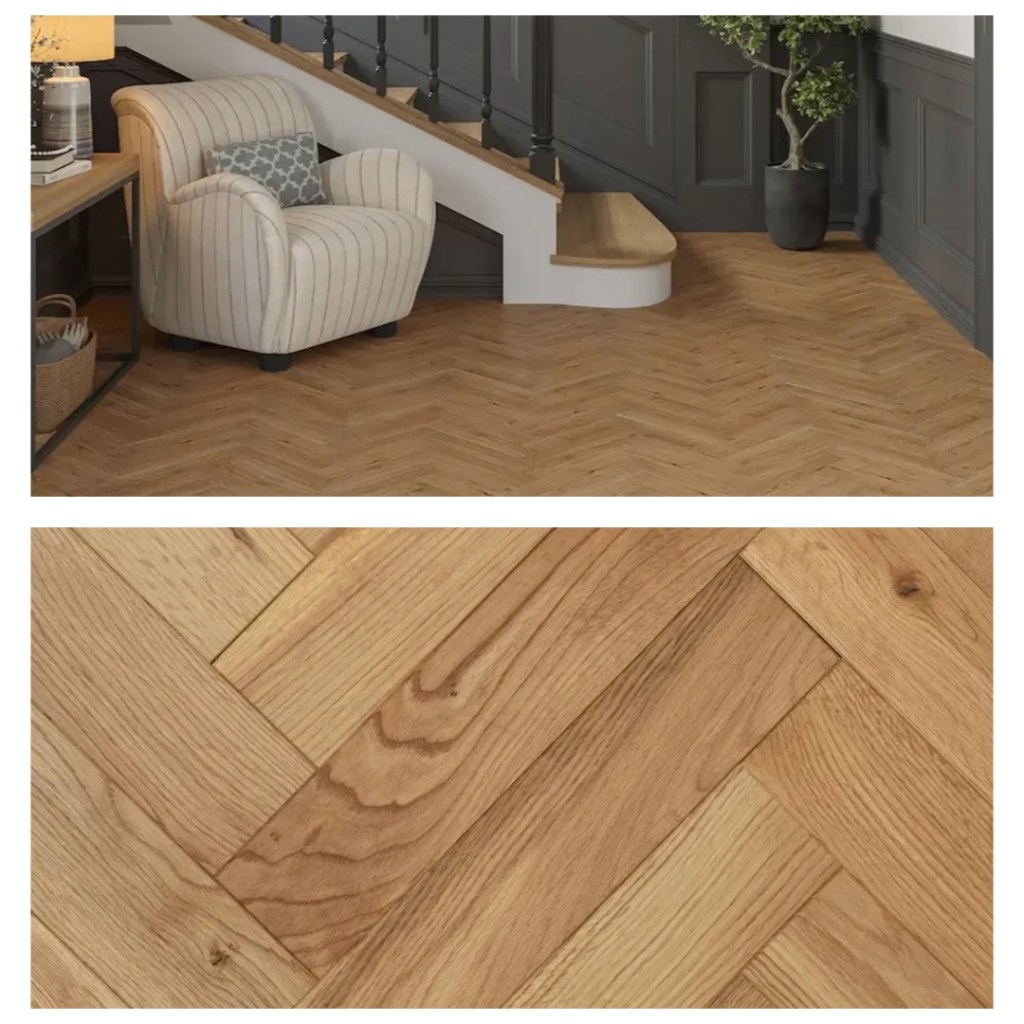
Diagonal board layouts are an effective way to visually extend space in small rooms. Laying planks at a 45-degree angle to the walls creates sightlines that cross corners and increase perceived length, as the diagonal path from one end of the room to the opposite corner is longer than a straight edge along a wall. This optical extension disrupts the brain’s quick assessment of square footage, making compact spaces feel less boxed in.
Designers frequently recommend diagonal patterns for hallways and boxy rooms because they guide the eye along a longer travel path, softening the impact of narrow or awkward proportions. Omitting border strips around the perimeter maximises flow, allowing the pattern to stretch uninterrupted — a subtle yet effective way to make a small area feel continuous and inviting.
In rooms with irregular shapes, diagonal layouts conceal odd angles by redirecting visual focus, helping the room’s outline feel less defined and more harmonious. Installing planks to point towards windows or fireplaces can highlight those features, drawing attention to architectural details instead of the room’s limits. This method works especially well in homes using solid wood flooring to create a luxury finish in tighter living spaces.
Wide Plank Effects in Compact Rooms
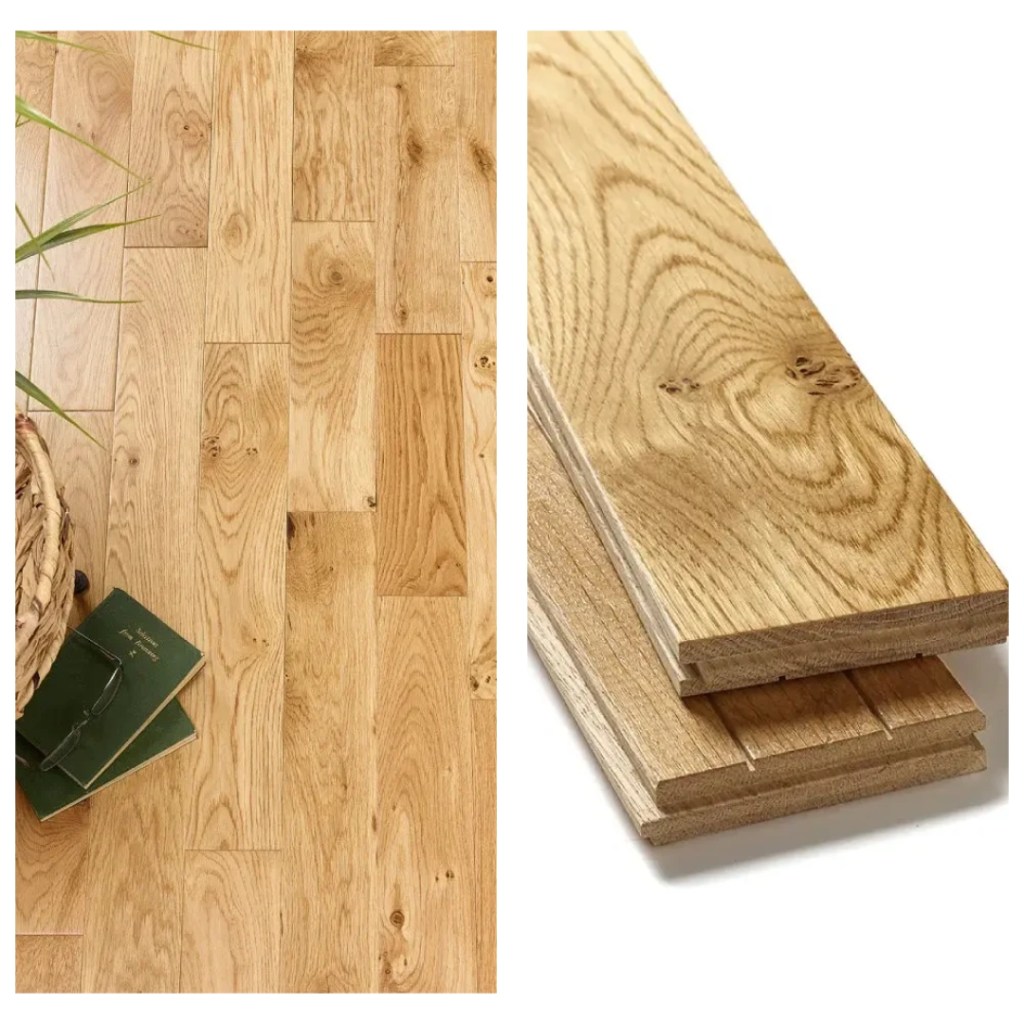
Wider planks can visually open up compact rooms, as fewer joints and seams break up the floor’s surface. This creates an uninterrupted appearance, reducing the ‘busy’ lines that often make narrow boards feel cluttered. When floorboards run parallel to the longest wall, the room gains an elongated, unified look.
Designers often use oversized planks to adjust perceived room proportions. A tight space with narrow boards might feel crowded, but wider boards make the flooring act like a canvas, stretching sightlines and calming the interior. This technique works best when plank width is balanced with the room’s dimensions, so avoid extremes that could dominate or diminish the floor’s visual role.
Choosing natural oak with distinctive grain helps add soft texture that keeps the space from feeling one-dimensional. The subtle movement in solid oak’s patterning draws the eye outwards, inviting people to notice the floor without overwhelming the senses.
Light reflectivity matters, too. Wide planks with matte or satin finishes distribute natural and artificial light more evenly than narrow, glossy boards. Testing a few finish samples in daylight and at night can reveal which option softens shadow and gives the calm, open feel homeowners want in a small room.
Border Inlays and Their Space-Defining Properties
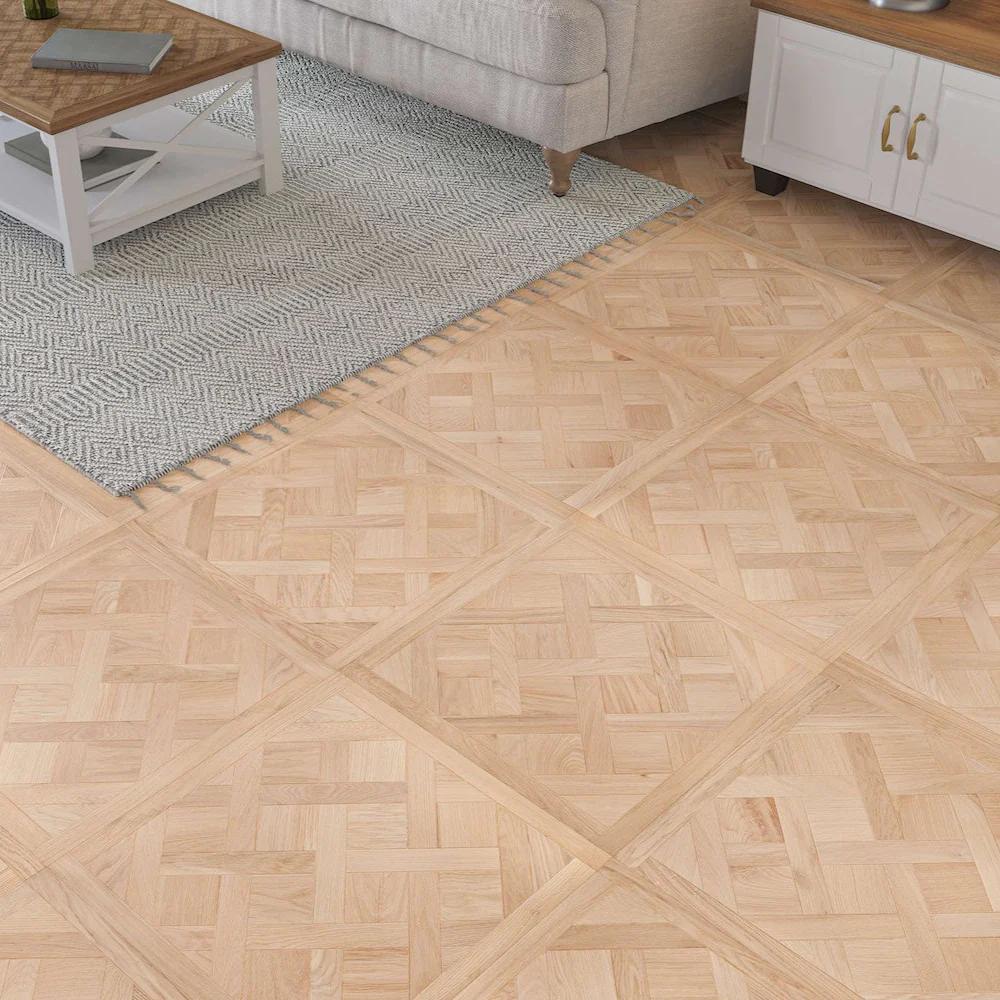
Border inlays serve as visual frames around a room, guiding the eye outward and making the central floor seem more expansive without adding physical square footage. This approach, rooted in classic design principles, remains effective for both traditional and modern interiors. In contemporary spaces, subtle perimeter borders offer a tailored look that avoids distraction while maximising perceived openness.
The right border width is crucial for small rooms. Designers typically advise borders between 15 and 25 cm so the effect is noticeable without dominating the space. Borders that are too wide shrink the usable area, while those that are too narrow lose their defining purpose. A pro tip: use a contrasting wood tone for clarity without excess weight, creating an outline that separates floor from wall and keeps sightlines clean.
Industry guidance highlights that slim, high-contrast border bands add visual order while staying light, which remains a preferred tactic across project styles. In practical areas like kitchens and hallways, consistency in wood hardness between the border and the main field prevents premature wear, supporting long-term durability. Choosing solid wood flooring makes it easier to match both colour and performance, especially in high-traffic environments where maintenance and resilience matter.
Colour and Finish Considerations for Spatial Enhancement
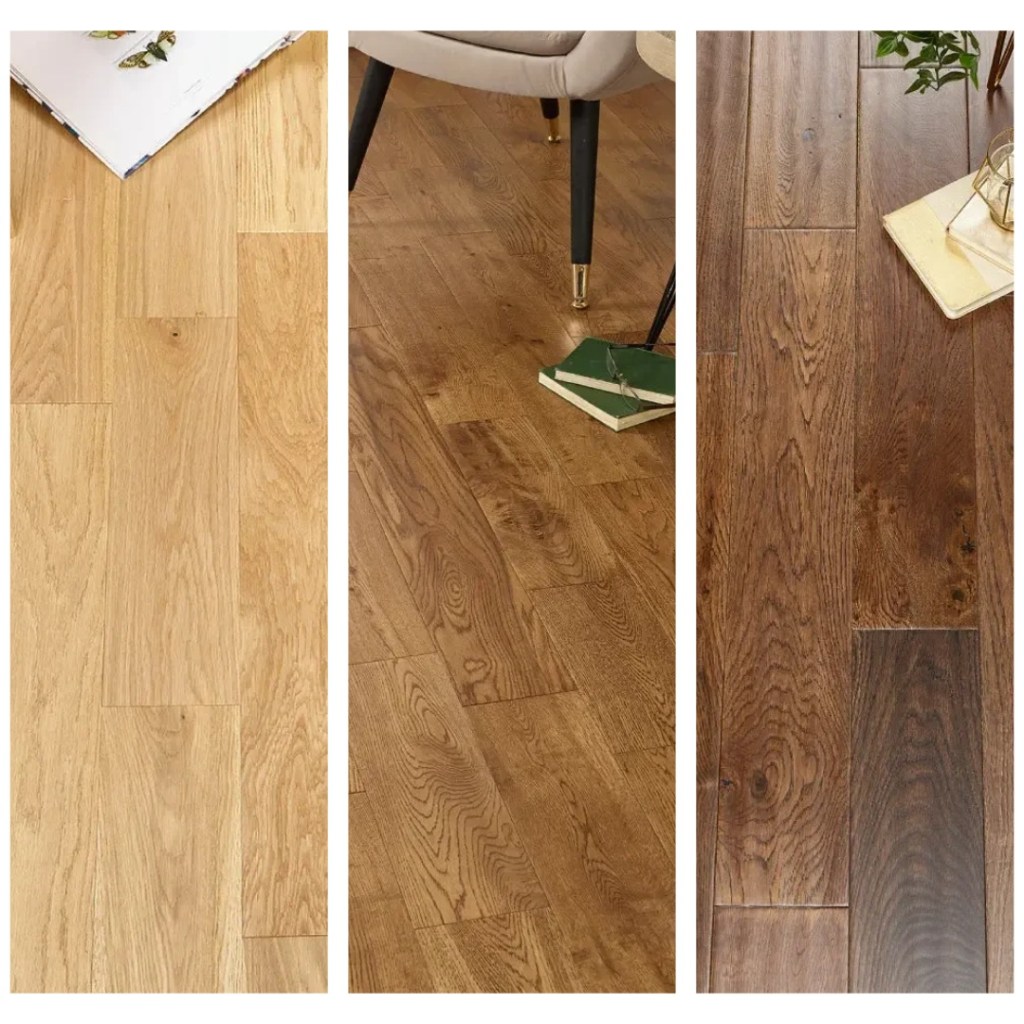
Wood flooring colour has a direct effect on space perception. Lighter tones such as pale oak increase light reflection, making small rooms appear larger and brighter. Designers rely on these shades to stretch sightlines and boost daylight, especially where windows are limited. Natural oak reflects about 35% more light than darker species, and finishes such as white-wash or limed oak can push reflectivity even higher, reaching up to 60%. This high reflectance is key in compact flats and city terraces where every inch of openness counts.
Finish selection changes the mood and openness of a room. Matte finishes scatter light evenly, resulting in a gentle, expansive effect that softens shadows. Satin creates a subtle gleam without the harshness of gloss, which can cause distracting contrast in smaller spaces. High-gloss is often avoided in tight rooms since strong reflections emphasise corners and boundaries, reducing the sense of unity.
Continuity matters for flow. Extending the same flooring through several rooms erases physical breaks, connecting spaces visually and making homes with modest footprints feel cohesive. When thresholds can’t be avoided, matching them to the floor’s tone preserves spatial unity.
Tonal alignment between flooring, skirting, and major furnishings helps the eye travel freely, removing abrupt visual stops. This technique is vital for maintaining a sense of openness where wall space is at a premium.

Pattern Scale Relative to Room Size
Pattern scale directly influences how open or crowded a small room feels. Oversized flooring patterns can dominate compact spaces and make them feel closed in, while undersized patterns introduce too much visual noise, leading to clutter. Achieving balance means selecting a pattern that matches the room’s dimensions, ensuring the floor adds flow rather than taking over. For instance, smaller herringbone blocks multiply pattern repetition, encouraging depth without overwhelming the layout. This makes them ideal for tighter areas where a sense of movement is needed without crowding the floor. In larger rooms, wider planks or bold parquet formats appear more harmonious and less imposing.
Professionals recommend placing several flooring samples on site before installing. This method lets you see how the intended pattern interacts with light and furniture, catching scale mismatches early. Relying on online images often leads to disappointment, as patterns can look much larger or busier once installed. Switching to a slightly smaller block or narrower board at this stage can prevent costly corrections and guarantee a result that feels open and balanced.
It’s best to consult a specialist installer when choosing patterned solid wood flooring for small rooms. Their experience with spatial planning and grain direction helps avoid scale mistakes. This approach ensures your final floor supports an inviting, spacious feel rather than making the room feel crowded.