
Perhaps it’s no secret that Cava is conceived as the lesser, cheaper counterpart of Champagne. This is the perception that D.O. Cava is working tirelessly to change as the regulatory board continues to educate potential consumers around the world on the savoir-faire and tradition that gained this sparkling wine its reputation as the Champagne of Spain.
Penedès: The Home of Cava
Around 30 minutes south of Barcelona lies the Penedès region, famously known as the birthplace of Cava as we know it today. Slightly off the radar compared with its glitzy Catalonian counterpart, it was here that we ventured to discover the art that lies behind the bubbles of Spain’s most favoured fizz.
Having checked in to arguably the dreamiest hideaway in the area, Hotel Boutique Font de la Canya, we were whisked away to one of six tastefully designed rooms. With that, our trip to become confident Cava connoisseurs had begun.
Our first night in the region was a relaxed one. Our guide, Alice, had been to the region on multiple occasions, so was well versed in what to expect. A quick tour of the hotel, which is situated amongst lush vineyards and enjoys enviable views of the mountains of Montserrat, along with a compulsory dip in the gorgeous outdoor pool. Before long it was time for dinner.
‘What are your thoughts about Cava?’ the group was asked rather openly, and unsurprisingly, the answer was a unanimous one: a less en vogue take on Champagne, which is often snubbed by those who enjoy the occasional glass (or two) of bubbly.
My first memory of the trip was being told that by the end of the three-night trip, which would see us visit some seven vineyards, my opinion would change – and without giving too much away, this was very much the case.

A Lesson on Spain’s Sparkling Story
The following morning, we had an early start as we visited the headquarters of D.O. Cava, a pretty office in an unassuming street, and were greeted by Judith, who leads the communications department for the board.
‘We are not trying to compete with Champagne’ was her opening line, and this was a theme that echoed throughout the trip. When asked why, she explained that the legacy of the families who produce some of the region’s most iconic Cavas has created something so special it is in a league of its own.
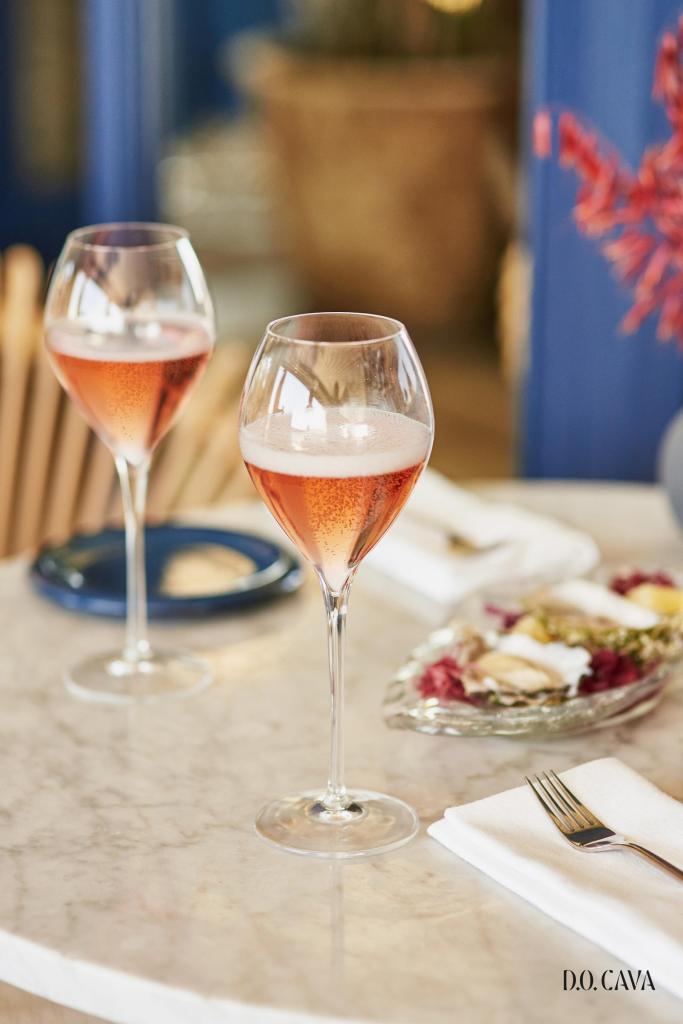
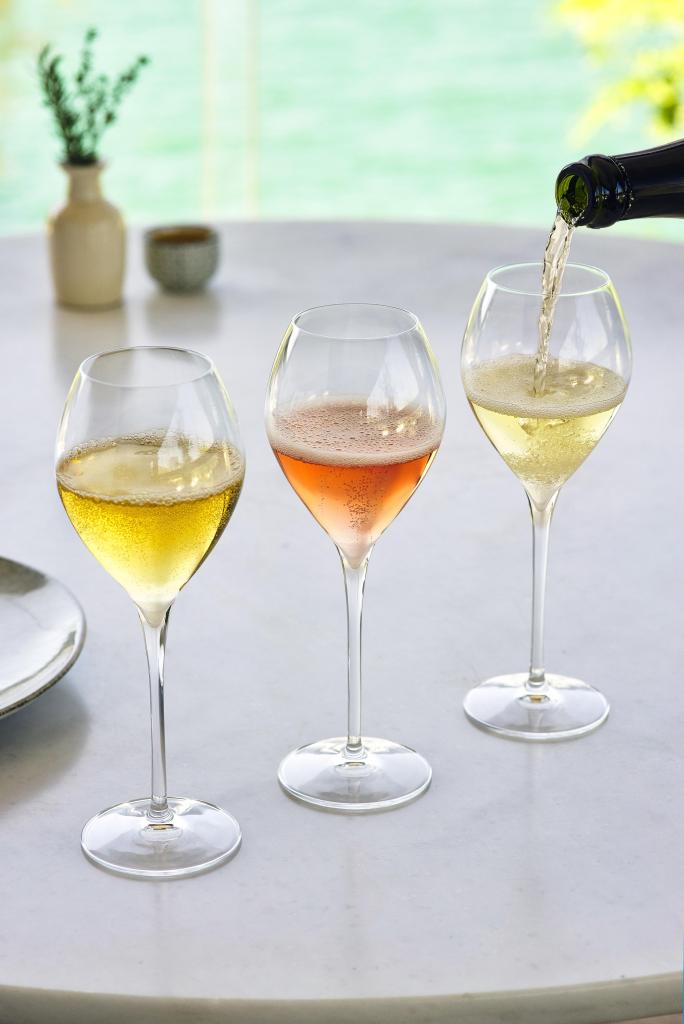
At this point, we hadn’t yet visited any of the wineries, though we had indulged in a bottle of D.O. Cava’s own Rosé Cava the night before (with suitably paired dishes courtesy of Font de la Canya). We were yet to understand why there was such a need to push the drink into the luxury market.
One thing I hadn’t realised until that morning was that Cava is produced in the same way as Champagne.
The vineyards are just as rich and the dependence on weather conditions just as pressing, with unpredictable climes causing havoc in recent years for the harvest, and the quantities produced are similarly regulated to those of its French neighbour.
This is an exciting time for D.O. Cava as the visit was coincidentally timed with the arrival of Marta Vidal as the board’s new President following her appointment in June, and will see her tenure last for four years, notably as the first female to be elected to the position.
Her plan will undoubtedly be to further reinforce Cava as a prestige product and to continue to expand it into new territories as markets, including the US, Asia, South America and the Middle East, look to buy into the current Cava craze, along with Belgium and Europe, which stand as the number one importers today.
Something that the Board has also mastered is the introduction of a classification method that truly authenticates vintages and thus promotes them as the most exclusive Cavas on the market across Cava de Guarda, aged for at least nine months; Cava de Guarda Superior, which comes either as an 18-month Reserva or a 30-month Gran Reserva; and the jewel in the crown, the Cava de Paraje Calificado, which requires a minimum ageing of 36 months.

Sumarroca – A Love of Vineyards
Our first stop on our sun-drenched tour of the estates was that of Sumarroca, a suitably sleek arrival, before being immediately ushered away in a large jeep straight to some of the prettiest vineyards in the region, which span an impressive 400 acres.
Dating back to the 1980s, it was when Carles Sumarroca acquired the Molí Coloma country estate in Subirats and the Heretat Sabartés country estate in Banyeres del Penedès, that the family business was established. Today, it is one of the most celebrated Cava brands in the region.
Our appropriately handsome guide made us feel at ease as we journeyed through a voyage of different vintages, and already, as he explained the composition of the grapes, the ageing processes and how the flavours differed between the Brut and Cuvées produced, I suddenly became accustomed to the smooth taste of the bubbles and their delicacy – something I hadn’t expected.
My particular favourite was Núria Claverol Homenatge, a signature of the estate housed in a bottle inspired by the ancient Greek amphorae.
Vins El Cep – Four Generations of Winemaking
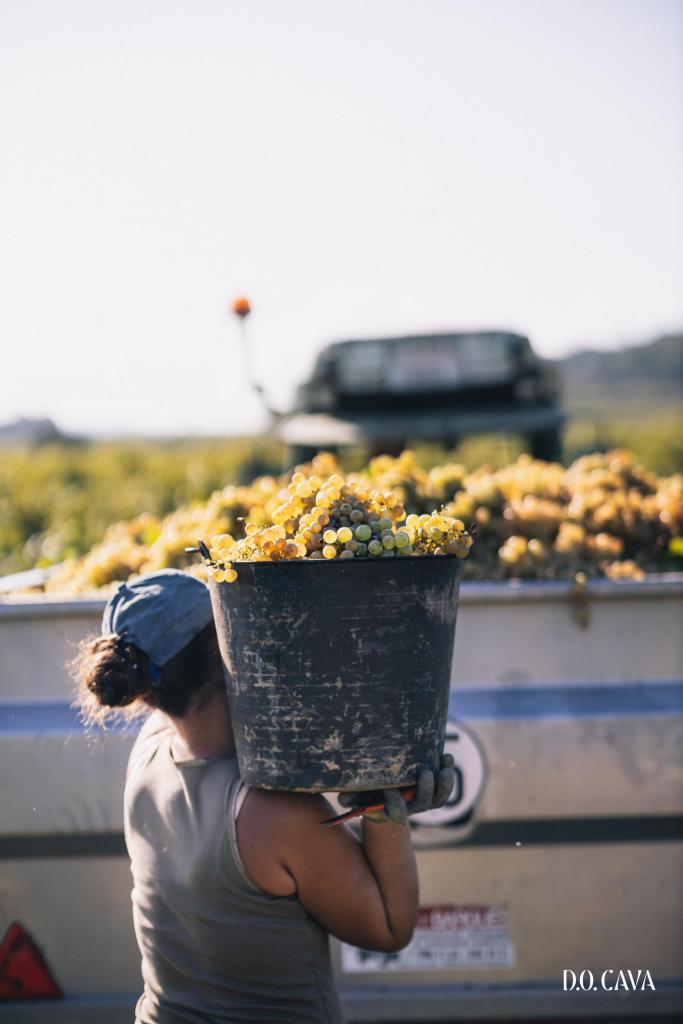
We moved on to Vins El Cep, a winery that focused strongly on its vineyards, which date back as far as 1499 and are home to the estate of the winery, Can Llopart de les Alzines. It was here that four farming families combined their expertise in the 1980s to establish the winery in the midst of a new boom in Cava production, which focused on modern techniques.
Here we were invited to savour and enjoy great Cavas; no pretence, just sublimely sparkling wines that hit every note in a flurry of sophistication and moments to enjoy the drinks produced amidst the terrain.
Of particular note was the MiM Natura Pinot Noir Brut Reserva, a Cava that falls into the ageing requirement to classify it as a Brut Reserva, and one that was easy to drink, certainly in the sweltering heat in what we were told was unusually hot for the time of year.
Pere Ventura – A Luxe Take on Cava
The tree-lined driveway that leads to the private home of the Can Bas family is in itself a spectacle worthy of a photoshoot – and it’s no wonder they have planned a gala dinner that will see guests dotted along the drive for an evening of festivities for those privileged enough to be part of their exclusive Tresor wine club.
Before being chauffeured around in an open-top 4×4, we were lucky enough to meet Pere Junior, who went on to explain how the Cava house is working with luxury brands in the automobile, fashion and jewellery sectors to curate experiences that engage their private clients – he casually name-dropped Bentley, Tiffany and Gucci, and quickly I realised this winery was focused on exploring new ways to engage with exceptional Cava.
Pere Ventura’s vineyards span 328 hectares and produce some of the finest high-end Cavas, with a focus on the more premium sector of the market. The new wing of the estate is somewhat breathtaking, and it is known that they host events amongst the scenery of the barrels – something as spectacular as the drinks themselves.
Eudald Massana – Embracing a New Wave of Wine Tourism
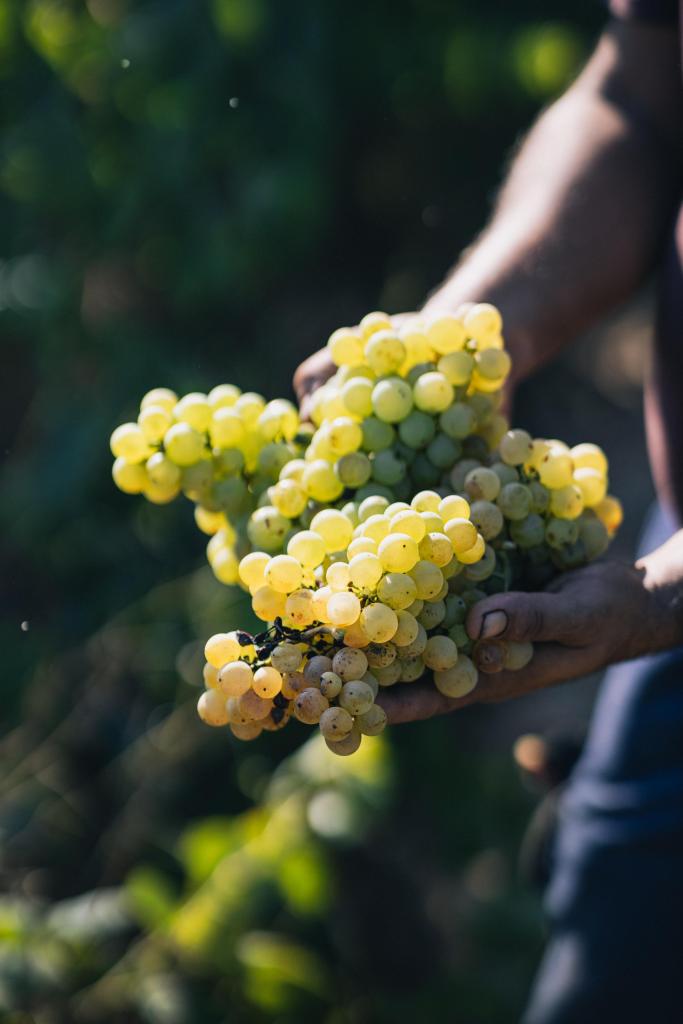
One of the more innovative wineries for me was Eudald Massana, an estate and winery that has been kept alive through ten generations of family tradition and relies on the stunning vineyards of the family’s estate to grow grapes ripened by the Mediterranean climate and sunshine.
It was here that we also settled down for lunch and, in doing so, discovered Mas Grimosach, a strikingly beautiful estate connected to the vineyard and available to rent as a remote retreat set in the most romantic of settings – and the backdrop for a spot of al fresco dining and some tastings.
Something I found rather interesting was the dedication to natural wines, which was a focus for the winery and a recurrent theme across the 30-hectare vineyards that followed core principles of organic farming and balancing plant life and waste. It was this commitment that shone through in the Cavas, and in my personal favourite, Eudald Brut Nature Reserva.
Jaume Giró Giró – Falling in Love with Cava
Our next stop was, for me, a wildcard – as for the first time on the trip we were greeted by someone who clearly wasn’t born and raised in the Penedès: Frank.
Quirky in the most enchanting of ways, his explanation of Cava was enlivened by how he had fallen into it – through finding love with the winery’s current owner, Ramon Giró Gramona, who is working to preserve more than 100 years of family history through their small boutique winery.
There was a distinct level of passion in his presentation of their sparkling wines: the small detail of the Swarovski crystals that adorn the nameplate of each bottle, and the different artworks that are dotted throughout the winery, as they often host exhibitions for emerging artists.
For the first time, I was engrossed in the storied past that had brought the winery to its current glory, one of Ramon’s parents being from rival families and the tales that added a new dimension of storytelling.
It was when Frank encouraged us to compare the drinks from the bottle and from a decanter, something that unlocked so much more flavour and punch. If a potential distributor reads this and becomes the first UK importer, then I will know my work is done.

Pinord – The Art of Pairing Cava with Gastronomy
Our final stop of the day was at Pinord, one of the more picturesque settings and slightly grander in scale as the first winery to make biodynamic wines and, of course, the first winery to produce sparkling wines in Spain.
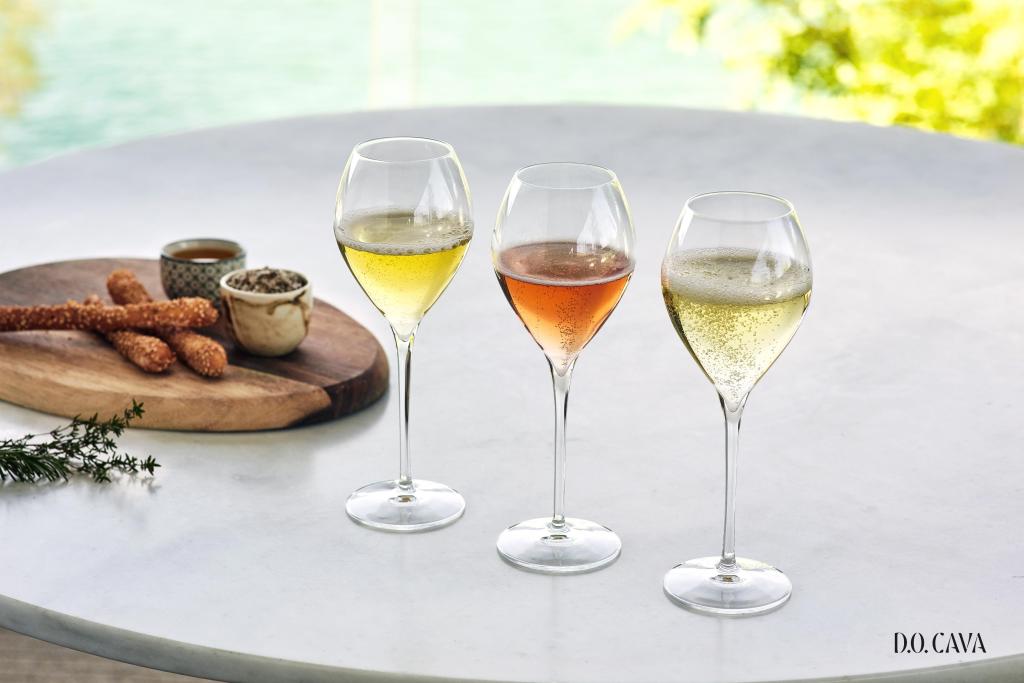
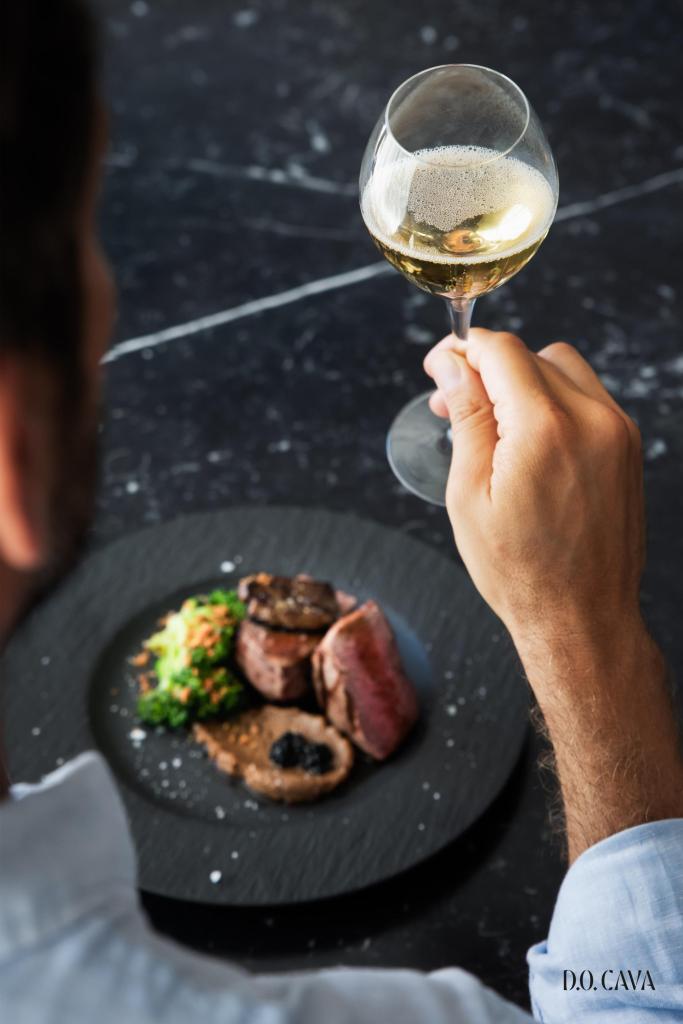
Here, we were served plates of traditional tapas and Spanish dishes to pair with the Cavas produced – well-balanced flavours, and each sparkling wine felt perfectly paired to the sharing-style dishes synonymous with Spain’s dining habits.
I also noticed that this winery was producing non-alcoholic Cava, something I hadn’t seen before and a signal of a new wave of demand for alcohol-free alternatives suitable for moments of celebration.
Roger Goulart – 140 Years of Winemaking
Before heading back to London, we were treated to one last winery, and arguably had saved one of the best till last. Cue Roger Goulart, a winery that was a bit of a drive away but worth the journey – we entered through the gates to be greeted by Davide, someone who had been with the business for many years and, with that, carried most of its secrets.
The cellars here were quite unlike anything I had seen. Different floors maintained at optimal temperatures, and we learnt from our guide that this winery was the biggest supplier of Cava to Japan – their key market.
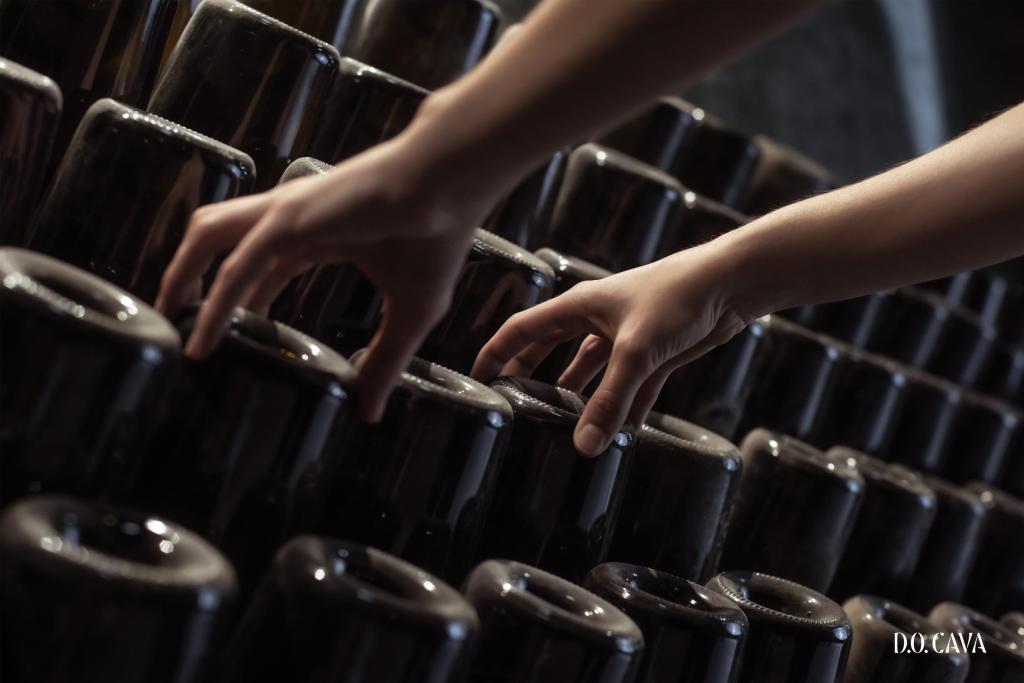
A welcome surprise was the chance to taste Raw Cava, another first for me, and the experience of tasting the wine before the disgorgement process was sublime and really articulated how much the drink evolves and matures before reaching the point of being served.
Cava – A Sparkling New Obsession
We had travelled with hand luggage only, which to my disappointment meant we couldn’t bring loads of Cava home with us (though I’m hopeful the Cava godmother may send some on reading this). I could never have imagined that my opinion of this fascinating drink would spark such joie de vivre, and understanding the legacy and the people behind the estates just made each sip on this trip all the more memorable.
For more information, click HERE.
All images courtesy of D.O. Cava