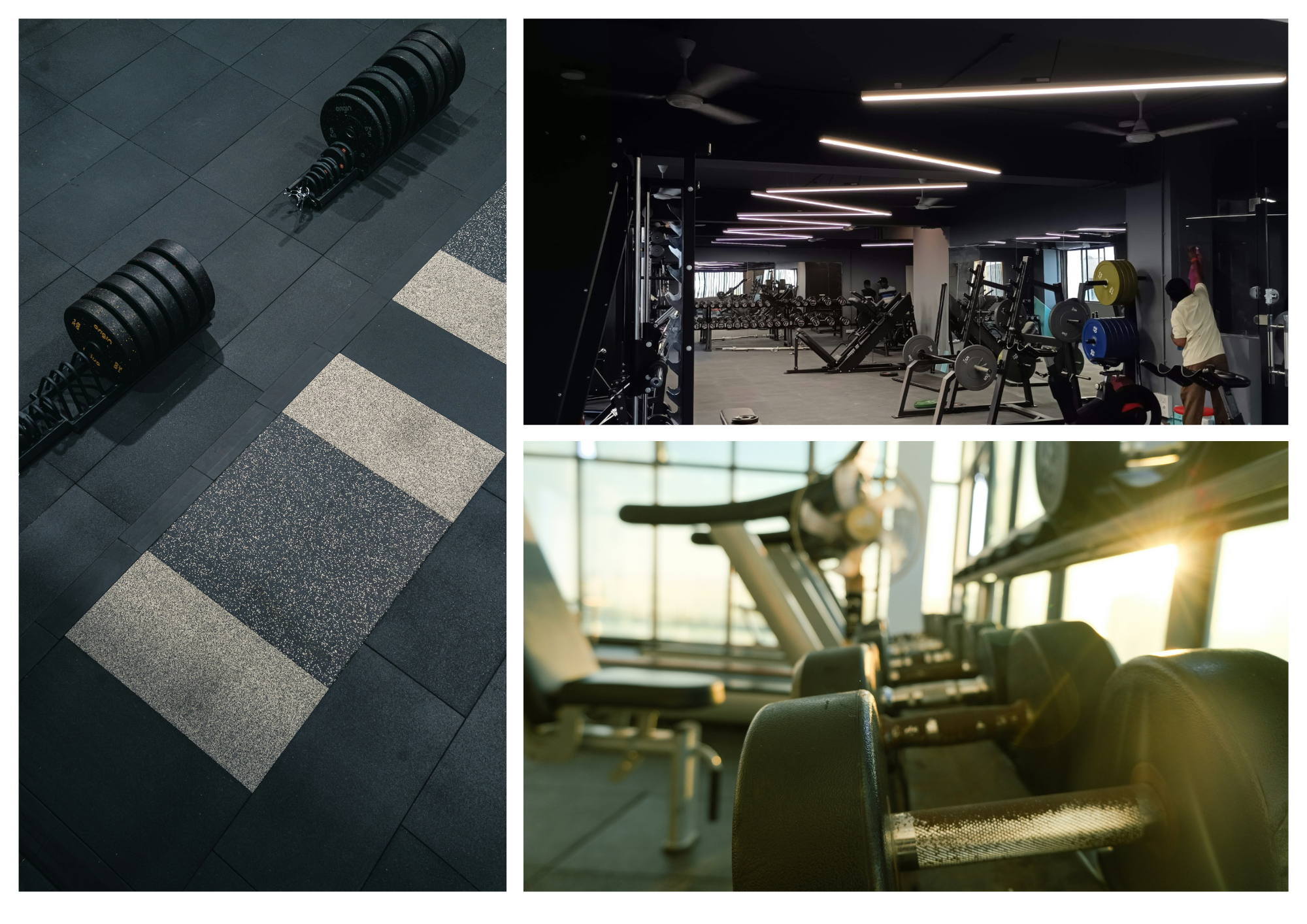
A well-planned home gym has two jobs. It should fit with the rest of your interior while handling weight, sweat, and impact without disturbing everyone downstairs. Flooring is where those needs meet, yet it is often one of the most rushed decisions.
Before comparing colours or fleck patterns, settle three points: what you will do in the room, who lives below or next door, and what sits underneath the floor, such as concrete, timber joists, or heated screed. Those answers will guide nearly every other choice.

Gabin Vallet/Unsplash
Start with a performance brief, not a mood board
Write down the training you will realistically do. Mat work and Pilates, cardio machines, moderate free weights, a rack with barbell drops, and sled pushes place very different demands on a floor.
Next, note the constraints. A detached home gives you more acoustic freedom than a first-floor flat. A concrete slab behaves differently from suspended timber, while underfloor heating limits what you can install above it. Treat these factors as design inputs rather than compromises. They narrow the material and thickness choices and reduce the risk of installing a floor that looks good but performs poorly.

Ambitious Studio/Unsplash
Materials at a glance
Rubber remains the practical choice for areas used with weights. It is easy to clean, hides scuffs, and comes in subdued blacks, greys, and fine colour flecks that can look considered rather than industrial.
Sports vinyl suits studio zones. Taraflex, for example, publishes a 9 mm construction with Class 3 shock absorption of at least 40%, along with low-VOC certifications. It is available in wood effects and flat colours and can be paired with a rubber platform under heavy equipment.
Turf works best as a defined lane for sled exercises rather than a wall-to-wall surface. Cork is warm and quiet for mobility work but is not designed for dropped weights. Engineered timber or sprung floors suit dance and movement, with rubber added in rack zones. For an initial comparison, Kinta Fitness groups rubber options by format and thickness, though the final choice should still reflect your training and subfloor.

Haberdoedas/Unsplash
A thickness cheat sheet
Supplier guidance is a useful starting point, not a performance guarantee. Greatmats suggests about 8 mm of rubber where free weights of roughly 23 to 54 kg are used without intentional dropping, and 12 to 13 mm for heavier weights that are still lowered with control. For powerlifting and regular drops at or above 45 kg, its guidance points to 19 to 25 mm rubber or specialised impact tiles in the drop zone.
SPORTEC follows a similar principle, suggesting around 6 mm for cardio, 10 mm for strength training, and roughly 30 mm engineered plates where free weights are dropped.

Tuaans/Unsplash
Rolls, tiles, or loose mats
Rolls have fewer seams and are easy to clean, but they are heavy to handle and usually need tape or adhesive. Interlocking tiles are easier to install yourself and allow individual damaged sections to be replaced, although their joints are more visible. Loose mats provide targeted protection under a rack, bike, or bench.
Formats vary by supplier. A rubber roll may measure 1 m by 10 m at 8 mm thick, while a heavy-duty tile may be 1 m square at 15 mm thick. REGUPOL’s everroll classic, for comparison, is offered in 1,250 mm rolls and 600 by 600 mm tiles at several thicknesses. If you are comparing tiles, seamless rolls, and accessories such as ramp edges and corners, the high-density gym flooring range listed by Kinta Fitness is a useful reference for available formats and multi-tile pack sizes, rather than proof of performance in a particular room.

Beth Macdonald/Unsplash
Sound, neighbours, and building rules
Acoustic requirements apply to the complete floor and ceiling assembly, not just the visible surface. In England and Wales, Approved Document E sets impact-sound requirements for separating floors in finished buildings. In the United States, the 2021 International Building Code sets minimum airborne and impact-sound ratings between dwelling units.
Specialist products can improve impact performance. One 30 mm interlocking tile, for example, publishes a laboratory improvement rating of 31 dB under ASTM E2179. A laboratory result does not guarantee the same performance in your home. If the gym sits above neighbours, consult an acoustician and check any lease or building rules before choosing the floor.
Erik Mclean/Unsplash
Underfloor heating and subfloors
Compatibility varies by manufacturer. Some SPORTEC rubber roll systems are listed as suitable for use with underfloor heating when the total floor build-up is no more than 20 mm. Roppe prohibits installing certain recycled rubber products over radiant-heated substrates. Always check the installation guide for the exact product rather than relying on general advice about rubber.
Subfloor preparation matters just as much. The surface should be flat, clean, and dry. Rubber rolls are non-perforated, so spills remain on top, while moisture in a damp slab may become trapped underneath and create a mould risk. Over hardwood, a suitable slip sheet can help reduce staining.
Jinish Shah/Unsplash
Design choices that feel considered
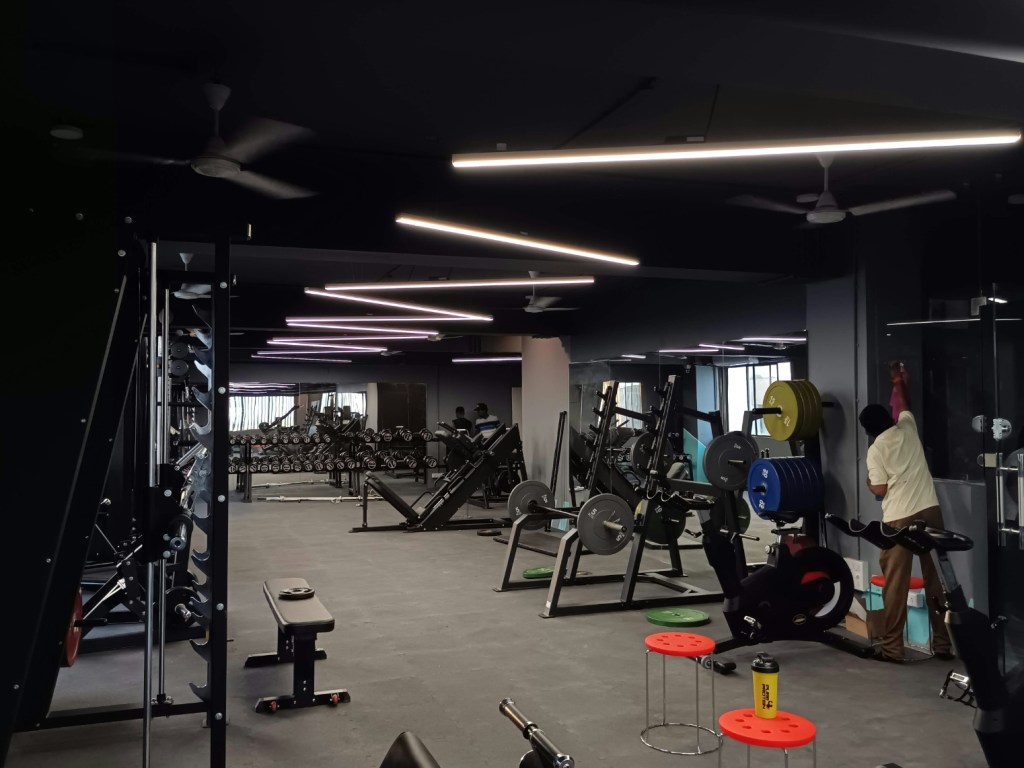
Keep the palette narrow. Warm neutrals with fine grey flecks tend to age better than bold colours. Consider wood-look sports vinyl for the studio half of the room and rubber for the rack zone, joined with a clean transition rather than a scattered patchwork.
A slim turf lane with simple white markings can add rhythm without dominating the room. Custom printing is available on some sports vinyl, but a restrained finish is usually easier to integrate with the surrounding interior. Kinta Fitness lists 15 to 20 mm rubber tiles alongside 8 mm rolls, illustrating a useful zoning principle: place thicker protection where the weights are used and choose a lighter, flatter surface elsewhere. For a broader design perspective, explore designing your home gym for complementary ideas.

Hera Reyes/Unsplash
Care and three quick scenarios
Sweep or vacuum regularly, mop when needed with a pH-neutral cleaner, and avoid harsh solvents. Ventilate the room well during the first few weeks because the odour from new rubber usually takes time to fade. With an interlocking layout, keep one or two spare tiles so a damaged section can be replaced without lifting the entire floor.
A spare room over timber joists with underfloor heating may suit lighter training and 8 to 10 mm rubber once product compatibility is confirmed. A basement slab with a rack and regular drops may need 15 to 20 mm rubber or roughly 30 mm impact tiles in the drop zone. In a flat above neighbours, acoustic advice and permissions should come before appearance.

Towfiqu Barbhuiya/Unsplash
FAQ
Do I need an underlay or a moisture check?
A moisture check is sensible on concrete. Because rubber rolls are non-perforated, moisture in the slab can become trapped beneath them. Acoustic underlays may improve impact performance, but the need for one depends on the complete floor and ceiling assembly.
Define the training first, choose a surface for each zone, and treat acoustics and heating as design constraints from the start. A well-specified floor should support the room without drawing attention to itself.
Image courtesy of Unsplash. Featured image credits to Hera Reyes, Jinish Shah and Ambitious Studio.