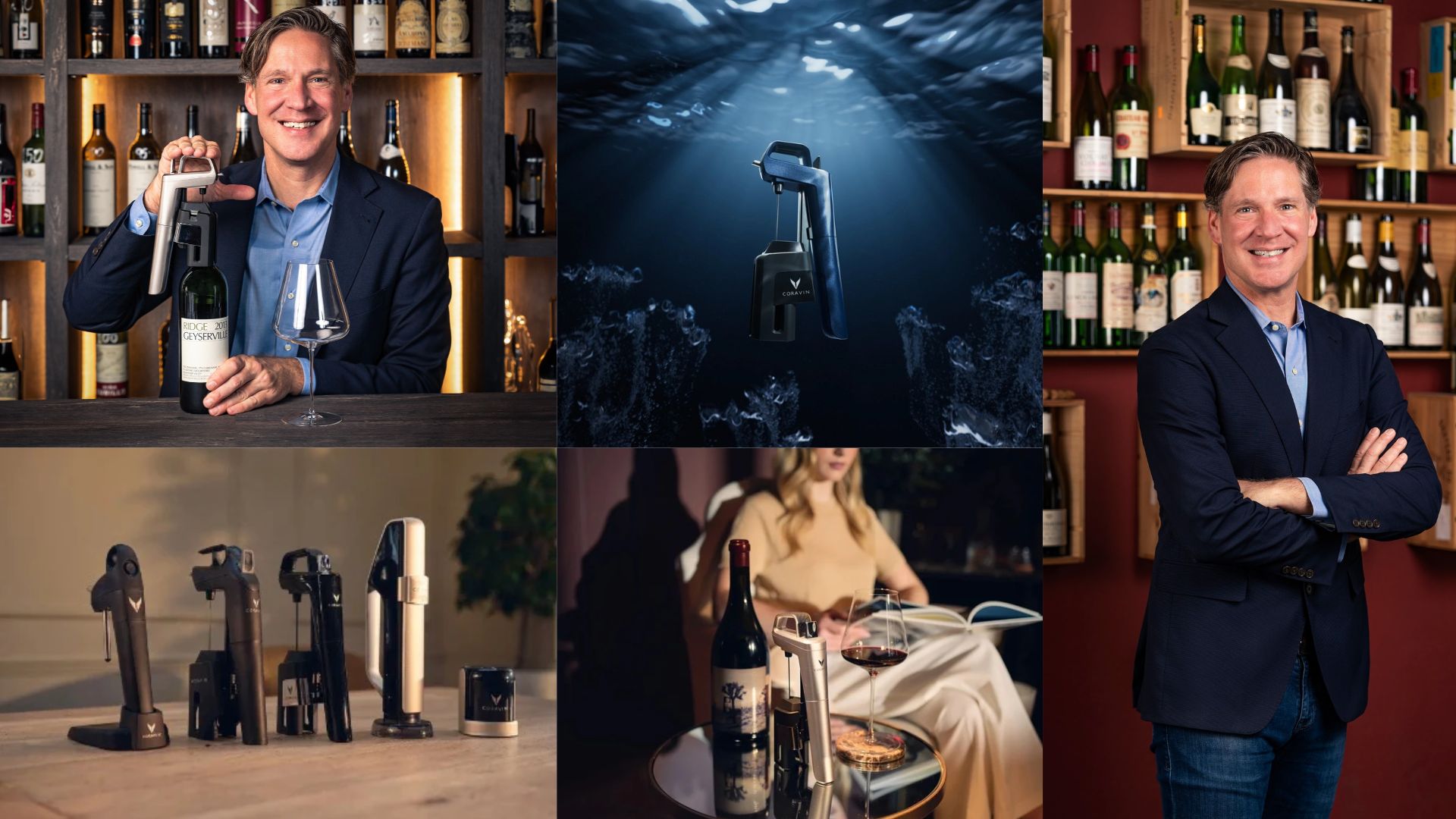
Coravin has changed the way we drink wine, one glass at a time and it is all thanks to inventor Greg Lambrecht. The New Yorker studied nuclear and mechanical engineering at MIT, then spent his career designing medical devices. By the time inspiration struck, he held around a hundred patents.
It came one evening in his cellar, when his medical needles met his wine collection. Years of testing followed before the launch in 2013. More than two million systems later, his invention is a fixture in home cellars and top restaurants alike. Lambrecht, now chairman, still splits his time between wine and medicine. We talked to him about 19th-century Burgundy, coral reefs and why one great glass can beat a whole bottle.
How did it all start?
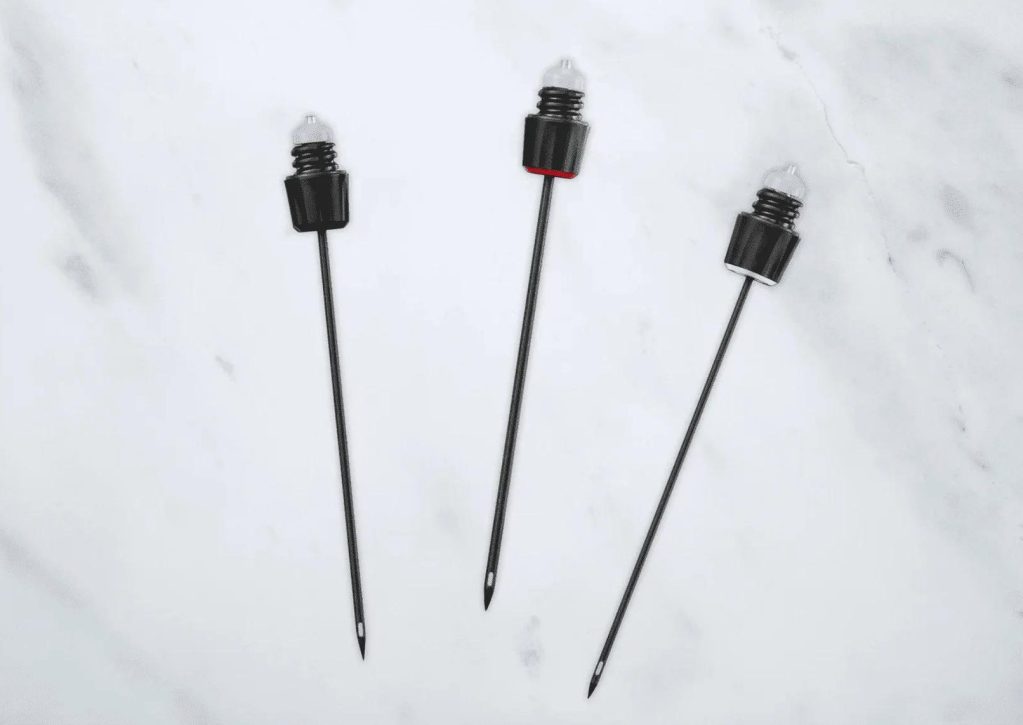
In January 1999, my wife at the time was pregnant with our second son and had stopped drinking. I loved opening something special in the evening, but didn’t want to finish a whole bottle alone. I was working in medical devices and had become really good at making needles. One night in my cellar, with a needle in one hand and a bottle in the other, I thought: “I want to drink from any bottle I own, in any amount, whenever I want.” I wanted to have a glass of white and a glass of red wine without ever opening a bottle.
I then spent years doing blind tastings to prove it worked. Robert Parker told me he hated wine gadgets until he tasted a wine I’d first accessed seven years earlier, and he called it the best thing in wine since the wine glass. We launched in 2013.
Innovation comes from a fresh perspective on a problem. I was just a wine lover who knew a lot about needles.
Tell us about the Coravin wine system and how it actually works.
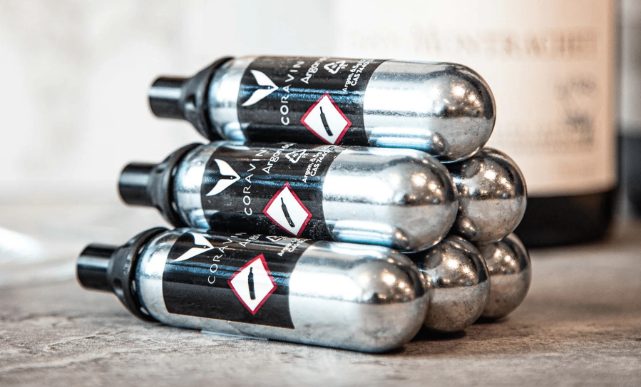
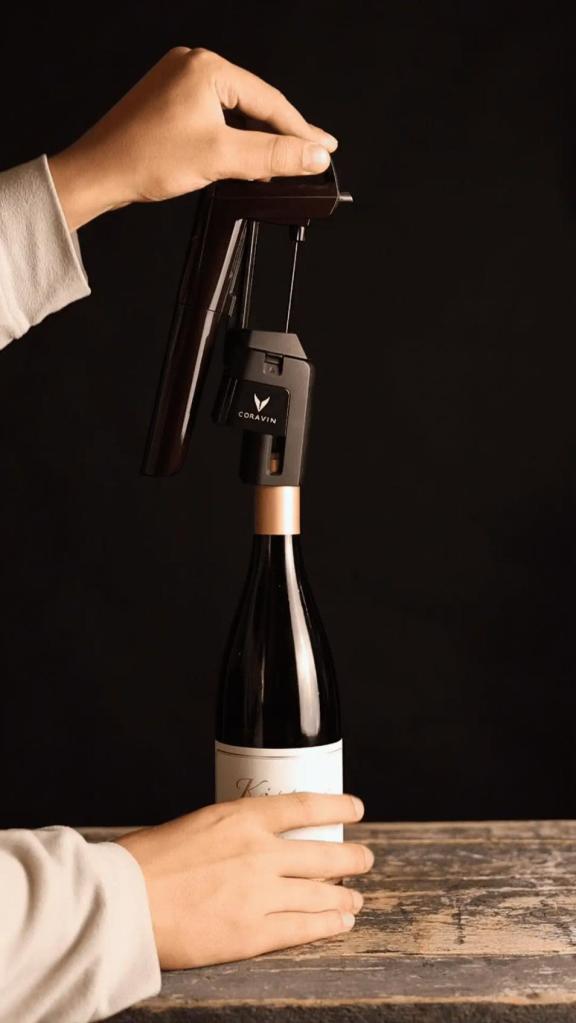
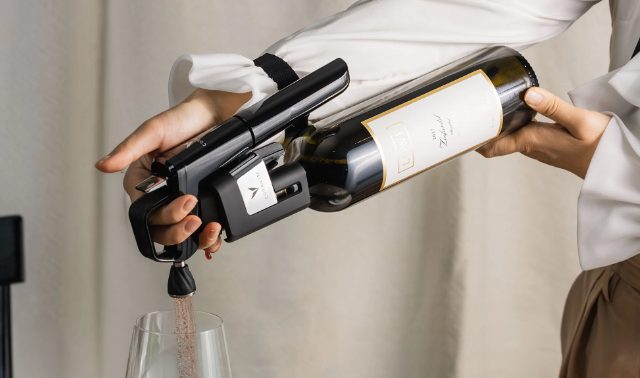
Our Timeless wine by-the-glass system uses a thin, precision-engineered needle that passes through the cork. Pure argon gas, which doesn’t react with wine, pushes the wine out into your glass without air entering the bottle. Remove the needle, and the cork reseals, so the rest of the bottle always tastes as if it’s just been opened.
You can pour a glass of great Burgundy tonight and return to the same bottle even years later. The last glass is as good as the first.
We’ve since added Coravin Pivot, which works with any closure and is great for busy, fast-moving restaurants; wine poured with Pivot stays fresh for up to four weeks. Then came Coravin Sparkling, which keeps sparkling wines in perfect condition for at least four weeks.
All serve one mission: any wine, any time, in any amount.
Have you noticed interesting differences between countries or cultures in how people use Coravin, and what do those patterns reveal about our relationship with wine?
Absolutely. Coravin has given me a fascinating lens on culture, and I have travelled all over the world because of it.
When we launched in London, I realised it’s the wine capital of the world because you can really get wines from anywhere. That openness makes it a natural home for wine by the glass.
France was a tale of two regions. Initially, in Bordeaux, a couple of top producers walked me out of the door, worried Coravin would reduce consumption. I’m pleased to say they now see Coravin as an important tool for getting consumers to try their wines. Burgundy, whose wines are scarce and expensive, embraced us almost immediately.
Australians are generally early adopters, so the hospitality trade there welcomed Coravin naturally, whereas more traditional markets such as Germany have taken longer to be convinced.
Wine is tied to how each culture thinks about scarcity, hospitality and tradition. But everywhere, the underlying desire is the same: people want to explore without committing to a whole bottle.
You have also found ways to use the brand as a force for good. How do you choose the charitable causes you support? And tell us all about your partnership with The Tusk Trust
Half my career has been in medicine, so improving people’s lives has always motivated me. We look for causes where we can make a measurable difference and that share our values: curiosity, respect for the natural world, and protecting things for future generations.
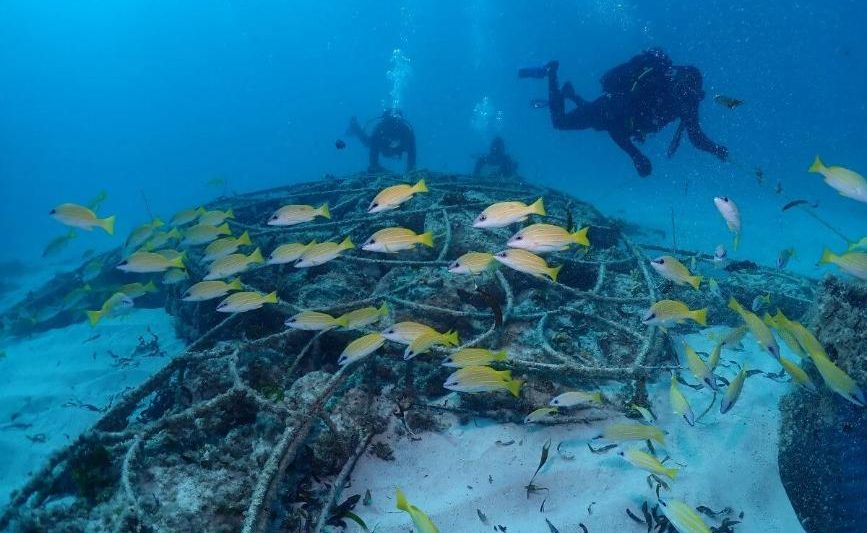
For 2026, our Limited Edition Coravin Timeless Six+ comes in Ocean Blue, a colour inspired by the sea and the part it has played in wine’s story. Long before Coravin, the ocean carried wine to new shores, introducing people to grape varieties and styles they had never encountered. With the ocean at the heart of this edition, supporting a project that helps restore ocean health was a natural choice, because this precious environment is now under huge pressure.
The Tusk Trust was the perfect partner. For more than three decades, it has backed African-led conservation efforts that protect wildlife and support local communities. Together, we are proud to support the rebuilding of 1,000 square metres of coral reef in the Indian Ocean, while creating new opportunities for marine rangers and helping to protect the very seas that made wine exploration possible. A portion of the proceeds from every Coravin Timeless Six+ Ocean Blue Limited Edition sold on coravin.com funds this restoration project.
You had the extraordinary experience of sampling 19th-century wines discovered beneath a castle in the Czech Republic, including bottles dating back to the 1890s. What did it feel like to taste something created in an entirely different century, and what has stayed with you from that experience?
It was one of the most moving experiences of my life. At Bečov Castle, around 133 bottles had been hidden beneath the chapel during the Second World War. They were going to auction to repair the church roof and needed verification without being opened, which made Coravin the only technology for the job.
I sampled a dozen or so, including Château d’Yquem from 1892, 1896 and 1899. The one that stopped me was an 1899 Corton Rouge, a pre-phylloxera Burgundy from a producer that no longer exists. It was so alive. My skin still tingles thinking about it.
What stayed with me is how wonderful it is that we make things that outlive us. The people who made that wine were long gone, yet their work was still speaking.
Château Margaux has used Coravin to check for cork taint before important occasions, an application you hadn’t originally anticipated. What has been the most fascinating or unexpected way someone else has reimagined your invention?
Château Margaux used to send multiple bottles of the same wine to events all over the world in case any of the bottles had cork taint. Now they use Coravin to check every bottle for cork taint before an important occasion and ship only the number of bottles they need, which is a much more efficient process.
Auction houses such as Hart Davis Hart and Zachys use Coravin to verify rare bottles. Because it can only take wine out and never put it back, it’s a tool for authenticity.
My favourite was a New York restaurant that served a cheese plate with a glass of Château d’Yquem. It was the most wonderful cheese and wine experience I’ve ever had, and impossible before Coravin.
At extraordinary wine destinations such as London’s 67 Pall Mall, guests can now explore thousands of exceptional wines by the glass. When choice becomes almost limitless, what separates a genuinely imaginative wine experience from a simply impressive wine list?
67 Pall Mall, with over a thousand wines by the glass, is one of my favourite places in the world. But the number isn’t the point. Luxury is a uniquely curated experience.
An impressive list shows you everything; an imaginative experience takes you somewhere. That might be one producer across a decade, one grape across three continents, or a famous wine beside its undiscovered neighbour.
The other ingredient is people. A great sommelier turns limitless choice into an adventure. Coravin gives them the freedom to open anything for anyone; what they do with it is where the magic happens.
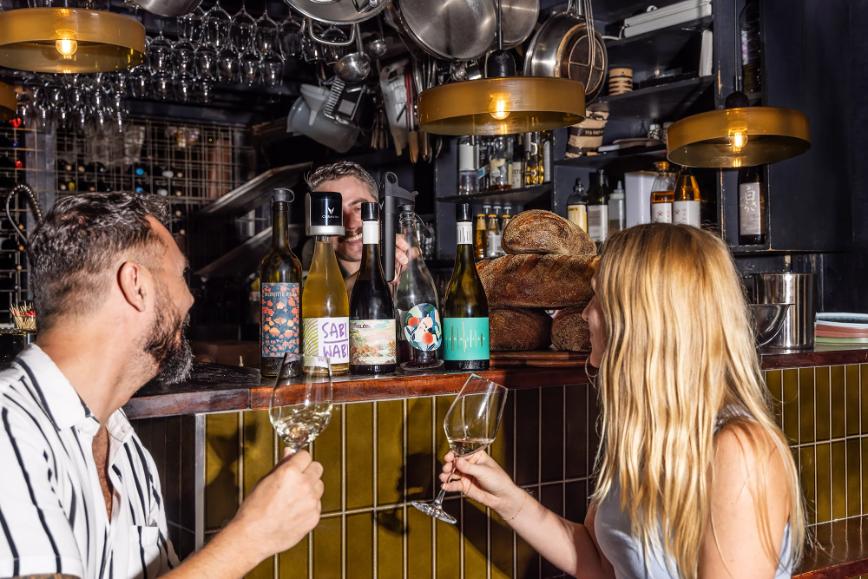
There is a wonderful sense of theatre surrounding fine wine service, from the presentation of the bottle to the ritual of opening it. How do you think technology should complement that theatre without losing the romance and human connection that make great hospitality so special?
The wine, the guest and the person pouring should be the stars, but I really believe Coravin adds to the theatre.
People once called Coravin a magic trick, and guests do love that. But the real romance is what makes it possible: a sommelier can present a great wine, tell its story and pour a single glass. That moment used to belong only to whoever bought the whole bottle.
Technology should give hospitality teams more chances to engage with their guests and create more exciting experiences and discoveries. Remove the fear of waste, and the conversation becomes about curiosity, not commitment.
You first fell in love with wine at just 16, during a visit to Napa Valley. After decades of tasting some of the world’s most extraordinary bottles, is there something about the innocence and excitement of that first discovery that you consciously try to preserve?
Every day. At 16, the first winery I walked into was Peju, then starting out of a barn. Tony Peju welcomed me in (not realising I was underage!) and walked me through his wines, with no reservation and no fee. I remember thinking, “That is absolutely amazing.”
Today, a top Napa tasting can cost $250. If I’d faced that at 16, I’d never have fallen in love with wine.
So, I try to hold on to that openness: wine should invite you in, not keep you out. That’s really what Coravin is for, and I still get the same thrill trying something new.
Has there ever been a single glass of wine that completely challenged everything you thought you knew about a particular grape, region or producer?
A 1990 Jean-Louis Chave Hermitage taught me what wine could become. With Coravin, I tasted it many times over the years, and it was like a creature going through phases: youthful, with fruit and black pepper, then evolving towards an insane savoury, meaty complexity. A wine isn’t fixed; each glass you pour meets it at one moment in its life.
Sparkling wine surprised me too. While developing Coravin Sparkling, I tested 225 sparkling wines from around the world at home and discovered it’s almost as wide a category as still wine.
And I’m a closet sweet-wine lover. A 2005 Château de Fargues reminded me how much depth and freshness great Sauternes can have.
With innovations such as Coravin Vinitas, even small samples of exceptional wines can travel to people who might never otherwise encounter them. What possibilities does this create for brilliant but relatively undiscovered winemakers, particularly those working in lesser-known regions?
Vinitas lets wineries, importers and distributors fill 100ml bottles without exposing the wine to oxygen – keeping the wine fresh for up to a year.
For a small producer in a lesser-known region, the hardest thing is getting someone to taste the wine. A buyer or curious drinker may never commit to a full bottle from an unfamiliar name, but they’ll try 100ml that tastes exactly as the winemaker intended.
Imagine a six-pack of white Burgundy from six producers, or a discovery set from a region you’ve never visited. Seven 100ml bottles are seven times the experience of one 750ml bottle. The beauty of wine is exploration.
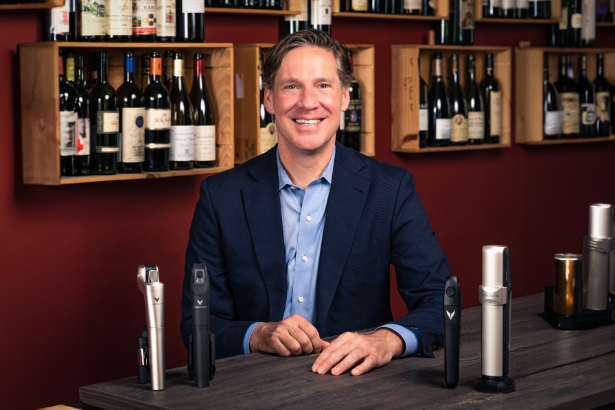
Your invention has fundamentally changed wine culture. What is next for you and Coravin?
Our vision is unchanged: every wine, everywhere, available to be discovered by the glass.
People’s wine habits have changed, and many are drinking more mindfully, choosing one great glass over a bottle, whilst being keener than ever on wine discovery. That’s exactly what Coravin was built for.
That’s why, alongside our wine-by-the-glass systems, we created The Coravin Guide, the world’s only wine-by-the-glass guide.
The platform highlights excellent places to drink wine by the glass. It is currently live in 12 countries and lists more than 750 venues. We wanted to connect wine lovers with all the amazing venues that provide great by-the-glass experiences.
As chairman, with a great team running the business, I’m free to keep inventing, in wine and in medicine, where I’m working on spine surgery. Spine and wine. Either way, it’s about improving someone’s life.
To discover more, visit coravin.co.uk
View this post on Instagram
All images courtesy of Coravin.