
One of the great things about Namibia is that it’s surprisingly easy to get to. Windhoek the capital of Namibia, is easily reached from Cape Town and Johannesburg in South Africa, with connections to flights from London or via a direct flight from Frankfurt, a hub for most major European cities. We sailed through immigration, a quick and pleasant experience, as was the hiring of the obligatory 4×4 which we were going to need for travelling around the country. Our destination: Okonjima Nature Reserve.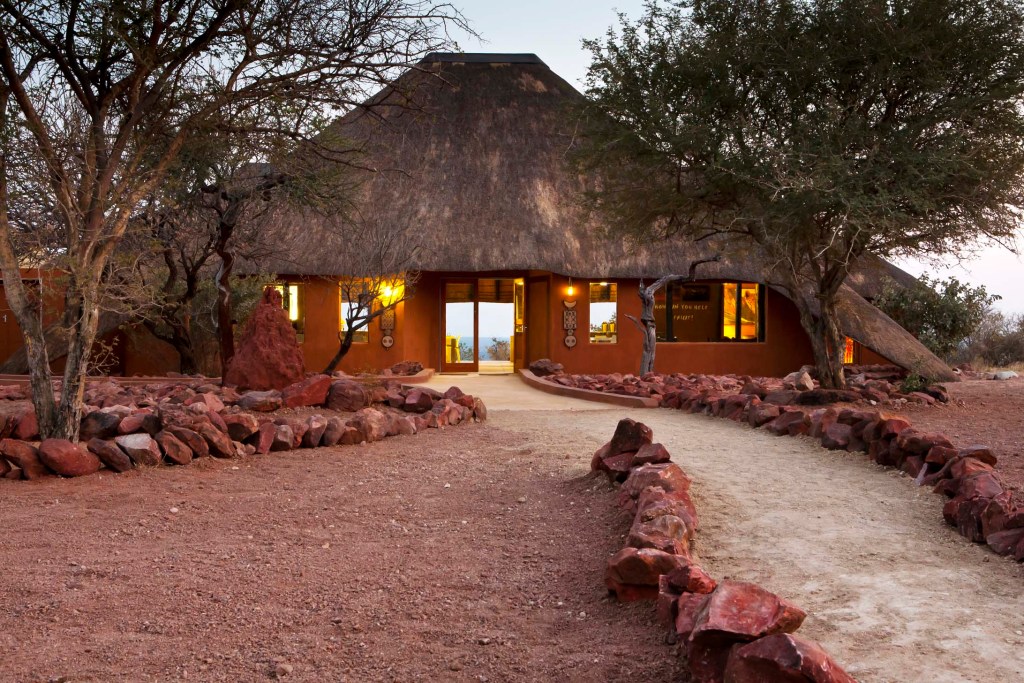
Getting to Okonjima Nature Reserve
This is a big country, but the drive from Windhoek was short by Namibian standards, around two and a half hours on a very good road which cut through the plain between 2 mountain ranges. A left turn onto an unpaved road brought us to a gate attended by a very friendly security guard who checked our reservation and cheerily waved us on our way into the reserve. The 20km to the various accommodation offerings gave us a taste of what was to come, with giraffes eating from trees by the side of the road and baboons busily scampering across it. This is a family-owned and run reserve, and it certainly feels like that with a warm and friendly feel.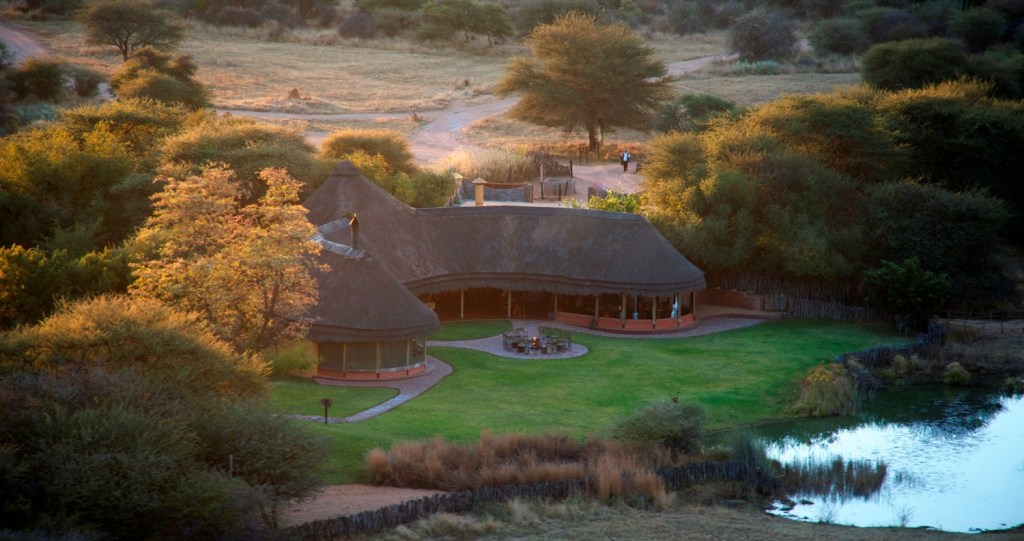
Okonjima Luxury Bush Camp
Okonjima Nature Reserve has a variety of accommodations which means there is something for everyone’s taste and budget. We were staying at the beautiful Okonjima Luxury Bush Camp, with only eight thatched, safari-chic chalets, three en-suite safari tents, and a junior suite, all spaciously laid out to ensure serenity and privacy. We arrived at the long, open thatched main communal area, an oasis of cool in the 36-degree heat and offering great views of the water hole directly in front of it. Later in the day, I saw a giraffe not far away, nonchalantly eating leaves as the sun set behind it and the water hole glistened in the light. Here we had a restaurant, curio shop, dining area, inside and outside fireplaces, and an abundance of cosy seating where you could sit and watch the African bush unfold in front of you. A secluded private swimming pool called our names but had to be enjoyed later during our stay.
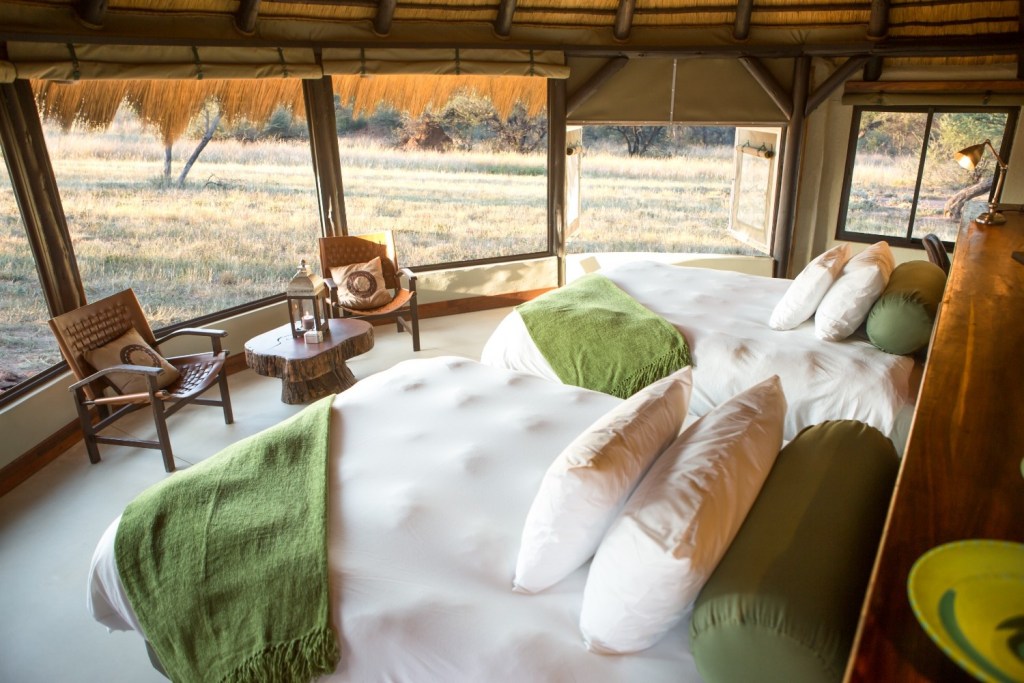
Our Chalet
It was a short drive to our luxury chalet, and our first impressions were that we really couldn’t get closer to the animals we had come to see. The round thatched chalet had huge glass windows facing onto the savannah, a small watering hole in front of us, and within an hour as the heat subsided a group of Springbok arrived to quench their thirst. Everything is spacious, with a huge bed in the middle of the room where you can lie in bed and watch the world outside. African – style in décor the chalet was fabulous with everything you could want for your stay.
We were then led back outside and into another slightly smaller rounded building, which was the piece de la resistance in my view; an open-air sala with a stylish lounge area, bar, working desk and two comfortable day (or night) lounge beds which meant that you could relax, lie back, view and listen to the sounds of the bush.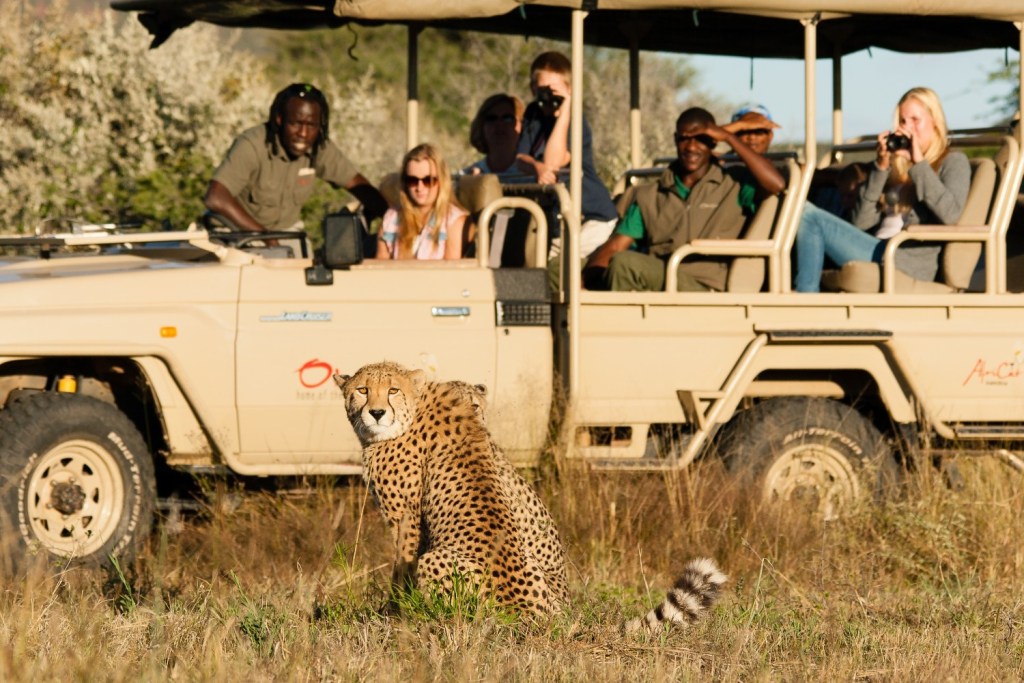
Activities
Okonjima offers a number of activities ranging from leopard tracking by Jeep, pangolin, and rhino tracking on foot and game drives focused on both all the wildlife of the area or just the endangered species present in the reserve. As it was approaching the end of the afternoon, we opted for the leopard tracking as the preservation and research into these magnificent animals is one of the key focuses of the AfriCat foundation, which is located in the 220 square km Okonjima Nature Reserve.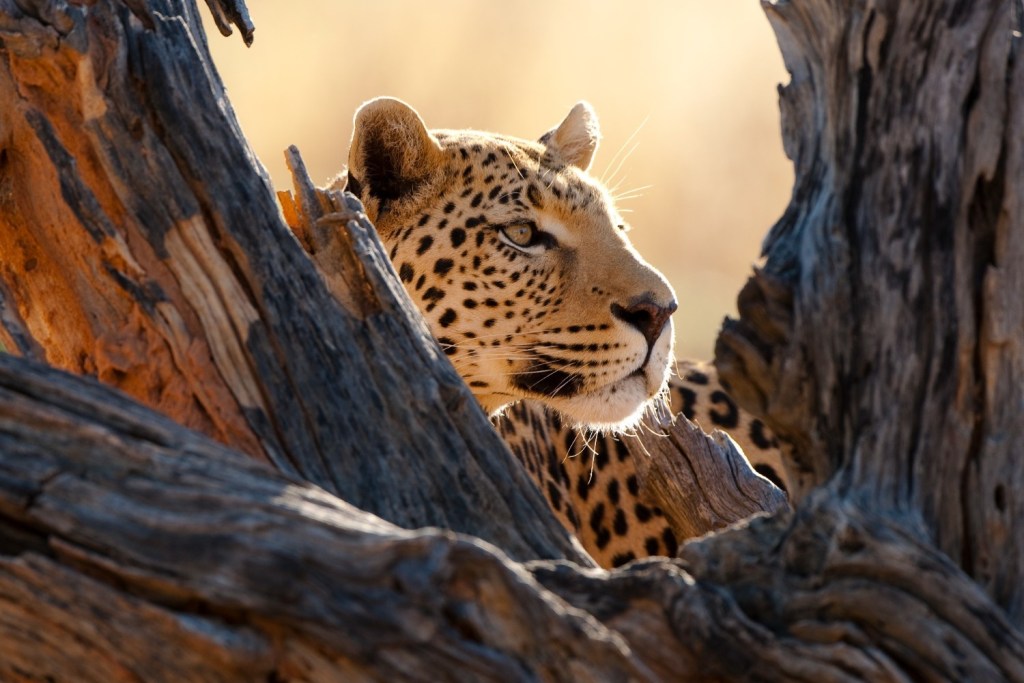
Magnificent Leopards
Gideon, our guide greeted us in reception, and we clambered onto our Land Rover to begin the tracking. Gideon was an expert tracker with an encyclopedic knowledge of the animals in the area. We were soon encountering many sorts of antelope – Dik- dik, Steenbok, Springbok, Oryx and Kudu to name but a few – accompanied by both mountain and plains zebra, and the odd black-backed jackal or two. Soon Gideon picked up the signal emitted from collared leopards and the tracking began in earnest. After several near misses, and some expert maneuvering of the vehicle through bushland and dried-up river beds, we finally spotted the female leopard, perched up a tree and snacking on the corpse of a recently killed zebra.
To our astonishment, she was accompanied by a one-month-old cub, who no human had seen before and who she proceeded to teach how to climb the tree. We watched the two of them for many minutes before retiring for sundowners of gin and tonic and snacks and then returning to the camp.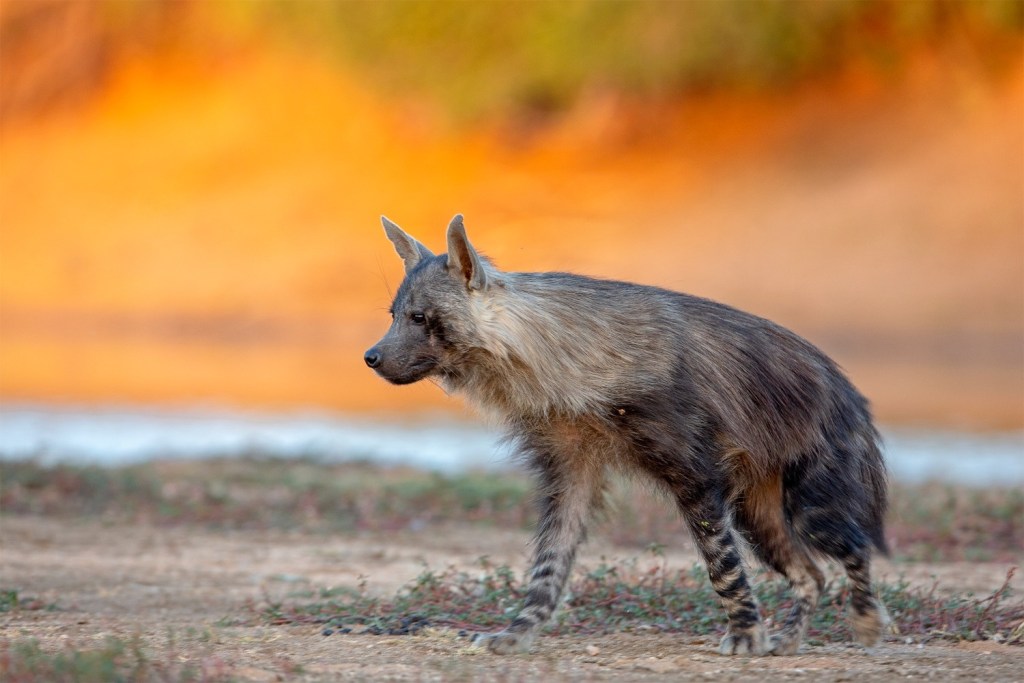
Endangered Species
For the morning activity, we opted for the endangered species drive. Coffee and homemade muffins were offered before the dawn start. Even this was too late to see the bat-eared foxes who had already retired to their burrow for the day, but the very distinctive smell led us to the den of the very rare brown hyena. Some excellent tracking by Gideon and the local anti-poaching team (who accompany you on the foot tracking activity) delivered us to within a few feet of two white rhinos making their way along a dried-up river bed. Then it was back to camp for an excellent breakfast with a sighting of an adult male leopard en route.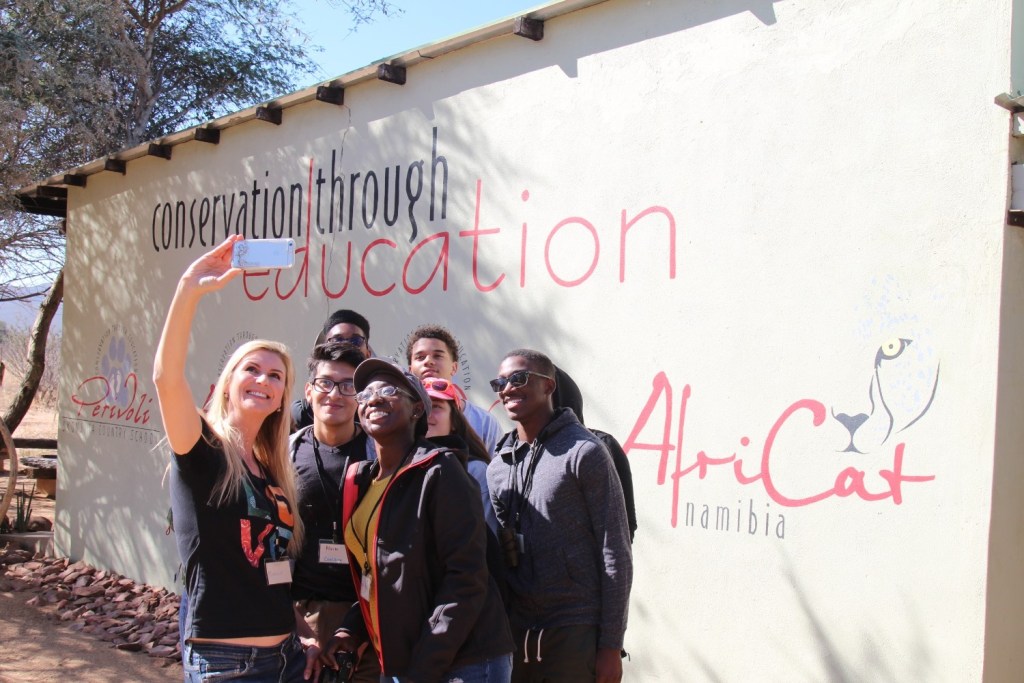
The AfriCat Foundation
One of the distinctive aspects of Okonjima Nature Reserve is that it is home to the AfriCat Foundation, founded in the early 1990s to contribute to the long-term conservation of Namibia’s wildlife. AfriCat has one of the longest-running leopard monitoring projects in the country and their Pangolin research project is one of the few that exist studying free-ranging pangolin. We learned about the research that is taking place into these, and other lesser-known wildlife, using long-term trend data to understand and guide conservation objectives and ultimately national policy.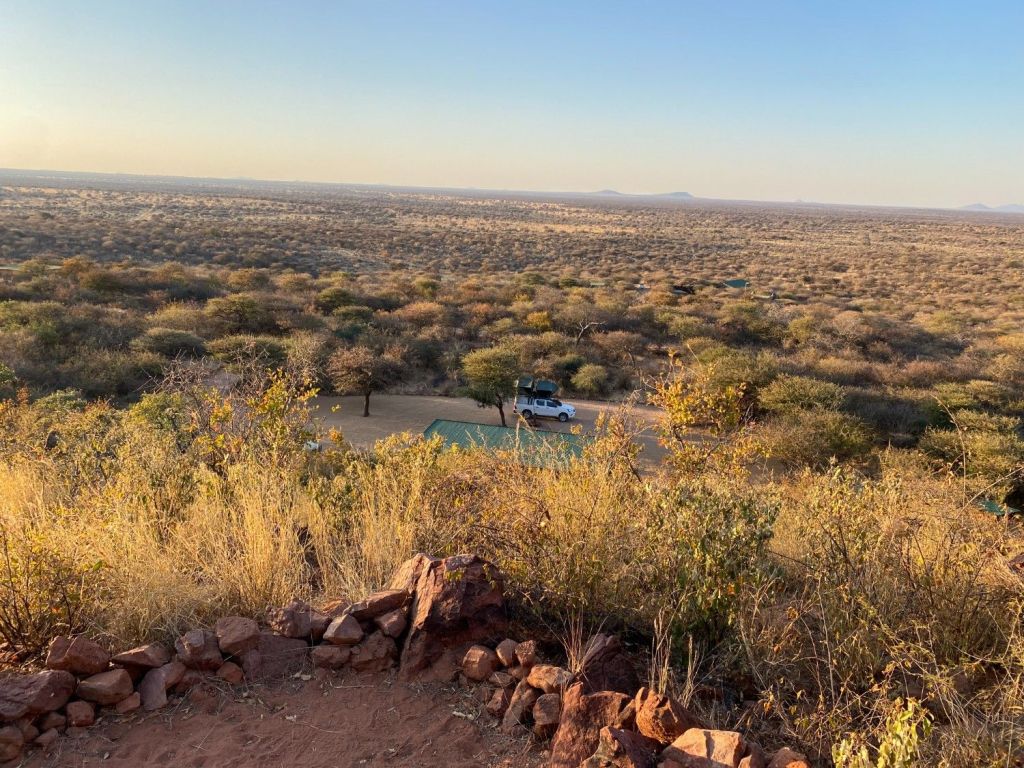
An amazing experience
All in all, it was a fascinating, exciting, and unforgettable experience. The Okonjima focus on leopards and other endangered species means you can study these in-depth, whilst the luxury of the camp means you do this in the most ultimate comfort. Even the most experienced of travellers would find much to enjoy and learn from a stay here. It really was a unique African safari which will long be remembered.
Discover More at okonjima.com
View this post on Instagram
All Imagery Courtesy of Okonjima Nature Reserve.