Most meals start with a ritual we typically don’t pay much mind to: a basket of fresh bread, a small plate, and a perfunctory pour of a green-gold liquid. It’s a little dish to open our stomachs, serving as a precursor to our meal, until the first course arrives and steals our attention completely. But at YOPO Zaytoun, that initial splash of extra virgin olive oil is not just a formality; it is their entire foundation. Taking its name from the Arabic word for olive, the restaurant perceives this ubiquitous oil not merely as a cooking medium but as a liquid terroir: a symbol of peace, renewal, and restorative energy–thereby transforming the space into a physical, living representation of “zaytoun”.

Designing The Mediterranean
There are great things happening at The Mandrake, from the appointment of dynamo general manager Eljesa Saciri through to the mega bar talent in the shape of Anas Hernandez and Noah Chambers. There is a raw new energy in their food and drinks offering.
The Founder, Lebanese art connoisseur Rami Fustok, intentionally treats The Mandrake less like another minimalist copy-paste British hotel, and more like a living, evolving art installation. Long fascinated by the ephemeral, transient nature of hotels, Fustok approaches hospitality with the eye of a curator rather than a traditional hotelier. Consequently, the Mandrake has never been tailored to mass appeal; from the suspended evergreen canopy of the Jurema Terrace to the ethnobotanical elixirs at Waeska, it thrives on sensory immersion and total conviction. Yet, the challenge with a hotel that constructs such a potent persona is that the identity of the dining room must be unique enough to avoid falling into its shadow.
Therefore, during the restaurant’s redesign, Rami Fustok’s creative direction wasn’t solely to extend the hotel’s existing decor, but to cultivate a space that reflects the essence and serenity of the Mediterranean. By channelling the natural hues of Greek coastlines, sunlit cliffs, and textured stone, the new design stripped away the room’s former darker, nocturnal aesthetic, leaving room for natural light to flood the space, while still preserving a bit of the hotel’s signature moody, maximalist soul.

While the room changed, so did the cooking. Working alongside Rami, new Head Chef Viktor Yordanov translates his vision into the kitchen by stripping away any superfluous theatrics and distilling the menu down to its Levantine core.
Viktor bears over fifteen years of high-standard kitchen experience—from the rigour of Michelin-starred dining at Lucknam Park to leading the kitchen at Notting Hill’s praised MAZI. Even so, his craft at YOPO Zaytoun leans into simplicity. With a focus on seasonality and ingredient-led dishes made to be shared, the kitchen allows the purity of the Eastern Mediterranean flavours to dictate dishes that feel organic to the verdant space.

A Feast for Sharing
While plenty of fine-dining spots boast extensive wine lists, or even dedicated whisky pages, few offer a tableside olive oil menu complete with tasting notes and origin stories from family-run Mediterranean estates. Upon finding your seat, you are presented with a menu of distinct regional olive oil expressions such as the Palestinian Burqa, Cypriot Manayi, Greek Loukakos Estate, and Spanish Núñez de Prado. Poured into shallow dishes, they’re meant to be mopped up with blistered za’atar flatbreads fresh from the oven.
The olive oil programme at YOPO Zaytoun turns something normally treated as a simple table accompaniment into a miniature journey around the Mediterranean. You can taste oils from Cyprus, Greece, Spain and Palestine, each chosen to express the character of its landscape and olive varieties: a bright, herbaceous Manayi oil from Cyprus; an aromatic early-harvest Greek oil from the Loukakos Estate; an organic, unfiltered Núñez de Prado from Andalucía with notes of citrus and fresh herbs; and a vibrant Suri oil from Nazareth, cold-pressed early in the harvest for a distinctly peppery finish. Rather than fading into the background alongside the bread, each oil has its own provenance, texture and personality, reinforcing the restaurant’s idea of olive oil as something to be considered and tasted in its own right.
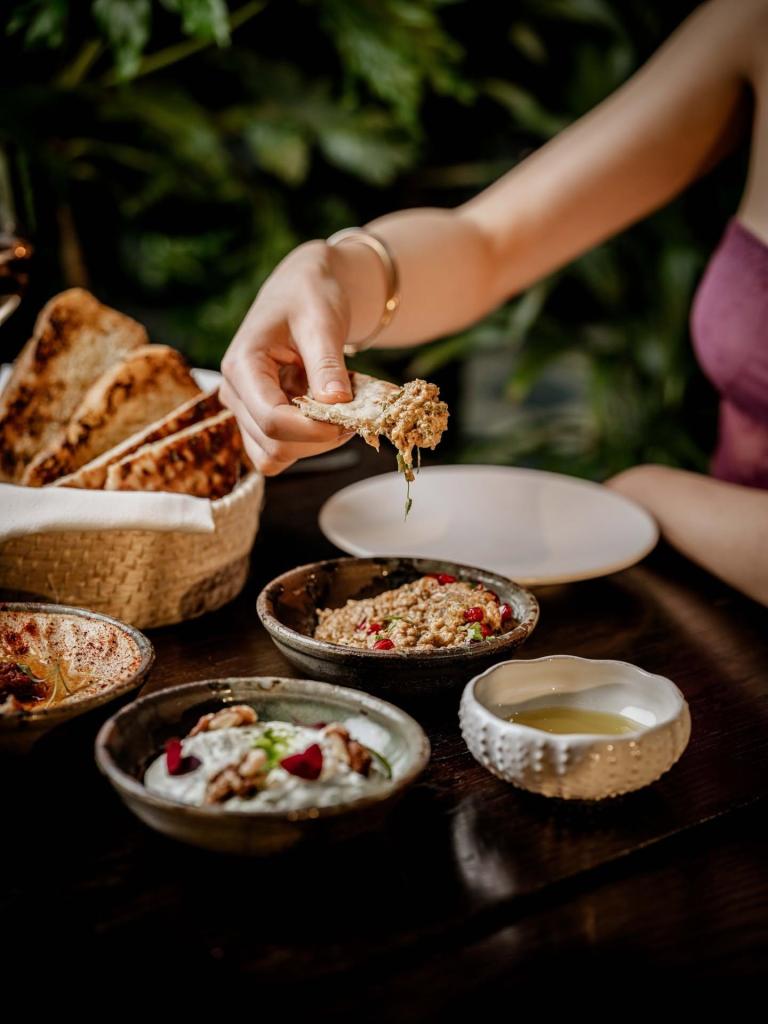
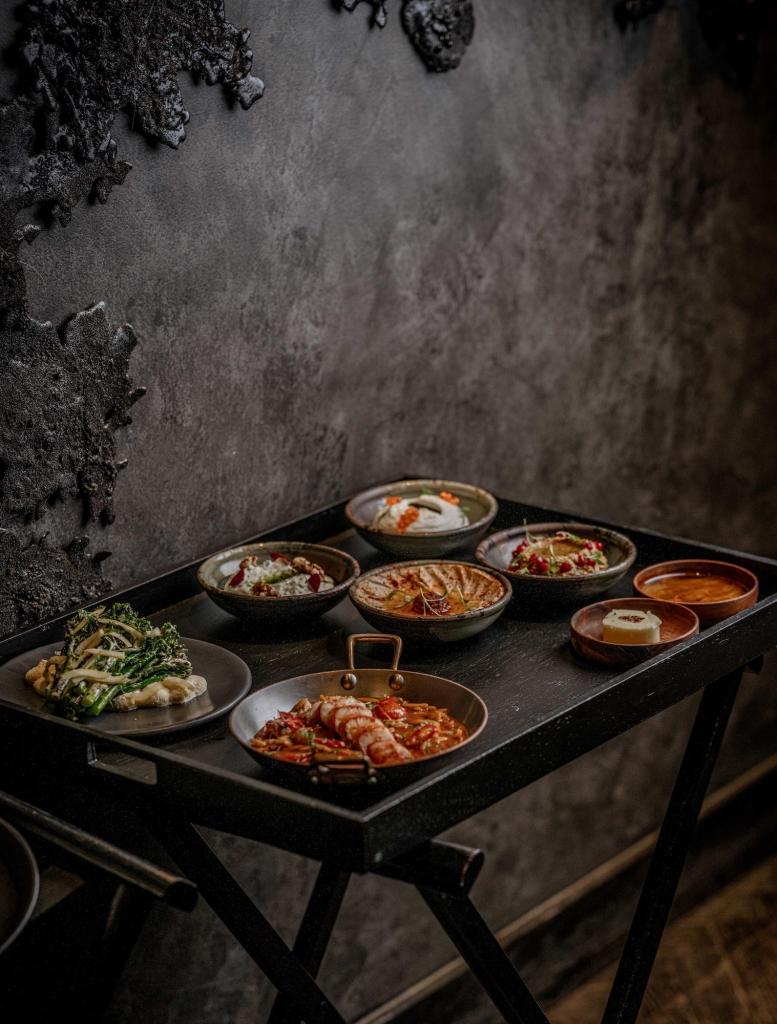
After the olive oil prologue, a trio of Levantine-adjacent dips arrives in quick succession. Accompanied by the warm, olive-oil-coated flatbreads, choices from a variety of aromatic dips include a silky hummus topped with sun-dried tomatoes, olives, and sumac, or a charred baba ghanoush. To temper the heat, there is a smooth tzatziki infused with mint oil and walnuts—all flawlessly complemented by the crunch of house pickles.
Before the fire takes over, the menu’s raw section delivers hand-dived scallop carpaccio with citrusy grapefruit and sea fennel, flanked by yellowtail crudo dressed in burnt lemon gel and fresh green chilli. Unadorned and driven by acid.
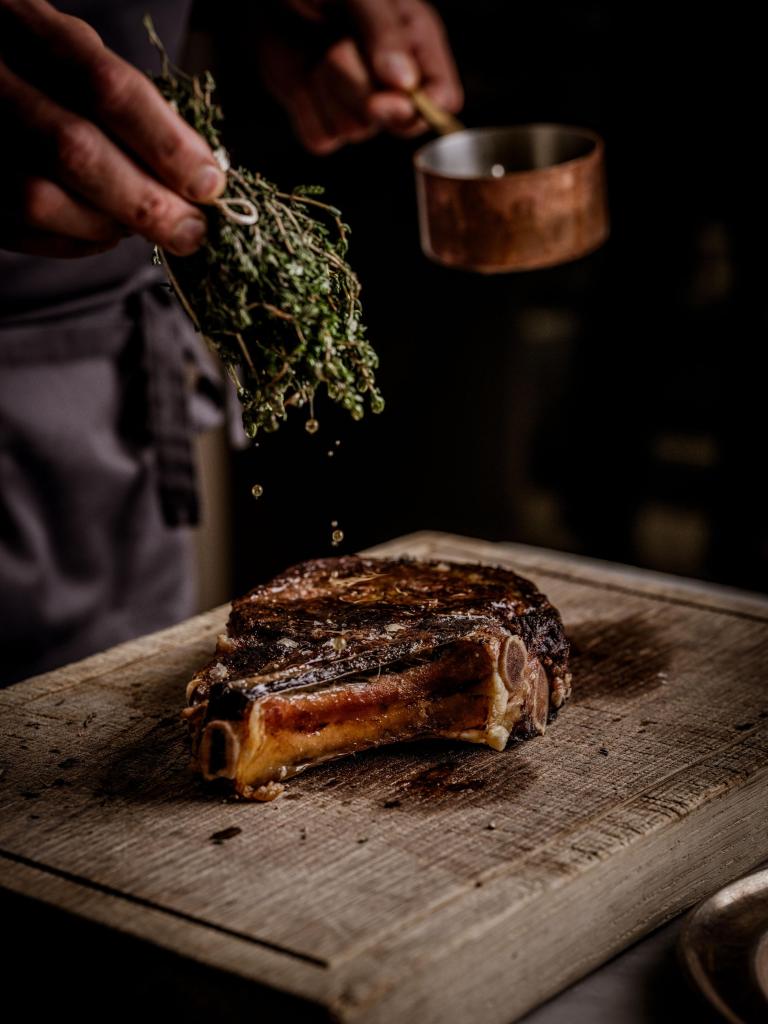
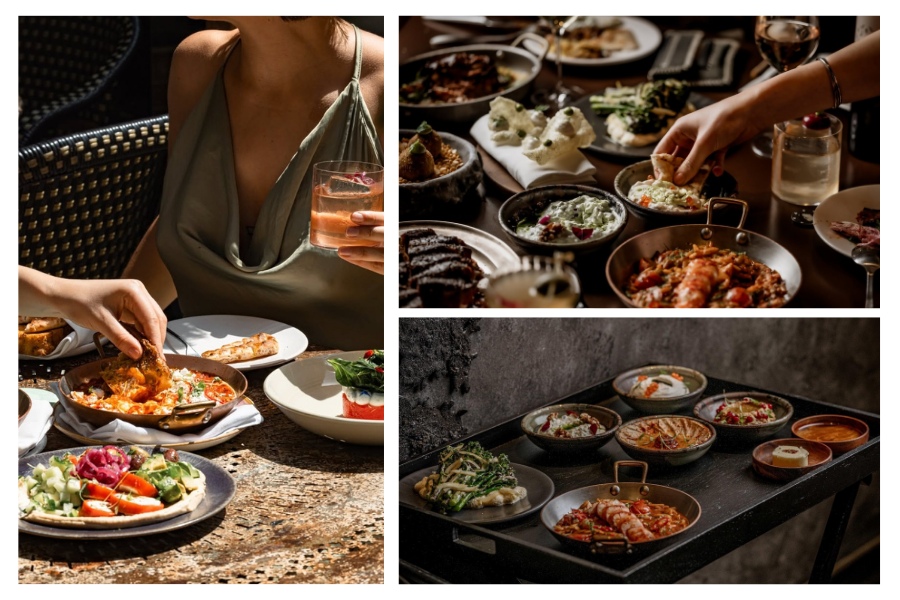
Then comes the heat. From the open kitchen enters the flame-grilled poussin, skin coal-scarred and tender inside, it is paired with an airy, whipped garlic toum. Alongside it, a whole charred cauliflower arrives transformed by open flame, blackened at the edges and set over a rich bed of red pepper tahini and fresh herbs. For the main show, native Cornish lobster tail sits atop a rich, tomato-chilli orzo, while a County Wexford rib-eye that is cooked to an immaculate medium-rare appears glistening under melting harissa butter alongside sweet, caramelised Roscoff onions.
At its core, Head Chef Viktor Yordanov’s kitchen is truly an ode to the Eastern Mediterranean spirit of sharing. It’s a menu that has turned its vibrant food into a catalyst for connection. Free of any fine-dining pretension, the restaurant simply aims to feed well, draw people together, and get your hands a bit messy in the process.

The Liquid Companion
As it turns out, olive oil isn’t just for the table, but makes some notable appearances in the bar, too. At YOPO Zaytoun, the cocktail list shares that same Mediterranean DNA through its botanical precision and subtle savoury twists. Take the Zaytoun Martini: a blend of olive oil-washed Bombay Gin, fortified bergamot, and preserved lemon brine that delivers a clean, velvety kick. Or for non-drinkers, they can complement their meal with the alcohol-free Sumac Margarita, which blends Three Spirits Livener, sumac, rose, lime, and chilli.
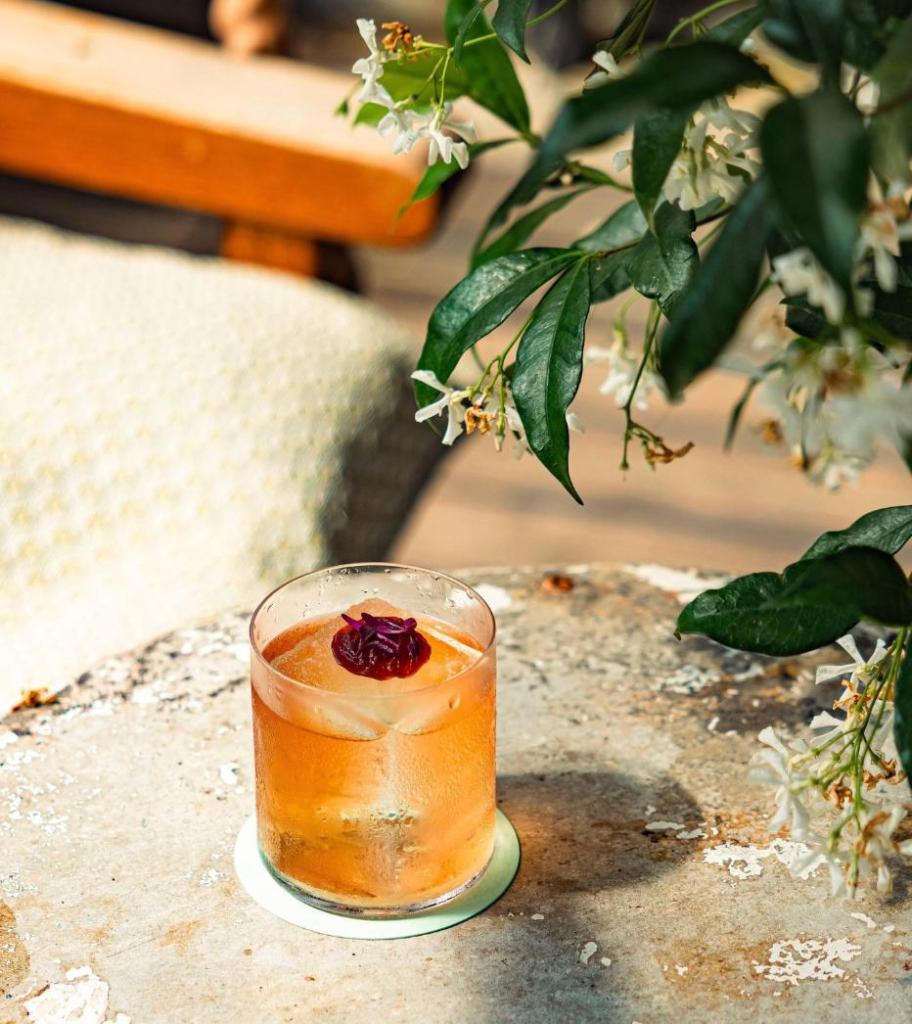
Considering the detail of their olive oil selection, the wine offerings keep up the tempo, showcasing singular Mediterranean pours from crisp Greek Assyrtiko from Santorini to rich Lebanese reds like the 2022 Sept Cuvée de Soleil from the Batroun Mountains. It’s a drink list that tethers the smoky dishes while cutting through the richness and beckons you to keep your glass full.
Towards the end of the meal, you may find yourself imperceptibly full by grazing on this array of communal dishes, but you must certainly save room for dessert. Honouring the Levantine spirit, the meal concludes with a crisp pistachio mille-feuille cube scented with citrus, or the chamomile chocolate fondant served alongside a contrasting olive oil ice cream. The ultimate reward for pacing yourself.
An Olive Branch
From the starters to the dessert, olive oil is undoubtedly the foundation of the menu. Yet, Rami Fustok ensured that its significance to the restaurant’s identity surpassed its role as a culinary utility. It became the inspiration for a space that reflects a mission greater than just cooking delicious food: to nurture the entire atmosphere with restoration, positivity, and genuine human connection. Through Fustok’s lens, the restaurant extends an olive branch to the public, offering a moment of healing and communion over shared plates.
What starts with a pour of liquid gold carries all the way through to the last glass. Unburdened by gratuitous formality, it leaves you with the only things that matter: coal-scarred plates, empty glasses, and a table sprinkled with breadcrumbs—the natural byproduct of people truly breaking bread together.
To discover more, visit YOPO Zaytoun
View this post on Instagram
All images courtesy of The Mandrake.