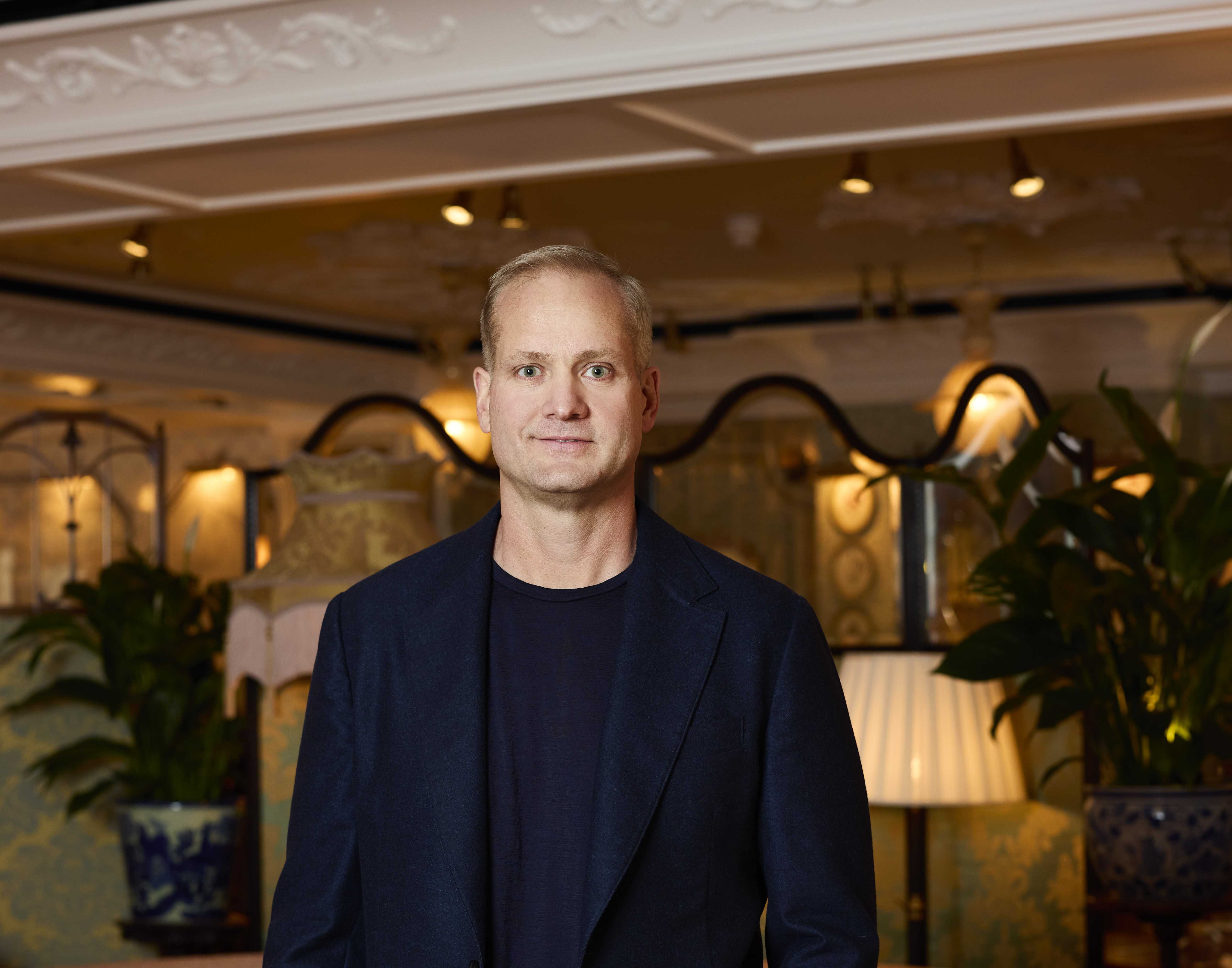
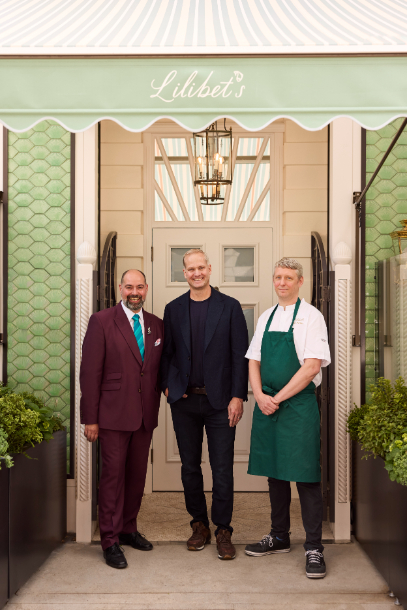
Ross Shonhan, the creative force behind Lilibet’s, brings together storytelling, design, and gastronomy in a timeless and refreshingly modern way. His vision for the restaurant was born out of an unexpected pause. When he first took over the site at 17 Bruton Street, within those blank walls, he saw potential for a narrative deeply rooted in the history of Mayfair.
From this inspiration grew the name, design, and soul of Lilibet’s: a restaurant conceived as a tribute to heritage, elegance, and imagination. Lilibet’s has since become one of London’s most talked-about dining destinations, celebrated for its seafood-led menu that pays homage to Britain’s coastal bounty while embracing global influences a princess might have encountered on her travels.
Ross and his team have crafted a space that feels warm, graceful, and layered with detail, yet still entirely of the moment. Through storytelling woven into every plate, cocktail, and design element, we caught up with Ross to talk about one of London’s best openings of 2025.

How did it all start?
When we first took the site in early 2020, it was still an office building – a blank canvas. Then the world stopped. That pause gave us a rare time to reflect on what story we wanted this restaurant to tell. We immersed ourselves in the history of the area, where at our address – 17 Bruton St – Princess Elizabeth was born in her grandparents’ house. We felt that story should be told, and from that came the name, the design, and ultimately the soul of Lilibet’s began to take shape.
All reimagined as possibly the most beautiful room in London and ‘Home to an unexpected majesty’.
Lilibet’s is the talk of the town. Tell us all about your seafood-led menu?
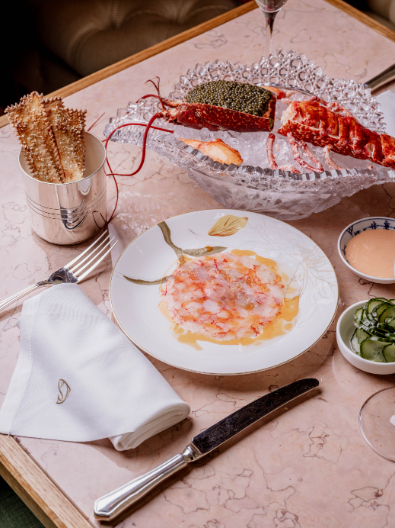
Britain is blessed with some of the finest seafood in the world, and many of London’s most historic restaurants were built on seafood. It felt natural to start there. What makes Lilibet’s different is how we weave in flavours a princess would recognise from her travels. From France, Spain, through to Italy and beyond, these influences allow us to tell stories of the sea in fresh and surprising ways. Some of our favourites are the Foccia di Recco, where we break tradition to add some garlic and herbs to the cheese, our whole turbot with Pil Pil sauce and buttery lobster mash.
Lilibet’s blends storytelling with gastronomy. What is this all about?
For us, storytelling gives meaning. It explains the why behind each dish and creates a sense of playfulness at the table. It’s another way to connect with guests – not just through flavour, but through imagination, memory, and a little theatre.
Tell us about the design elements at Lilibet’s?
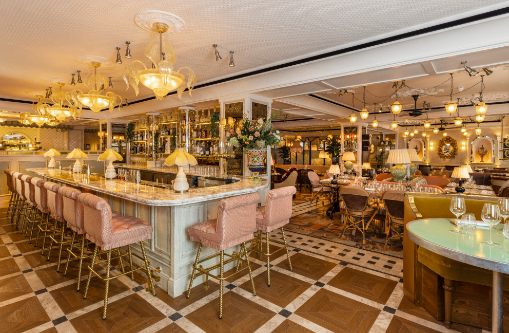
We collaborated with Russell Sage, who has a remarkable ability to weave stories through design. Together, we wanted Lilibet’s to feel as if it had been here for 20 years on day one, yet still be relevant 20 years from now. Together, we believe we have created the most beautiful dining room in London, but it is also very warm and comfortable. We have done this by focusing on timeless elegance, adding in details like fireplaces and underpinned by layers of craftsmanship and detail that reveal themselves the more time you spend in the space.
What about the wines and cocktails?
Our cocktails tell stories just as much as the food does. Some are faithful to timeless classics, but others take inspiration from imagined countryside journeys – using fresh herbs, seasonal fruits, and unexpected aromatics. We want drinks that feel elegant and familiar, but with a twist that sparks conversation. There’s no theatre for theatre’s sake; the craft is in the detail, the balance, and the story behind each glass. I would highly recommend our burnt tomato martini and our oystershell martini.
The wine philosophy follows the same thread. It is rooted in heritage vineyards and coastal traditions. There’s no dogma here – simply bottles from winemakers we admire and places that feel like they belong. Some are rare, others sentimental, but all have character. The cellar is designed to feel as though it has been lovingly assembled over decades.
Are there any new dishes we can expect to see in the next few months?
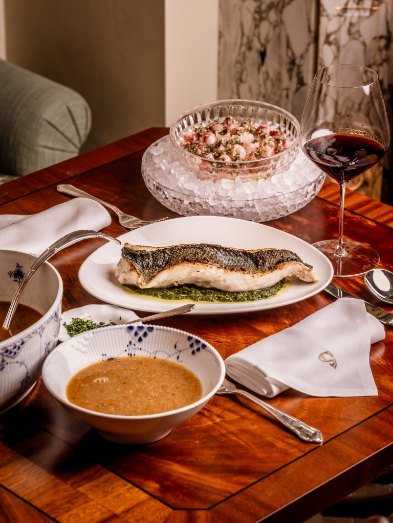
One section of the menu we’re most excited about is our fish triptych – three different courses from the same fish. The first is served raw, the second grilled, and the third transformed into a rich soup made to order from the frames in a pressure cooker. Over time, we may expand the preparations to include a fried option. We will always look to seasons ahead for inspiration and are currently working on Autumn dishes featuring pumpkins and a lot of seafoods are at their best in Autumn and Winter, so it is a great time to visit. Overall, we expect the opening menu to stay consistent while we get to know our guests’ preferences.
Why now? Why Mayfair?
Mayfair is one of the world’s great dining destinations, steeped in history and elegance. We felt it was the perfect place to open a restaurant that champions the classic spirit of hospitality with a food and wine menu to match – but with a slightly different lens. At Lilibet’s, it’s not about trends; it’s about doing something timeless, elegant, and enduring.
Can ethical & sustainable practices ever become the norm in restaurants? What do you do at Lilibet’s to support sustainability?
Awareness of sustainability has grown enormously in London over the past 15 years, and we take our responsibility seriously. One of the ways we address it is through a menu section called Unsung Heroes of the Sea. Here, we highlight by catch and underappreciated species, helping
Fishermen sell more of what they catch and guide guests away from overused favourites. It allows us to tell new stories, support sustainability, and offer dishes that feel both distinctive and responsible. This is a great way for guests to be able to taste new types of fish while helping the British fishing industry.
Top 3 favourite restaurants in the UK?
That’s a very tough question. I would obviously say Lilibet’s is my new favourite, but for me, it often comes down to my personal connection with the people behind the restaurants. Right now, I’d say Bouchon Racine, Rambutan, and The Ledbury.
If you could award a Michelin star right now to a UK Chef, who would it be and why?
I’ve been so immersed in bringing Lilibet’s to life that I haven’t had the chance to explore as much as I’d like recently. It wouldn’t be fair to single someone out without being up to date, though I have huge admiration for the depth of talent across the UK dining scene right now.
What is next for you and Lilibet’s?
Our focus now is simple: to build a happy team and a community of regular guests who truly appreciate what we’re trying to do. We want to stabilise the business, grow steadily, and above all, make people happy along the way. Our ambitions are grounded – it’s about creating something lasting and genuine.
To discover more, visit Lilibet’s
View this post on Instagram
Images Courtesy of Lilibet’s / Claire Menary.