
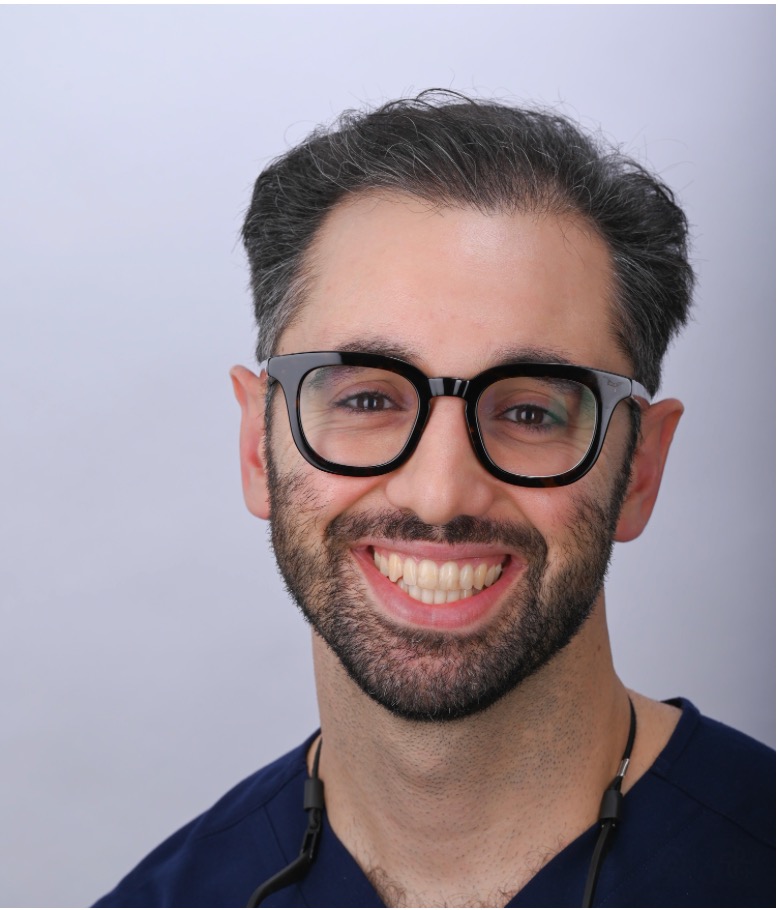
At Ten Dental London, Dr Ali Nasser is a dentist with a growing reputation for solving overall well-being problems by focusing on dental sleep medicine, with a belief that oral health should not be overlooked. His interest in sleep and longevity developed through further training with the British Society of Dental Sleep Medicine and membership with the British Sleep Society, alongside ongoing collaboration with sleep doctors, ENT specialists, physiotherapists and myofunctional therapists. Dr Nasser has adopted a holistic approach that considers the wider impact of sleep, breathing and stress on long-term health.
At Ten Dental, Dr Nasser offers airway assessments and custom-made mandibular advancement devices (MADs) to help patients struggling with snoring, poor sleep quality and obstructive sleep apnoea management. His approach combines evidence-based dentistry with practical lifestyle guidance, always focusing on the individual rather than simply the symptoms. Dr Nasser sees the potential in improving people’s oral health, supporting better energy, cardiovascular health and healthy ageing overall, by simply improving breathing and sleep.
We caught up with him to talk all things wellness, dentistry and sleep.
How did it all start?
As a general dentist, I’ve always been driven to expand my knowledge and clinical offering to treat patients as whole people, not just a set of teeth. That journey led me to the British Society of Dental Sleep Medicine, where I began formal training, and eventually to membership of the British Sleep Society too. Along the way, I’ve attended conferences, collaborated with allied healthcare professionals and read widely. Books like Why We Sleep by Matthew Walker and Breath by James Nestor changed the way I think about health.
What really motivated me clinically was seeing how many patients were suffering because of poor sleep. I was seeing people grinding and breaking teeth, struggling with CPAP devices they couldn’t tolerate, and waiting months for support through the NHS. When I made a mandibular advancement device for my own mother and watched her health and sleep transform, and the snoring stop, it became personal too. Over a million UK adults are estimated to have undiagnosed obstructive sleep apnoea. These are people I can help, and that feels important.
Tell us about your approach and the sleep-related services you offer at Ten Dental.
Everything starts with the person in front of me. My approach is genuinely holistic. I want to understand your lifestyle, your stress levels, your work, and your relationships. Because sleep doesn’t exist in isolation. So many of us in London are running on empty, and the consequences go far beyond feeling tired. Poor sleep drives up cortisol, increases cravings, affects focus, strains relationships, and significantly raises the risk of cardiovascular disease and hypertension.
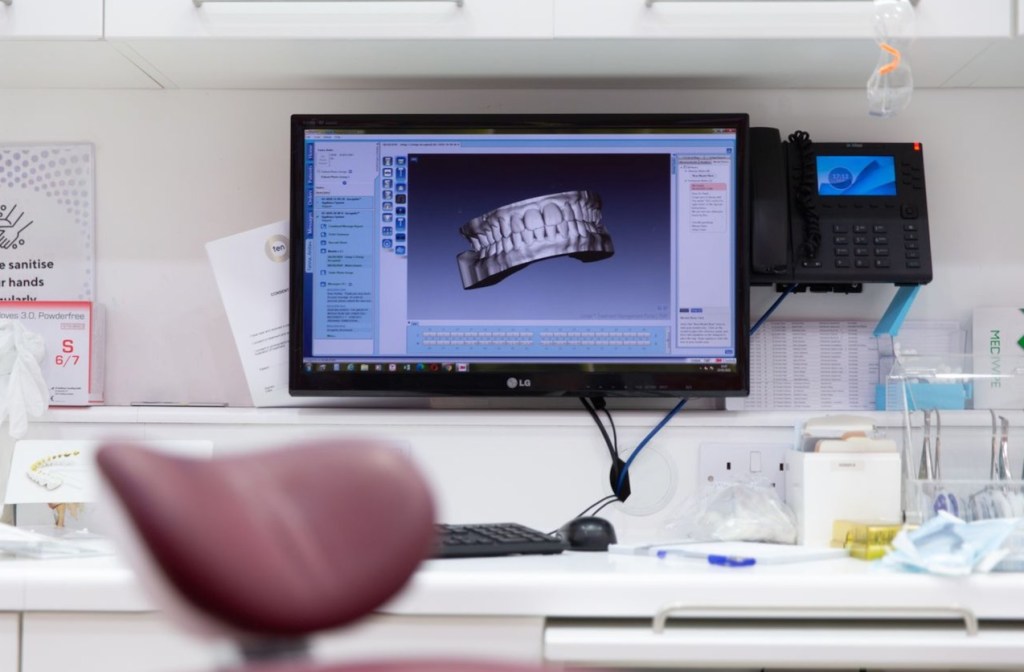
Clinically, I offer a full airway assessment, and where appropriate, a custom-made mandibular advancement device — a MAD. These are discreet, comfortable, easy to travel with and, for many people, far more sustainable than CPAP. I work within a multidisciplinary framework too, collaborating with myofunctional therapists, physiotherapists, sleep physicians, ENT doctors, and GPs because the best outcomes usually come from a team approach.
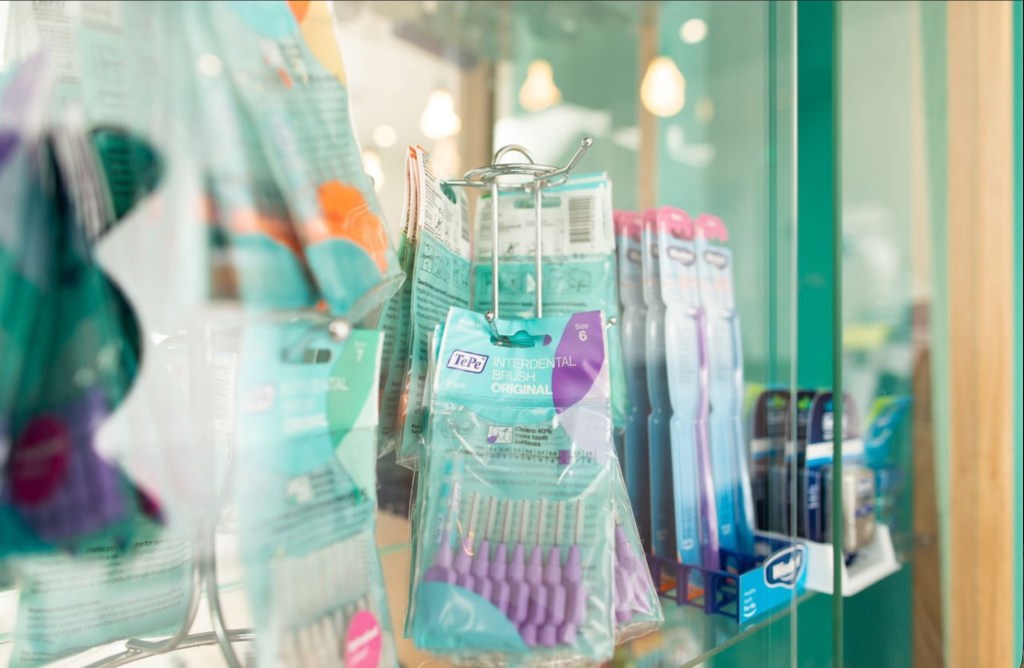
I also always discuss the simpler, lower-cost options first: nasal dilators, positional aids, and mouth tape. Many patients have already tried these before they reach me, but it’s worth exploring everything. Before any device is made, oral health comes first. The gums need to be healthy, and any active dental disease treated. The mouth is the gateway to the body.
It’s worth saying that we all snore occasionally: a blocked nose, a few drinks, an unusually deep sleep. That’s normal. But when snoring is regular, loud, and accompanied by other symptoms such as waking unrefreshed, gasping, morning headaches, and daytime fatigue, it can be a sign of something more significant: obstructive sleep apnoea. As a dentist, I’m not in a position to formally diagnose OSA, but I can recognise the signs, have an honest conversation, and guide patients towards the right people, whether that’s their GP or a sleep doctor who can arrange proper testing. I can also offer private at-home sleep tests, reported on by a sleep physiologist. What I can then offer, once someone has been assessed, is a custom MAD to help manage it. I’ve had patients tell me they’ve been banished to the spare room, or that their partner is suffering just as much from broken sleep as they are. In some cases, addressing the snoring has genuinely saved the relationship. That’s not an exaggeration; I hear it regularly.
How early can poor breathing during sleep begin to impact long-term health?
Earlier than most people realise. The evidence linking poor sleep to serious disease is overwhelming: cardiovascular disease, hypertension, and metabolic conditions. Chronically disrupted sleep means chronically elevated cortisol, and without sufficient deep, restorative sleep and REM, the body simply cannot recover the way it needs to. These aren’t abstract risks. They are among the leading causes of illness and death.
There’s also a persistent stereotype that only overweight middle-aged men snore or have sleep apnoea. That’s simply not true. I see fit, young women; I see people of all backgrounds and body types. The sooner we move past that stigma, the sooner more people will seek help, and the public health benefit of that could be enormous.
What does correct mouth taping actually look like in practice?
First, it isn’t for everyone. If you have a blocked nose, whether from a cold, hay fever, or a deviated septum, mouth taping can restrict airflow and do more harm than good.
For those it does suit, the key is choosing the right product. I don’t recommend anything that seals the mouth completely shut. The best options, like MyoTape, have a small opening that still allows you to part your lips if needed, while gently encouraging nasal breathing throughout the night. Nasal dilators can work well alongside mouth tape, too. These are inexpensive, accessible first steps and, for some people, genuinely effective. I’ve tried them myself and think they can be remarkably effective. And if they become uncomfortable, you can simply peel them off.
What’s the one sign someone should never ignore when it comes to their sleep?
Chronic fatigue that persists despite a full night in bed. If you’re consistently waking up exhausted, especially if accompanied by a dry mouth, a morning headache, or jaw pain and tension, something is wrong. Your body is telling you that what’s happening overnight isn’t restorative. That’s the signal to pay attention and get it looked at.

The dentist seems to be becoming a key gatekeeper for preventative health. Ten Dental offers oral microbiome testing — what can this reveal that traditional dentistry might miss?
It’s an exciting and rapidly developing field. While microbiome testing is offered by colleagues here at Ten Dental rather than directly through me, I’m genuinely fascinated by where the research is heading. Particularly, the emerging connections between the oral microbiome, sleep, and systemic health. Prevention has always been the most powerful tool we have, and the more information we can gather early, the more we can intervene before problems develop.
What I’d say more broadly is that dentists are underutilised in preventative care. We see patients every six months, we look inside their mouths, and we observe their airways. We are well placed to ask the right questions and notice things that might otherwise go undetected.

You’ve linked sleep, breathing and oral health directly to how well we age. What are the biggest mistakes people are making?
The biggest one is still not taking sleep seriously enough. The old mentality — “I’ll sleep when I’m dead” — is hopefully fading, but many people are still pushing through exhaustion rather than addressing its root cause. We’re not listening to what our bodies are telling us.
Snoring and sleep apnoea literally deprive the brain of oxygen. That’s not a minor inconvenience; it’s a long-term health risk. And yet so many people normalise it, or assume nothing can be done. Prevention is always more powerful than treatment, and sleep is one of the most impactful places to start.
There’s also something that doesn’t get talked about enough: the social embarrassment of snoring. I speak to patients who dread falling asleep in public, on a long-haul flight, on a sun lounger, or sharing a hotel room. They’ll fight sleep rather than risk the mortification of waking themselves or everyone around them with a snore. That kind of anxiety is exhausting in itself, and it’s a real sign that something needs addressing.

Do wearables and sleep trackers help, or are they distracting people from the real problem?
Largely, I think they help. I wear an Oura ring myself and find it useful, and an Apple Watch worn during sleep can also track patterns accurately. Devices like these aren’t perfectly accurate, and I wouldn’t rely on them exclusively, but they make people more aware of their sleep, and that awareness can drive real behaviour change. Seeing how a glass of wine affects your HRV and readiness score the next morning is a powerful thing.
For snoring specifically, there are also some great apps worth trying — the one I like is SnoreLab, which records sounds through the night and gives you a clear readout of the data. It can be a real eye-opener.
That said, the gold standard remains a formal sleep study. Wearables and apps are a helpful prompt, not a diagnosis.
How do you see dentistry evolving over the next five to ten years?
Sleep and airway are already being integrated into dental curricula at leading institutions globally. That’s a real shift. My hope is that asking patients about their sleep becomes as routine as asking about their diet or smoking habits. Every check-up should include airway assessment: evaluating tongue size, pharyngeal patency, Mallampati scoring, and offering validated tools like the STOP-BANG questionnaire as standard.
We’re also seeing home sleep tests become more accessible, with sleep physiologists reporting on results and AI increasingly supporting analysis. The potential for dentistry to be far more deeply embedded in multidisciplinary healthcare — working alongside GPs, ENTs, orthodontists, and breathwork coaches — is real, and I think that collaboration is where the best patient outcomes will come from.

What’s next for you and Ten Dental?
I want to establish myself and Ten Dental as a trusted centre of excellence for dental sleep medicine in South London, whether patients come to us directly, self-refer after searching online, or are referred by their GP or sleep doctor. This work is genuinely rewarding. Helping someone sleep well can save a relationship, restore their energy and focus, and in some cases, quite literally add years to their life.
I’d love to see stronger local collaboration with GPs and sleep doctors — a real referral network built around helping patients access the right care more easily. If you’re struggling with your sleep, come in for a conversation. We can take it from there.
Discover more at Ten Dental
View this post on Instagram
All imagery courtesy of Ten Dental London.