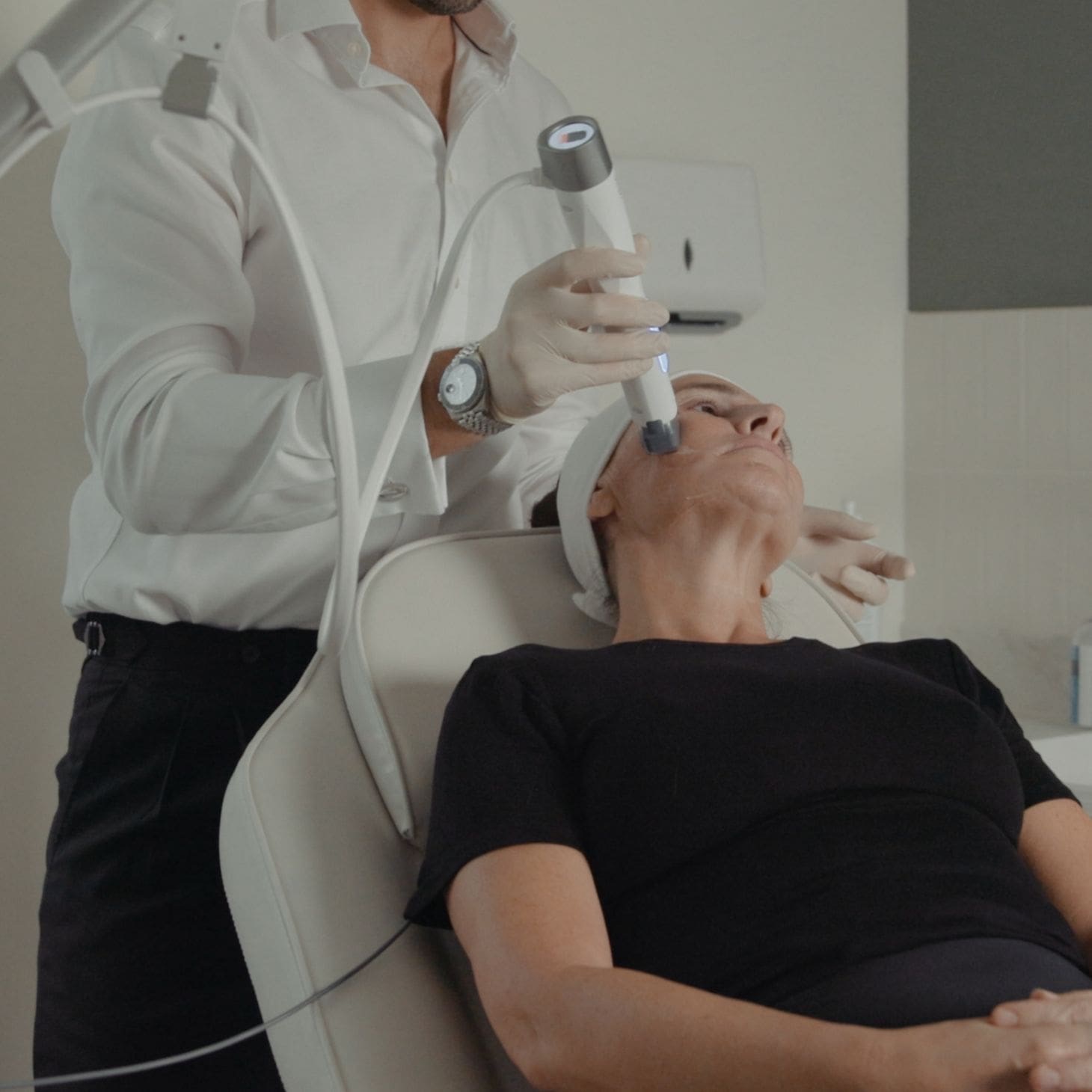
Most non-surgical skin tightening devices share the same limitation: they work on the superficial and mid layers of skin, producing real but modest results that fall well short of what a surgical facelift achieves by tightening the deeper structural layer directly. XERF, a laser built to reach past where most of them stop, is a dual-frequency system recently cleared for use in the UK, and the clinics now offering it on both sides of the Atlantic are watching closely to see whether it delivers.
The layer that actually matters
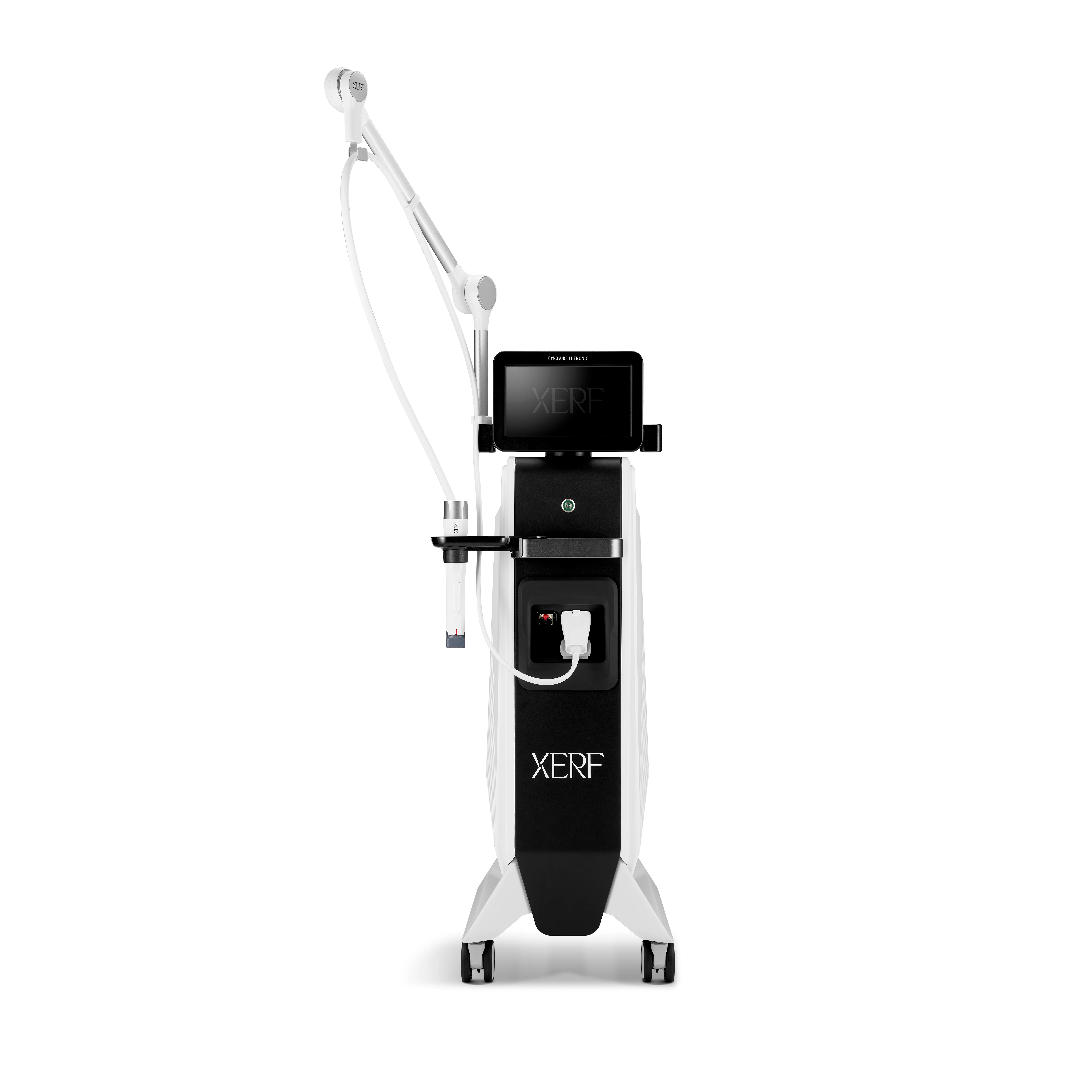
Surgical facelifts work by tightening the SMAS, the superficial musculoaponeurotic system, a layer of connective tissue beneath the skin that gives the mid and lower face its structure. Most energy-based tightening devices, including established options like HIFU and standard radiofrequency, cannot reach it. XERF is engineered to deliver dual-frequency energy beneath the skin’s surface specifically to reach that structural layer, paired with continuous cooling to keep the surface comfortable without needles, incisions or anaesthetic.
“Most non-invasive tightening devices work on the surface layers of skin,” says Dr Hasaneen Al Janabi, the GMC-registered surgeon offering the treatment. “XERF is designed to reach the structural layer underneath, which is a meaningful difference in how the results tend to look and last.” Dr Hasaneen Al Janabi offers XERF in his premium Mayfair clinic.
What a session involves
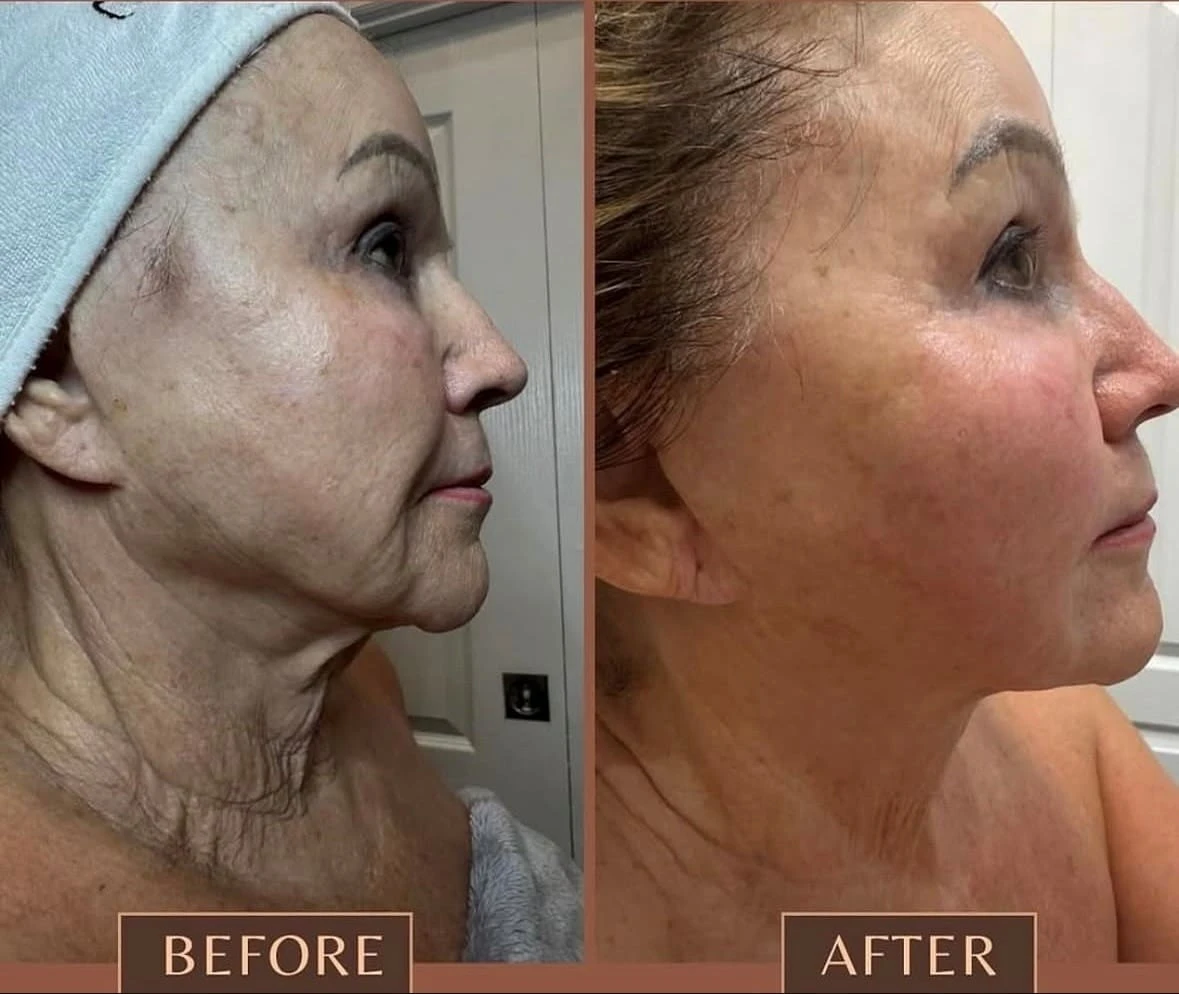
Treatment runs 45 to 90 minutes with no numbing cream required, using the device’s built-in cooling for comfort instead. There is no downtime, patients return to normal activity immediately, and results develop gradually over three to six months as new collagen forms, typically holding for 12 to 24 months.
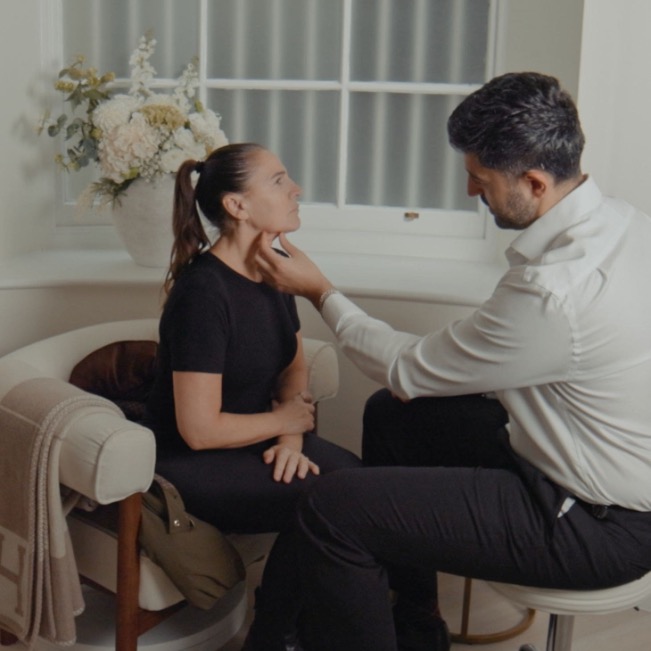
Image courtesy of Dr Hass Clinic
Who it’s positioned for
Clinics are generally recommending XERF for people in their late thirties through fifties noticing early jawline or neck laxity who aren’t yet considering surgery, as well as younger patients using it preventatively, and those wanting a non-surgical way to extend the results of a previous facelift. As a heat-based rather than light-based technology, it’s also considered suitable across a broad range of skin tones, though a consultation remains the right first step to confirm suitability individually.
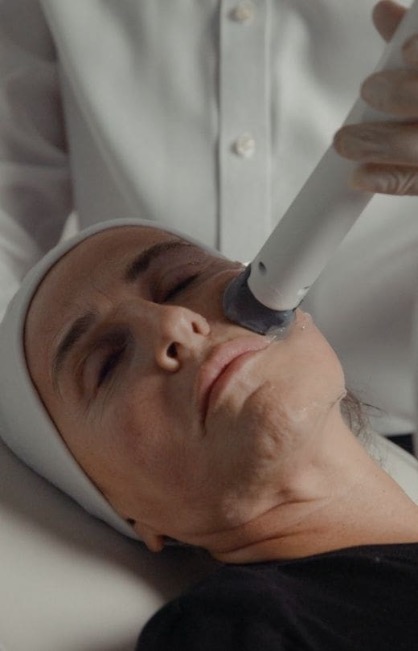
Image courtesy of Dr Hass Clinic
A reasonable amount of scepticism
New aesthetic devices arrive with some regularity, and not all of them live up to their early claims. What makes XERF worth watching rather than dismissing is the mechanism itself: dual-frequency delivery treating both superficial and deep tissue in a single pass, something that previously required separate devices or settings. The device was developed in South Korea, a market that has set the pace for non-surgical aesthetic technology for much of the past decade, before earning clearance in the US and, more recently, the UK.
Whether it holds up against that early promise in practice will depend on accumulated outcomes over the next year or two, a normal and appropriate amount of caution for any new energy-based device, however sound the underlying mechanism sounds. A handful of UK clinics are now offering it under surgeon-led supervision, and the clinic’s candidacy criteria are worth checking against before assuming it’s the right fit.