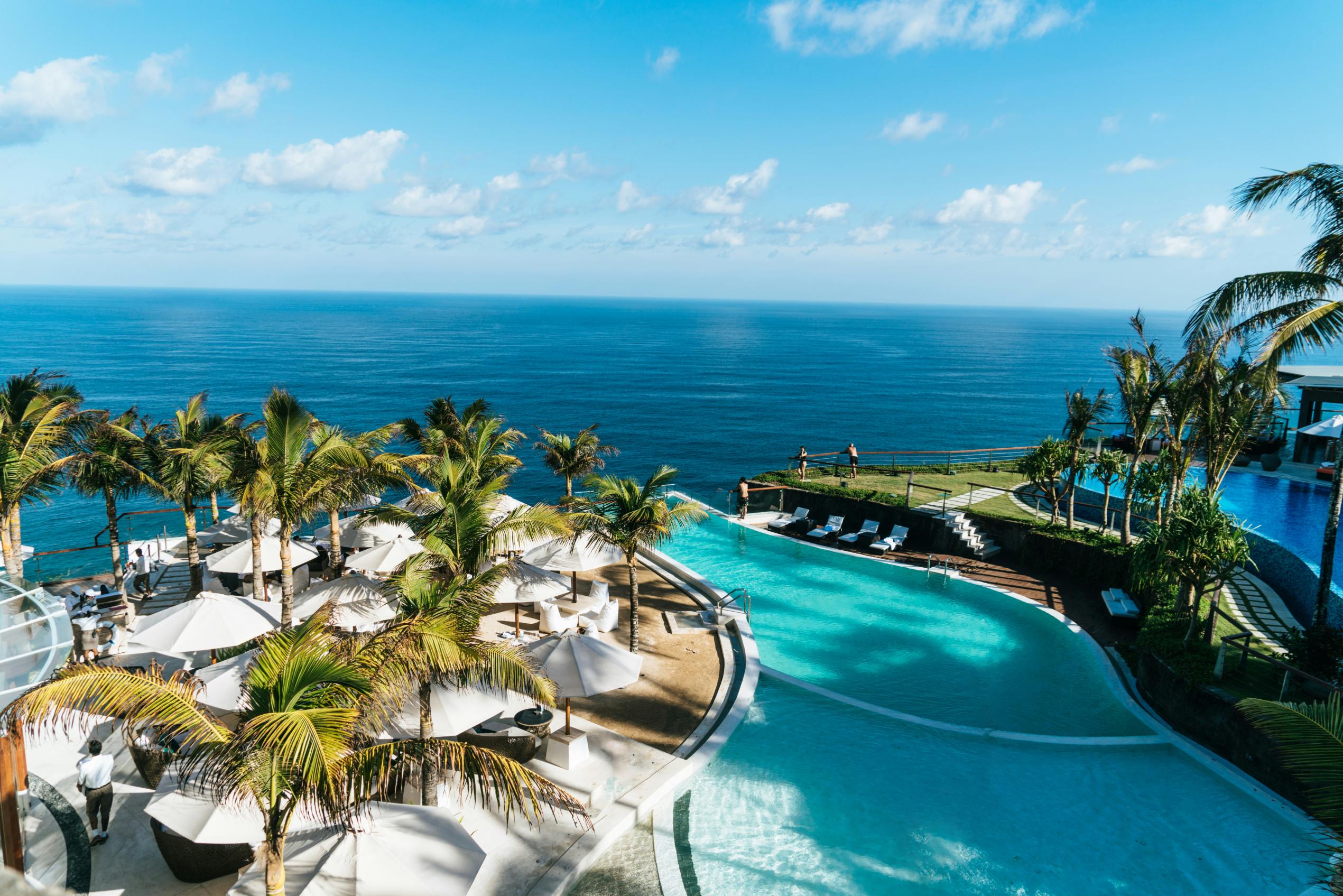
There is a moment many travellers recognise — the one where they fall for a place before they’ve been there. A film clip of a villa at dusk, the camera moving slowly through an arcade of palms toward the sea. A residence revealed through a sequence of views: lobby, terrace, the city spread below through floor-to-ceiling glass. The anticipation that arrives before any booking is made, before any flight is taken.
This experience has always existed at some level in luxury travel — the aspirational photograph, the carefully worded description. What’s changed is the sophistication and the reach of how premium spaces are introduced, particularly in the period before they open. Anticipation, it turns out, can be designed.
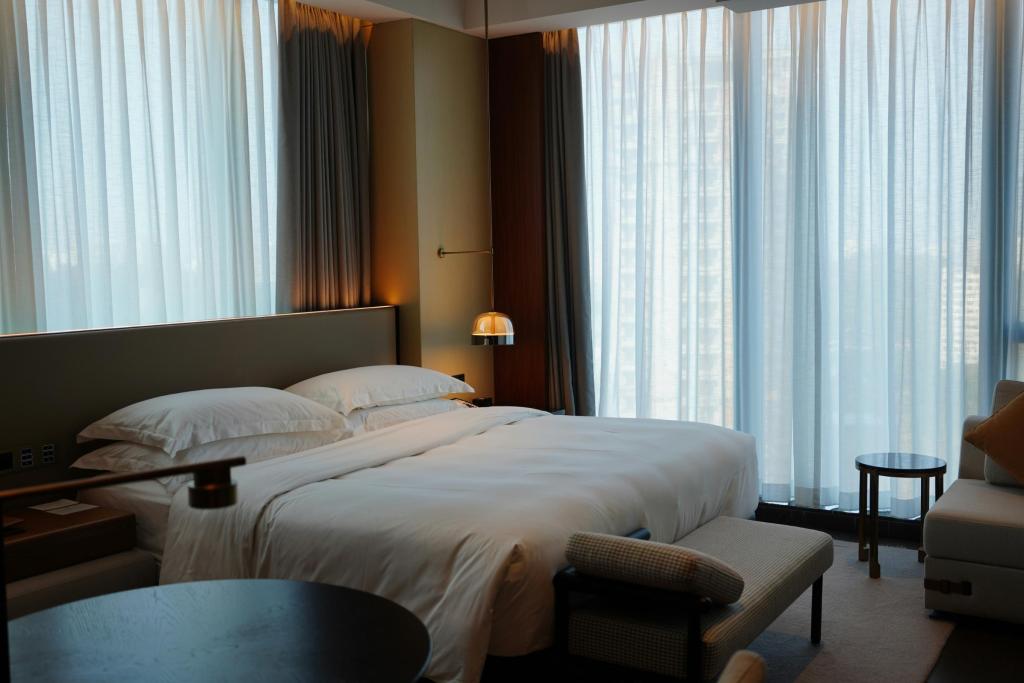
Image courtesy of Travis Chen on Unsplash
Luxury Is Sold on Feeling Before Anything Else
The specifications of a luxury hotel or residence suite, including count, square footage, and amenity list, are necessary information. They are rarely what creates desire.
What creates desire is the sense of how a place will feel. The quality of light on the terrace in the late afternoon. The unhurried transition from the arrival court to the lobby. The particular quality of stillness in a room that has been designed to offer it. These are experiential qualities, and they’re the ones that make a traveller put a destination on a list, or make a buyer reach out to a developer months before a project is complete.
Luxuriate Life’s own coverage of hotels and resorts reflects this consistently. At ME Dubai, the architecture and interiors create a mood that is inseparable from the guest experience. At Las Alamandas in Mexico, the place is the product — the lush privacy of it, the relationship between the casitas and the gardens and the Pacific beyond. At Aliah Lomas Verdes, sustainability and luxury aren’t in conflict; they’ve been woven into a sensibility the project communicates from the outset. In each case, the story is about atmosphere, not amenity lists.
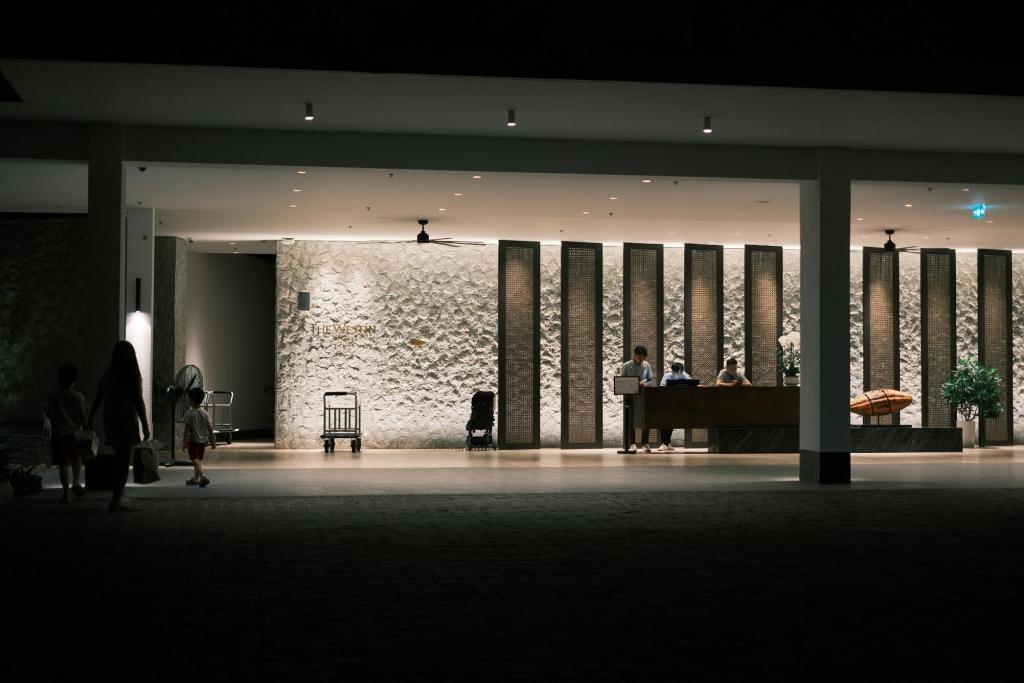
Image courtesy of Duc Van on Unsplash
What Movement Adds to the Story
A beautifully composed still image can establish atmosphere at a moment. What it cannot do is show the sequence — the way a luxury arrival unfolds across time and space, the transitions that make a resort or residence feel like a complete world rather than a collection of photographed rooms.
Movement through a space reveals things that a single viewpoint cannot. The approach along a tree-lined drive and the first view of a façade. The compression and release of moving from a low entrance into a double-height lobby. The relationship between a guestroom and the terrace beyond it, and between the terrace and the landscape it commands. The way daylight shifts across materials through the day.
For luxury hotels, branded residences, and destination developments that are still taking shape, the challenge is not only to show what will be built, but to communicate how it may feel. In that early stage,architectural animation services can help present movement through the space, changing viewpoints, arrival moments, and the relationship between interiors, architecture, and setting. The result isn’t a replacement for the finished building — it’s a first invitation to imagine it.

Image courtesy of Kellen Riggin on Unsplash
Hotels: Where the Story Begins at the Threshold
In hospitality design, the arrival sequence is not a preliminary to the experience. It is the beginning of it.
The best luxury hotels have always understood this. Shangri-La The Shard positions the city below you as the lobby itself, making arrival a moment of orienting encounter with London’s scale and light. A well-conceived resort manages the transition from public road to private sanctuary deliberately — each turn in the drive, each pass through a gate or archway, shaping the guest’s emotional shift from the outside world to the world of the property.
Communicating this sequence before a hotel opens — when the only physical reality may be a construction site — requires that the storytelling work across time rather than at a single moment. The camera that travels through a property, pausing in a lobby, moving onto a terrace, arriving at the pool at a particular hour: this is how a guest begins to understand what kind of place they are entering. Not through specification, but through sequence and mood.
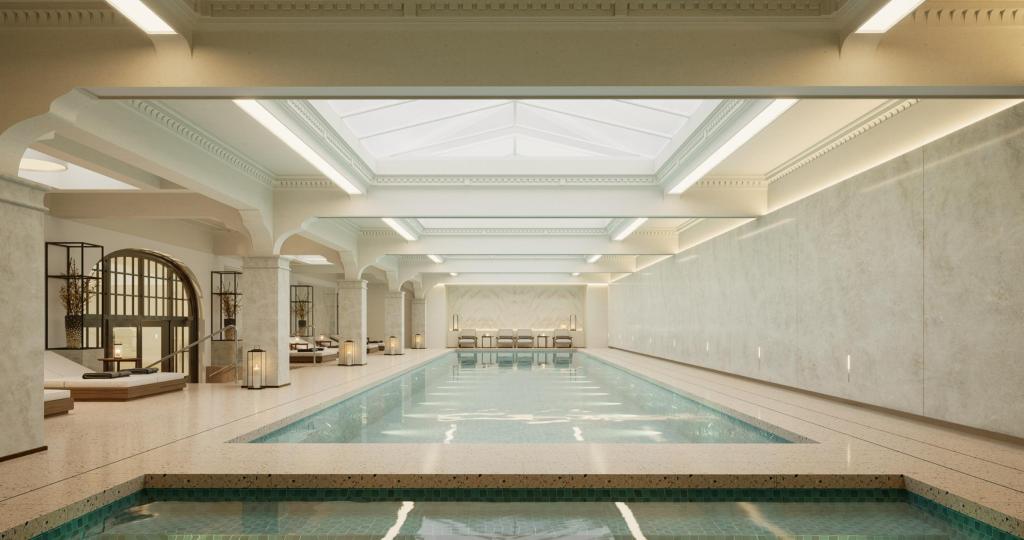
Image courtesy of D5 Render on Unsplash
Branded Residences: Lifestyle Presented Before Completion
The luxury residence market presents a specific version of this challenge. Buyers are often asked to commit to a future they cannot yet inhabit — a sky-level apartment whose views can be described but not yet stood in, a terrace whose relationship to the city can be rendered but not yet experienced in morning light.
In this context, the language of luxury presentation shifts toward the aspirational. Not merely “how many bedrooms” but “what kind of morning” — the quality of light through the primary suite windows, the relationship between the kitchen and a terrace that faces a particular direction, the calm of a building that has been designed to offer privacy within a dense urban context.
Wellness spaces, arrival lobbies, residents’ lounges, rooftop gardens: these shared amenities are often significant parts of the value proposition in branded residential schemes, and they’re the elements that photographic floor-by-floor documentation handles least well. Showing how they work as spaces — how they feel, what scale they operate at, what the progression from entrance to elevator to private floor suggests about the building’s character — requires a presentation approach that operates at the level of spatial experience.
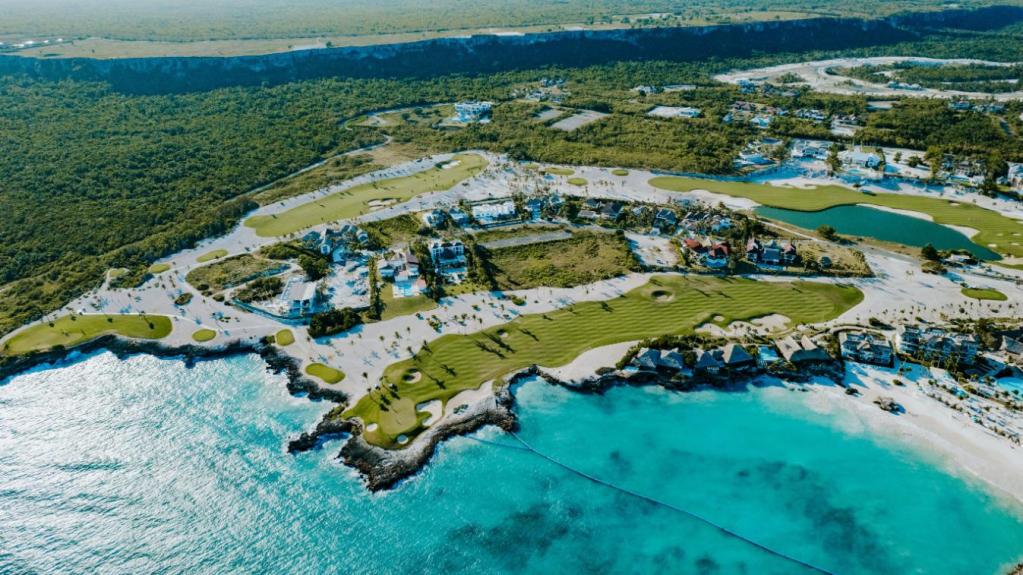
Image courtesy of Luis J. Corniel on Unsplash
The Landscape as Part of the Luxury Offer
For resorts and destination properties, the setting is often inseparable from the luxury proposition. An island retreat is not simply a hotel on an island; the island itself, the approach by boat, the way the horizon exists in a different relationship to the building at different hours — all of this is part of what guests are paying for.
This creates both an opportunity and a challenge in the pre-opening presentation. The setting can be shown. The specific relationship between the architecture and its landscape — how a pavilion sits above a lagoon, how a desert property faces the mountain range at sunset, how a coastal resort positions itself relative to the prevailing breeze and the direction of the afternoon light — requires a spatial intelligence in the presentation that simple photography of a location doesn’t provide.
The most effective luxury resort presentations tend to treat the landscape and the architecture as a single subject. The aerial view that establishes the setting and then descends toward a specific point of arrival. The sequence that moves from the horizon to the terrace to the interior shows how the property mediates between the natural world and the composed spaces it offers.
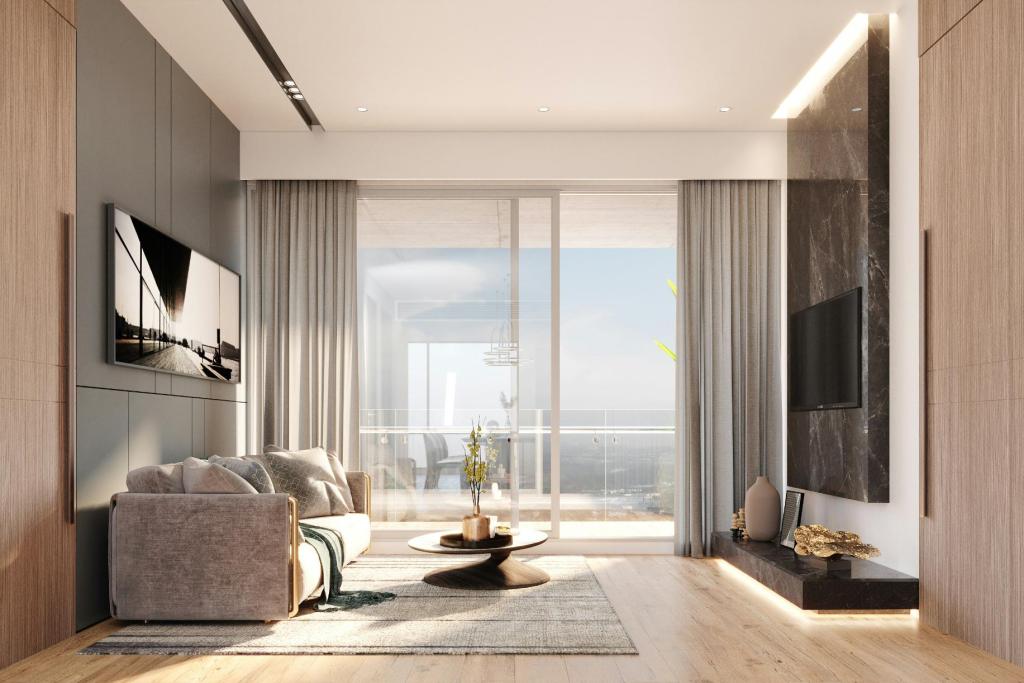
Image courtesy of Aalo Lens on Unsplash
The Risk of Style Without Substance
A caveat worth holding onto: cinematic presentation works best when it is honest to what will actually be delivered. Luxury audiences are experienced enough to sense when atmosphere has been used to substitute for architectural quality rather than to express it — when the golden light in the film is several grades above what the orientation and glazing will produce, when the sense of space implied by the camera angles exceeds what the floor plans would suggest.
The most effective pre-opening storytelling for luxury projects is not the most spectacular. It’s the most precise — the presentation that captures what is genuinely distinctive about the space and communicates it in a way that accurately prepares the guest or buyer for what they’ll encounter. Trust, once earned through honest anticipation, creates a better opening than spectacle followed by disappointment.

Image courtesy of Jake Nackos on Unsplash
The First Encounter Is Now Usually Digital
Luxury travel and real estate audiences encounter projects through launch films, social video, digital publications, and brand campaigns — often months or years before a physical visit. The first impression of a new hotel or residence is now, in most cases, a virtual one.
This has raised the stakes for pre-opening visual storytelling and changed where that storytelling happens. A project whose opening film circulates through the relevant digital channels, whose cinematic quality conveys the project’s ambition clearly, whose atmosphere is consistently communicated across platforms, arrives at opening day having already built the anticipation that will make it matter. The first guest who walks through the door may have been imagining the crossing of that threshold for some time.
The most compelling luxury spaces understand that the experience of them begins before arrival. Designing that pre-arrival experience with the same care applied to the architecture itself is not a marketing afterthought. It’s part of what makes a project, as opposed to simply a building, worth waiting for.
Feature image courtesy of Paolo Nicolello on Unsplash