
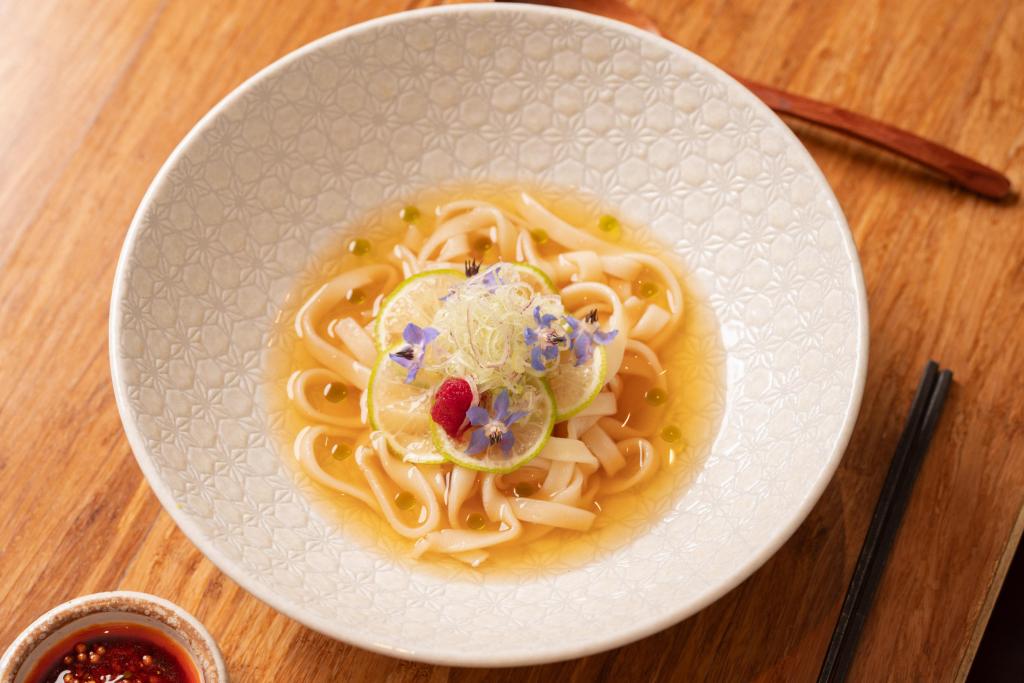
Lunch at Dinings SW3 arrives in small, deliberate waves. First come the tar-tar chips, delicate crisps that carry toro tuna and Wester Ross salmon. Then a chilled sesame udon lands, the homemade noodles cool and springy in a nutty goma ponzu. After that, sashimi, sliced from Cornish day-boat seafood, changes with the season. Nothing on the table is big, and that is the point. I had come to graze slowly, and the kitchen clearly had the same plan.
Dinings SW3 does an evolved version of the Japanese izakaya. Think of it as the convivial cousin of the neighbourhood bistro: small plates, good drinks, conversation that stretches. I had expected polish. Considered Japanese dining in London leans that way now, from omakase counters to newer rooms like MA/NA in Mayfair. Still, I had not expected it to feel so local. By the time I sat down, I had stopped checking my phone.
A hidden mews in Knightsbridge
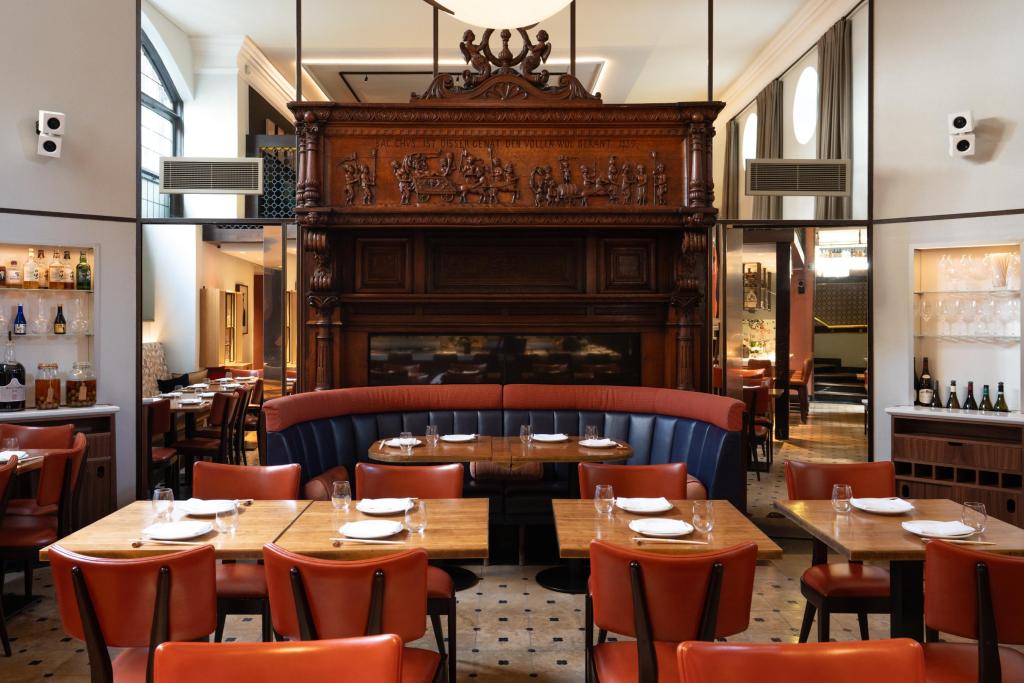
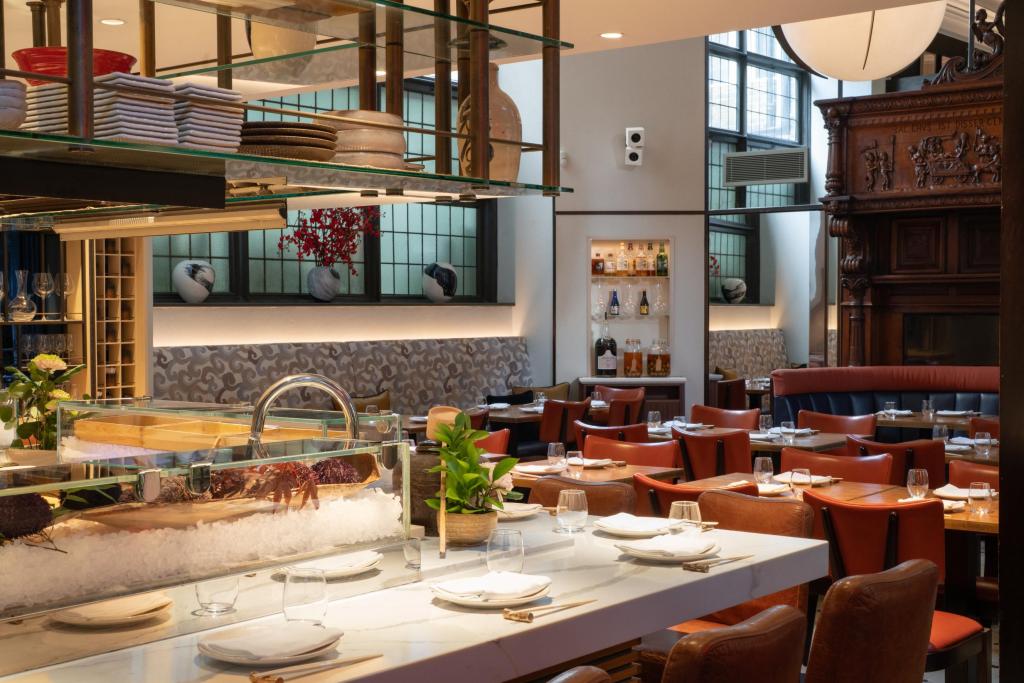
Dinings SW3 opened in 2017, so it is nearly ten years old now. You can feel that age in the room. It has the settled ease of somewhere with nothing left to prove. The dining room sits a half-level below the street. It wraps around an open kitchen and a sushi counter, and cabinets of crystal glassware catch the light. Clearly, this is not an average sushi bar. A grand carved wooden fireplace dated 1559 anchors the back wall, all cherubs and barrels, an unexpected European flourish in a room otherwise built around clean Japanese lines.
You can take your lunch a few ways here. Sit at the counter and watch the chefs work. Or take a stool at the bar by the door. The quiet Kurabu lounge sits upstairs, and the main dining room runs alongside. There is also a secluded outdoor courtyard, bamboo-screened and dotted with Japanese maples, which becomes the obvious choice on warmer days. At midday, the space fills with daylight and stays calm. You arrive thinking you will stay an hour, and then you leave closer to two.
Masaki Sugisaki and the art of the izakaya
Executive Chef and co-owner Masaki Sugisaki leads the kitchen, and his story explains a lot about the food. He grew up in Saitama. As the eldest son, he learned to cook in his family’s traditional kaiseki restaurant. He came to London at 23. Then he went back to Japan to run that family kitchen. Later, he moved to Tokyo to build his own style. In 2005, he returned to London and joined the opening team at Nobu Berkeley Street. There he met Tomonari Chiba, the founder of Dinings, and the two became business partners. Masaki has led this kitchen for over a decade.
You taste that background in the detail. The team works gill-to-tail and uses as much of each fish as it can. Shellfish shells become a lobster miso. Vegetable trimmings turn into stocks and sauces. Suppliers creel-catch the lobster and langoustine and hand-dive the scallops. A Josper oven handles the smoky Sumiyaki dishes. The kitchen never makes a show of any of this. It simply arrives as food that tastes precise and alive.
One word sums up why lunch here feels different: omotenashi. It is the Japanese idea of hospitality as anticipation rather than performance. Masaki keeps it at the centre of the restaurant. So you notice it in small ways. A server explains a dish without rushing you. Someone tops up your glass before you reach for it. The team comes from all over, from London to Lisbon to Nagasaki. Still, they share that same instinct to look after a table. That is a big reason a quick lunch becomes a long one.
A drinks list worth arriving early for
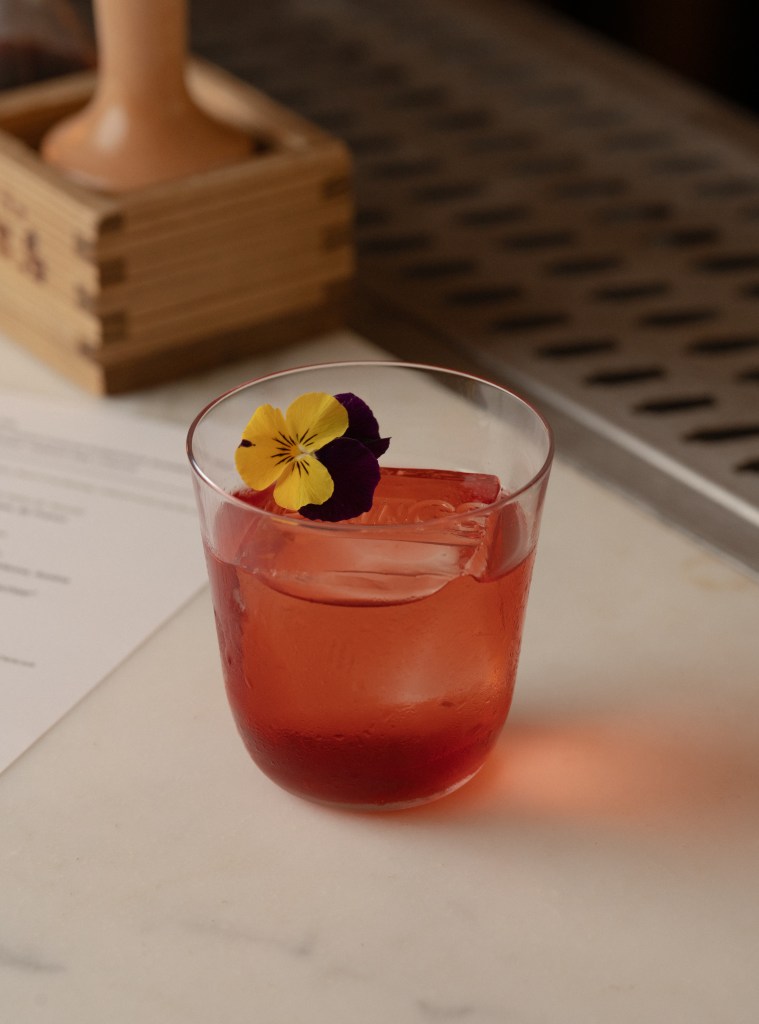
The bar by the entrance is its own draw, and walk-ins are welcome. The cocktail list splits cleanly in two. Kaizen, meaning change for the better, takes classics and lifts them with Japanese ingredients like yuzu, sesame oil, shiso and koji. Ikasu, meaning to use time to the fullest advantage, moves with the seasons.
The two serves people talk about are both Kaizen. The Sesame Old Fashioned uses Dinings’ own sesame oil to fat-wash Maker’s Mark bourbon, finished with a whisper of banana liqueur for a rich, nutty drink that holds its weight against the food. The White Miso Espresso Martini is the bigger surprise, layering savoury umami onto the familiar caffeinated hit, and it has earned itself a small cult following. The Dorai Dry Martini, garnished with shiso oil and stirred with the restaurant’s house Junmai Daiginjo sake, is the choice for purists with a touch of curiosity.
The Ikasu menu rotates every few weeks. On the day I visited, a Green Kiwi and Thai Basil Margarita arrived crisp and herbaceous over a single large ice cube, the kind of drink that nudges lunch into the afternoon without protest. A Gooseberry and Lemongrass Gimlet and a Kumquat and Turmeric Negroni were also on the list, the latter a particularly clever twist on the Italian original.
Dinings also pours two own-label sake brews made with the family-run Konotomo brewery in Japan’s Shiga region, and the wider sake list runs deep into small-batch producers you will not see elsewhere. If you want something alongside the bar, there is an otsumami snack menu, kara-age chicken and the like. It is also worth knowing that Sundays and Mondays are no-corkage, so a Sunday lunch is a rare chance to bring a special bottle of your own at no charge.

A lunch worth lingering over
We ordered the way the menu wants you to, broadly and to share. The chilled sesame udon was an early favourite, the homemade noodles cool and springy under a nutty goma ponzu, exactly the kind of thing I want at midday. A miso soup came brightened with umami chilli oil. The sashimi, which changes with the season and leans on seafood from Cornish day boats, was clean and quietly luxurious, and we grazed through a run of sushi between conversations. There is an à la carte and a daily specials menu that follows whatever is best that week, so I left already knowing the next visit would be different.
The dishes that define a visit
Some plates I had read about, and they earned the reputation. The tar-tar chips are the Dinings calling card, delicate crisps topped with toro tuna, Wester Ross salmon or seared A5 Wagyu, gone in two bites and immediately missed. The steamed mini burger buns are the other, and the one filled with Ben’s potted native blue lobster from Cornwall is the one I would order again first.
Then there is the aubergine, which I had been waiting for. The nasu-dengaku is double-cooked until the flesh inside collapses into something almost custardy, glossy and lacquered with a miso glaze that is restrained rather than cloying. It is one of those dishes that sounds modest on paper and steals the meal. Vegetarian or not, it is a non-negotiable order. The vegetables generally are given the same level of thought as the proteins, from a koji cured baked cabbage with truffle potato foam to roasted seasonal roots from the Sumiyaki grill.
For something with more ceremony, there are the koji-cured steaks, dry-aged in-house, and the black cod marinated in amazake soy from the Sumiyaki grill. The black cod has become a benchmark dish across high-end Japanese restaurants in London, and Dinings’ version stands among the best in the city. The fish arrives pearlescent and silken, the flakes parting under the lightest pressure of a chopstick, the marinade caramelised at the edges into something between candy and char.
By the time the plates were cleared, I understood why people talk about Dinings SW3 the way they do. Nearly ten years in, it has grown into that rare thing, a genuine destination that still behaves like a local. For a long lunch in Knightsbridge, I struggle to think of a finer way to spend an afternoon.
For more information, visit Dinings SW3
View this post on Instagram
All Images Courtesy of Dinings SW3.