
Since 1989 Emma Bache has worked as a graphologist analysing handwriting for both the corporate and private sectors, with a client list that includes leading international businesses, celebrities and the press and media.
Emma is a former columnist in The Times and The Financial Times, and has appeared on TV and Radio programmes such as Breakfast, Loose Women, This Morning, The Today programme and a wide range of regional BBC programmes. She was also an integral part of Amazon Prime’s TV documentary Becoming Ian Brady, analysing handwritten letters to shed some insights into the serial killer’s personality.
Emma now works with organizations in both the US and UK to help with recruitment and restructuring of companies. During the last decade, her experience and breadth of knowledge as well as her engaging personality has allowed her to expand her career into a wide range of areas ensuring her position as the UK’s number one handwriting expert.
In a conversation with her, we uncover Emma’s unique line of work and what crucial tasks are involved, as well as discuss her relatively recent book.
How did you get into graphology?
Emma Bache: I have always been interested in psychology and what makes people tick but many years ago I did a weekend workshop in graphology and got hooked. I found myself a tutor and did a three-year course in London and the rest is history.
Who do you work for and what does a typical day look like for you?
Emma Bache: I love the fact that my work is so varied and over the last 30 years (or more!) I have been privileged enough to work with so many wonderful organisations and individuals. I help with recruitment for companies in the UK and abroad, I write reports for individuals and businesses analysing employees and for personal use. About 20% of my work is forensic, analysing criminal profiles and authentication of signatures on legal documents and sometimes even works of art. I work extensively for the press and media, analysing those in the public eye. I am also in high demand at events both big and small, after dinner and keynote speaking as well as running workshops from my home in West London.
A typical day would always consist of writing two or three reports for companies in the UK and America, perhaps a meeting in the afternoon visiting new clients or a face-to-face analysis. A couple of evenings a week I will be working at an event anywhere in the UK and sometimes abroad. I have been known to come home at midnight and then write a couple of reports for my American clients who are in a different time zone. I go to bed exhausted!

What sort of things can graphology tell us about the personality?
Emma Bache: When I am looking at handwriting it is a snapshot in time of the author and so everyone’s handwriting changes throughout life and sometimes throughout the day. However, I can detect personality traits such as emotions, communication style, work ethic, honesty and in fact most things that an employer would want or need to know. Overlaid with the personality type is also how the author is feeling at the very time of writing both physically and emotionally which can be affected by what they are writing about, who they are writing to, even how much they have drunk or what time of day it is.
Is there anything graphology cannot determine?
Emma Bache: There are three things graphology can never determine and some people are surprised by these:
The sex of the writer, whether the writer is right or left-handed (and this can be important for an accurate analysis), and the age of the writer.
What is your favourite aspect of your work?
Emma Bache: I am so very lucky to have created my own career around a subject that I am passionate about so I love all my work. However, I do enjoy speaking to large groups of people and leaving them with an insight into my profession and how I analyse handwriting as well as hopefully giving them entertainment and fun. I know that public speaking isn’t everyone’s favourite thing to do but I love it!
What do you think about letter writing? Is it a lost art?
Emma Bache: Of course, before the telephone and certainly a very long time before the internet, writing letters was the only form of long-distance communication. I think it is a terrible shame that people rarely write letters to each other now. There is nothing better than receiving a carefully penned letter through the post and shows an intimacy with communication that can never be achieved through sending an email or text.
From a historical point of view, letters have been instrumental in filling in the details of historical figures and indeed history itself as well as being a wealth of information for the graphologist. I really don’t think that we are going to be scrutinising emojis a hundred years from now. I would urge everyone to find time in the day to write a letter to a relative or friend. We are living in an increasingly lonely and impersonal world and we can all make a difference by writing to each other.
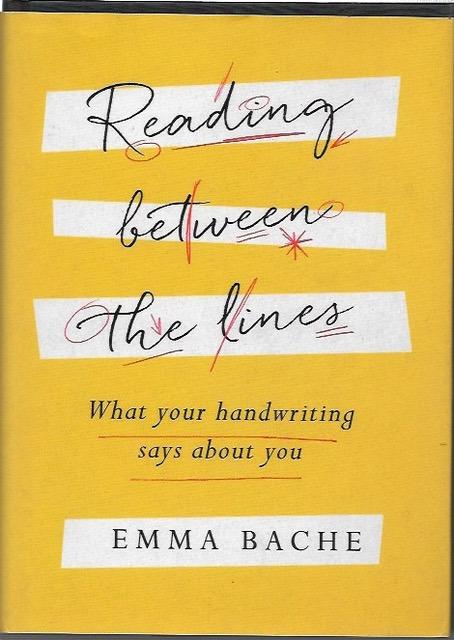
Tell us about your book, Reading Between the Lines.
Emma Bache: In 2018 I was lucky enough to be asked to write my first book, Reading Between The Lines which was published by Quercus. I thoroughly enjoyed writing it because it is a book for all would-be graphologists as well as anyone aged between 10 and 110 to help them analyse their own and others’ handwriting. Each chapter covers a different aspect of the writing with a little quiz to help deduce how much you have learnt. There are also lots of examples of famous handwriting to examine. One of my favourite chapters both to write and I think to read is the chapter entitled ‘Red Flags’ – rather negative character traits which can show up in handwriting with examples of famous murderers and villains’ handwriting. Something to pore over when choosing your life partner!
Can you tell us about the samples of handwriting from these world-famous people – what do you deduce?

KING CHARLES III
Emma Bache: The King’s somewhat spidery scrawl is speedy but difficult to read. This shows an intelligent but nervous individual with very creative thought processes. There are a number of inky blots and pause marks within the text – there is a strong sensuality but also a need to have his own way. He can be irritable but charming.
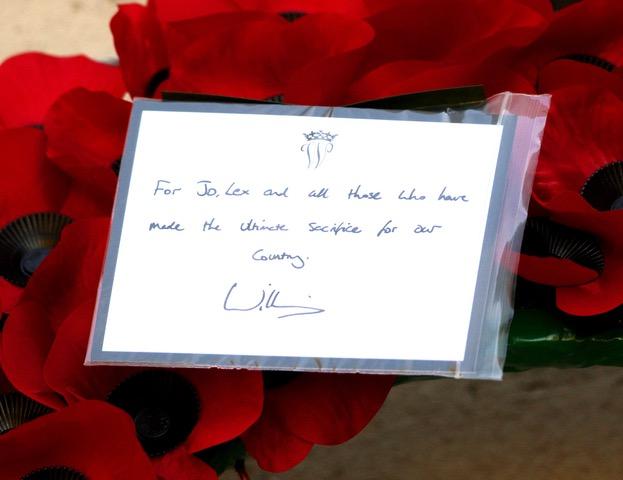
THE PRINCE OF WALES
The slightly irregular slant with wide spaces between the words shows sensitivity and a rather moody character who needs and enjoys time on his own to decompress. Not naturally a team player he is nevertheless hard working but can lose his temper when stressed rather like his father.

THE PRINCESS OF WALES
Catherine, Princess of Wales has a very strong right slant – she is a natural communicator but unlike her husband prefers to be with people. There is a regularity to the writing although some of the lines do not avoid tangling. She enjoys routine but can take on too much and her organisational skills can suffer. There is a strong sense of duty and loyalty and she would expect the same in return.

DONALD TRUMP
Donald always writes with a thick black marker showing a strong sensuality and love of the good things in life. He demands attention and is a natural orator. He will get his point across in no uncertain terms.
His signature is all angles, illegible and looks more like a cardiogram than a normal signature. Everything is carefully orchestrated for maximum effect. He is an unemotional showman.

JOE BIDEN
The US President’s script is angular and speedy – he can be impatient but analytical with a critical disposition. There are a number of unconscious small ticks on the end of handwriting strokes – he can be quick to lose his temper but those long lower straight strokes also point to a stubbornness. He has a strong imagination and would need help to bring his ideas to a logical fruition.
Can and should employers use handwriting analysis to decide whether to hire someone or not?
Emma Bache: Obviously a large proportion of my work is helping companies to recruit the right person for the team. I think graphology is such a unique snapshot of the individual that it can help employers to see aspects of the candidates’ personality that would never show up in an interview or even due diligence. Therefore yes, I absolutely think that it is an extremely useful tool in the toolbox of character assessment. However, I have always said that no one should be hired or indeed fired on the basis of handwriting analysis alone. When I am helping to build a team it is important that I analyse not only the prospective newcomer but also the current team members – it is all about relationships and being the right ‘fit’.
What is next for you?
Emma Bache: I am probably the UK’s leading handwriting expert but I really want to expand my career into the US and Middle East. My clients are very international but I am now being recruited by speakers agencies abroad which is certainly where I want my career to go in the next few years.
To find out more, visit: emmabache.com
View this post on Instagram
All imagery courtesy of Emma Bache.