
Forget matcha, reformer Pilates and run clubs, Padel is the new addiction. Now, the country is being rapidly overrun by glass-walled courts; apps exist entirely to pair strangers for a weekend match, and it’s unlikely that you will walk past an urban sports club without encountering the world’s fastest-growing racquet sport. The sport’s attraction is in its radical inclusivity, proving that this game really has no boundaries. What began as another racquet sport has transformed into a complete lifestyle contagion.
This summer, from August 3-9, the capital’s premium clubs will embody this evolution of racquets and revelry with the inaugural London Padel Week 2026. Sprawling across five venues, this social ‘fringe festival’ coincides with the historic UK debut of Premier Padel London, the elite professional tour at the newly transformed £1.3bn Olympia London. While the pros duel for a P1-tier title under Olympia’s lights, London Padel Week opens its gates to the entire city, inviting everyone to experience the sport’s intoxicating blend of competition, laughter, and social synergy.

Why Padel, Why Now?
The prospect of starting a new sport rarely instils much confidence. Many people carry an underlying anxiety that everyone else is already well-accustomed to the rules, knows the format inside out, and has rightfully earned their place on the court. Padel largely strips away that pressure. Here, the court is smaller, the pace is merciful, and the doubles format ensures you are never alone in your confusion. Even complete beginners can find themselves comfortably sustaining a rally within their first session, while the more experienced lot still find enough tactical depth to continuously evolve their game.
Perhaps even more remarkable than Padel’s meteoric rise is how many different people have found a place within it. As a game with such a lack of intimidation, the sport, let alone individual matches, is rarely confined to a single demographic. Courts are shared by young university students, active retirees, competitive families, and experienced athletes alike. Padel, in its infinite generosity, serves us on multiple fronts, providing all the elements necessary for graceful ageing and modern wellbeing: regular movement, mental stimulation and meaningful social connection. Together, they make it the perfect antidote to the weekly grind—an undeniably brilliant way to switch off and reclaim your Saturday afternoon.

The Rise of Padel
Padel’s newfound popularity across Europe is not merely a testament to the inviting nature and quality of the game. Plenty of sports are thoroughly enjoyable yet have not managed to spark an entire reshaping of leisure culture. Padel arrived in a specific moment in our social history. In a post-COVID era when escalating technology use has left us parched for analogue connection and desperate for active yet engaging ways to socialise, the sport steps into this void as a “third place”: the new sanctum, neither home nor office, but rather a third realm where the ancient art of being together is rediscovered.
Finally, depending on one’s competitive prowess, the match itself could be an afterthought; players arrive early for coffee, lingering long enough to move on to an aperitif afterwards, and before you know it, a 90-minute workout swells into a whole afternoon of languorous conversation and post-match recovery. Padel opens the door to exercise completely devoid of penance; an hour centred on movement becomes a place of conversation, community, and shared experience. In a time where our leisure hours are increasingly fragmented, padel has found a way to stretch time and slow it down again.
What To Expect
The 2026 London Padel Week is not just a sporting event, but a culmination of all that Padel has become. Borrowing a page from the playbooks of London’s Fashion Week and Milan’s Design Week, it recasts the city’s clubs throughout the capital into stages where tournaments, conversations, wellness experiences, and community events collide. In doing so, it proves that in London, Padel has graduated from a mere court-side pursuit to a citywide state of mind.
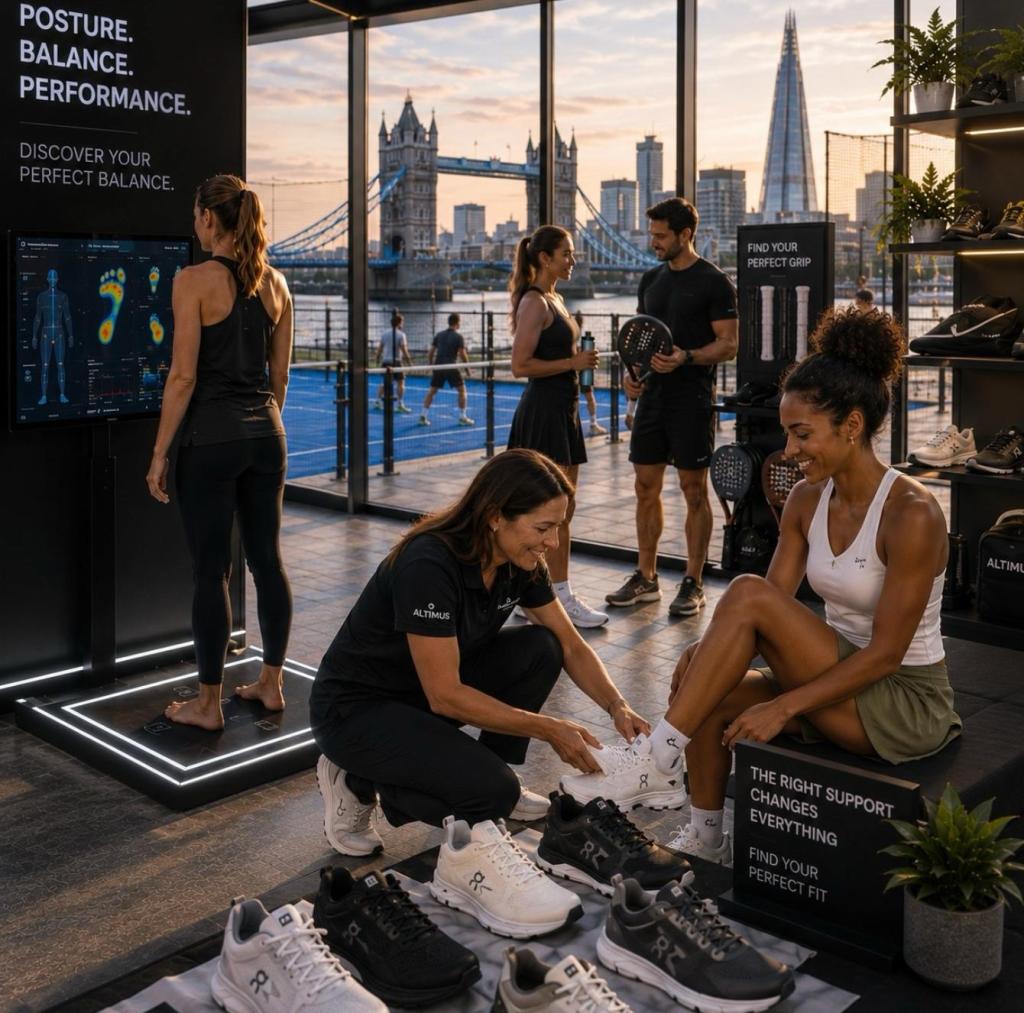
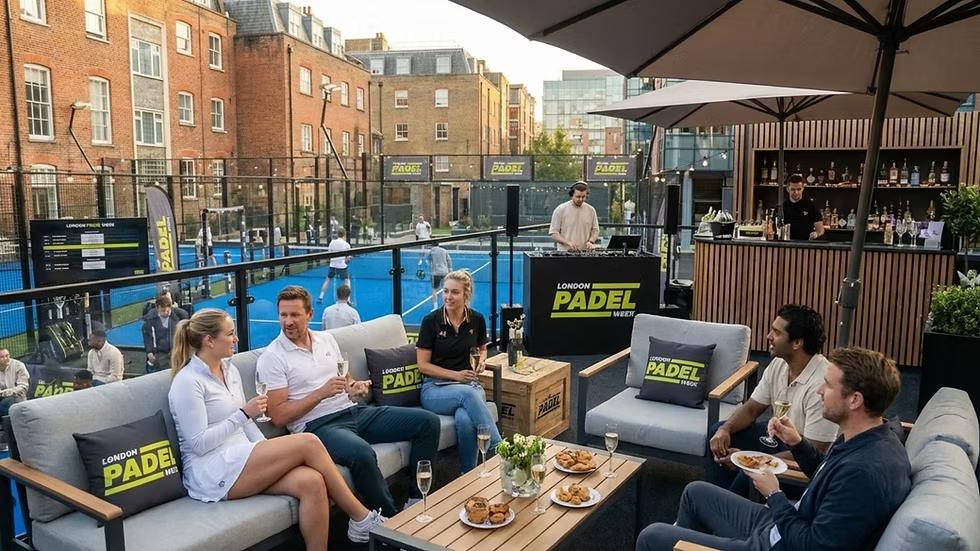
Rocket Padel Battersea, Rockslane Chiswick, Stratford Padel Club, House of Racquet (King’s Cross), and S3 Wembley will host everything from beginner coaching sessions to social mixers. Visitors can expect exhibition matches and elite competition alongside chances to play. Beyond the rallies, the programming highlights a lifestyle ecosystem. Attendees can step into product-testing zones to trial avant-garde, precision racquets from the high-end designer brand Raquex or browse exclusive apparel showcases curated by the contemporary performance-fashion label Wylde Ensemble. Complemented by recovery lounges, wellness activations, food experiences, live music, networking events, and panel discussions, the modern padel club focuses as much on the rituals before and after the match as the match itself. Rather than following a single itinerary, the festival encourages visitors to explore London’s clubs. Each venue offers its own perspective on the city’s growing padel culture.
Who Should Go
Embodying the true social culture of Padel, the festival is not an exclusive, elite event but one deliberately designed for everyone. Running alongside Britain’s first-ever Premier Padel P1, the festival brings the energy of top-tier competition beyond Olympia and into London’s clubs. It invites everyday players to take part rather than simply watch. Whether you are a beginner who has never picked up a racquet, a wellness enthusiast interested in recovery sessions, or a spectator who craves the infectious atmosphere without stepping onto the court, you are welcome.

The Future of Urban Leisure
Ultimately, London Padel Week is more than just a sporting milestone; it serves as a hopeful representation of where our urban wellbeing is heading. In an era where our leisure time is aggressively more digitised, and we are losing the physical places that have historically connected us, Padel has cleverly found a way to commercialise unadulterated, healthy, analogue joy. By celebrating the premium clubs that have successfully evolved into “third places,” the festival defies the isolation of modern routines and encourages everyone, at any level, to get a taste of the addictive spirit of Padel. This August, it becomes clear that the city hasn’t just fallen in love with a new sport; it has found a healthier, happier, and infinitely more connected way to live.
Discover More at London Padel Week
View this post on Instagram
All images courtesy of London Padel Week